
Bulk Sourcing Guide to Crystal AB Hotfix Rhinestones for Stage Costumes
The Definitive Bulk Sourcing Guide: Crystal AB Hotfix Rhinestones for Stage Costumes
For costume manufacturers, theatrical design houses, and professional dancewear companies, the “sparkle” is more than just an aesthetic choice; it is a fundamental component of the performance’s success. In the competitive world of global stage production, Crystal AB hotfix rhinestones remain the industry gold standard. However, sourcing these stones at a B2B level requires more than just an eye for beauty—it requires a technical understanding of the coating process, an appreciation for the physics of stage lighting, and a strategic approach to bulk procurement economics.
As a leading manufacturer of hotfix rhinestones based in Guangzhou, we understand the unique pressures faced by procurement officers and lead designers. Whether you are outfitting a Broadway ensemble or producing thousands of competitive gymnastics leotards, this guide will deep dive into why Crystal AB is indispensable and how to optimize your sourcing strategy for maximum impact and margin.
The Alchemy of Aurora Borealis: Understanding the AB Coating Process
The “AB” in Crystal AB stands for Aurora Borealis, a finish named after the Northern Lights. This coating was famously co-developed in the 1950s by Swarovski and the fashion house Christian Dior. For B2B buyers, understanding how this coating is applied is crucial for distinguishing between high-quality factory-direct stones and inferior imitations that may flake or lose their luster during a performance.
The technical process is known as Vacuum Metallizing. In a controlled laboratory environment within our Guangzhou facility, high-quality glass crystals are placed into a vacuum chamber. A thin layer of metallic salts—typically including gold or silver-based alloys—is vaporized and deposited onto the surface of the crystal. Unlike a simple spray-on finish, this vacuum deposition process creates a molecular bond between the coating and the glass.
The result is a micro-thin, iridescent layer that reflects light in a multi-chromatic spectrum. When you look at a Crystal AB stone, you aren’t just seeing clear glass; you are seeing a surface that shifts between blue, pink, yellow, and green depending on the angle of the light. For stage costumes, this “chameleon effect” is vital because it allows the costume to harmonize with various lighting cues without requiring a change of attire.
The Physics of the Stage: Why Crystal AB Refracts Better Than Clear Stones
In a theatrical setting, lighting designers use a complex array of RGB (Red, Green, Blue) LEDs, follow spots, and wash lights. A standard “Crystal Clear” rhinestone reflects light directly, which can sometimes result in “hot spots” or a flat, white glare that washes out the performer’s silhouette on camera or from the back of the house.
Diffusion vs. Direct Reflection: Crystal AB stones function through both refraction and diffusion. The AB coating acts as a prism. When a white follow spot hits a costume covered in SS20 Crystal AB stones, the light is broken down into its component colors. This creates a “glow” around the performer rather than a sharp, distracting flash. This softening effect is why AB is preferred for television broadcasts and high-definition filming of stage plays.
Furthermore, because the stage is a three-dimensional environment where performers are constantly moving, the AB coating ensures that at least some part of the stone is always catching and splitting the light. This constant “twinkle” provides a sense of luxury and high production value that clear stones simply cannot match.
Size Strategy for Mass Production: Why SS16 and SS20 are the B2B Favorites
When sourcing for large-scale production, the choice of size (SS or Stone Size) is a critical decision that impacts both the visual weight of the costume and the labor costs associated with application. In the global stage costume industry, SS16 (approx. 3.8-4.0mm) and SS20 (approx. 4.6-4.8mm) are the most frequently requested bulk sizes.
1. The “10-Foot Rule” in Theatrical Design
In theater, costumes must look good from the front row and the “nosebleed” seats. SS16 stones are large enough to be seen from a distance but small enough to allow for intricate detailing and curved patterns. SS20 stones, being slightly larger, offer a “bolder” sparkle. Many manufacturers use a 70/30 mix—using SS20 for the “hero” areas of the costume (chest, shoulders, headpieces) and SS16 for the gradient fades and intricate sleeve work.
2. Application Efficiency
From a manufacturing standpoint, time is money. Applying 10,000 SS10 (tiny) stones takes significantly longer than applying 3,000 SS20 stones, even if the total surface area covered is the same. For B2B buyers looking to reduce labor costs, standardized SS16/SS20 Crystal AB stones provide the best “coverage-to-labor” ratio. Our Guangzhou factory specializes in high-speed sorting to ensure that every gross (144 stones) in your 1,000-bag order is uniform in size, preventing jams in automated ultrasonic rhinestone setting machines.
The Economics of Bulk Sourcing: Maximizing Profit Margins
Sourcing Crystal AB hotfix rhinestones in bulk is a significant investment. For a theatrical production house, the cost of rhinestones can represent 15% to 25% of the total material cost of a high-end costume. Understanding the economics of the supply chain is essential for maintaining margins.
Factory Direct vs. Wholesale Middlemen
Most “local” suppliers in the US or Europe are simply resellers of Chinese manufacturing. By sourcing directly from a Guangzhou-based manufacturer, B2B buyers can typically save 30% to 50% on their procurement costs. However, this requires a higher volume commitment. We typically deal in “Bags,” where 1 Bag of SS20 contains 10 Gross (1,440 stones). For bulk orders, we measure by the “Box,” which can contain 100 to 200 bags.
Calculating the “Cost Per Sparkle”
When evaluating suppliers, don’t just look at the price per bag. Consider the Yield Rate. Lower-quality stones often have a 5% to 8% defect rate (broken edges, missing glue, or uneven coating). High-grade AAAA+ stones from our facility maintain a defect rate of less than 0.5%. When you are applying 50,000 stones to a set of costumes, a 5% failure rate isn’t just a waste of materials—it’s a massive loss in labor time as workers have to manually pick out and replace “dead” stones.
Technical Specifications: Adhesive Quality and Heat Resistance
Since these are hotfix rhinestones, the glue on the back is just as important as the crystal on the front. In the stage industry, costumes undergo extreme stress. They are stretched, sweated in, and often cleaned under harsh conditions.
1. The Grey Glue Advantage
In the Guangzhou market, you will see various glue colors. Our premium Crystal AB stones use a High-Elastic Grey Glue. This German-formulated adhesive is designed specifically for performance fabrics like Lycra, Spandex, and Power Mesh. It has a lower melting point (to protect delicate stage fabrics) but a higher “pull strength” once cured. This ensures that when a dancer does a floor slide, their costume doesn’t leave a trail of rhinestones behind.
2. Washability and Longevity
Costumes for touring shows must survive “the wash.” Our hotfix stones are tested to withstand at least 20 professional dry-cleaning cycles and multiple hand-washes without losing the AB coating or the adhesive bond. This durability is a key selling point for B2B buyers who provide costumes for professional companies that expect their wardrobe to last for multiple seasons.
B2B Quality Control Checklist for Procurement Officers
When vetting a new manufacturer for Crystal AB stones, we recommend requesting a sample and testing for the following three factors:
- Coating Uniformity: Spread the stones out under a bright LED. Does every stone have the same “pink-to-blue” shift? Inferior batches often have “dull” stones mixed in, which creates dark spots on a costume when viewed from a distance.
- Edge Clarity: High-quality stones have machine-cut facets. Use a magnifying glass to check the edges. Rounded or “mushy” edges indicate a pressed-glass process rather than a cutting process, resulting in significantly less sparkle.
- Glue Coverage: Flip the stones over. The glue should be a uniform “pill” shape covering the entire back of the stone. If the glue is off-center or thin, the stone will tilt or fall off during application.
Global Compliance: Lead-Free Requirements for the Costume Industry
Regulatory environments in the EU (REACH) and the US (CPSIA) have become increasingly strict regarding lead content in apparel. For theatrical manufacturers producing for the global market, sourcing Lead-Free Crystal AB rhinestones is no longer optional—it is a requirement. This is particularly relevant for costumes used in youth dance competitions or children’s theater, where lead exposure is strictly monitored.
While traditional leaded crystal has a slightly higher refractive index, modern lead-free glass formulations have bridged the gap. Our Guangzhou facility offers lead-free options that comply with international safety standards while maintaining the brilliant AB reflection necessary for professional stagecraft. Always ask your supplier for their latest SGS or Bureau Veritas testing reports to ensure your costumes won’t be flagged at customs or by safety regulators. In the B2B world, compliance is just as much a part of the quality as the sparkle itself.
The Impact of Rhinestone Shape and Faceting on Stage Presence
While the focus of this guide is on Crystal AB, it is important to understand how the physical cut of the stone interacts with the AB coating. Most B2B buyers in the theatrical space prefer a 12-facet or 14-facet cut for their bulk SS16 and SS20 orders. Why does the number of facets matter?
Each facet acts as a mirror. When you apply an Aurora Borealis coating to a stone with more facets, you increase the number of “refraction points.” This creates a more complex and “expensive” look under the lights. A 14-facet stone will catch light at more acute angles than an 8-facet budget stone. For lead characters or soloists in a dance company, using a 14-facet or 16-facet Crystal AB stone ensures they stand out from the ensemble.
In Guangzhou, we utilize high-precision German-imported cutting machines to ensure that each facet is sharp and uniform. If the facets are uneven, the AB coating will pool in the valleys of the glass, creating “muddiness” rather than clarity. For large-scale costume production, this consistency is vital. When an audience sees 50 dancers on stage, any variation in the quality of the stones will be immediately apparent as a “patchy” appearance under the stage wash.
Manual vs. Machine: Optimizing Application Techniques for B2B Production Lines
For a costume manufacturer, the method of application is the largest bottleneck in the production cycle. When sourcing Crystal AB hotfix rhinestones in bulk, you must align your stone choice with your application technology.
1. Ultrasonic Rhinestone Setting Machines
In high-volume factories, ultrasonic machines are the standard. These machines use sound waves to generate localized heat, melting the glue in a fraction of a second. For these machines, stone uniformity is paramount. A single “out-of-size” stone can jam the feeder, halting production for 20 minutes. This is why our bulk SS20 Crystal AB stones are triple-sieved to ensure a 99.9% size accuracy.
2. Industrial Heat Presses
For applying large motifs or “all-over” sparkle to fabric panels before they are sewn, a heat press is the most efficient tool. However, the Crystal AB coating is sensitive to excessive heat. If a press is too hot or the dwell time is too long, the iridescent layer can “scorch,” turning a beautiful AB stone into a dull, yellowish one. We provide our B2B clients with specific temperature and pressure charts tailored to our High-Elastic Grey Glue, typically recommending 160°C to 175°C for 10-15 seconds, depending on the fabric thickness.
3. Hand-held Applicator Wands
For theatrical repairs and “one-off” couture pieces, manual application is still used. While slower, it allows for the most creative placement. When training staff for manual application, it is important to emphasize “vertical pressure.” Sliding the stone while the glue is molten can smear the adhesive, which will be visible on the fabric once cooled. Because Crystal AB is so reflective, any glue residue on the surface of the stone will significantly dull its stage presence.
Bulk Inventory Management: Storing and Handling Large-Scale Rhinestone Stocks
One often overlooked aspect of B2B sourcing is how the stones are managed once they arrive at your warehouse. If you are ordering 500,000 stones at a time, proper storage is essential to maintain the integrity of the AB coating and the adhesive.
- Climate Control: Rhinestone glue is sensitive to humidity. In many manufacturing hubs, high humidity can cause the hotfix glue to become “tacky” even before application, leading to stones sticking together in the bag. We recommend storing your bulk inventory in a climate-controlled environment with humidity below 50%.
- Light Sensitivity: While our vacuum-metallized AB coating is durable, prolonged exposure to direct UV light can eventually affect the brilliance of any iridescent finish. Store your bags in their original opaque boxes until they are ready for the production floor.
- Batch Tracking: For large theatrical runs that may require “add-on” orders six months later, always record the batch number from our packaging. While we strive for perfect color consistency in Guangzhou, slight variations in the vacuum metallizing process can occur between different production runs. Tracking your batches ensures that the “Stage Left” costumes match the “Stage Right” costumes perfectly.
The Future of Stage Sparkle: Trends in Sourcing
We are seeing a shift in the B2B market toward “Texture Layering.” Instead of using only Crystal AB, designers are now requesting “AB Mixes”—combining Crystal AB with Jet AB or Sapphire AB to create depth. As a manufacturer, we provide custom bulk mixes, allowing costume companies to order pre-blended bags that save time in the design studio.
Additionally, sustainability is entering the conversation. More production houses are inquiring about the environmental footprint of their embellishments. By sourcing from factories that utilize water-recycling systems and ethical labor practices in Guangzhou, international brands can maintain their CSR (Corporate Social Responsibility) goals while still achieving the high-glamour look required for their productions.
Conclusion: Partnering for Performance
Sourcing Crystal AB hotfix rhinestones in bulk is a strategic partnership between the costume manufacturer and the crystal factory. For the theater and dance industry, where margins are tight and expectations are high, the reliability of the supplier is the foundation of the production’s success.
By focusing on high-quality SS16 and SS20 sizes, insisting on premium vacuum-applied AB coatings, and ensuring the use of elastic grey adhesives, B2B buyers can create garments that don’t just shine—they endure. Guangzhou remains the heartbeat of the rhinestone manufacturing world, and for those who understand the technical and economic nuances of these brilliant stones, the potential for both artistic and financial success is limitless.
When your next production calls for the magic of the Aurora Borealis, remember that the most beautiful sparkle is one that is backed by technical precision and sound procurement logic. Maximize your stage presence, protect your margins, and source with confidence.
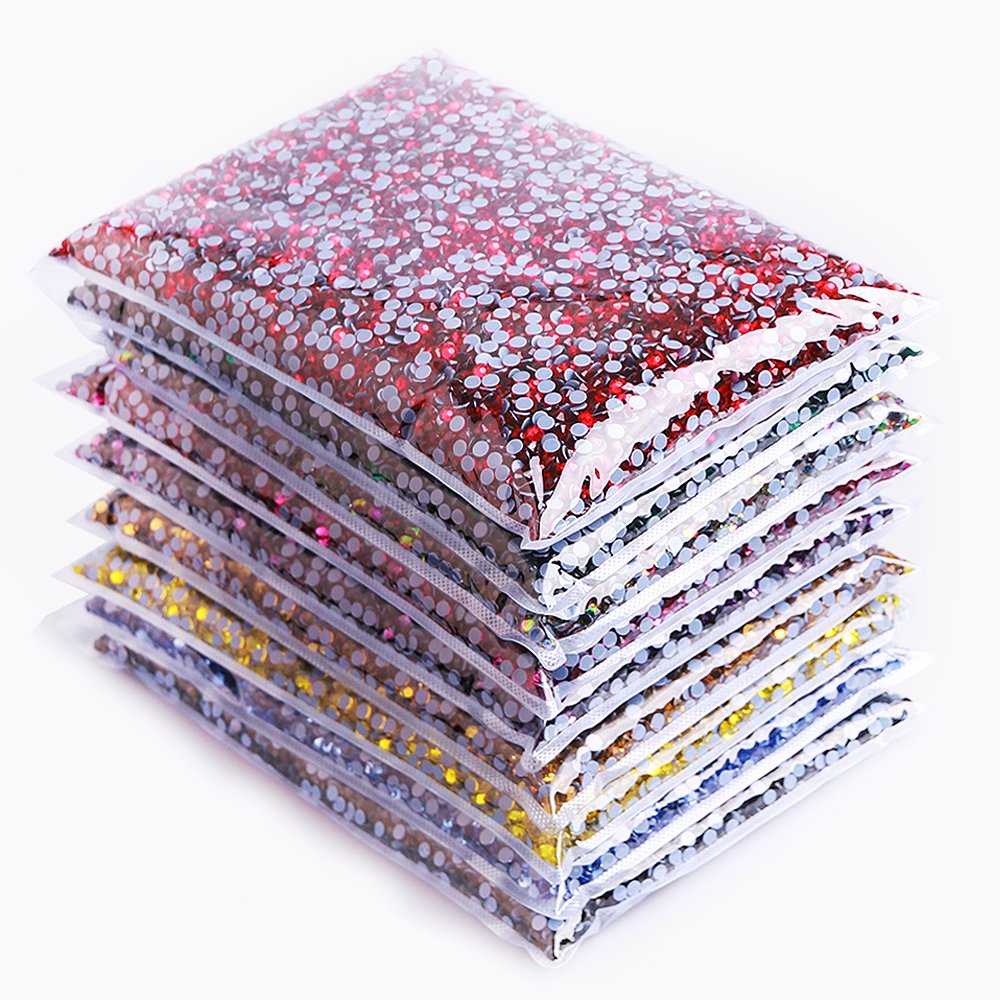
Get a free sample pack and factory pricing – WhatsApp us at +86 13692450325 or request a quote to check stock, bulk pricing, and lead time for your order.
Related reading: