
The Rise of Custom Rhinestone Athleisure as a Profitable Niche for 2025
The Rise of Custom Rhinestone Athleisure: A Profitable Niche for 2025
The fashion world is witnessing a seismic shift where comfort no longer competes with luxury—it merges with it. As we look toward 2025, one niche is standing out for its explosive growth and high-profit margins: Custom Rhinestone Athleisure. What started as a niche trend in dancewear and gymnastics has officially crossed over into mainstream high-street fashion, influenced by celebrity gym-to-dinner looks and the resurgence of Y2K aesthetics. Custom athleisure production routes through our OEM and ODM service.
For B2B manufacturers, garment decorators, and boutique owners, this trend represents a massive opportunity. However, it isn’t just about sticking crystals on leggings; it’s an art form that requires technical precision and a deep understanding of modern performance fabrics. In this comprehensive guide, we will explore why rhinestone-embellished athleisure is the next big thing, which products are driving the demand, and the technical secrets to applying hotfix stones to high-spandex fabrics without compromising quality.
The Evolution of Athleisure: From Utility to Luxury
Athleisure has dominated the garment industry for over a decade, but the “luxury” segment of this market is currently undergoing a transformation. Consumers are moving away from plain, generic athletic wear in favor of statement pieces that express individuality. This “Bling-thleisure” movement is driven by several factors:
- The Personalization Boom: Modern consumers want products that feel unique to them. Custom rhinestone logos, initials, and patterns provide that bespoke feel.
- Social Media Influence: On platforms like TikTok and Instagram, “sparkle” translates exceptionally well to video. Rhinestones catch the light during a workout or a stroll, making the garment highly “Instagrammable.”
- Premiumization: A basic pair of black leggings might retail for $30. Add $5 worth of high-quality hotfix rhinestones and a professional design, and the perceived value jumps to $80 or even $120.
For wholesale suppliers and custom apparel businesses, the message is clear: the market is ready for high-end, embellished performance wear. The focus for 2025 is on three core categories: yoga pants, sports bras, and hoodies.
Key Product Focus: Where the Sparkle Meets the Sweat
1. Rhinestone-Embellished Yoga Pants and Leggings
Yoga pants are the backbone of the athleisure industry. In 2025, we are seeing a move toward more intricate and daring rhinestone placements. It’s no longer just a small logo on the waistband. Trends include:
- Side-Seam Accents: Vertical lines of SS10 or SS16 rhinestones running down the outer leg to create an elongating effect.
- Calf and Ankle Details: Intricate “filigree” or geometric patterns around the lower leg that flash during movement.
- Waistband Branding: Large, bold rhinestone branding across the back of the waistband, a favorite for “merch” lines.
2. The Statement Sports Bra
Sports bras have transitioned from being “undergarments” to being the main top in many fitness outfits. Rhinestone embellishment here focuses on the straps and the “racerback” area. Because sports bras are often made of thicker, multi-layer fabrics, they offer a stable base for larger stones like SS20, which can be used to create high-impact designs that withstand the rigors of a HIIT workout.
3. Elevated Hoodies and Zip-Ups
The “after-gym” look is incomplete without a hoodie. Rhinestone hoodies are a staple of the “cozy luxury” aesthetic. We are seeing a high demand for oversized hoodies with full-back rhinestone murals. These pieces are particularly popular in the B2B sector for fitness influencers and boutique gym brands looking to offer premium merchandise to their members.
The Technical Challenge: Rhinestones on High-Spandex (Lycra) Fabrics
While the market potential is enormous, the technical execution is where many businesses struggle. Applying hotfix rhinestones to high-performance fabrics like yoga pants presents a unique challenge: Elasticity vs. Adhesion.
Yoga pants and sports bras are typically made from a blend of polyester or nylon with a high percentage of Spandex (often referred to by the brand name Lycra). This fabric is designed to stretch up to 5 to 7 times its original length and then snap back. Standard hotfix glue, however, is designed to be rigid once it cools.
The Problem: The “Cracking” and “Popping” Effect
If you apply a standard hotfix stone to a spandex-heavy fabric, the following usually happens:
- The heat required to melt the glue can scorch or “melt” the synthetic fibers of the garment.
- When the wearer puts on the leggings and the fabric stretches, the rigid glue bond cannot expand.
- The glue either cracks, causing the stone to fall off, or it creates a “pucker” in the fabric, ruining the smooth silhouette of the garment.
To succeed in this niche, you must master the science of the Flexible Bond.
Technical Solution: How to Apply Hotfix Stones to Spandex Without Cracking
As a B2B manufacturer specializing in hotfix rhinestones, we have spent years perfecting the application process for performance wear. Here is the professional protocol for 2025:
1. Selection of the Right Glue (The “Elastic” Formula)
Not all hotfix glues are created equal. For athleisure, you must use stones with a high-quality, flexible adhesive. Look for “low-melt” or “elastic-friendly” glues. These are formulated to remain slightly pliable even after curing, allowing the bond to “wiggle” slightly as the fabric fibers move. Grey or transparent glues from reputable manufacturers often have better performance on synthetics than the cheaper, yellowish variants.
2. Heat Press Settings: Precision is Key
Synthetics are heat-sensitive. A temperature that is too high will cause “burn marks” or “shine marks” on the fabric. A temperature that is too low won’t fully activate the glue.
- Recommended Temp: 150°C to 160°C (300°F – 320°F).
- Time: 12 to 15 seconds.
- Pressure: Medium. Excess pressure can force the glue too deep into the fibers, leaving a flat, unattractive look, while too little pressure won’t create a secure bond.
3. The “Pre-Stretch” Technique
This is the industry’s best-kept secret. When applying rhinestones to highly elastic areas (like the calf of a legging), it is often beneficial to slightly stretch the fabric before pressing. You can do this by using a specialized platen or inserting a foam board. By applying the stones while the fabric is under about 10-15% tension, the stones will sit closer together when the fabric relaxes, and the “gap” created during a full stretch will be less likely to snap the glue bond.
4. Using a Protective Barrier
Always use a Teflon sheet or a clean piece of parchment paper between the heat press and the rhinestones. This protects the spandex fibers from direct contact with the metal plate, preventing that dreaded “melted” look.
5. The Cooling Phase
Never peel the transfer tape immediately. For athleisure, a Cold Peel is mandatory. Let the garment cool completely. This allows the glue to set and “grip” the synthetic fibers. Peeling while warm can disturb the bond before it has fully hardened.
Design Strategy: 2025 Trends for Athleisure Decorators
To maximize your profits in this niche, your designs must be as modern as the fabrics they sit on. In 2025, we are seeing three distinct design directions:
The “Minimalist Luxe”
This uses very small stones (SS6 or SS8) in colors that match the fabric (e.g., Jet Black stones on Black leggings). The effect is a subtle, shimmering texture that only reveals itself when the wearer moves. This is highly popular for premium gym brands that want to maintain a sophisticated image.
The “Retro Sport”
Drawing from 90s and early 2000s tracksuits, this trend uses bold, contrasting colors. Think Cobalt Blue stones on White hoodies or Neon Pink stones on Navy bras. Large, blocky fonts for brand names are the go-to here.
The “Organic Flow”
Instead of rigid lines, these designs mimic the musculature of the body. Rhinestones are placed in “swirls” around the quadriceps or following the curve of the shoulder blades. This not only looks beautiful but also allows for better fabric movement as the stones are not concentrated in one large, stiff block.
B2B Economics: Why This Niche is a Goldmine
From a business perspective, custom rhinestone athleisure offers some of the highest ROIs in the garment decoration industry. Let’s look at the numbers for a B2B setup:
- Wholesale Garment Cost: A high-quality wholesale yoga pant costs roughly $8-$12.
- Rhinestone Cost: A medium-density design using 500-800 stones (SS10) costs about $1-$3 when bought in bulk (per gross/bag).
- Labor/Overhead: Using a heat press and pre-made transfers, the application takes less than 2 minutes.
- Total Cost: ~$15.
- Wholesale Sale Price: $30-$45.
- Retail Price: $70-$120.
The margins are significantly higher than traditional screen printing or vinyl heat transfers. Because rhinestones are perceived as “luxury,” you can charge a premium that far exceeds the material cost.
Future-Proofing Your Business: Sustainability and Innovation
As we move through 2025, two additional factors will define the successful rhinestone athleisure brand: Sustainability and Durability.
Eco-Friendly Crystals
The market is shifting toward lead-free rhinestones. B2B buyers are increasingly asking for “Eco-friendly” certifications. Ensuring your wholesale source provides lead-free, high-index glass stones will put you ahead of the competition and satisfy the requirements of major retail chains.
Washability and Longevity
Performance wear is washed frequently. To ensure your custom pieces last, always advise your clients (or include in your branding) that rhinestone garments should be washed inside out on a cold cycle and never tumble dried. The heat of a dryer is the number one enemy of hotfix glue; it can re-melt the adhesive and cause stones to migrate or fall off.
The Science of Color Psychology in 2025 Athleisure
In 2025, the color palette for athleisure is moving beyond just “bright and bold.” We are seeing a shift towards sophisticated, tonal, and earthy hues that evoke a sense of grounding and wellness. The choice of your rhinestone color should complement these trends to create a harmonious, high-end look.
- Wellness Neutrals: Shades of sage green, warm terracotta, and “oatmeal” are dominating yoga studios. For these, use Crystal AB or Champagne rhinestones. These stones offer a subtle, multi-colored shimmer that enhances the earthy base without overpowering it.
- Digital Lavender: A continuing trend from 2024 into 2025, this soft purple is perfect for Light Amethyst or Violet rhinestones. It creates a calming, “zen” aesthetic that is highly popular for meditation and yoga sets.
- The “Midnight Glitz”: Deep navies, charcoal greys, and classic blacks remain staples. Here, the trend is using Hematite or Jet Lead stones for a “stealth wealth” sparkle—a look that says luxury without being overtly flashy.
Scaling Your Production: Machine vs. Hand Application
As your business grows in the rhinestone athleisure niche, you’ll need to decide between hand-setting and machine-aided production. Each has its place in the B2B landscape of 2025.
Hand-Setting for Bespoke Luxury
For ultra-high-end boutiques or celebrity one-offs, hand-setting stones using a hotfix applicator wand remains the gold standard. It allows for absolute precision, especially around complex areas like the seams of a sports bra or the intricate mesh panels of a performance legging. However, it is labor-intensive and difficult to scale.
Ultrasound and Heat Press for Mass Customization
For larger B2B orders—such as 500 units for a gym chain—automated or semi-automated processes are necessary.
- Rhinestone Templates: You can create templates using a vinyl cutter or a specialized template-making machine. The stones are brushed into the template, transferred to a heat-stable tape, and then applied to the garment in one press. This is the most efficient way to maintain consistency across hundreds of units.
- Ultrasonic Rhinestone Setting: This technology uses ultrasonic waves to melt the glue instead of traditional heat plates. It is particularly effective for spandex because it applies heat very locally to the stone itself, minimizing the risk of heat damage to the surrounding synthetic fibers.
Case Study: The Fitness Influencer Merch Model
To understand the profitability of this niche, let’s look at a growing trend for 2025: the “Influencer Limited Drop.” Many boutique fitness influencers are moving away from simple screen-printed t-shirts toward high-end, embellished athleisure. One client of ours, a yoga instructor with 500k followers, launched a “Diamond Edition” legging line. By using SS10 hotfix stones for her logo and a side-leg “constellation” pattern, she was able to sell out 1,000 pairs at $115 each, with a production cost of only $22 per pair. The rhinestone element was the primary differentiator that allowed her to charge a 400% markup while still offering value to her community.
The Technical Deep Dive: Why Spandex Glue Cracking Happens at the Molecular Level
To truly master the application of stones to spandex, one must understand what happens during the bonding process. Spandex (elastane) is a synthetic fiber known for its exceptional elasticity. It is made of a long-chain polymer called polyurethane. When you apply heat, the polyurethane fibers can “relax” or even slightly melt. If the hotfix glue is too rigid, it creates a “stiff spot” on a flexible surface.
When the fabric is stretched, the stress is concentrated at the edges of the glue bond. A rigid glue will simply snap at these points. Our 2025-grade flexible adhesives are engineered with a higher percentage of elasticizing agents that allow the glue matrix to stretch alongside the polyurethane fibers. This ensures that even when a pair of yoga pants is pulled tight during a deep lunge or a “downward dog” pose, the stones remain securely attached and the fabric maintains its structural integrity.
Maintaining the Sparkle: 2025 Wash and Care Protocols
Because the bond between hotfix glue and spandex is more delicate than on cotton, your customers must be educated on proper care. We recommend including a “Care Card” with every custom garment.
- Turn Inside Out: This protects the stones from hitting the drum of the washing machine.
- Mesh Laundry Bag: For items with heavy stone work, a laundry bag is a must.
- No Fabric Softeners: Chemical softeners can actually break down the adhesive over time, leading to “stone loss.”
- Air Dry Only: The high heat of a commercial dryer is the most common cause of hotfix failure. Always advise air-drying for embellished performance wear.
Final Thoughts for B2B Entrepreneurs
The custom rhinestone athleisure niche is more than just a fashion statement—it’s a high-growth business opportunity for 2025. By combining the right materials, the correct technical application, and an eye for current design trends, you can offer a product that stands out in a crowded market. Whether you are a small studio or a large-scale manufacturer, the ability to successfully add “bling” to spandex is a skill that will pay dividends for years to come.
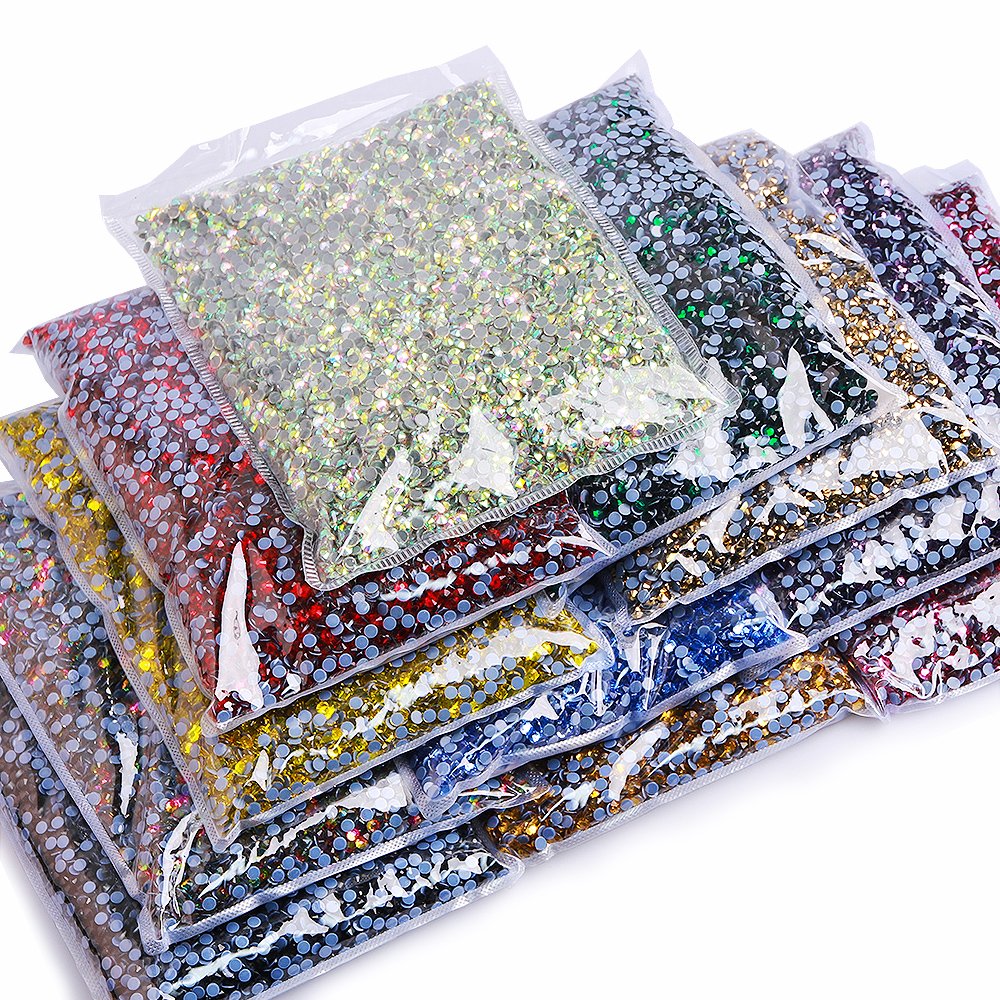
Get a free sample pack and factory pricing – WhatsApp us at +86 13692450325 or request a quote to check stock, bulk pricing, and lead time for your order.
Related reading: