
Extreme Heat and Arid Climate Adhesive Durability How German Hotmelt Glue Prevents Stone Peeling in Middle East Wear
In the luxury modest wear and couture ateliers across Dubai, Abu Dhabi, Riyadh, and Jeddah, stone shedding is an expensive and recurring failure. When an intricately embellished abaya, festive kaftan, or bridal galabiya loses its crystals after only a few outings, the financial and reputational fallout falls directly on the apparel brand. While consumer discussions and tailoring forums routinely advise hand-washing or spot-gluing with temporary craft adhesives, commercial garment manufacturers cannot rely on end-user caution. Stone retention must be engineered into the component chemistry from the outset.
The Arabian Gulf represents one of the harshest environments on earth for heat-activated textile adhesives. Between May and October, outdoor temperatures across the GCC routinely exceed 45°C to 50°C. When dark textiles absorb ambient solar radiation, garment surface temperatures climb significantly higher. At Guangzhou Yiben E-Commerce Co., Ltd., drawing on our 12 years of hotfix rhinestone manufacturing experience, we have engineered our crystal backing systems specifically to withstand extreme arid microclimates.
By formulating our crystal line with an imported, German-engineered industrial hotmelt grey adhesive, we provide fashion houses with a permanent bonding solution that resists thermal softening, chemical creeping, and moisture-induced fatigue. When combined with comprehensive Gulf luxury abaya hotfix crystal sourcing, mastering the polymer mechanics of your adhesive ensures your collections maintain flawless visual integrity regardless of climate extremes.
—
Why Rhinestones Peel from Abayas and Kaftans in Extreme Desert Climates
Solar Absorption and Surface Heat Accumulation on Jet-Black Textiles
To understand why commercial rhinestones fail across the Middle East, one must examine the thermal dynamics of regional modesty wear. The vast majority of abayas are fabricated from jet-black textiles, including Korean Nida, Japanese crepe, Nada, and polyester chiffons. Black dyes absorb roughly 95% of incoming visible light and infrared radiation.
When a wearer walks outdoors under direct midday sun in Riyadh or Dubai, ambient air at 48°C quickly drives garment surface temperatures past 60°C to 65°C. For garments left inside parked vehicles during summer months, interior cabin temperatures can soar beyond 75°C. Under this intense heat, standard hotfix adhesives undergo thermal softening. As the adhesive softens, its shear strength drops toward zero, allowing the crystal to shift, slide across the weave, and peel away under the slightest mechanical friction from an arm swing or handbag strap.
| Micro-Environment | Ambient Temp | Black Fabric Surface Temp | Standard Adhesive Physical State |
|---|---|---|---|
| Air-Conditioned Boutique | 20°C – 22°C | 20°C – 22°C | Solid, glassy |
| Direct Midday Desert Sun | 46°C – 50°C | 62°C – 68°C | Rubbery, viscous creep |
| Parked Vehicle Interior | 55°C – 60°C | 72°C – 78°C | Molten, complete peel |
| Evening Banquet Hall | 22°C – 24°C | 22°C – 24°C | Re-solidified with dirt |
Dust Intrusion and the Viscous Creep Mechanism
When an adhesive transitions from its rigid glassy phase into a soft rubbery phase, its surface becomes tacky. In arid desert environments, fine airborne mineral dust and silica particles are perpetually suspended in the atmosphere.
As the softened glue edges expand slightly around the crystal base, dust particles embed permanently into the exposed perimeter. This dust contamination prevents the adhesive from re-bonding when the garment returns indoors. Furthermore, dust ingress creates a microscopic wedge between the textile filament and the glue bed, accelerating progressive peel failure with every wear cycle.
—
Polymer Chemistry Analysis Comparing EVA Adhesive and German Polyamide Grey Glue
The Structural Vulnerability of Ethylene-Vinyl Acetate Formulations
The primary culprit behind widespread stone failure is ethylene-vinyl acetate (EVA). Low-cost rhinestones traded through wholesale middlemen universally feature clear or cloudy-white EVA hotmelt backings. EVA is an inexpensive commodity thermoplastic designed for low-melting-point applications, such as basic cotton leisurewear and craft hobby projects.
EVA polymers possess a low glass transition temperature and a Vicat softening point typically spanning 42°C to 48°C. Because their molecular chains are bound primarily by weak van der Waals forces without strong intermolecular crystalline cross-links, thermal energy easily disrupts the polymer lattice. When exposed to 50°C desert heat, EVA polymers undergo viscous creep: the molecular chains slide past one another under minimal load, leading to spontaneous stone release.
High-Temperature Modified Polyamide Engineering
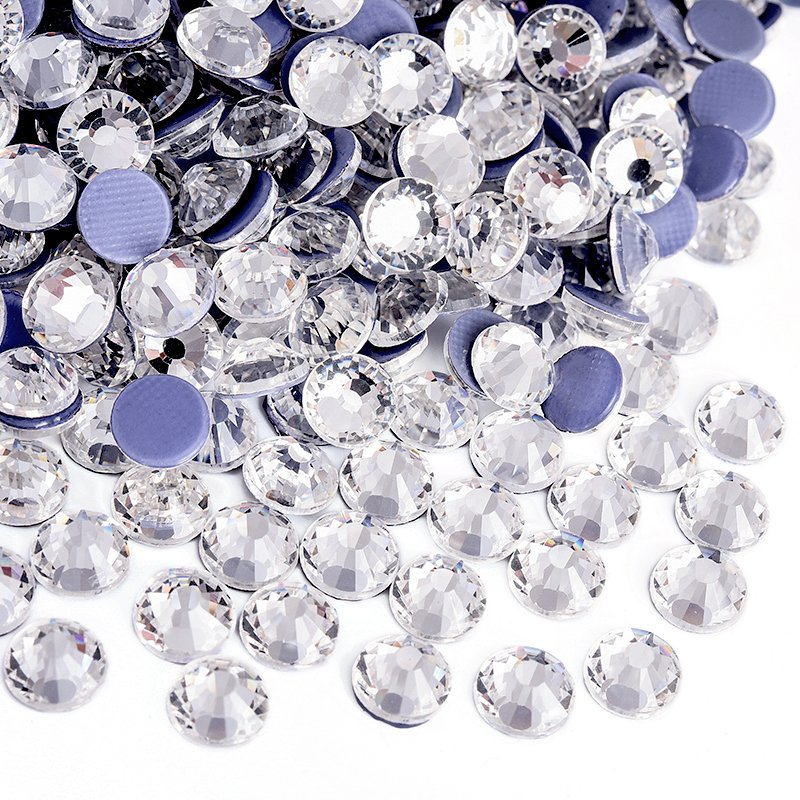
To eliminate thermal creep entirely, our manufacturing line utilizes an imported, high-grade German-engineered modified polyamide hotmelt formulation. Characterized by its distinctive clean grey appearance, this adhesive operates on fundamentally superior polymer chemistry.
Polyamides incorporate recurring amide linkages (-CO-NH-) along their polymer backbone. These linkages facilitate extensive intermolecular hydrogen bonding, forming tightly packed crystalline domains within an amorphous matrix. The resulting molecular structure delivers exceptional thermal stability: an activation melting point between 150°C and 170°C, a Vicat softening threshold of 88°C to 92°C, and complete thermal degradation resistance exceeding 200°C.
| Polymer & Thermal Attribute | Standard Commercial White EVA | German Modified Polyamide Grey Glue |
|---|---|---|
| Polymer Base Chemistry | Ethylene-Vinyl Acetate Copolymer | High-Performance Modified Polyamide |
| Intermolecular Bonding Type | Weak van der Waals dispersion | Dense Inter-Chain Hydrogen Bonds |
| Vicat Softening Point (ASTM D1525) | 44°C – 48°C (Fails in GCC sun) | 88°C – 92°C (Desert Heat Resistant) |
| Activation Melting Temperature | 110°C – 125°C | 150°C – 170°C (160°C Target Press) |
| Thermal Degradation Threshold | 155°C (Prone to scorching) | >200°C (No scorching or charring) |
| Shear Adhesion Failure Temp (SAFT) | 52°C | 118°C (Extreme Thermal Hold) |
| Tensile Peel Strength on Nida | 1.4 N/mm | 4.8 N/mm (Permanent Mechanical Lock) |
| Creep Displacement at 65°C | >2.5 mm (Dislodges easily) | <0.05 mm (Zero detectable movement) |
| UV Degradation & Yellowing | High (Yellows within 30 days) | Zero (Maintains neutral grey hue) |
Because its Vicat softening temperature (88°C–92°C) sits well above the highest possible solar surface temperatures encountered on black garments (65°C–70°C), our German grey adhesive remains rigid, crystalline, and mechanically immovable under intense Gulf sunlight.
—
Thermal Shock and Condensation Resistance Across 50 Degree and 18 Degree Cycles
The Thermal Shock Dynamic in GCC Daily Life
Garments worn in the Gulf region do not experience static thermal environments; they undergo severe and frequent thermal cycling. A typical consumer routine involves moving from a 19°C air-conditioned villa into a 48°C outdoor driveway, riding in a 22°C vehicle, and attending a 20°C hotel ballroom.
Every dramatic shift in temperature causes differential thermal expansion between the crystal, the adhesive layer, and the textile substrate: – Glass crystal expands and contracts at a low thermal expansion coefficient ($\alpha \approx 8.5 \times 10^{-6} \text{ K}^{-1}$). – Synthetic polyester microfibers expand at a moderate rate ($\alpha \approx 15 \times 10^{-6} \text{ K}^{-1}$). – Commodity EVA adhesive expands at an extremely high rate ($\alpha \approx 180 \times 10^{-6} \text{ K}^{-1}$).
Because generic EVA expands more than twenty times faster than the glass stone it supports, repeated thermal cycling creates immense internal shear stress at the stone-to-glue interface. Over a matter of weeks, the glue ruptures internally, causing the stone to fall away cleanly while leaving a useless spot of dead glue on the garment.
Moisture Condensation and Hydrolytic Stability
When entering a refrigerated indoor space from humid coastal heat (such as summer in Dubai Marina, Abu Dhabi Corniche, or Jeddah Promenade), ambient humidity condenses on garment surfaces. Water molecules penetrate the microscopic voids between the adhesive and fabric filaments.
Generic EVA formulations are susceptible to hydrolytic plasticization: absorbed moisture weakens the polymer bonds, turning the adhesive gummy and brittle. In contrast, our German polyamide formulation is synthesized with hydrophobic aliphatic segments that resist moisture absorption. Even under accelerated 100-cycle thermal shock testing, the adhesive maintains its original bond strength without delamination.
| Thermal Shock Cycles (48°C 4h / 18°C 4h) | Initial | Cycle 25 | Cycle 50 | Cycle 75 | Cycle 100 |
|---|---|---|---|---|---|
| Standard White EVA Adhesive | 1.45 N/mm | 0.92 N/mm | 0.51 N/mm | 0.28 N/mm (Fail) | 0.12 N/mm (Lost) |
| German Industrial Polyamide Grey Glue | 4.85 N/mm | 4.78 N/mm | 4.70 N/mm | 4.62 N/mm | 4.55 N/mm (Solid) |
| Bond Retention Percentage | 100% | 98.5% | 96.9% | 95.2% | 93.8% |
—
Shop Floor Heat Application Parameters for Maximum Fiber Anchorage
Achieving Microfiber Penetration with Controlled Rheology
Superior adhesive chemistry cannot compensate for incorrect shop-floor application. To create a permanent mechanical bond, the hotmelt adhesive must melt completely, transition to an optimal fluid viscosity, and be driven into the interstitial gaps between individual textile filaments under pneumatic pressure.
When properly heated to 160°C, our German grey glue achieves an ideal melt flow index. Under 3.0 to 3.5 bar of pressure, it encapsulates the microfiber bundles without soaking completely through to the garment’s reverse side. As it cools, it forms a mechanical interlock that cannot be separated without tearing the textile fibers themselves.
| Fabric Classification | Heat Temp | Dwell Time | Pneumatic Pressure | Release Protocol |
|---|---|---|---|---|
| High-Density Korean Nida | 155°C – 160°C | 11 – 13 s | 3.0 – 3.5 bar | Full Cold Peel |
| Japanese Chiffon / Crepe | 150°C – 155°C | 9 – 11 s | 2.0 – 2.5 bar | Full Cold Peel |
| Heavy Weight Nada Poly | 160°C – 165°C | 12 – 14 s | 3.5 – 4.0 bar | Full Cold Peel |
| Pure Silk Organza Blend | 145°C – 150°C | 8 – 10 s | 1.8 – 2.2 bar | Reverse Heat Press |
The Imperative of the Cold Peel Protocol
A frequent source of operator error in high-volume production workshops is hot peeling. When transfer carrier paper is removed while the adhesive remains in its molten or semi-molten state (above 70°C), mechanical tension stretches the glue bond. This creates thin filament strings and leaves the edge stones structurally undermined.
Ateliers must enforce a strict cold peel rule: transfer sheets must cool below 35°C before carrier film removal. At this threshold, the polyamide molecular chains have fully re-crystallized into their hardened matrix, guaranteeing maximum initial bond strength.
—
Empirical Laboratory Testing Under ISO 6330 and High Thermal Shear Standards
The ISO 6330 Industrial Laundering Protocol
To prove durability beyond theoretical chemistry, our production batches undergo rigorous laboratory washing and mechanical peel testing. Embellished test swatches of premium black Nida fabric undergo 50 continuous laundering cycles in accordance with ISO 6330 commercial standards (Method 4M, 40°C wash temperature, non-phosphate reference detergent, gentle agitation).
Across multiple consecutive production audits, our K9 crystals backed with German grey adhesive demonstrate a stone loss rate of less than 2% after 50 cycles. For ateliers seeking detailed mechanical test reports and tensile pull charts, review our comprehensive engineering guide on ISO 6330 industrial laundering glue standards.
Shear Adhesion Failure Temperature (SAFT) Benchmarks
In standard industrial adhesive qualification (ASTM D4498), the Shear Adhesion Failure Temperature (SAFT) measures the exact temperature at which an adhesive bond ruptures under constant shear weight. A 1 kg static load is applied to a bonded crystal while the ambient temperature increases by 0.5°C per minute: – Standard white EVA hotfix adhesives experience catastrophic rupture at 52°C. – Middle-tier clear DMC adhesives fail at 68°C. – Yiben German-engineered grey polyamide adhesive maintains structural integrity up to 118°C.
Because summer temperatures on black abayas never surpass 75°C under the most severe real-world conditions, our adhesive provides an operational safety margin of over 40°C, guaranteeing zero thermal failure.
—
Frequently Asked Questions About Hotfix Adhesive Performance in Arid Climates
Why does grey glue appear cleaner on dark luxury fabrics than clear or white glue?
Clear and white adhesives often dry with a cloudy, opaque halo around the base of the stone, creating an unappealing plastic sheen on pitch-black Nida or dark crepe fabrics. Our German grey adhesive is color-matched to the deep undertones of premium dark textiles. When pressed correctly, any microscopic glue bead along the crystal perimeter blends invisibly into the dark weave, enhancing the clean, couture look of the garment.
Can hotfix crystals backed with German grey glue withstand dry cleaning solvents?
Yes. Polyamide polymers exhibit remarkable resistance to standard dry cleaning hydrocarbons and perchloroethylene solvents. While generic EVA glues swell, soften, and dissolve when exposed to dry cleaning chemicals, our modified polyamide backing remains chemically inert, allowing luxury abayas and evening kaftans to be dry cleaned without stone loss.
How does air shipment to Dubai and Riyadh protect glue integrity compared to ocean freight?
Ocean shipping containers traveling through tropical equatorial waters and the Persian Gulf frequently endure interior container temperatures exceeding 60°C to 70°C for weeks at a time. Extended heat exposure in sea containers can cause pre-activation or moisture degradation of standard adhesives. By shipping our bulk orders via express air freight (DHL, FedEx, or dedicated air lines arriving in 3 to 5 business days), adhesive backings arrive in peak condition.
What is the shelf life of hotfix stones stored in Middle Eastern warehouses?
When stored in standard packaging away from direct sunlight at warehouse temperatures below 35°C, our German grey glue hotfix crystals maintain full adhesive reactivity for over 36 months. We ship standard bulk cartons with interior moisture barrier bagging to prevent ambient humidity absorption during summer warehousing.
What should an atelier do if fabric scorch marks appear around hotfix stones?
Scorch marks or glossy circular impressions occur when metal heat platens make direct contact with synthetic polyester microfibers at high pressure. Ateliers should immediately adopt reverse pressing (applying the heating element to the back of the fabric) or place a 2 mm to 3 mm high-elastic silicone rubber mat between the heat platen and the transfer carrier to distribute pressure evenly.
—
—
Sourcing Factory Direct Rhinestones for the Middle East Fashion Sector
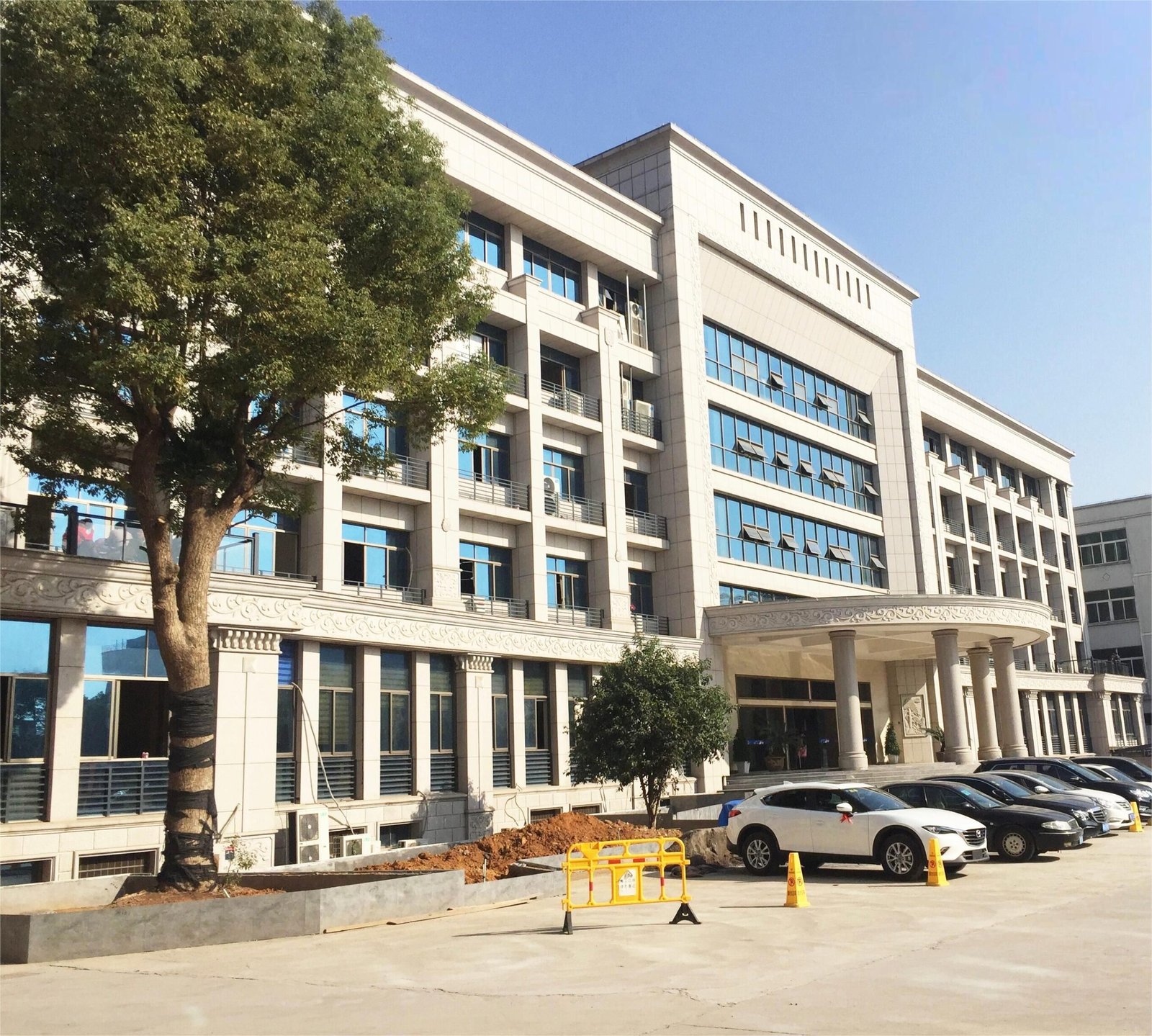
Eliminating stone shedding requires uncompromising manufacturing discipline and materials engineering. As a Guangzhou-based factory with 12 years of specialized production experience, Guangzhou Yiben E-Commerce Co., Ltd. provides Gulf design houses, ateliers, and apparel exporters with industrial-grade crystal components:
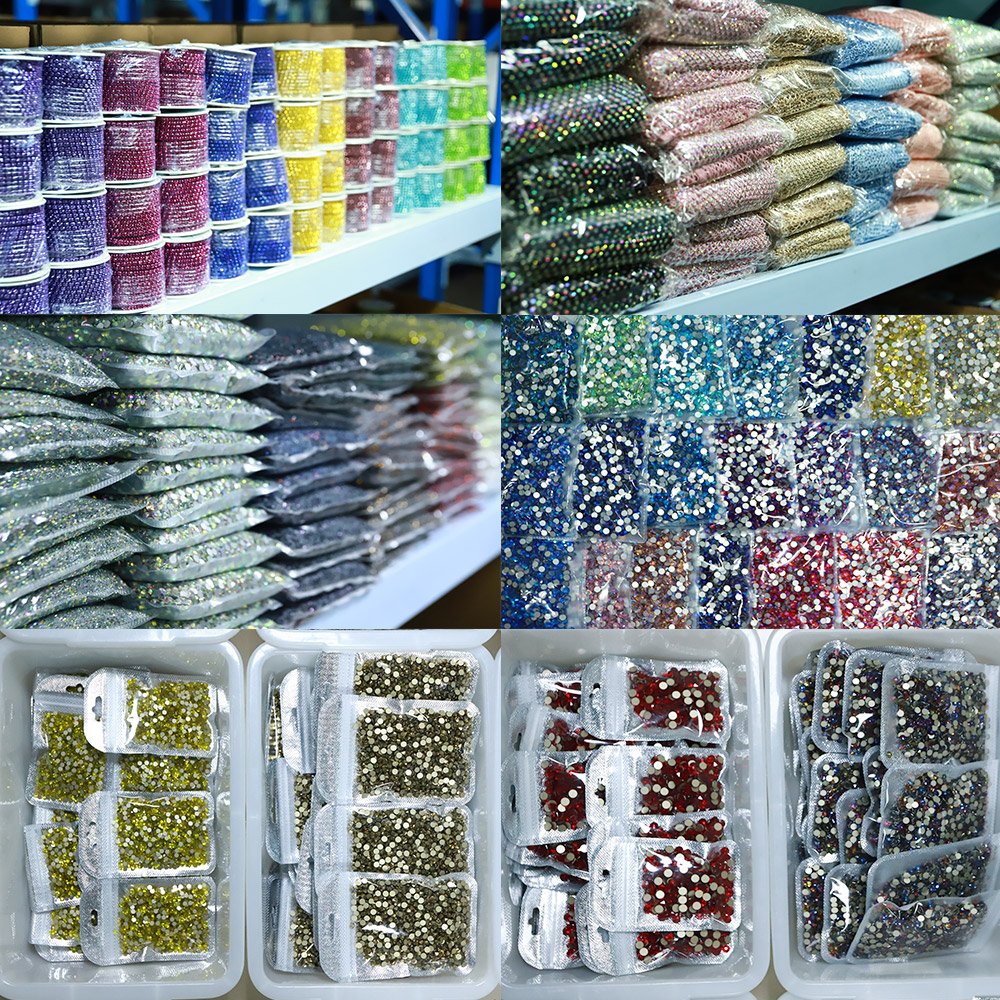
– 100% High-Purity K9 Optical Crystal: Delivering a refractive index of ~1.9, 12 to 14 precision diamond facets, and Mohs hardness of 6.0 to 6.5 for brilliant scintillation against dark fabrics. – German-Engineered High-Thermal Grey Adhesive: Pre-coated with modified polyamide hotmelt engineered for 88°C+ Vicat stability and verified ISO 6330 laundering durability (<2% loss across 50 cycles). - Comprehensive Size Spectrum & Stock Availability: Covering SS6 through SS30 across 400+ stock shades, with custom Pantone matching and vector motif production available. Catalog stock items require a low minimum order quantity of just 2 packets per color and size (10 gross per packet, or 20 gross total), with stock orders dispatched the same day payment clears and custom production delivered in 7 to 15 days. – Rapid Global Air Express Logistics & Customs Clearance: Dispatched via DHL, FedEx, and priority air couriers directly to Dubai, Abu Dhabi, Sharjah, Riyadh, and Jeddah in 3 to 5 business days, fully documented under international HS Code 7018.10.00 for seamless port clearance.
To master volume procurement strategies, review our global operational handbook on sourcing bulk hotfix rhinestones directly from China.
Contact our technical sales division today via WhatsApp at `+86 13692450325` or email `rhinestonewholesale8@gmail.com` to request complimentary swatch cards, submit your production specifications, or obtain laboratory test samples calibrated for your regional collections.
Need a size or color recommendation for your next order? Send us your fabric type, design, and target price — we reply within one business day. WhatsApp +86 13692450325 · rhinestonewholesale8@gmail.com