
High Yield SS10 and SS16 Rhinestones for Saree and Lehenga Embroidery Factories Machine Feeding and Precision Sorting
Across the prominent textile and apparel manufacturing belts of India, traditional ethnic wear production represents an extraordinary fusion of heritage craftsmanship and high-throughput industrial engineering. In Surat, the undisputed textile capital of Gujarat, thousands of automated embroidery units run around the clock weaving intricate motifs across miles of georgette, chiffon, and art silk sarees. In Delhi, Jaipur, and Mumbai, specialized couture export houses and bridal ateliers craft breathtaking wedding lehengas, heavily embellished dupattas, and ornate festive gowns designed for global Indian diaspora communities and international luxury boutiques.
In this high-volume apparel manufacturing environment, decorative crystals are not applied by hand one stone at a time. The modern Indian ethnic wear factory relies on high-speed multi-head computerized embroidery machines equipped with automated rhinestone setting attachments, high-frequency ultrasonic gemstone affixing systems, and multi-color vacuum pick-and-place motif layout tables. In these mechanized setups, hotfix rhinestones are fed through vibrating hoppers and narrow gravity delivery tracks at speeds exceeding 180 to 220 stones per minute per operating head. A single production floor operating 20 multi-head machines can consume millions of crystals every week.
For factory directors, production supervisors, and sourcing executives in Surat and Delhi, production profitability hinges directly on two dominant crystal calibers: SS10 (measuring 2.70 to 2.90 mm) and SS16 (measuring 3.80 to 4.00 mm). These two sizes form the core embellishment architecture of Indian sarees and bridal lehengas. However, procuring these calibers through regional trim merchants and open-market traders frequently introduces severe operational bottlenecks. Randomly mixed crystal lots with fluctuating diameters, uneven stone heights, and brittle, low-grade adhesive backings cause constant mechanical chute jams, nozzle vacuum failures, and catastrophic fabric scorching on delicate silks.
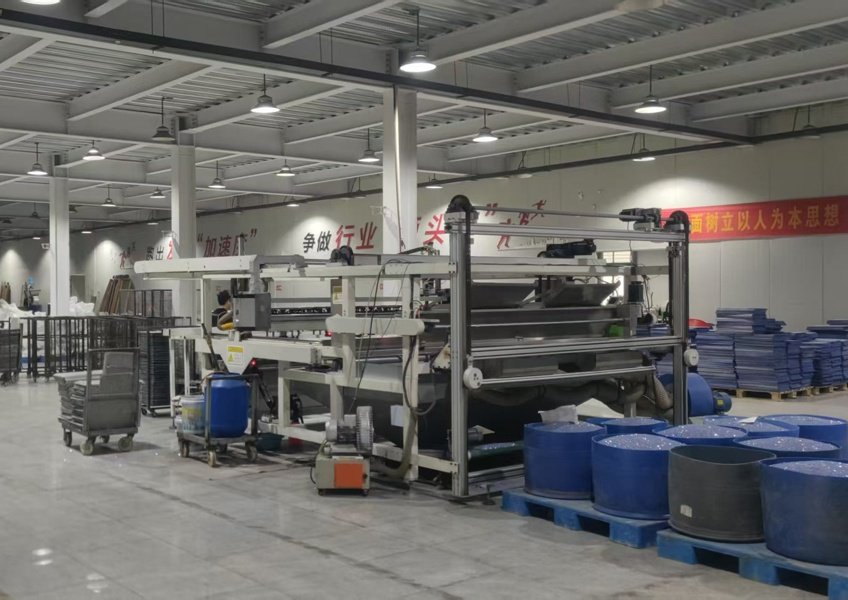
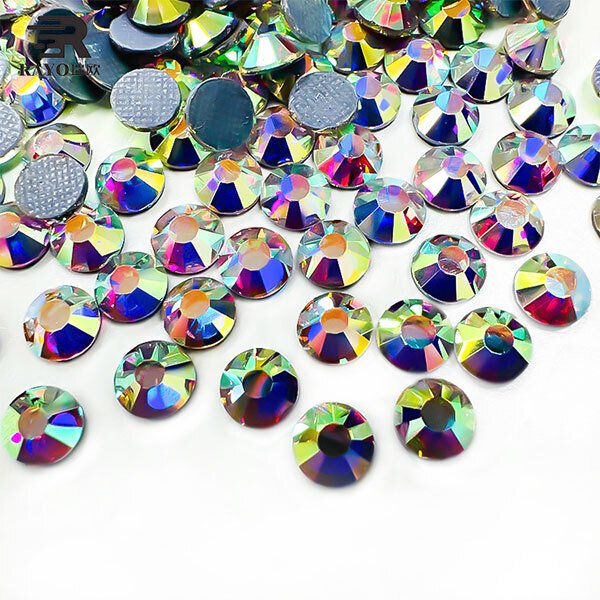
At Guangzhou Yiben E-Commerce Co., Ltd., we bring 12 years of dedicated hotfix rhinestone manufacturing experience directly to Indian garment and embroidery factories. By engineering 100% K9 optical crystal glass with precision robotic sizing and fusing it with German-formulated elastic grey hotmelt adhesive, we deliver high-yield SS10 and SS16 stones optimized for uninterrupted automatic machine feeding. Exploring our comprehensive bulk hotfix rhinestone supply for garment factories demonstrates how sourcing directly through verified direct China rhinestone manufacturing channels protects automated line efficiency, eliminates intermediary price inflation, and ensures flawless batch-to-batch color fidelity for high-stakes wedding season production runs.
—

Why Indian Saree and Lehenga Embroidery Factories Prioritize SS10 and SS16 Rhinestones
The Functional Architecture of Ethnic Wear Embellishment
Indian ethnic garments demand an intricate visual rhythm that balances continuous surface brilliance with garment drape and wearability. A traditional bridal lehenga skirt can measure up to 6 meters in flare circumference, while a classic formal saree spans 5.5 meters in length. Creating visual density across these vast expanses requires a deliberate pairing of crystal calibers:
| Caliber Size | Metric Diameter | Visual Placement | Structural and Engineering Function |
|---|---|---|---|
| SS10 | 2.70 – 2.90 mm | Field backfills, all-over butis, jaal scrollwork | Delivers dense micro-sparkle without adding excessive garment weight or stiffening drape |
| SS16 | 3.80 – 4.00 mm | Border scalloping, floral centers, neckline frames | Provides bold optical anchors and focal points that catch stage and wedding banquet lighting |
When an embroidery workshop designs an all-over floral jaal pattern for a saree, SS10 rhinestones are deployed in massive volumes. Because of their modest diameter and light physical weight, an artisan or machine can apply 6,000 to 10,000 SS10 stones across a georgette saree without causing the sheer fabric to sag or distort its fluid fall. Conversely, SS16 crystals are strategically positioned at the core of flower florets and along the dense zari border (pallu). Their larger table diameter and broader facet windows produce explosive light refraction that anchors the heavier decorative elements of the design.
Sourcing Vulnerabilities in Regional Trim Wholesalers
Despite the critical importance of these two calibers, sourcing managers in Surat’s Ring Road markets or Delhi’s Chandni Chowk frequently face compromised material streams. Regional merchants routinely purchase mixed-origin stock lots by the kilogram. These bulk bags contain stones sourced from multiple small-scale manual cutting workshops across different production dates.
When tested on automated factory floors, these trader lots exhibit chaotic physical variations. An SS10 bag labeled 2.8 mm often contains stones ranging from 2.5 mm up to 3.2 mm. For manual crafters gluing stones with tweezers, this variation might go unnoticed. But for an automated multi-head ultrasonic setting machine, caliber fluctuations of this magnitude are fatal to line productivity, causing immediate mechanical stalls, damaged setting heads, and massive production delays during peak festival calendars.
—
Preventing Machine Jams on High Speed Ultrasonic and Mechanical Setting Systems
The Physics of Automated Crystal Feeding and Pick-and-Place Nozzles
Automated rhinestone application systems used in modern Indian textile mills operate through high-speed mechanical cycles:
| Machine Interface | Mechanical Motion | Critical Engineering Tolerance | Defect Prevention Outcome |
|---|---|---|---|
| 1. Vibratory Bowl | Rotational oscillation | Geometric center of gravity balance | Orients stones table-up without inversion |
| 2. Linear Guide Rail | Gravity-fed chute slide | Caliber width tolerance ±0.05 mm | Eliminates stone wedging and track bridging |
| 3. Escapement Gate | Single-stone index release | Caliber height tolerance ±0.05 mm | Prevents double-feeding and chute blockage |
| 4. Vacuum Suction Nozzle | Pneumatic negative pressure | Planar, flat adhesive backing | Airtight perimeter seal with zero stone drops |
| 5. Ultrasonic Horn | Acoustic resonance transfer | Controlled dwell time 0.25 to 0.35s | Instant thermal bond without fabric scorch |
In automated setting machines, bulk crystals are loaded into vibratory hoppers that shake the stones into single-file orientation. The stones slide down a gravity-fed guide track into an escapement gate, where a pneumatic vacuum nozzle descends, seals against the top table facet of the stone, and transfers it onto the fabric panel. Once positioned, an ultrasonic horn descends for 0.25 to 0.35 seconds, converting high-frequency mechanical vibrations into localized frictional heat that melts the adhesive base without heating the surrounding fabric.
This automated sequence fails instantly when stone dimensions fluctuate:
1. Guide Rail Bridging and Jams: If an oversized stone (e.g., 3.10 mm in an SS10 batch) enters the linear feeder track, it wedges tightly against the metal side rails. Stones backing up behind it immediately spill over or jam the track, halting the entire setting head. 2. Vacuum Leakage and Dropped Stones: If a stone’s girdle thickness varies or if the top facet is cut unevenly, the rubber or polyurethane vacuum suction cup cannot form an airtight seal. The stone drops prematurely, leaving an unembellished blank spot on the saree pattern. 3. Misalignment Under the Ultrasonic Horn: Stones with uneven adhesive underside thickness sit tilted on the textile surface. When the flat ultrasonic horn applies down-pressure, the asymmetric force chips the glass facet edges or causes uneven glue melting, producing a weak bond that fails during laundering.
Yiben Robotic Caliber Sorting and Zero-Defect Standards
At Guangzhou Yiben, our production process incorporates advanced automated multi-tier sorting systems specifically engineered to eliminate machine feeding failures:
| Engineering Parameter | Generic Wholesale Market Stones | Yiben Factory Direct Precision Stones |
|---|---|---|
| Diameter Tolerance Window | ±0.20 mm to ±0.35 mm (High drift) | ±0.05 mm (Laser-gauged sorting) |
| Height and Thickness Uniformity | Erratic, mixed table heights | Strictly uniform planar parallelism |
| Adhesive Backing Perimeter | Irregular glue flash and beads | Flush, clean edge, zero perimeter spill |
| Vibratory Track Feed Rate | Frequent stalls (every 30-45 mins) | Smooth, continuous 200+ pcs/min feed |
| Vacuum Pick-Up Drop Rate | 3.8% to 6.5% stone drops | < 0.05% verified miss-pick rate |
| Defective Units per 10,000 Pcs | 300 to 500 defective stones | < 10 defective stones (0.10% ceiling) |
| Line Production Efficiency | 72% (Interrupted by manual clears) | 96% to 98% continuous running capacity |
By ensuring that every SS10 crystal measures exactly 2.80 mm (±0.05 mm) and every SS16 stone measures exactly 3.90 mm (±0.05 mm), Yiben rhinestones glide through automated feeder tracks without bridging or jamming, allowing Indian textile factories to maximize machine utilization rates.
—
Protecting Delicate Silk Georgette and Net Fabrics from Adhesive Bleed and Scorching
The Challenge of Thermal Bonding on Delicate Ethnic Textiles
Traditional Indian garments are crafted from some of the most delicate and heat-sensitive textiles in the apparel industry:
| Textile Substrate | Fiber Base | Critical Heat Threshold | Primary Manufacturing Risk with Inferior Adhesives |
|---|---|---|---|
| Pure Silk Chiffon | Natural protein filament yarn | 155°C – 160°C | Fiber embrittlement, scorch marks, fabric discoloration |
| Poly Georgette | Synthetic crepe twisted yarn | 165°C – 170°C | Heat glazing, puckering, permanent press shine rings |
| Bridal Net & Tulle | Fine polyamide or nylon mesh | 145°C – 150°C | Mesh melting, hole burning, glue strike-through to table |
| Heavy Bridal Velvet | Cotton or Rayon raised pile base | 150°C – 160°C | Pile crushing, adhesive starvation in deep fiber roots |
When applying hotfix rhinestones to lightweight sheer fabrics such as chiffon or net, inferior adhesives create major defects. Cheap commercial stones utilize low-grade EVA glues that melt into an uncontrolled, watery liquid. Under the heat and pressure of an iron or setting press, this liquid adhesive bleeds outward past the crystal perimeter, leaving glossy, yellowish residue rings (glue halo) that ruin the sheer textile face. Furthermore, because EVA glue lacks cohesive strength, operators often increase press temperatures to 180°C or 190°C in a futile attempt to improve adhesion, scorching delicate silk fibers and causing irreparable glaze marks.
German Formulated Grey Hotmelt Adhesive Engineered for Zero Bleed
Guangzhou Yiben eliminates adhesive bleed and textile damage by applying exclusively imported German-formulated modified polyamide grey hotmelt glue across all SS10 and SS16 crystal lines:
1. Controlled Thixotropic Viscosity: When activated at its optimal operating temperature of 160°C (with a melting range of 150°C to 170°C), our German grey glue transforms into a viscous, cohesive polymer. It flows directly downward into the textile weave via capillary action rather than spreading laterally across the fabric surface, completely preventing unsightly glue halos. 2. Low-Pressure Capillary Penetration: The adhesive requires only moderate application pressure (2.0 to 3.0 kg/cm²), preventing the crushing of raised velvet piles or the mechanical deformation of fine georgette crepes. 3. Exceptional Wash and Moisture Durability: Once set, the cross-linked polyamide matrix resists moisture, steam ironing, and dry cleaning solvents. In standardized testing under ISO 6330 wash durability standards, Yiben grey-glue rhinestones achieve an attrition rate of less than 2% after 50 commercial laundry cycles, ensuring that festive garments maintain their brilliance through years of celebratory wear.
—
Batch Color Consistency for Repeat Wedding Season and Festive Production Orders
The Commercial Challenge of High Volume Replenishment Orders
The Indian ethnic wear market operates on intense, compressed seasonal cycles. The autumn festival season, anchored by Navratri and Diwali, flows immediately into the massive winter and spring wedding seasons (Shaadi Season). During these periods, retail demand for bestselling saree and lehenga designs surges exponentially.
| Production Parameter | Regional Market Traders | Yiben Factory Direct Standard |
|---|---|---|
| Base Glass Purity | Scrap glass mixture | 100% Virgin K9 optical crystal glass |
| Coating Technology | Open-pot thermal bake | Automated high-vacuum magnetron arc sputtering |
| Specimen Archiving | Zero physical retain | Sealed retain samples cross-checked in spectrophotometer |
| Hue Tolerance Window | Visible delta E > 3.5 | Strict commercial delta E < 0.8 |
A common disaster in Surat and Delhi happens when a manufacturer cuts an initial production run of 10,000 sarees in August, followed by an emergency replenishment order for 30,000 additional units in October. If the factory purchases additional crystals from local distributors, the replenishment stones frequently come from a different melting batch or a different vacuum coating furnace.
Under daylight or stage lighting, the color shift is glaring. In Crystal AB coatings, the initial batch might display a warm champagne-golden iridescence, while the second batch reflects a sharp icy-blue hue. In jewel tones like Siam Red or Emerald Green, batch deviations result in mismatched garment panels, leading retail buyers to reject shipments.
400 Color Library and Spectrophotometer-Controlled Master Batches
To protect garment manufacturers from dye-lot discrepancies, Guangzhou Yiben operates a closed-loop color standardization and retain archiving system:
– Comprehensive Palette of 400+ Stock Shades: We maintain ready inventory across classic bridal shades, including Crystal Clear, Crystal AB, Golden Shadow, Light Peach, Siam, Light Siam, Emerald, Sapphire, Topaz, and Jet Black in full SS6 to SS30 dimensions. – Precision Magnetron Vacuum Sputtering: Our iridescent AB and metallic coatings are applied using computerized magnetron sputtering under high vacuum, ensuring atomic-level film thickness that guarantees identical light refraction across multi-ton production volumes. – Physical Retain Archiving: For every production run, our quality laboratory archives sealed master samples. When repeat orders are placed months later, our spectrophotometer systems cross-reference the new melt against the baseline standard, keeping color drift well below commercial detection limits.
—
Garment Cost Analysis Sourcing Directly from Guangzhou Versus Surat Domestic Traders
Landed Cost Breakdown for High-Volume Saree and Lehenga Production
Transitioning from domestic market traders to direct factory procurement with Guangzhou Yiben fundamentally alters an apparel workshop’s profitability. Regional trim traders in Surat and Delhi mark up stones substantially to cover intermediate warehousing, multiple transport stages, and retail credit risks. Furthermore, high defect rates in trader lots create hidden costs in rejected garments and manual line repairs.
| Cost Component | Surat Local Trim Wholesaler | Guangzhou Yiben Factory Direct |
|---|---|---|
| Average Stones per Garment | 7,000 SS10 + 2,000 SS16 | 7,000 SS10 + 2,000 SS16 |
| Total Gross Required (500 Pcs) | 24,305 Gross SS10 / 6,944 Gross SS16 | 24,305 Gross SS10 / 6,944 Gross SS16 |
| Product Purchase Price | $48,500 (Local merchant markup) | $26,200 (Direct factory gate pricing) |
| Express Air Freight & Customs | Handled domestically | $3,400 (Direct air cargo to BOM/DEL) |
| Defect & Machine Jam Allowance | 5.0% added wastage ($2,425) | < 0.5% wastage ($148) |
| Total Landed Material Cost | $50,925 Total Expenditure | $29,748 Total Expenditure |
| Net Cost Reduction | Baseline Reference | $21,177 Net Direct Savings (41.6%) |
| Cost Savings per Garment | $0.00 | $42.35 Net Margin Improvement per Lehenga |
For an Indian garment exporter producing thousands of embellished pieces every season, direct factory sourcing preserves critical margins, enabling competitive pricing in European and North American export markets.
—
Application Parameters and Ultrasonic Pressing Guidelines for Ethnic Wear Textiles
Machine Settings for Optimal Bonding Across Traditional Fabrics
To assist factory technicians in establishing repeatable production standards, our engineering team has developed verified heat press and ultrasonic setting guidelines:
| Textile Substrate | Equipment Type | Temperature or Energy Setting | Dwell Time | Applied Pressure Setting |
|---|---|---|---|---|
| Pure Silk Georgette | Multi-Head Ultrasonic Setter | Level 4 (High Frequency) | 0.25 – 0.30 sec | Pneumatic 2.0 bar |
| Poly Crepe Saree | Automatic Motif Heat Press | 155°C – 160°C (311°F) | 10 – 12 sec | 2.5 – 3.0 kg/cm² |
| Bridal Net / Tulle | Ultrasonic Gem Setter | Level 3 (Medium Frequency) | 0.20 – 0.25 sec | Pneumatic 1.8 bar |
| Bridal Velvet Lehenga | Pneumatic Heat Press | 150°C – 155°C (Reverse Heat) | 14 – 16 sec | 2.0 – 2.5 kg/cm² |
| Heavy Zari Dupatta | Flatbed Industrial Heat Press | 160°C (320°F) | 12 – 14 sec | 3.0 kg/cm² |
Essential Technical Best Practices
1. Reverse Heat Application for Heavy Velvet: When applying SS16 crystals to dense velvet lehenga panels, apply heat from the reverse (underside) of the fabric. This draws the molten grey adhesive deep into the base weave without compressing the face pile. 2. Teflon Cover Sheets for Sheer Fabrics: Always place a virgin PTFE Teflon sheet between the top heating plate and delicate poly georgette or chiffon to distribute pressure evenly and eliminate fabric shine marks. 3. 24-Hour Bond Cure Window: While hotfix adhesive sets within seconds of cooling, full chemical cross-linking requires 24 hours. Finished garments should not undergo wash testing, tension stretching, or folding until the adhesive matrix has fully stabilized.
—
Direct Factory Sourcing and Rapid Air Freight Logistics to Mumbai and Delhi
Efficient International Logistics Linking Guangzhou to Indian Textile Hubs
Factory managers often assume international sourcing requires weeks of maritime transit. However, high-value garment accessories operate on rapid air freight networks. Guangzhou Yiben provides swift air dispatch directly from our Baiyun manufacturing headquarters:
| Destination City or Textile Zone | Primary Airport | Logistics Route | Door-to-Door Transit Time |
|---|---|---|---|
| Mumbai (BOM) & Surat Industrial Belt | CAN to BOM | DHL / FedEx Express | 3 to 5 Business Days |
| New Delhi (DEL) & Noida Apparel Hub | CAN to DEL | Express Commercial Courier | 3 to 5 Business Days |
| Ahmedabad (AMD) Textile Cluster | CAN to BOM / AMD | Dedicated Air Freight | 4 to 6 Business Days |
| Bangalore (BLR) & Tirupur Knitwear | CAN to BLR / MAA | Air Express Cargo Priority | 4 to 6 Business Days |
Our logistics department provides complete export documentation, including certified commercial invoices under HS Code 7018.10.00, packing lists, and Certificates of Origin, ensuring seamless clearance through Indian customs and enabling input tax credit reconciliation under local GST regulations. Standard catalog colors dispatch the same day payment clears, while custom runs ship in 7 to 15 days depending on order quantity.
—
Frequently Asked Questions
Why are SS10 and SS16 the standard rhinestone sizes for Indian ethnic wear?
SS10 (2.8 mm) provides the ideal balance of fine detail, dense sparkle, and light garment weight, making it the premier choice for extensive all-over butis and intricate jaal scrollwork on sarees. SS16 (3.9 mm) delivers a larger optical facet area and bold visual impact, making it ideal for anchoring floral centers, scalloped border edges, and dense necklines. Together, they create a balanced textural hierarchy across traditional garments.
How does Yiben prevent stone misfeeds on high-speed multi-head setting machines?
Our production lines utilize computerized vibrational screening and optoelectronic sizing to maintain stone diameter and thickness tolerances within `±0.05 mm`. Furthermore, our German grey hotmelt adhesive backing is applied with a flat, planar perimeter free of excess glue flash. This uniform geometry ensures smooth movement through linear gravity chutes and creates an airtight seal with automated vacuum suction nozzles.
Can your grey hotmelt adhesive withstand commercial dry cleaning?
Yes. Our modified polyamide grey hotmelt adhesive forms a cross-linked polymer bond that exhibits exceptional resistance to common commercial dry cleaning solvents, including perchloroethylene. When properly applied, garments embellished with Yiben rhinestones can be dry cleaned repeatedly without stone loosening or adhesive degradation.
How quickly can sample cards be delivered to factories in Surat or Delhi?
We maintain complete physical sample cards featuring over 400 genuine K9 crystal colors and actual stones across all sizes from SS6 to SS30. Sample cards are dispatched via DHL or FedEx Express within 24 hours of inquiry, typically arriving at factory offices in Surat, Mumbai, or Delhi within 3 to 5 business days for immediate evaluation and machine testing.
—
Upgrade Your Ethnic Wear Production with Precision Factory Direct Rhinestones
Elevate your garment manufacturing efficiency, eliminate costly machine downtime, and secure unmatched price competitiveness with Guangzhou Yiben. Partner directly with an established manufacturer dedicated to delivering flawless optical brilliance and dependable mechanical performance.
– Direct Factory WhatsApp: Connect directly with our Guangzhou technical sales office at `+86 13692450325` for immediate pricing, inventory confirmation, and bulk factory quotes. – Factory Sourcing Email: Send your production specifications, garment tech packs, and color requirements to `rhinestonewholesale8@gmail.com`. – Physical Sample Cards: Request your verified 400+ color K9 crystal sample card dispatched to your factory floor via DHL within 24 hours.
Need a size or color recommendation for your next order? Send us your fabric type, design, and target price — we reply within one business day. WhatsApp +86 13692450325 · rhinestonewholesale8@gmail.com