
Specifying Bulk Crystals for Cheerleading Uniforms and Competitive Dancewear SS16 to SS30 Sizing and Sparkle Durability
In competitive cheerleading, artistic gymnastics, and performance dancewear, embellishment is not mere surface decoration. It is an active performance component. When an all-star cheer team steps onto the competition mat or a soloist takes the stage at a national dance championship, thousands of heat-applied crystals interact with high-intensity theatrical floodlights to deliver visual drama, emphasize athletic movement, and capture judge scoring points.
Yet for performance costume manufacturers, custom team ateliers, and high-volume apparel decorators, crystal embellishment presents severe engineering obstacles. A single competitive cheer uniform or acrobatics leotard often incorporates between 2,500 and 7,000 individual stones. If a designer specifies stone sizes incorrectly, the finished uniform can become uncomfortably heavy, causing collar sag and impeding complex tumbling passes. If an inferior hotmelt adhesive is applied to four-way stretch spandex, stones shear off during dynamic stunting, creating dangerous floor hazards and prompting costly team deductions.
As outlined in our master operational guides on wholesale hotfix rhinestones for US and Canadian apparel brands and sourcing bulk hotfix rhinestones directly from China, high-performance trim requires strict material science. Furthermore, youth performance apparel must satisfy strict chemical limits, as examined in our study on CPSIA lead safety compliance for children’s wear and dance leotards.
At Guangzhou Yiben E-Commerce Co., Ltd., we have spent 12 years manufacturing commercial-grade hotfix rhinestones in Guangzhou, China. We supply competitive dancewear ateliers, gymnastics apparel factories, and all-star cheer manufacturers across 50 countries. This guide provides technical designers and production directors with the exact formulas, sizing strategies, and adhesive parameters required to engineer competition-grade garments that balance brilliant arena sparkle with flawless athletic durability.
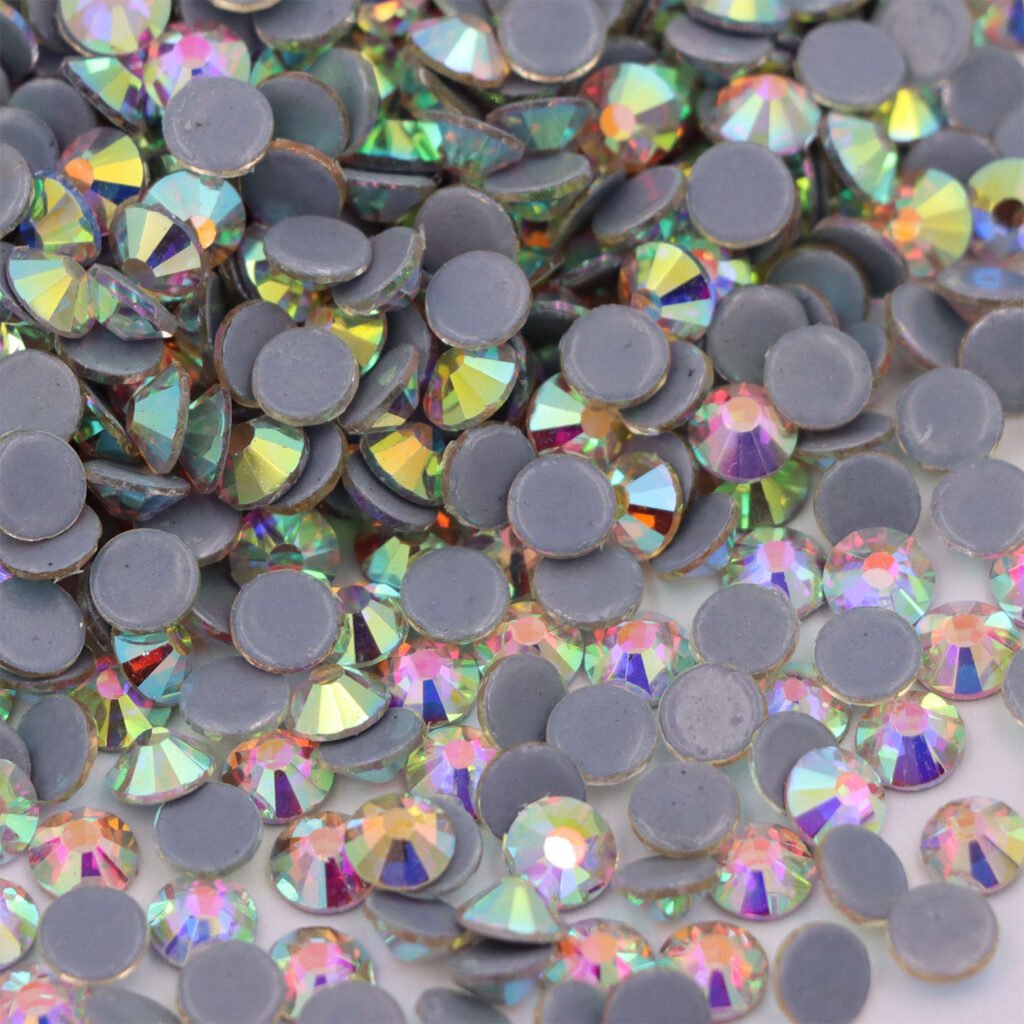
The Biomechanical and Aesthetic Demands of Performance Dancewear
Competitive stage and arena apparel operates in an extreme physical environment that standard fashion garments never encounter. Designing crystal embellishments for athletic performers requires addressing four biomechanical factors:
1. Dynamic Four-Way Fabric Elongation and Elastic Recovery
Competition leotards and cheer uniforms are crafted from high-spandex performance textiles, primarily 80/20 or 75/25 nylon-spandex knits, polyester Lycra blends, and holographic mystique foils. Under athletic motion, these textiles stretch up to 200% across both warp and weft dimensions.
When a hotfix crystal is bonded to the fabric surface, the stone itself is a rigid, non-stretchable solid. As the underlying spandex stretches, immense lateral shear stress is concentrated directly at the adhesive interface. Standard fashion-grade glues, which cure into brittle crystalline structures, crack and release under this shear force. Performance dancewear demands an elastomeric adhesive that maintains a flexible, rubberized mechanical anchor within the fabric weave.
2. Garment Weight Distribution and Athlete Fatigue
While maximum sparkle is the universal objective, crystal weight accumulates rapidly. A standard gross consists of 144 stones. If an all-star cheer uniform features 30 gross of large SS30 rhinestones, the embellishment alone adds over 600 grams (1.32 pounds) of concentrated dead weight to the torso and sleeves.
Excessive trim weight causes: * Neckline and Shoulder Sagging: Heavy embellishments pull the neckline downward, exposing sports bras or undergarments and violating competition modesty rules. * Sleeve Droop and Wrist Drag: Overloading mesh sleeves with large stones fatigues athletes during synchronized arm motions and tumbling passes. * Seam Strain: Concentrated weight pulls at lateral flatlock seams, creating unsightly tension dimples and premature garment wear.
3. Perspiration Acidity and Hydrolysis Resistance
Athletes generate substantial body heat and perspiration during intense routines. Sweat contains water, sodium chloride, lactic acid, and urea. These chemical agents penetrate porous dancewear fabrics from the inside out, attacking the adhesive bond line. Cheap vinyl-based hotmelt glues undergo rapid chemical hydrolysis when exposed to acidic sweat, softening and peeling away within weeks of production.
4. Arena Lighting Dispersion and Camera Calibration
Competition arenas feature powerful LED spot banks and metal-halide floodlights emitting tens of thousands of lumens. Low-grade glass or plastic acrylic stones scatter this light poorly, appearing cloudy, milky, or gray under bright illumination. Under high-definition broadcast cameras and scoring photography, inferior stones lose their crisp fire, diminishing the team’s visual impact.
The Stone Size Architecture From SS10 Through SS30
Balancing optical sparkle against garment weight requires a strategic combination of stone sizes. Guangzhou Yiben produces full-spectrum K9 optical crystal stones across SS6 to SS30. In performance athletic apparel, four primary gauges define the design vocabulary:
SS10 Sizing for Precision Details and Mesh Sleeves
SS10 stones are lightweight, delicate crystals designed for high-density accentuation. * Primary Applications: Sheer power mesh sleeves, neckline borders, intricate lattice fills, and delicate color-gradient shading. * Weight Profile: Approximately 0.012 grams per stone (1.7 grams per gross). * Engineering Purpose: Because power mesh is fragile and prone to heat distortion, the low thermal mass of SS10 stones allows rapid heat transfer without scorching delicate sheer knits. Designers can apply thousands of SS10 stones to create intricate pavé effects without weighing down the garment.
SS16 Sizing for Structural Contours and Chevrons
SS16 is the foundational workhorse gauge across modern competitive cheerwear and gymnastics leotards. * Primary Applications: Muscle contour striping, team chevron accents, skirt borders, and cuff framing. * Weight Profile: Approximately 0.028 grams per stone (4.0 grams per gross). * Engineering Purpose: SS16 provides the ideal balance between individual facet brilliance and moderate weight. Its 3.9 mm diameter is large enough to reflect bold light bursts to the judge’s stand while remaining compact enough to flex naturally across curving muscular contours.
SS20 Sizing for Primary Arena Sparkle and Lettering
When spectators and judges view a performance from 50 feet away in an arena, SS20 is the smallest gauge that delivers distinct individual fire. * Primary Applications: Center chest team lettering, primary starburst patterns, shoulder crests, and high-impact bodice coverage. * Weight Profile: Approximately 0.055 grams per stone (7.9 grams per gross). * Engineering Purpose: SS20 features expansive table and pavilion facets that capture directional spotlights. Most competitive cheer programs specify SS20 Crystal AB as their core design element, balancing dramatic fire against manageable total uniform mass.
SS30 Sizing for Focal Statement Accents
SS30 stones are commanding focal elements designed for maximum visual punch. * Primary Applications: Center medallion highlights, exploding starburst hubs, collar clasps, and high-accent crest focal points. * Weight Profile: Approximately 0.140 grams per stone (20.2 grams per gross). * Engineering Purpose: Because SS30 stones carry substantial individual mass, they must be used selectively. Placing SS30 stones across moving joints (elbows, underarms, hips) invites stone detachment and athletic discomfort. They should always be positioned over stable, low-stretch anatomical zones, such as the upper sternum or center upper back.
| Stone Size Gauge | Metric Diameter | Weight per Stone | Weight per Gross (144 Stones) | Primary Performance Costume Placement | Recommended Maximum Garment Density |
|---|---|---|---|---|---|
| SS10 | 2.8 – 3.0 mm | ~0.012 g | 1.7 g | Power mesh sleeves, gradient fades, neckline edges | Up to 3,000 stones (36 g total) |
| SS16 | 3.8 – 4.0 mm | ~0.028 g | 4.0 g | Geometric cheer striping, skirt trims, bodice contours | Up to 2,000 stones (56 g total) |
| SS20 | 4.6 – 4.8 mm | ~0.055 g | 7.9 g | Primary chest lettering, central bodice sparkle | Up to 1,500 stones (82 g total) |
| SS30 | 6.3 – 6.5 mm | ~0.140 g | 20.2 g | Center focal medallions, starburst hubs, collar accents | Up to 150 stones (21 g total) |
The Garment Weight Budget and Sizing Calculation Framework
Professional performance costume designers work within a strict embellishment weight budget. As a standard engineering guideline, the total weight of heat-applied embellishments should not exceed: * Youth / Junior Divisions: Maximum 180 to 220 grams (6.3 to 7.7 ounces) of embellishment. * Senior / Collegiate All-Star Divisions: Maximum 300 to 350 grams (10.5 to 12.3 ounces) of embellishment.
Exceeding these limits degrades fabric recovery and introduces athlete fatigue. To calculate total embellishment weight before committing to production, production managers use the following sizing formula:
$$\text{Total Embellishment Weight (g)} = \sum \left( \frac{\text{Stone Count}_i}{144} \times \text{Weight per Gross}_i \right)$$
Production Case Study Calculating an Elite All-Star Cheer Bodice
Consider an elite senior all-star cheer uniform featuring an intricate multi-gauge Crystal AB pattern: * Chest Lettering and Primary Bodice: 1,200 stones of SS20 K9 Crystal AB * Contour Chevrons and Waist Banding: 1,800 stones of SS16 K9 Crystal AB * Sheer Mesh Sleeves and Back Cutout: 2,500 stones of SS10 K9 Crystal AB * Focal Star Accents on Sternum and Shoulders: 80 stones of SS30 K9 Crystal AB
Applying the weight formula: 1. SS20 Component: $(1,200 / 144) \times 7.9\text{ g} = 65.8\text{ grams}$ 2. SS16 Component: $(1,800 / 144) \times 4.0\text{ g} = 50.0\text{ grams}$ 3. SS10 Component: $(2,500 / 144) \times 1.7\text{ g} = 29.5\text{ grams}$ 4. SS30 Component: $(80 / 144) \times 20.2\text{ g} = 11.2\text{ grams}$ * Total Trim Weight: $65.8 + 50.0 + 29.5 + 11.2 = \mathbf{156.5\text{ grams}}$
With a total embellishment weight of only 156.5 grams, the design incorporates 5,580 brilliant crystals while consuming less than half of the senior weight allowance. The uniform delivers breathtaking arena illumination while remaining featherweight and dynamically flexible for tumbling passes.
Material Science of Guangzhou Yiben K9 Optical Crystal
The sparkle of competitive dancewear relies directly on glass physics. Many trim merchants sell cheap soda-lime stones or acrylic imitations that fail under arena lighting. Guangzhou Yiben manufactures performance rhinestones from 100% optical K9 borosilicate crystal glass:
1. Refractive Index of ~1.9 for Theatrical Fire
The refractive index measures how intensely a material bends and reflects light. Standard soda-lime glass has an index of only 1.50, while acrylic is even lower at 1.48. Optical K9 crystal achieves a refractive index of approximately 1.90. This high index creates total internal reflection: light entering the front table of the stone bounces internally off the angled pavilion facets before firing back toward the viewer in a brilliant prism burst.
2. Precision 12 to 14 Diamond-Cut Facet Geometry
Our automated facet-grinding and polishing lines cut razor-sharp facet intersections. Hand-polished or molded glass stones have rounded facet junctions that scatter light into dull gray hazes. Yiben’s symmetric 12-facet and 14-facet geometries act as micro-mirrors, reflecting razor-sharp beams across long arena sightlines.
3. Pure Electronic-Grade Aluminum Vacuum Mirroring
On the pavilion of our flatback crystals, we deposit high-vacuum sputtered aluminum mirror coatings passivated by protective chemical barriers. Unlike cheap silvering that oxidizes and turns brown when exposed to atmospheric humidity or body sweat, our mirror backing remains flawlessly reflective throughout multi-season performance schedules.
4. True Optical AB Coatings with Delta E < 0.8 Consistency
Crystal AB (Aurora Borealis) is the dominant color choice in competitive dancewear because it reflects iridescent flashes of rainbow color, matching any uniform fabric. However, inconsistent vacuum vapor deposition results in some batches looking yellow while others look blue. Guangzhou Yiben utilizes automated spectrophotometers to calibrate AB coating thickness to the nanometer scale, ensuring an identical chromatic spectrum across repeat team orders.
| Optical & Physical Layer | Technical Material Specification | Performance Role in Competitive Arena |
|---|---|---|
| Precision Diamond-Cut Table & Facets | 12 to 14 symmetric facet geometries, optical glass polishing | Maximizes initial light capture from arena spotlights with zero edge rounding |
| High-Refraction Crystal Body | K9 Optical Crystal Glass (Refractive Index ~1.89 – 1.93, Mohs 6.0–6.5) | Generates intense internal light dispersion and rainbow spectral fire |
| High-Vacuum Mirror Backing | Multi-layer sputtered aluminum with passivated barrier | 100% internal total reflection; completely impervious to sweat and oxidation |
| German Industrial Hotmelt Grey Glue | Thermosetting elastomeric polyurethane matrix | Activated at 160°C; penetrates 80/20 spandex fibers with high dynamic stretch recovery |
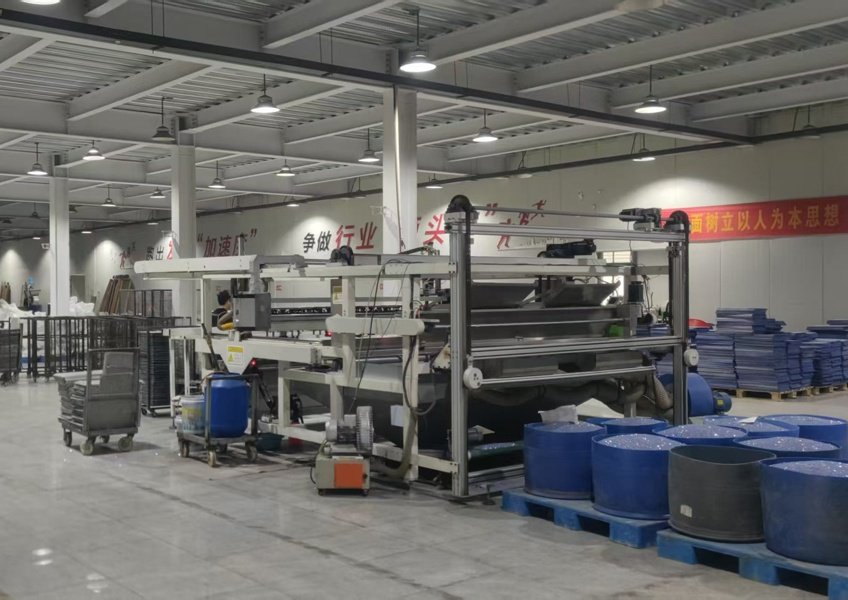
German Industrial Hotmelt Grey Glue for Dynamic Fabric Adhesion
The single most critical vulnerability in cheerleading and dance leotards is stone detachment during athletic performance. When a base catches a flyer during a basket toss, friction across the chest and torso is extreme. If the rhinestone glue lacks shear strength, stones peel off instantly.
Guangzhou Yiben pre-coats all performance stones with genuine German-formulated industrial hotmelt grey glue:
* High-Polymer Polyurethane Resin: Unlike brittle EVA (ethylene-vinyl acetate) glues used in low-cost craft stones, our German grey glue is formulated with elastomeric polyurethane polymers. When melted, it flows into a low-viscosity liquid that wicks between individual spandex microfibers. * Thermal Activation Profile: Formulated with a melting point of 150°C to 170°C (302°F to 338°F), the adhesive becomes active under professional heat presses at 160°C (320°F). * Dynamic Elastic Memory: Once cured, the grey glue functions like synthetic rubber. It can stretch repeatedly by over 150% without tearing, detaching from the glass backing, or lifting from the fabric yarn. * Wash Durability: In rigorous testing conforming to industrial laundering wash durability under ISO 6330 wash tests, Yiben rhinestones maintain over 98.5% retention across 50 consecutive wash cycles, ensuring costumes survive entire competitive seasons without shedding.
Professional Heat Press Calibration for Performance Textiles
Achieving an indestructible bond requires calibrating heat press parameters to the specific textile substrate. Applying generic heat press settings across diverse performance fabrics is the leading cause of stone failure or fabric scorching.
1. Matte and Heavyweight Nylon-Spandex (80/20 or 75/25)
* Characteristics: Resilient, dense stretch knit used for primary cheer uniform bodices and skirts. * Temperature: 160°C (320°F). * Dwell Time: 15 to 18 seconds. * Pneumatic Pressure: 4.0 bar (Medium-Firm). * Carrier Peel: Completely Cold Peel. * Pro Tip: Apply a 4-second pre-press without stones to eliminate residual mill moisture and textile finishing lubricants.
2. Holographic Mystique and Metallic Foil Knits
* Characteristics: Foil-laminated stretch fabric offering brilliant metallic sheen, but highly susceptible to surface scorching, clouding, or foil lifting under high heat. * Temperature: 148°C to 152°C (298°F to 305°F). * Dwell Time: 18 to 22 seconds (Extended dwell compensates for lower thermal energy). * Pneumatic Pressure: 3.0 to 3.5 bar (Avoid excessive pressure that crushes the hot foil). * Carrier Peel: Completely Cold Peel. * Crucial Protection: Always place a thick Teflon sheet or heat-resistant silicone sheet over the transfer carrier paper. Never apply direct metal platen heat onto bare mystique foil.
3. Stretch Power Mesh and Sheer Illusion Tulle
* Characteristics: Delicate, open-weave polyamide netting used on illusion necklines and sleeves. High risk of adhesive striking through to the platen or back fabric layer. * Temperature: 150°C to 155°C (302°F to 311°F). * Dwell Time: 12 to 14 seconds. * Pneumatic Pressure: 2.5 to 3.0 bar (Light-Medium). * Carrier Peel: Completely Cold Peel. * Crucial Protection: Insert a smooth silicone release sheet or parchment paper inside the sleeve or bodice cavity. Without an internal barrier, the melted German grey glue will push through the open mesh pores, fusing the front and back panels together.
| Performance Textile | Primary Fiber Content | Heat Press Temperature | Press Dwell Time | Platen Pressure | Protective Barrier Requirement | Peel Temperature |
|---|---|---|---|---|---|---|
| Matte Heavyweight Spandex | 80% Nylon, 20% Spandex | 160°C (320°F) | 15 – 18 sec | 4.0 bar | Standard Teflon sheet | Completely Cold |
| Holographic Mystique Foil | Polyester Spandex with Foil | 150°C (302°F) | 18 – 22 sec | 3.2 bar | Silicone pad over carrier | Completely Cold |
| Stretch Power Mesh | 85% Nylon, 15% Spandex | 152°C (305°F) | 12 – 14 sec | 2.8 bar | Internal parchment separator | Completely Cold |
| Stretch Velvet / Velour | 90% Poly, 10% Spandex | 155°C (311°F) | 16 – 18 sec | 2.5 bar | Foam pad underneath pile | Completely Cold |
Automated Motif Transfers vs Individual Stone Placement
For commercial costume ateliers manufacturing uniforms for hundreds of athletes across multiple gyms and school teams, manually placing thousands of individual stones with hand-held hotfix wands is commercially unfeasible.
High-efficiency production relies on automated hotfix transfer sheets: * Digital Vector Layouts: Uniform designs are created in vector software (Adobe Illustrator or CorelDraw), specifying exact stone gauges (SS10, SS16, SS20, SS30) and color coordinates. * Automated Pneumatic Motif Machines: In our Guangzhou factory, computer-controlled placement heads pick and place thousands of stones per minute onto heat-resistant sticky silicone mylar carrier film. * Single-Press Factory Application: Ateliers receive finished, pre-spaced transfer sheets. The production team positions the carrier film on the garment panel and bonds hundreds of stones in a single 16-second heat press cycle. For large streetwear or team motifs, explore our specialized guide on custom hotfix rhinestone motifs and transfers for streetwear brands.
By sourcing pre-assembled custom transfer sheets directly from Guangzhou Yiben, dancewear manufacturers reduce workshop labor hours by up to 85% while ensuring 100% geometric uniformity across every team member’s uniform.
—
Technical Sourcing Knowledge Matrix
To help commercial garment decorators, costume designers, and apparel procurement managers build a resilient, high-margin trim supply chain, Guangzhou Yiben provides deep technical documentation:
* North American Regional Supply Architecture: Review logistics, Section 321 de minimis entry, and landed cost models in Wholesale Hotfix Rhinestones for US and Canadian Apparel Brands Factory Direct Supply Quality and Compliance. * Global Factory Procurement Guide: Master direct manufacturing workflows in How Global Apparel Manufacturers Source Bulk Hotfix Rhinestones Directly from China. * Youth Apparel Chemical Safety Standards: Understand federal toxicological testing in CPSIA Lead Safety Compliance for Rhinestones in US Children’s Wear and Dance Costumes Under 90 ppm Limit. * International Air Courier Rates and Speed: Review shipping comparisons and door-to-door transit timelines in DHL vs FedEx vs Air Cargo for Bulk Rhinestone Orders With Shipping Rates and Transit Times. * Laundering Durability and Press Curves: Master commercial wash testing in Preventing Stone Loss in Industrial Laundering With ISO 6330 Wash Tests and Heat Press Curves. * Custom Transfer Manufacturing: Master vector motif production in Custom Hotfix Rhinestone Motifs and Transfers for US Streetwear Brands.
—
Request Factory Direct Performance Swatch Cards and Bulk Quotations
Elevate your upcoming competitive cheer, dancewear, and gymnastics collections with genuine optical K9 crystals and German industrial hotmelt grey glue. Contact Guangzhou Yiben E-Commerce Co., Ltd. for complimentary sample cards, custom vector transfer digitizing, and direct volume pricing.
* WhatsApp: +86 13692450325 * Email: rhinestonewholesale8@gmail.com * Guangzhou Facility: Hebian Subdistrict, Baiyun District, Guangzhou, Guangdong, China
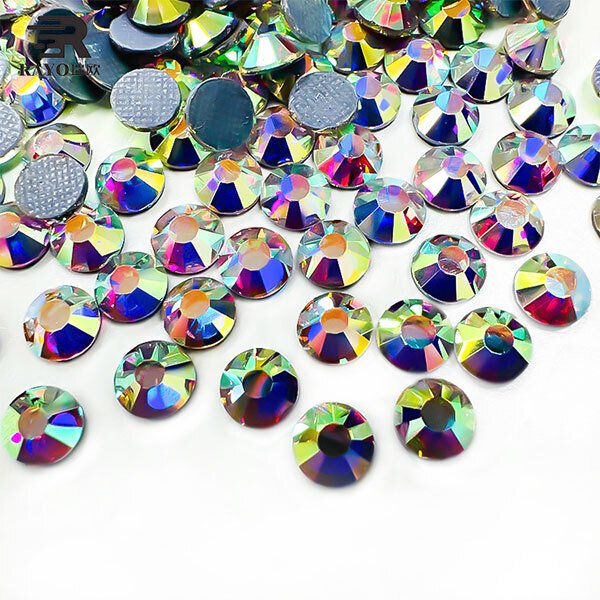
Need a size or color recommendation for your next order? Send us your fabric type, design, and target price — we reply within one business day. WhatsApp +86 13692450325 · rhinestonewholesale8@gmail.com