
CPSIA Lead Safety Compliance for Rhinestones in US Childrenswear and Dance Costumes Under 90 ppm Limit
For apparel decorators, commercial garment manufacturers, and competitive dancewear ateliers producing youth garments for the North American market, chemical compliance is an absolute legal mandate. Under United States federal law, any children’s product, including youth cheerleading uniforms, competitive gymnastics leotards, pageant dresses, and youth streetwear collections, must undergo strict toxicological evaluation before entering domestic commerce.
When embellishing youth garments with thousands of heat-applied stones, selecting non-compliant trim can lead to commercial ruin. If an imported crystal lot fails third-party laboratory screening for total lead content, the entire garment production run can be impounded by US Customs and Border Protection (CBP), flagged for mandatory recall by the Consumer Product Safety Commission (CPSC), and subjected to civil penalties reaching millions of dollars.
As detailed in our core regional guide on wholesale hotfix rhinestones for US and Canadian apparel brands, commercial trim procurement requires deep technical alignment with primary manufacturers. When sourcing bulk hotfix rhinestones directly from China, brands must understand glass formulation chemistry, laboratory digestion methodologies, and regulatory certification workflows.
At Guangzhou Yiben E-Commerce Co., Ltd., we have spent 12 years manufacturing high-purity optical crystal hotfix rhinestones. We supply commercial apparel exporters and dance studios across 50 countries, engineering our glass formulations and adhesive coatings to exceed international safety standards. This guide provides production managers, compliance officers, and garment designers with the exact regulatory protocols required to specify lead-safe hotfix crystals and maintain flawless CPSC compliance.
Understanding the Statutory Framework of US CPSIA and 16 CFR Part 1303
The primary statutory authority governing heavy metal content in children’s apparel imported into the United States is the Consumer Product Safety Improvement Act (CPSIA), administered by the CPSC. The law establishes distinct thresholds for surface coatings and accessible substrate materials across any product designed or intended primarily for children aged 12 and younger.
The 90 ppm Surface Coating Standard under 16 CFR Part 1303
Under 16 CFR Part 1303 (Ban of Lead-Containing Paint and Certain Consumer Products Bearing Lead-Containing Paint), the maximum allowable concentration of lead in paint and similar surface coatings is 0.009 percent by weight, or 90 parts per million (ppm).
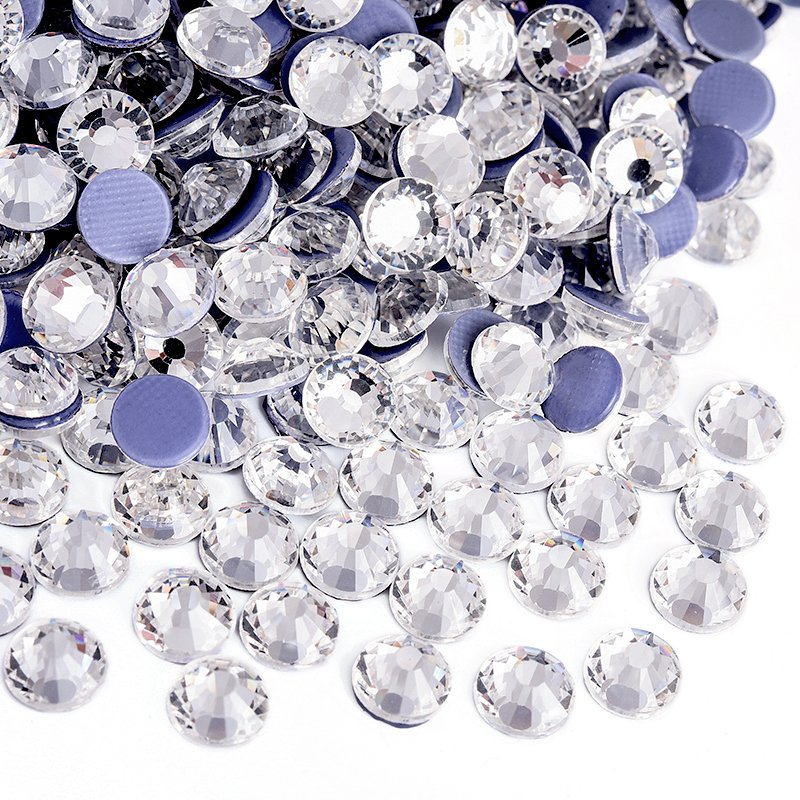
In rhinestone embellishments, this restriction applies directly to: * Metallic mirror vacuum backings deposited on the pavilion of flatback stones. * Vacuum electroplated surface coatings, including iridescent AB (Aurora Borealis) treatments and metallic color lusters. * Heat-activated hotmelt adhesives pre-applied to the underside of the stones.
If an overseas crystal supplier uses low-grade metallic paints, copper-lead composite foil alloys, or contaminated chemical pigments to achieve an iridescent reflection, the surface coating will readily breach the 90 ppm statutory ceiling.
The 100 ppm Substrate Standard under CPSIA Section 101
CPSIA Section 101(a) establishes that accessible substrate materials on children’s products must not contain lead concentrations exceeding 100 ppm. Because hotfix rhinestones on a cheer leotard or children’s dress are directly accessible to young wearers, the raw crystal glass itself must satisfy this 100 ppm threshold.
Traditional European lead crystal, historically favored for high-dispersion jewelry, contains between 24% and 32% lead oxide (PbO) by weight, equivalent to 240,000 to 320,000 ppm of elemental lead. While traditional lead crystal remains legal for adult couture and fine tabletop glassware under specific historical exemptions, incorporating leaded crystal into children’s apparel is strictly prohibited under federal law.
| Regulatory Standard | Target Product Category | Maximum Allowable Lead Limit | Applicable Component in Rhinestones |
|---|---|---|---|
| US CPSIA 16 CFR Part 1303 | Children’s apparel and accessories (Ages 12 & under) | 90 ppm (0.009% by weight) | Surface coatings, vacuum AB plating, foil backings |
| US CPSIA Section 101(a) | Accessible substrates in children’s products | 100 ppm (0.010% by weight) | Base crystal glass body and hotmelt adhesive layer |
| Canada CCPSA (SOR/2016-193) | Consumer products and children’s textile items | 90 mg/kg (90 ppm total lead) | Total surface embellishments, glass, and adhesives |
| EU REACH Annex XVII Entry 63 | Textile articles and decorative jewelry | 500 mg/kg (500 ppm total lead) | Total composite embellishment material |
| Guangzhou Yiben Optical K9 | Standard production for export apparel lines | < 40 ppm (Typical test result 10 to 25 ppm) | Complete rhinestone unit (Glass, silvering, grey glue) |
The Science of Optical K9 Glass vs Traditional Lead Crystal
Achieving brilliant theatrical sparkle without toxic heavy metals requires advanced optical glass engineering. Understanding why certain budget stones fail laboratory testing while Guangzhou Yiben stones pass with wide safety margins requires analyzing raw melt chemistry.
Why Budget Importers Fail CPSC Lead Screenings
Budget rhinestone suppliers often purchase raw glass blanks from unregulated regional glass foundries that recycle unrefined glass cullet. In cheap furnace batches: 1. Recycled CRT and Leaded Cullet: Scrapped cathode-ray tube glass and legacy lead crystal scrap are frequently melted down to lower furnace operating temperatures, inadvertently infusing hundreds of parts per million of toxic lead into the molten glass. 2. Heavy Metal Fluxes: Inferior foundries introduce inexpensive lead and cadmium oxides to lower the melting viscosity of silica, speeding up production runs while compromising chemical safety. 3. Contaminated Vacuum Mirroring: Inexpensive mirror foils frequently use unrefined lead-tin alloys to achieve a reflective silver backing, creating an immediate breach of 16 CFR Part 1303.
Guangzhou Yiben Lead-Free Optical K9 Formulation
To eliminate lead contamination at the molecular level, Guangzhou Yiben manufactures hotfix crystals using virgin optical-grade K9 borosilicate crystal glass:
* High-Purity Raw Material Batching: We source refined quartz silica, potassium carbonate, and high-purity barium titanate. We enforce strict supplier certificates of analysis ensuring virgin materials contain zero detectable lead or cadmium impurities. * Non-Lead Refractive Index Engineering: High optical brilliance (refractive index ~1.9) is attained through precise titanium dioxide (TiO2) and zirconium oxide fusion rather than toxic lead fluxing. This provides exceptional optical dispersion, 12 to 14 symmetric facets, and diamond-like fire under arena spotlights without legal liability. * High-Purity Aluminum and Silver Vacuum Sputtering: Our mirror backing is deposited inside high-vacuum physical vapor deposition (PVD) chambers using 99.99% pure electronic-grade aluminum and protective passivation barriers. The backing contains zero lead, antimony, or arsenic stabilizers. * Formulated German Hotmelt Grey Glue: Our pre-coated German industrial grey adhesive uses medical-grade polyurethane resins that cure completely free of volatile organic compounds (VOCs), phthalates, and restricted heavy metal catalysts. The adhesive provides industrial laundering wash durability under ISO 6330 wash tests without compromising child health.
CPSC Testing Protocols and Laboratory Methodologies
When an apparel brand submits embellished garment swatches to a third-party testing laboratory, technicians use standardized testing protocols to determine statutory compliance.
Digestion and Spectrometry Testing Methods
CPSC-accredited laboratories (such as SGS, Intertek, Bureau Veritas, and TÜV Rheinland) utilize two primary testing sequences:
1. CPSC-CH-E1002-08.3 Standard Operating Procedure for Determining Total Lead in Nonmetal Children’s Products: Technicians crush the sample rhinestones into a fine powder, perform acid microwave digestion using concentrated nitric acid (HNO3) and hydrofluoric acid (HF) to dissolve the silicate glass matrix, and analyze the digestate using Inductively Coupled Plasma Optical Emission Spectrometry (ICP-OES) or Inductively Coupled Plasma Mass Spectrometry (ICP-MS). 2. CPSC-CH-E1003-09.1 Standard Operating Procedure for Determining Lead in Paint and Other Similar Surface Coatings: Technicians scrape the metallic mirror backing and adhesive layer from the back of the crystal, dissolve the scrapings in hot acid, and measure lead concentrations relative to the dry coating weight.
Because acid digestion dissolves the entire material matrix, superficial surface barriers or clear lacquer overcoats cannot mask lead hidden inside the underlying glass or foil. Total chemical purity is the only defense.
| Workflow Step | Laboratory Testing Phase | Standard Operating Procedure | Analytical Metric & Threshold |
|---|---|---|---|
| Step 1 | Composite Sample Ingestion | Log garment swatch, style number, and bill of materials (BOM) | Chain of custody verification |
| Step 2 | Mechanical Scraping & Separation | Physically isolate crystal glass body from metallic foil and adhesive film | Clean component fractionation |
| Step 3 | Microwave Acid Digestion | Closed-vessel dissolution in ultra-pure HNO3 / HF at 200°C under pressure | 100% matrix liquefaction |
| Step 4 | Spectrometric Detection | ICP-OES / ICP-MS emission spectrometry | Elemental lead detection limit down to 2 ppm |
| Step 5 | Pass/Fail Certification | Issue third-party accredited laboratory test certificate | Substrate Lead <100 ppm; Coating Lead <90 ppm |

How US Importers Issue a Children’s Product Certificate
Under CPSIA Section 102, the domestic US importer of record or domestic manufacturer is legally responsible for certifying that a children’s product complies with all applicable safety rules. This certification takes the form of a written Children’s Product Certificate (CPC).
A common compliance misconception among apparel decorators is assuming that a test report from an overseas factory is sufficient on its own. While factory laboratory reports provide essential technical due diligence, the legal US importer must issue an official CPC based on testing conducted by a CPSC-accepted laboratory.
Essential Components of a Compliant CPC
Every Children’s Product Certificate for embellished youth apparel must contain seven mandatory legal elements:
1. Detailed Product Identification: Complete description of the finished garment, including style numbers, collection names, and visual representations. 2. Citation to Each Applicable Safety Regulation: Explicitly listing 16 CFR Part 1303 (Lead in Paint and Surface Coatings), CPSIA Section 101 (Total Lead Content in Substrates), 16 CFR Part 1610 (Standard for the Flammability of Clothing Textiles), and applicable tracking label statutes. 3. Identification of the US Importer or Domestic Manufacturer: Legal corporate name, physical address, and telephone contact of the certifying entity. 4. Contact Information for the Custodian of Records: Name, email, and address of the individual maintaining test records and supporting evidence. 5. Date and Place of Manufacture: City, province, and country of finished assembly, including month and year of production. 6. Date and Place of Third-Party Testing: Exact date and location where laboratory testing was performed. 7. Identification of the CPSC-Accepted Testing Laboratory: Full corporate name, CPSC laboratory identification number, address, and contact details of the accredited testing facility.
Guangzhou Yiben supports our North American brand partners by supplying certified raw material test data, lot-specific bills of materials, and batch traceability codes, simplifying the CPC compilation process for your compliance department.
Application Considerations for High-Performance Youth Dancewear
Ensuring compliance is only half the battle; the stones must also endure intense physical performance. Youth cheerleading and competitive dance costumes undergo extreme tensile stretching and frequent commercial wash cycles.
When designing youth competition wear, garment decorators balance three interdependent factors:
1. Stone Sizing and Weight Optimization
Over-embellishing lightweight 4-way stretch spandex can cause the garment to sag, pulling seams out of alignment during tumbling passes and dance routines. * Use SS10 and SS16 stones for high-density sleeve shading, gradient fade lines, and cuff details. * Use SS20 stones for primary body designs, school lettering, and chest motifs. * Reserve SS30 stones for focal starbursts and center medallions. To calculate exact stone counts and optimize uniform weights across youth sizing charts, consult our dedicated technical manual on specifying bulk crystals for cheerleading uniforms and competitive dancewear SS16 to SS30.
2. High-Elasticity Bonding on Stretch Textiles
When pressing compliant hotfix rhinestones onto youth dancewear constructed from 80/20 nylon-spandex, polyester Lycra, or stretch velvet: * Maintain a heat press temperature of 155°C to 160°C (311°F to 320°F). * Apply firm pneumatic pressure of 3.5 to 4.0 bar. * Maintain a dwell time of 15 to 18 seconds. * Ensure a complete cold peel of the transfer carrier sheet.
Our genuine German hotmelt grey glue penetrates the microscopic fibers of the stretch knit. As the young athlete moves, the elastomeric glue matrix stretches dynamically with the garment, preventing stone detachment while remaining completely non-toxic and skin-safe.
3. Custom Transfer Motif Integration for Volume Decorators
For commercial garment decorators fulfilling high-volume cheer contracts across hundreds of youth athletic teams, manual stone placement is cost-prohibitive. Automated rhinestone transfer sheets allow single-press application of multi-color team logos. For technical guidelines on artwork digitization, transfer tape selection, and volume production timelines, review our guide on custom hotfix rhinestone motifs and transfers for streetwear brands.
Sourcing Due Diligence Checklist for Production Directors
Before issuing a purchase order for bulk hotfix crystals intended for youth apparel, procurement managers should execute the following five-point compliance verification:
* [ ] Verify Raw Material Composition: Request confirmation that all stones are manufactured from optical K9 borosilicate crystal glass rather than leaded glass or low-grade recycled cullet. * [ ] Inspect Laboratory Test Documentation: Ensure supplier test reports originate from an accredited independent laboratory (SGS, Intertek, TÜV) utilizing ICP-OES digestion methodologies, showing total lead well below 90 ppm. * [ ] Confirm Adhesive Chemistry: Verify that the pre-coated hotmelt adhesive is free from prohibited ortho-phthalates, cadmium compounds, and toxic solvent residues. * [ ] Establish Batch Traceability: Ensure every master carton is labeled with unique production lot numbers that correlate directly to factory raw material batch records. * [ ] Review Factory Track Record: Partner with an established primary manufacturer possessing verified manufacturing facilities, direct export documentation capabilities, and multi-year supply histories with major international brands.
—
Technical Sourcing Architecture and Related Documentation
To support apparel brands, costume ateliers, and garment export facilities in building an audit-proof supply chain, Guangzhou Yiben provides an integrated technical knowledge matrix:
* Regional Supply Chain Framework: Explore logistics, Section 321 de minimis clearance, and North American distribution models in Wholesale Hotfix Rhinestones for US and Canadian Apparel Brands Factory Direct Supply Quality and Compliance. * Global Procurement Master Guide: Review complete overseas buying protocols in How Global Apparel Manufacturers Source Bulk Hotfix Rhinestones Directly from China. * International Air Courier Rates and Timelines: Master express shipping strategies in DHL vs FedEx vs Air Cargo for Bulk Rhinestone Orders With Shipping Rates and Transit Times. * Industrial Wash Testing Protocols: Review standardized thermal bonding parameters in Preventing Stone Loss in Industrial Laundering With ISO 6330 Wash Tests and Heat Press Curves. * Cheer and Dancewear Sizing Standards: Master stage sparkle and stone durability parameters in Specifying Bulk Crystals for Cheerleading Uniforms and Competitive Dancewear SS16 to SS30. * Custom Transfer Manufacturing: Master vector digitization and volume motif production in Custom Hotfix Rhinestone Motifs and Transfers for US Streetwear Brands.
—
Request Factory Direct Chemical Compliance Certifications and Sample Swatches
Ensure your youth apparel collections meet strict North American safety standards without sacrificing stage fire or commercial profit margins. Contact Guangzhou Yiben E-Commerce Co., Ltd. for third-party laboratory test reports, compliant sample cards, and wholesale volume quotations.
* WhatsApp: +86 13692450325 * Email: rhinestonewholesale8@gmail.com * Guangzhou Facility: Hebian Subdistrict, Baiyun District, Guangzhou, Guangdong, China
Need a size or color recommendation for your next order? Send us your fabric type, design, and target price — we reply within one business day. WhatsApp +86 13692450325 · rhinestonewholesale8@gmail.com