
HS Code for Swimwear and Hotfix Rhinestones From a Guangzhou Manufacturer
A swimwear distributor in Florida once cleared two identical cartons of crystal-embellished bikinis under two different codes and ended up paying two different duty rates on the same product line. Nobody caught it for a year. When the audit came, the refund went one way and the penalty the other. Swimwear classification looks simple until you add trims, men’s boardshorts, and the loose rhinestones that decorate resort collections. This page covers the working codes for swimwear and the crystal components that go on it, from a Guangzhou factory that ships both to buyers in forty countries.
What is the HS code for swimwear?
Swimwear splits by construction, with knitted swimwear living in Chapter 61 under heading 6112 and woven swimwear under Chapter 62 heading 6211. The HS code for swimwear most importers use is 6112.41 for women’s knitted synthetic swimwear and 6112.31 for men’s knitted synthetic swimwear. If the fabric is woven rather than knitted, the codes shift to 6211.12 for women and 6211.11 for men. Nearly all modern swimwear is knitted from nylon or polyester blends, which is why 6112.41 and 6112.31 dominate the invoices you see in the trade.
What is the HS code for a swimsuit?
A swimsuit uses the same 6112 family as swimwear, and the HS code for swimsuit depends on the wearer and the fiber. Women’s knitted synthetic swimsuits clear under 6112.41, while men’s knitted synthetic styles clear under 6112.31. Cotton swimsuits are rare but exist for fashion beachwear, and those fall under the cotton subheadings within 6112. The fiber matters because synthetic and cotton swimwear carry different duty treatment in some markets, so you should read the fabric tag before your broker finalizes the entry, not after the goods are already on the water.
What is the HS code for swim shorts?
Men’s and boys’ swim shorts are classified as swimwear rather than as general shorts, and the HS code for swim shorts is 6112.31 for knitted synthetic styles. Woven boardshorts move to 6211.11. This is a place where importers make an expensive mistake, because general men’s shorts under 6203.43 carry a different duty band in several countries, and the lower or higher rate depends on the destination. Boardshorts with a mesh liner and a drawstring waist are unambiguously swimwear, but a hybrid short sold as both swim and street wear needs a deliberate classification decision backed by the product’s essential character.
What is the HS code for women’s swimwear?
The HS code for women’s swimwear is 6112.41 for knitted synthetic swimwear and 6211.12 for woven styles, covering bikinis, one-pieces, tankinis, and cover-up sets that are classified with the main garment. When a bikini ships with a matching sarong or cover-up as a set, the set classification follows the essential character of the swimwear, and the whole retail unit goes on one code. If the cover-ups ship separately as dresses or robes, they take their own apparel codes, and splitting them onto separate invoice lines keeps the entry defensible if customs questions the value.
What is the HTS code for swimwear in the United States?
The HTS code for swimwear in the United States extends the six-digit HS with national digits, giving 6112.41.0010 for women’s knitted synthetic swimwear and 6112.31.0010 for men’s. US duty on swimwear varies by fiber and origin, and swimwear from China can carry an additional Section 301 tariff on top of the base rate, which is why a buyer should always confirm the current year’s total rate with a licensed broker before quoting landed cost. The Section 301 layer is not in the base HTS number, so two shipments under the identical HTS code can land at different effective rates depending on the trade policy in force at the moment of import.
What is the HSN code for swimwear?
The HSN code for swimwear in India and other HSN jurisdictions follows the same 6112 structure, with women’s knitted synthetic swimwear at HSN 6112.41 and men’s at 6112.31. The swimwear harmonized code is identical across the World Customs Organization’s 180-plus member countries at the six-digit level, and only the trailing national digits differ. That consistency is the whole point of the Harmonized System: your Guangzhou supplier, your Indian buyer, and your US broker all read the first six digits the same way, which removes ambiguity when you are quoting three markets from one production run.
What is the swim ring HS code?
A swim ring is not swimwear, and the swim ring HS code falls under inflatable articles in Chapter 9506, typically 9506.29 for water-sport equipment or 9503.00 for toys when marketed to children. The distinction matters because apparel buyers occasionally lump pool floats into a swimwear container and misclassify the whole pallet. Swim rings, arm bands, and pool noodles are classified by their function as flotation or sports goods, not as clothing, and they can carry a different duty and different safety requirements, especially for children’s products under CPSIA in the United States.
What HS code do swimwear cover-ups and sarongs use?
A cover-up shipped with the swimwear as a matched set follows the swimwear’s classification under the essential character rule, so a bikini and sarong retail unit clears under 6112.41 or 6112.31 as one entry. A cover-up sold and shipped as a standalone dress or robe takes its own apparel code, typically 6104 or 6204 for women’s dresses or 6108 for robes and dressing gowns. The distinction is worth money because swimwear and dresses can carry different duty rates in the same market, and customs looks at whether the cover-up has a real closure and wearable structure to decide which side of the line it sits on.
What is the duty rate on swimwear from China to the United States?
The base US duty on synthetic knitted swimwear under 6112.41 and 6112.31 is a single-digit percentage, but swimwear from China has carried an additional Section 301 tariff layer for years, and the combined effective rate moves every time trade policy shifts. The Section 301 charge sits outside the HTS number, so two identical shipments can clear at different totals depending on the month they arrive. The only reliable way to quote landed cost is to confirm the current base rate plus the active 301 layer with a licensed broker on the day you book the shipment, then treat that number as a planning figure rather than a guarantee.
What is the HS code for rhinestones used on swimwear?
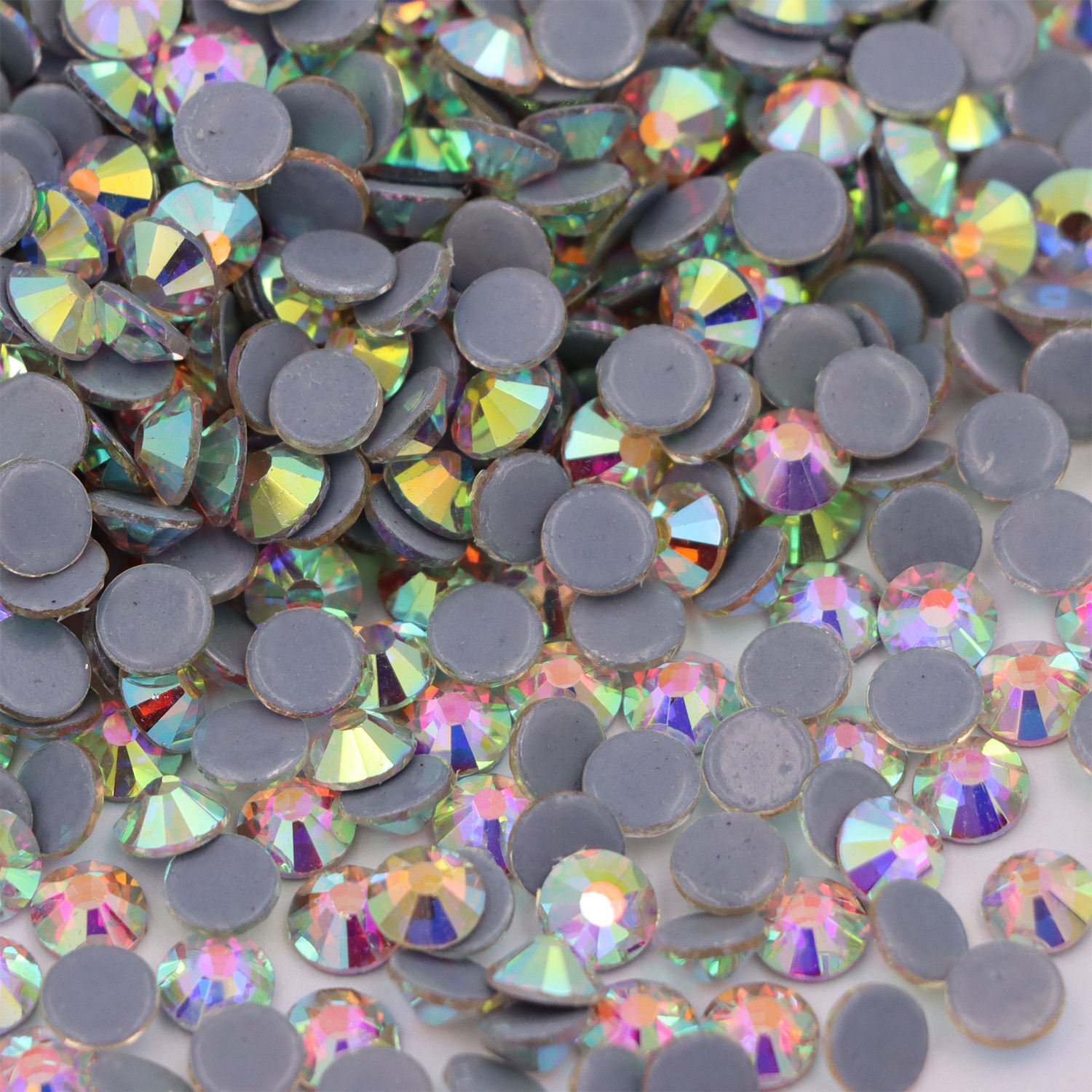
Loose hotfix rhinestones and crystal trims for swimwear fall under HS 7018.10, the heading for glass beads, imitation pearls, and imitation precious stones. This is the code our Guangzhou factory prints on every loose stone shipment, and the US equivalent is HTS 7018.10.5000 with a duty around 6.6 percent, while the EU applies roughly 3.7 percent. When the crystals are already fused onto fabric as a hotfix motif or roll, they often classify as an embellished textile rather than as loose glass, which is a separate consideration from loose stones. Keep loose stones and pre-fused motifs on separate invoice lines.
Why do swimwear rhinestones need a different adhesive?
A bikini stretches, bends, and sits in chlorinated water, which is the worst environment for a cheap hotfix stone. Our K9 glass rhinestones use a German gray glue that melts between 150 and 170 degrees Celsius and bonds to nylon and spandex when pressed at around 150 degrees Celsius for twelve seconds at thirty PSI. Cheap acrylic stones on yellow glue fail below 130 degrees Celsius and shed after a few swims, which is why a $3 bikini upgrade can cost a brand its reputation. For swimwear we recommend stones in the SS6 to SS16 range, with a typical design using five hundred to two thousand pieces per garment depending on coverage.
Do swimwear rhinestones survive chlorine and saltwater?
Swimwear rhinestones survive chlorine and saltwater when they are K9 glass on German gray glue, because the adhesive cures into a flexible bond that does not dissolve in pool water or seawater. Cheap acrylic stones on yellow glue fail below 130 degrees Celsius at the press stage, and even when they bond, the glue breaks down after repeated chlorine exposure and the stones lift within a few wears. Our K9 stones pass a fifty-cycle ISO 6330:2021 wash test with under 2 percent loss, which is the standard a buyer should demand before putting crystal on anything that goes in a pool. The glass itself does not cloud or etch in chlorine the way acrylic does, so the sparkle holds through a full resort season.
What is the best rhinestone size for swimwear?
The best rhinestone sizes for swimwear are SS6 through SS16, because stones larger than 4.0 millimeters add stiffness to stretch fabric and can pop off when the garment flexes. SS6 at 2.0 millimeters and SS10 at 2.8 millimeters suit strap and waistband details, while SS16 at 4.0 millimeters works for a fuller cup or back accent, and the smaller stones bend with the spandex instead of fighting it. A typical swimwear design uses five hundred to two thousand stones per garment, and staying within that range keeps the embellishment light enough for the fabric to recover its shape after every wear.

How many rhinestones does a swimwear collection use?
A single embellished bikini uses between five hundred and two thousand stones depending on whether you are doing a strap detail, a waistband, or a full-cup layout. A resort collection of six styles sampled at three colorways can consume forty thousand to sixty thousand stones before production even starts. Our minimum order of two packs per color and size, around 1,440 pieces per SS16 pack, is sized so a designer can sample an entire swim line without committing to volume. At full production, sea freight from Guangzhou reaches the US West Coast in eighteen to twenty-five days, and air freight lands in five to seven working days for urgent drop dates.
Why do swimwear buyers source rhinestones from the same factory?
Sourcing swimwear and its rhinestones from the same supplier removes the color-matching problem that plagues split sourcing, because the stone colorway is picked against the exact fabric swatch in one place. Our Guangzhou factory ships hotfix stones with a two-pack minimum per color and size, and because the stones and the swimwear plan come from the same desk, a buyer can lock a stone spec that survives chlorine before the fabric is even cut. The logistics simplify too, with air freight to North America in five to seven working days and sea freight in eighteen to twenty-five, so the stones arrive on the same calendar as the production deadline.
What should a swimwear buyer ask a rhinestone supplier?
Ask for the stone’s refractive index, the glue’s melting range, and a wash-test report before you place a volume order. Our K9 glass reads a refractive index around 1.9 against 1.5 for ordinary glass and 1.49 for acrylic, and the stones carry twelve to fourteen facets where cheap imitations carry eight or fewer. The German gray glue survives a fifty-cycle ISO 6330:2021 wash test with under 2 percent stone loss, while budget acrylic on yellow glue loses over 30 percent after five washes. A supplier who cannot produce those three numbers is selling you decoration, not a component your customer will swim in.
Get swimwear HS codes and rhinestone pricing in one reply
Swimwear classification comes down to four codes: 6112.41 and 6112.31 for knitted synthetic women’s and men’s styles, and 6211.12 and 6211.11 for woven. The crystal side is simpler still, with 7018.10 covering loose hotfix stones. Before your next resort order, confirm the national suffix and the current Section 301 layer with your US broker if that is your market. For current per-pack pricing on SS6 through SS30, chlorine-resistance guidance for specific fabrics, or a sample set for your next swim line, message our Guangzhou team on WhatsApp at +86 13692450325 or email rhinestonewholesale8@gmail.com and we will send a quote within twelve hours.
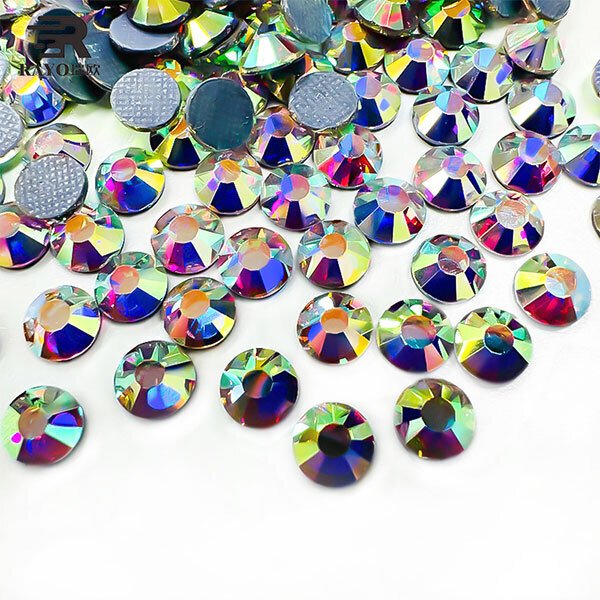
Need a size or color recommendation for your next order? Send us your fabric type, design, and target price — we reply within one business day. WhatsApp +86 13692450325 · rhinestonewholesale8@gmail.com