
Inside a Guangzhou Rhinestone Factory, an Interview with Our Production Director
The global fashion and textile industry is a whirlwind of sparkle, but behind every shimmering evening gown or branded sportswear logo lies a complex manufacturing process that most buyers never see. To truly understand the heart of the B2B rhinestone business, one must go to where the magic happens: the factory floor in Guangzhou. Today, we have the rare privilege of sitting down with Mr. Chen, a man whose hands have quite literally shaped the industry over the last two decades. As the Production Manager at one of Guangzhou’s leading rhinestone manufacturing facilities, he oversees the creation of millions of stones every month. From the precision cutting of K9 glass to the chemical engineering of grey glue, Mr. Chen is the guardian of quality in a world where a fraction of a millimeter makes all the difference.
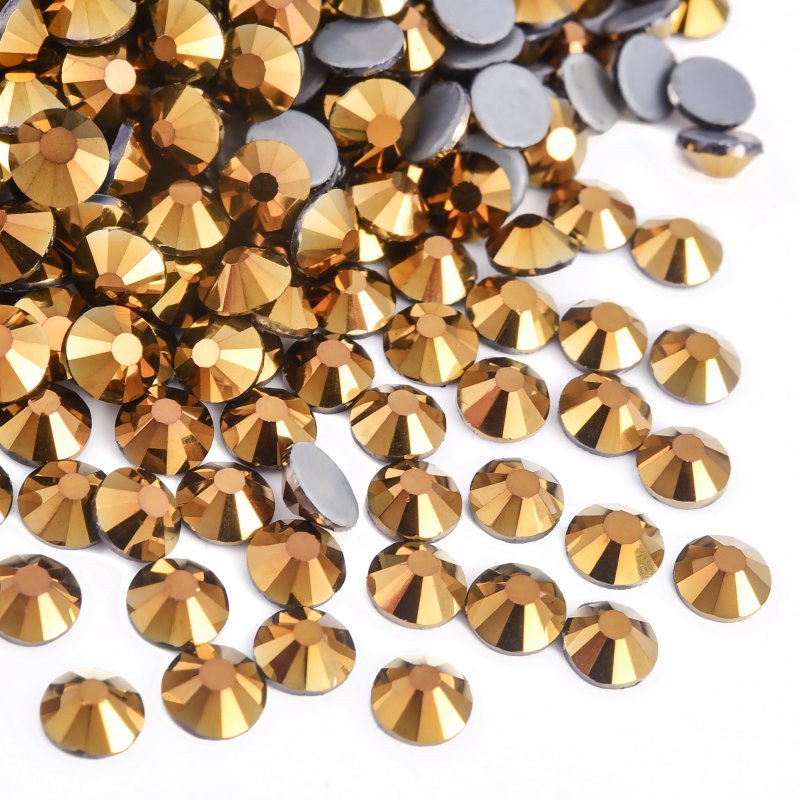
The Journey of a Production Veteran: 20 Years in the Heart of Guangzhou
Interviewer: Mr. Chen, thank you for joining us today. You’ve been in the rhinestone industry for 20 years. Looking back at when you started in the early 2000s, how has the landscape changed in Guangzhou?
Mr. Chen: (Laughs) It’s like night and day. When I first started as a technician on the polishing lines, everything was much slower. Guangzhou was already becoming a hub, but the technology was basic. We were mostly producing simple glass stones with manual labor for sorting. Today, we are a global powerhouse. We’ve moved from “quantity first” to “quality and precision first.” The machinery we use now—high-speed automated cutting machines and computerized vacuum plating—was a dream 20 years ago. But more importantly, the buyers have changed. They are more educated. They know the difference between lead-free glass and standard glass. They demand consistency.
Interviewer: What has kept you in this industry for so long? What is it about rhinestones that still excites you?
Mr. Chen: People think a rhinestone is just a piece of glass. To me, it’s a tiny piece of engineering. There is a specific satisfaction in seeing a raw block of K9 glass transformed into thousands of perfectly faceted gems that catch the light exactly right. Every time we improve the glue formula or refine a cutting angle, I feel a sense of pride. It’s about the “craftsman spirit” (匠人精神). In B2B, if our stones fail, our clients’ entire production line fails. That responsibility keeps me focused every single day.
The Secret of the the distributor: K9 Glass and the Art of the Cut
Interviewer: Let’s talk about the material. We hear a lot about “K9 glass” in the B2B world. Why is K9 the gold standard for hotfix rhinestones, and how does it differ from cheaper alternatives?
Mr. Chen: This is a crucial point for wholesalers to understand. K9 glass, or K9 crystal, is a high-quality optical borosilicate glass. It is prized for its exceptional clarity and high refractive index. When we talk about “sparkle,” we are really talking about how light enters and exits the stone. K9 has fewer impurities—fewer bubbles and streaks—than the cheaper “soda-lime” glass used in low-end stones. Cheaper glass looks “milky” or dull after a few washes. K9 stays brilliant because the glass itself is harder and more transparent.
Interviewer: How do you ensure that every stone has that “high-end” look? Is it just the material, or is it the cutting?
Mr. Chen: It’s both. You can have the best glass in the world, but if the cutting is sloppy, it won’t shine. In our factory, we use 12 to 16-facet cutting patterns for our premium lines. The angles must be mathematically precise. If one facet is slightly off, the light leaks out the side instead of reflecting back to the eye. We use diamond-tipped cutting wheels and water-cooled systems to ensure the edges are sharp. A sharp edge on a facet is what creates that “fire” or “rainbow effect.” If the edge is rounded or chipped, the stone looks cheap. We inspect the cutting wheels every few hours because even a tiny bit of wear can ruin the precision of the batch.
Interviewer: Many buyers are confused by “2088” or “2058” styles. Can you explain why the facet arrangement matters so much?
Mr. Chen: Those numbers originally referred to specific cuts popularized by top-tier brands. The “multi-layer” cut, where facets are arranged in different sizes and heights, creates more surface area for light to hit. For a B2B buyer, this is a selling point. When they show their clients a garment, a 16-facet stone will outshine an 8-facet stone every time, especially under stage lights or retail lighting. It adds perceived value to the final product far beyond the cost of the stone itself.
The Science of Adhesion: The “Grey Glue” Mystery
Interviewer: For hotfix rhinestones, the glue is just as important as the glass. We see “Grey Glue” advertised everywhere. What makes a good grey glue, and what are the “secrets” you’ve developed over the years?
Mr. Chen: You’ve hit on my favorite topic. The glue is the “soul” of the hotfix rhinestone. If it doesn’t stick, the stone is useless. We use a specialized “Intensive Grey Glue” that we’ve refined through years of testing. The secret isn’t just one ingredient; it’s the balance of three things: melting point, viscosity, and elasticity.
Mr. Chen: First, the melting point must be consistent. Our glue is designed to melt between 150°C and 180°C. If it melts too low, it might come off in a hot dryer. If it melts too high, you risk burning the fabric. Second, viscosity—when it melts, it needs to “wick” into the fibers of the fabric to create a mechanical bond. Finally, elasticity—once it cools, it needs to be slightly flexible. If the glue is too brittle, the stones will “pop” off when the fabric is stretched or folded.
Interviewer: Why is it grey? Does the color matter?
Mr. Chen: Traditionally, the grey color comes from the addition of specific heat-conducting particles. These particles help the glue melt more evenly and quickly when the heat press is applied. Also, from a quality control perspective, grey glue is easier to inspect against the silver foil backing of the rhinestone. We can see immediately if the glue coverage is 100% or if there are “bald spots.” A stone with only 80% glue coverage is a failure waiting to happen. Our goal is a thick, even “nest” of glue on every single stone.
Interviewer: How do you test the “washability” of your glue? Many B2B clients worry about stones falling off after a few laundry cycles.
Mr. Chen: We have a laboratory in the factory specifically for this. We don’t just guess. We take sample fabrics—denim, cotton, spandex—apply our stones, and then put them through industrial washing machines at 60°C for 20 or 30 cycles. We even do “stone-wash” tests for denim manufacturers. If more than 1% of the stones fall off, we reject the glue batch. For our premium line, we use a German-imported raw material for the glue base. It’s more expensive, but the “loss rate” is nearly zero. In the long run, that saves the client money because they don’t have to deal with returns or repairs.
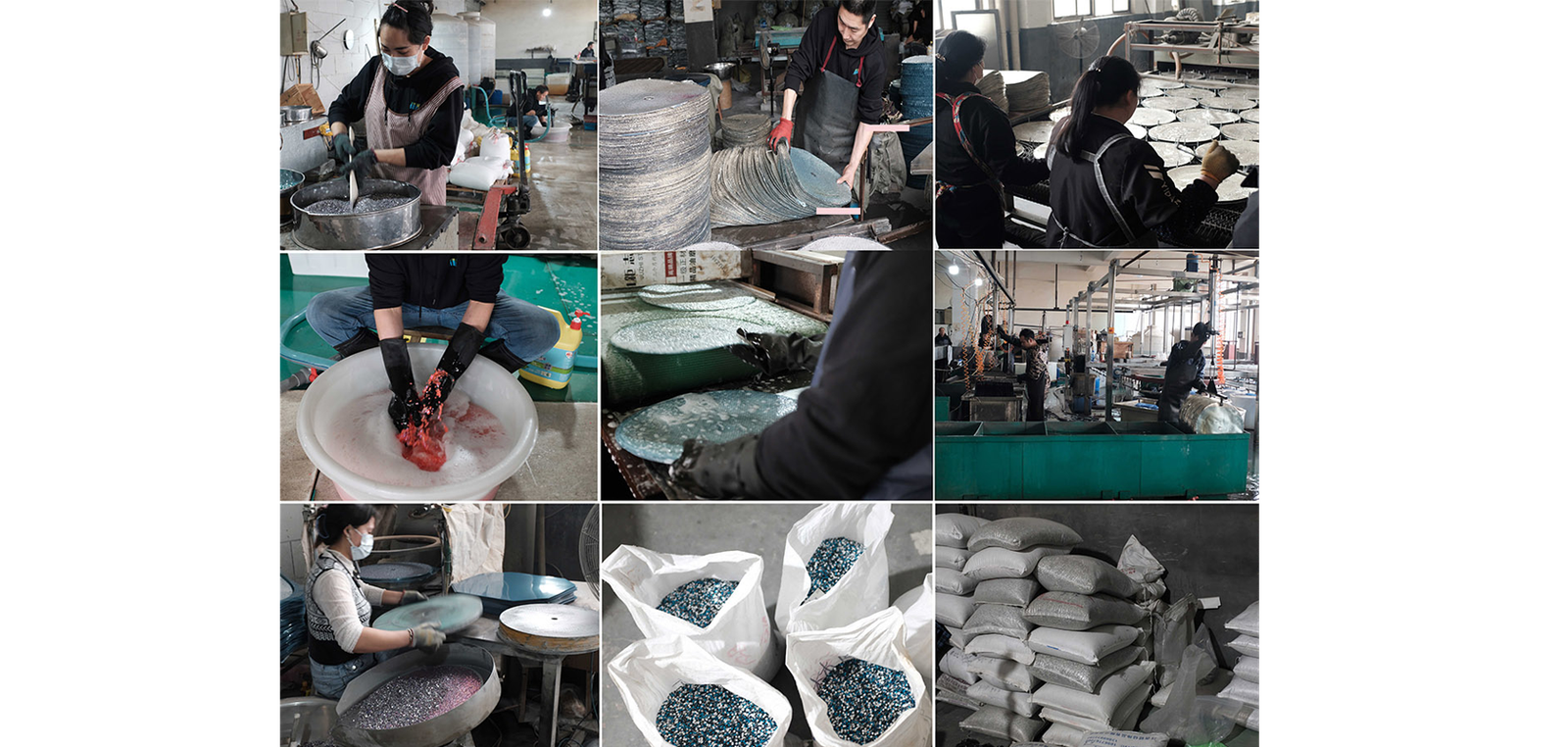
Quality Control: Why “Nearly Perfect” Isn’t Good Enough
Interviewer: In a factory producing millions of stones, how do you catch the mistakes? What does your QC process look like?
Mr. Chen: Quality control is a three-stage process here. It starts at the Raw Material Stage. We check the K9 glass blocks for any yellowing or cloudiness. If the “ingot” isn’t clear, the stones won’t be either.
Mr. Chen: The second stage is In-Process Inspection. Every hour, our QC staff takes samples from the cutting and plating machines. They use high-powered magnifiers to check for facet symmetry and “chipping.” They also check the “vacuum plating”—that’s the silver or gold foil on the back. If the plating is too thin, the stone won’t reflect light properly. If it’s too thick, the glue won’t bond well to it. It has to be just right.
Mr. Chen: The final stage is Post-Production Sorting. This is where the magic happens. We use automated color-sorting machines that can detect slight variations in shade. For example, if we are making “Crystal AB,” the machine ensures that the iridescent coating is uniform across the entire batch. Finally, we have a manual “shake test” and “vacuum test” to ensure no stones are stuck together and that there are no “empty” stones without glue. When a wholesaler opens a bag of 10 gross (1,440 stones), they expect 1,440 perfect stones. If they find 10 bad ones, they lose trust. My job is to make sure they find zero.
Interviewer: What is the biggest challenge in maintaining consistency, especially for large B2B orders that might span several months?
Mr. Chen: “Dye lot” consistency is the hardest part. Just like fabric, glass and coatings can have very slight variations between batches. If a client orders “Siam Red” in January and again in June, the color must match perfectly. We keep “master samples” for every color in a temperature-controlled, dark room. Every new batch is compared against the master sample under standardized D65 lighting. If the “Delta E” (the mathematical difference in color) is too high, we recalibrate the coating machines and start over. It’s expensive to do this, but for a high-end brand, a color mismatch is a disaster.
Trends and the Future: Lead-Free and Eco-Friendly Manufacturing
Interviewer: The industry is moving toward stricter environmental standards. How is the Guangzhou factory adapting to things like OEKO-TEX or lead-free requirements?
Mr. Chen: This is the biggest trend in the last five years. European and American brands now require “Lead-Free” (less than 90ppm or even 40ppm) and “Nickel-Free” certifications. In the old days, lead was added to glass to increase the refractive index—to make it sparkle. Removing the lead while keeping the sparkle is a major technical challenge.
Mr. Chen: We invested heavily in new glass formulas that use alternative elements to maintain the “fire” of the stone without using lead. We also upgraded our wastewater treatment systems. In Guangzhou, the government is very strict now. You cannot run a factory if you aren’t eco-friendly. We are proud that our premium lines are OEKO-TEX Standard 100 certified. This is a huge advantage for our B2B clients because it allows them to sell to the most demanding global brands without worrying about safety regulations or “toxic” materials.
Interviewer: Aside from sustainability, what other trends are you seeing in rhinestone design?
Mr. Chen: “Custom shapes” are exploding. It’s no longer just about round stones (SS6, SS10, SS20). We are seeing massive demand for baguettes, navettes, and even custom-branded shapes. Also, the “Matte” or “Velvet” finish is becoming popular in streetwear. It’s a rhinestone that doesn’t sparkle—it has a soft, diffused look. It’s technically difficult to get that finish perfectly smooth, but it’s what the market wants right now.
Advice for B2B Buyers: How to Spot a Quality Manufacturer
Interviewer: Mr. Chen, for a wholesaler or a garment factory looking for a new supplier in Guangzhou, what are the “red flags” they should look out for?
Mr. Chen: First, look at the packaging. If the stones are dusty inside the bag, it means the factory doesn’t have a good cleaning and air-filtration system. That dust will interfere with the heat-transfer process. Second, check the “uniformity” of the size. If you buy SS10, every stone should be exactly the same diameter. If some are slightly larger, they will “clog” the automatic rhinestone setting machines. A good factory has very tight tolerances.
Mr. Chen: Most importantly, ask for a “stress test” report. Any factory can show you a pretty stone. A real manufacturer can show you the wash-test results, the lead-test reports, and the glue-strength data. If they can’t provide that, they are probably a middleman or a small workshop without proper quality control. Finally, I always tell people: visit the factory if you can. Look at the machines. Are they modern? Are the workers wearing gloves? Is the floor clean? The environment where the stone is made tells you everything about the quality of the stone itself.
Closing Thoughts: The Future of Guangzhou Craftsmanship
Interviewer: After 20 years, do you think Guangzhou will remain the center of the rhinestone world?
Mr. Chen: I believe so. It’s not just about the machines; it’s about the ecosystem. We have the raw material suppliers, the chemical experts for the glue, the shipping infrastructure, and the skilled labor all in one place. But we have to keep innovating. If we just compete on price, we lose. If we compete on precision, technology, and reliability, we will always be the best in the world. As long as there is a need for beauty and sparkle in the world, we will be here in Guangzhou, making it happen.
Interviewer: Mr. Chen, thank you for these incredible insights. It’s clear that there is a lot of “heavy lifting” behind those lightweight stones.
Mr. Chen: My pleasure. I hope this helps your readers understand that in our business, quality isn’t an accident—it’s a choice we make every day on the production line.
***
Author’s Note: This interview provides a deep dive into the technical and operational excellence required to produce world-class hotfix rhinestones. For B2B buyers, understanding these nuances—from K9 glass cutting to intensive grey glue chemistry—is the key to finding a long-term manufacturing partner who can support their brand’s growth.
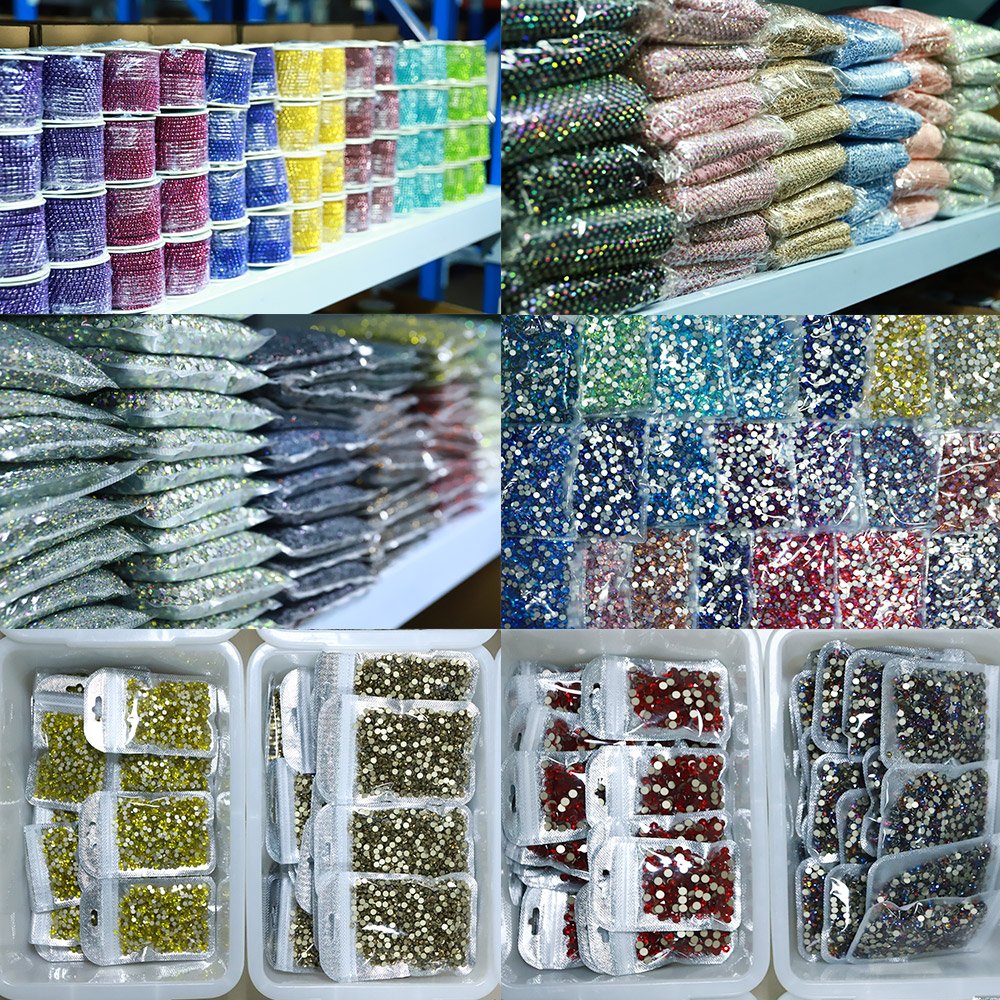
Need a size or color recommendation for your next order? Send us your fabric type, design, and target price — we reply within one business day. WhatsApp +86 13692450325 · rhinestonewholesale8@gmail.com