
What Headdress and Crown Makers Buy From a Rhinestone Wholesaler
Quick answer If you build pageant headdresses, crowns, or stage tiaras, you buy three things from us instead of a finished crown. First, K9 optical crystal flatbacks with a refractive index near 1.9, 12-14 facets, and Mohs 6-6.5 hardness. Second, the trims and settings that hold those stones. Third, a colour match that keeps the headpiece on the same shade as the gown. Metal and wire bases take glue-on or sew-on stones, fabric bases take hotfix, and minimum order is 2 bags per colour and size.
What Rhinestones Are Actually Used to Build a Pageant Headdress or Crown
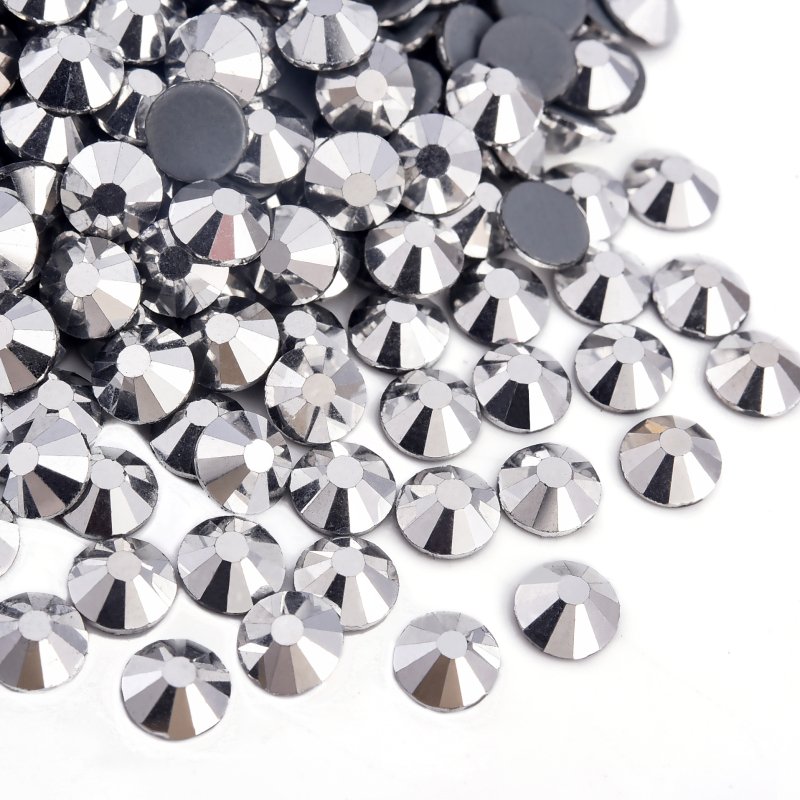
Most headdress builders work with K9 optical crystal in a flatback format. It carries a refractive index of roughly 1.9 across 12-14 machine-cut facets and sits at Mohs 6-6.5, and that combination is what throws the tight, bright flash a stage light bounces back at the audience. You buy the same crystal body in hotfix, glue-on, and sew-on versions.
A cheap 8-facet stone can look acceptable in a shop under white light. Put it under a follow spot and it goes flat, because fewer facets scatter the entering light instead of returning it. That gap is why the fire on stage headpiece work is not a brightness claim but a geometry one. Facet count and refractive index do the work. Size alone does nothing.
The same K9 body also comes with finishes. Clear, Crystal AB, and the other iridescent Aurora Borealis coatings are vacuum-deposited thin films rather than a sprayed layer, so the rainbow shift sits on the surface instead of flaking off the way a cheap painted stone does after a season of handling. If you are comparing this material against genuine Swarovski, we wrote a full breakdown in our K9 crystal hotfix vs Swarovski comparison for costume designers, which covers where the optical gap actually shows and where it does not. Headdresses are the one product category where that difference is most visible, because the wearer is standing under a hard light at eye level with judges rather than walking past a camera.
One honest limit before we go further. K9 is optical glass, not diamond and not genuine crystal. It is hard, but it is not scratch-proof. A headpiece that lives loose in a bag with metal pins will pick up surface scuffs, and a scuffed stone loses fire even though the facet count has not changed. Store finished pieces in a case, not a bin.
What Base Do You Set the Stones On and How Does It Change the Stone You Buy
The base decides your fixing method, and the fixing method decides the stone you order. This is the single most common mistake we see from new headpiece buyers. They order hotfix stones because fabric gowns are hotfix work, then try to press them onto a plated alloy arch and lose the whole run. Metal does not take heat transfer adhesive. It has to be glue-on or sew-on.
Four base families cover almost every headpiece we ship against.
| Base type | How stones attach | Stone format that works | Watch this |
|---|---|---|---|
| Alloy base with electroplating | Glue-on adhesive or sew-on settings | Glue-on flatback, sew-on stones, prong settings | Never hot-press, the plating and the arch both distort |
| Copper accessories and wire frame | Wire wrap, sew-on, glue-on | Sew-on stones, beads, rhinestone trim | Heat can soften solder points |
| Fabric base such as tulle, felt, or satin | Hotfix, glue-on, or sew | Hotfix flatback, glue-on | Follow the fabric temperature window |
| Pre-formed motif or applique | Hotfix or sew onto the finished base | Hotfix or sew-on | Test on a scrap of the actual base first |
The practical reading is simple. If the stone touches metal, order glue-on or sew-on. If it touches fabric, you can use hotfix and get the speed advantage of pressing. Nothing else about the stone changes. The crystal grade, the colour, and the size are identical between a hotfix and a glue-on SS16 from the same production lot, so you are never trading quality for a fixing method.
Wire and copper frames behave differently again. They are light, which is why every tall crown you have ever seen is built on one, but they have weak points at every join. A hotfix press applies even pressure across a flat plate, and a wire frame will not survive that. Settle those with sew-on stones or small prong settings, and keep the adhesive work for the solid faces. We keep glue-on, sew-on, and hotfix formats in the same size and colour range, so a single order can cover a mixed metal-and-fabric build without two shipments.
If your studio builds both gowns and headpieces, the gown sourcing logic is worth reading alongside this one. Our guide to wholesale rhinestones for pageant and prom gowns walks through the fabric side of the same catalogue, and the size and colour ranges are designed to overlap so the crown and the gown pull from one inventory.
What Stone Sizes Look Right on a Headpiece
Headdress work runs small. A headpiece is viewed from a distance under strong light, so detail lines carry at SS6 (2.0 mm) and SS10 (2.8 mm), the body fills at SS10, and single focal points sit at SS16 (4.0 mm) or SS20 (4.8 mm). SS30 (6.4 mm) only earns a place on a crown four inches and taller.
| SS size | Diameter | Where it works on a headpiece | Note |
|---|---|---|---|
| SS6 | 2.0 mm | Detail lines, edge trim, filigree fill | Lightest option, slowest to lay |
| SS10 | 2.8 mm | Body fill on band and arches | The workhorse size |
| SS16 | 4.0 mm | Focal points and centre motifs | Most common focal stone |
| SS20 | 4.8 mm | Statement centre on large crown faces | Noticeably heavier |
| SS30 | 6.4 mm | Only on crowns 4 in and taller | Heavy, use sparsely |
The reason small stones win here is proportion. A headpiece is roughly the size of a hand. A stone that reads as a subtle highlight on a gown bodice reads as a boulder on a tiara band, because the surrounding area is so much smaller. Designers who come from garment work and carry SS16 or SS20 habits onto a headpiece usually end up with a piece that looks clunky in photographs.
There is a second reason, and it is weight rather than looks. Stone weight scales with diameter, and a band is a thin strip with no fabric area to spread load across. Dense SS6 work on a band stays comfortable for a full competition day. Dense SS20 work on the same band gets heavy fast.
Where a large stone does belong is the centre declaration. One SS20 or SS30 set dead centre on a tall crown face anchors the whole piece and gives the eye a resting point. Our SS6 to SS30 complete size reference lists the full range with millimetre conversions if you are mixing sizes and need to check coverage before you order. When you plan a mixed lay, work the focal stone first, then fill outward with the smaller sizes. Doing it the other way round means you run out of room for the centre piece.
How Do You Keep a Headdress Light Enough to Wear All Day
Weight is controlled by structure, not by using fewer stones. A dense field of SS6 over a hollow frame reads as fully covered and weighs far less than a sparse scatter of SS20 over a solid plate. Build the field small, keep the base open behind it, and spend your weight budget on one focal cluster.
| Headpiece area | Recommended mix | Effect |
|---|---|---|
| Thin band and arches | SS6 and SS10 only | Stays light, reads as a continuous line of light |
| Focal centre | One cluster of SS16 or SS20 | Draws the eye without adding mass |
| Large crown face | SS16 field with SS20 accents | Full look with controlled weight |
| Full pavé panel | Dense SS6 field plus a few SS16 | Bright but lighter than a large-stone lay |
The reason this works is that the visual density of a headpiece is set by coverage percentage rather than stone size. Small stones tile a surface with less wasted gap and less material per unit of visible shine. Hollow or openwork structure behind the field removes the base weight entirely, which is how a piece with thousands of stones still feels light enough for a full day of wear.
Here is the honest boundary. The tradeoff flips at the small end of the size range. SS6 and SS10 give you the lightest and most detailed look, but they cost you labour, because laying four times as many stones takes roughly four times as long. On a tight deadline, a studio that switches from a dense SS6 field to a field of SS16 with SS20 accents will cut bench time even though the piece gets heavier. There is no free answer here, only a choice.
There is also a weight limit that has nothing to do with comfort. Large stone lays are not suitable for children’s divisions or for any headpiece worn by a young competitor. An SS30-dense crown on a small head is both top-heavy and uncomfortable within the first hour. For junior looks, stay at SS6 and SS10 with a single small SS16 focal, and keep the frame as open as the design allows. That is a real constraint, not a styling preference.
Which Stone Type Holds on a Headdress That Gets Handled and Packed
Most headpieces are handled far more than a gown. They are packed into cases, carried between dressing rooms, adjusted on the head, and stored for years between seasons. Mechanical hold matters more here, so sew-on stones and prong settings carry the load in high-wear positions, while hotfix grey glue handles fabric-based detail work.
| Fixing method | Handles packing and adjusting | Survives cleaning | Best for |
|---|---|---|---|
| Hotfix grey glue on fabric | Good on stable weaves | Depends on solvent used | Fabric bands, tulle, satin base |
| Glue-on flatback | Good with the right adhesive | Usually survives | Metal and wire bases |
| Sew-on stone | Best mechanical hold | Survives | High-handling crowns and arches |
| Prong setting | Very good for single stones | Survives | Focal points and loose stones |
The polymer that does the work is what separates a piece that lasts from one that sheds stones in the case. Our headband and crown stones use German grey glue with a melting window of 150-170°C and a working temperature of 160°C. That window means the adhesive bonds to the fabric surface and stays bonded through normal handling, seasonal storage, and the kind of re-pressing that happens when a designer wants to reset a stone.
Cheap yellow-glue stones behave differently, and this is where the honest boundary sits. That glue melts below 130°C. It can be persuaded to stick at the bench, but sun exposure, a hot car, or a warm storage room is enough to soften it back up, and the stones simply fall away. A headpiece that has to survive a southern outdoor pageant in summer will not do it on a yellow-glue stone. The failure is not caused by rough handling, it is caused by ordinary heat. We do not sell that grade, and we do not recommend building a competition piece on it.
For anything that sees repeated contact, sew-on is the safe choice. The stone is stitched through the base, so the hold is mechanical and does not depend on an adhesive layer at all. Large focal stones on tall crowns are almost always set this way, either sewn or in a prong setting. If you are establishing your own press settings for the fabric base, our hotfix application guide gives the temperature, pressure, and dwell time for cotton, spandex, and silk, and those settings matter more on a thin headpiece base than on a garment because there is less material to absorb heat.
How Do You Match the Crown Stones to the Gown Color
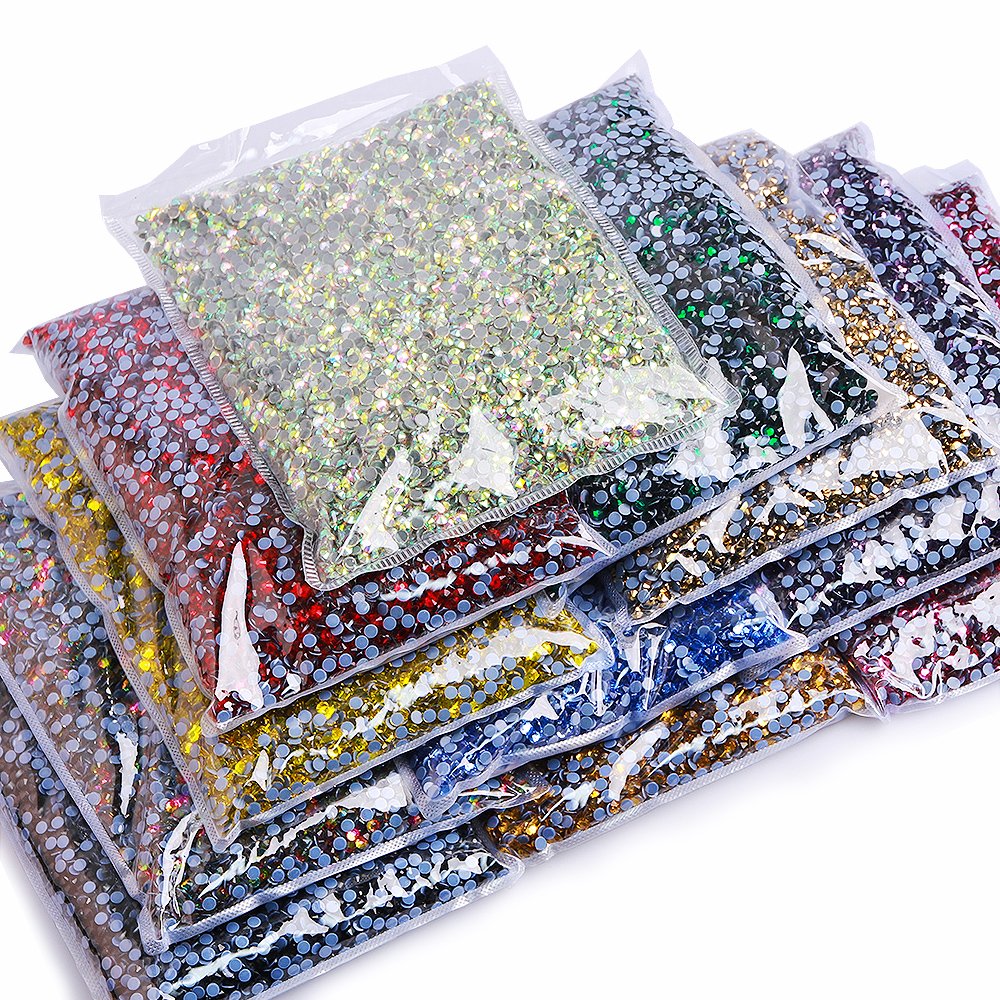
You match by ordering both from one stock run and holding a physical sample against the gown. We keep 400+ stock colours and match custom shades to a Pantone reference, and the discipline that keeps a set consistent is dye lot control. Stones from one production batch share the same colour, and stones from a different batch of the same nominal colour can sit half a shade off under stage light.
That half shade is the whole problem. A crown and gown are worn as one look and photographed together, so any drift between them is visible to a judge even if it is invisible on a bench under fluorescent light. The safe workflow is to order the headpiece stones and the gown stones together on the same purchase, keep a small sample from the bag, and compare that sample against the finished gown under the same light the piece will be worn under.
| Situation | What to order | Why |
|---|---|---|
| Crown and gown same colour | One order, one batch | Keeps both pieces on the same dye lot |
| Pantone-specific brand colour | Pantone custom match | Protects a labelled or sponsored look |
| Repeat order from a past season | Send the retained sample | Matches the earlier run rather than the current one |
| Mixed finishes in one design | Same base colour, different coating | Keeps the underlying colour consistent |
If your studio builds seasonal collections, our hotfix rhinestone colour reference maps the stock range by family so coordinating a headpiece and gown takes minutes rather than a run through swatches. For anything outside the stock 400+, the Pantone route covers it, and the custom batch is held the same as a stock colour once it is produced. We always keep a retained sample from every batch we run, which is how a repeat order two seasons later still lands on the same shade. If you do not keep your own reference sample, ask us for the batch record and we will match against it.
One practical note on finishes. If the gown uses a clear stone and the headpiece uses Crystal AB, the two will not read as identical under a camera flash even though the base colour matches. Decide the finish for the whole look up front, or accept that the headpiece will deliberately shift colour while the gown stays neutral. Either can work as a design choice, but it should be a choice rather than a surprise.
Where Can a Costume Studio Buy Headpiece Stones and Trims in Bulk
You buy direct from the factory at the same MOQ whether you order loose stones or finished trim, and factory purchase means the size and colour of a trim line up with the loose stones in the same order. We supply K9 hotfix stones, glue-on and sew-on flatbacks, rhinestone trims and chains, and pre-formed motifs, all from one stock so a headpiece build does not need three suppliers and three colour runs.
The trim option is the one headpiece studios underuse. Laying a band by hand, stone by stone, is precise work and it eats bench hours. A rhinestone trim or a pre-set band in the same stone and size drops onto the frame as a unit, which cuts the laying time to almost nothing on the linear sections and leaves your hand work for the focal areas. Our rhinestone trim by the yard range covers the linear and border formats, and single-row or multi-row banding lets you match the width of the headpiece arches directly.
| Component | What it replaces | Where it saves time |
|---|---|---|
| Rhinestone trim by the yard | Hand-laying a linear run | Bands, arches, and edge lines |
| Pre-formed motif | Building a centre cluster from loose stones | The focal point of the headpiece |
| Sew-on stones | Glue and press work on high-contact points | Points that get handled |
| Loose hotfix stones | Nothing, this is the core craft | Fabric fields and detail fill |
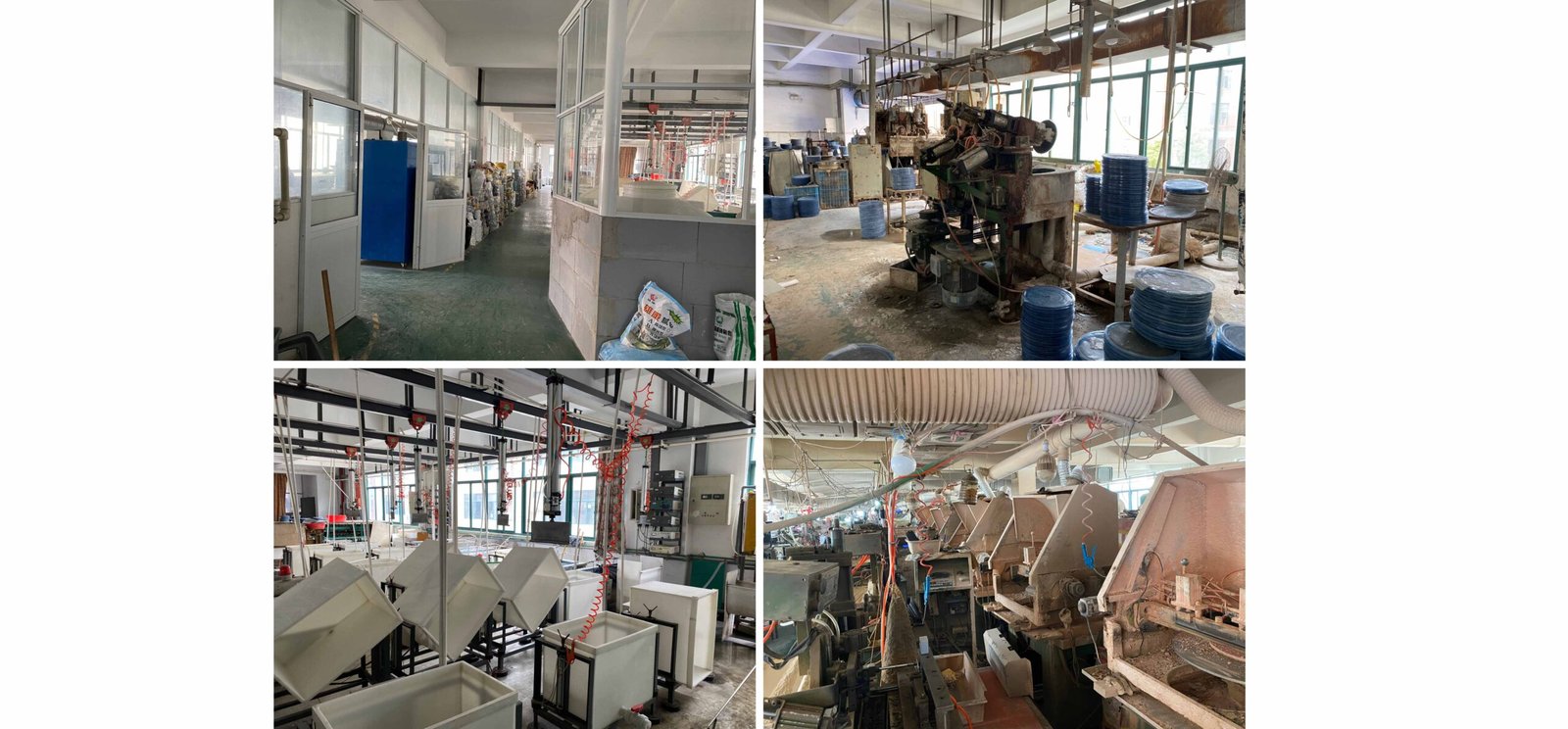
We are a Guangzhou factory shipping direct, not a reseller, so the people answering your order question are the people who run the batches. If you are specifying a look, that matters, because a factory can tell you whether a colour is a stock shade or needs a custom run before you commit the design. If you want an edge detail rather than a full band, the same trim stock handles it and pairs with the stones already in your order.
For studios that design their own hardware, the trim and motif route also opens up custom work. Send a sketch and we can produce a pre-laid motif on a base you specify, so your centre piece arrives ready to set rather than as a pile of loose stones. That shifts your bench time to assembly instead of laying.
What Is the MOQ and Lead Time for Headpiece Stone Orders
Minimum order is 2 bags per colour and size, and a bag holds about 1440 pieces at SS16, so the MOQ is effectively one gross per shade rather than a large production commitment. Stock colours ship the same day payment clears. Custom runs ship in 7 to 15 days depending on order quantity.
| Order type | MOQ | Lead time |
|---|---|---|
| Stock colours | 2 bags per colour and size | Ship the same day payment clears |
| Custom Pantone colour | 2 bags per colour and size | Ship in 7 to 15 days depending on quantity |
| Finished-headpiece industry reference | Often 12 pcs | 20 to 35 days |
The last row is context rather than an offer. It reflects how finished headdress manufacturers in this trade typically quote, and it is the reason a studio that builds its own pieces can move faster than a studio that outsources whole crowns. A factory that makes finished headpieces has to run a full production line before anything ships, so the common quote in that trade sits at around 12 pieces minimum with 20 to 35 days of lead time. When you buy stones and build in-house, the constraint becomes your own bench time, and the material arrives in days rather than weeks.
Two things decide whether an order lands on the fast lane or the custom lane. The first is whether the colour is inside the 400+ stock range. Stock shades move the same day, custom shades need a run. The second is quantity. A larger custom order takes longer within that 7-to-15-day window, and we confirm the exact date on the quote rather than leaving it open.
Once your bulk stones are in, storage matters more than most studios expect. Loose stones in an open tray pick up dust and blend shades, and a set that drifts out of its dye lot is hard to rebuild. Our notes on storing bulk rhinestones cover keeping bags sealed and batches separated, which is the cheapest insurance against a colour mismatch on a repeat order.
What a First Headdress Stone Order Actually Looks Like
Run one headpiece end to end before you scale. Pick the base you will actually build on, because that fixes whether you are ordering hotfix or glue-on and sew-on. Then order your detail size and your focal size together, plus a trim if the design has a linear run, so you can test the whole method on the real base rather than a scrap of the wrong material.
Send us the base type and the look, and we will quote within 12 hours and include a free sample so you can press or set a test piece before you commit. If the design mixes metal and fabric, say so up front, because that single detail decides the stone format for half the order. We ship from Guangzhou direct, so the person who confirms your sample is the person who can tell you whether your shade is stock or custom.
WhatsApp https://wa.me/8613692450325 or +86 13692450325, or email rhinestonewholesale8@gmail.com. Tell us the base, the sizes, and the colour family, and we will send a sample you can lay on a real piece.
Need a size or color recommendation for your next order? Send us your fabric type, design, and target price — we reply within one business day. WhatsApp +86 13692450325 · rhinestonewholesale8@gmail.com