
Sourcing High-Quality Rhinestone Embellishments for South American Brands
The Strategic Advantage of Sourcing Premium Rhinestones for South American Fashion Brands
The South American fashion landscape is undergoing a dramatic transformation. From the bustling textile hubs of Medellín, Colombia, to the high-end boutique districts of Palermo in Buenos Aires, Argentina, apparel brands are increasingly turning to intricate embellishments to differentiate their products in a competitive global market. For B2B buyers and fashion entrepreneurs, the choice of embellishment is not merely a design preference—it is a critical business decision that impacts brand reputation, product longevity, and bottom-line profitability.
As a leading hotfix rhinestone manufacturer based in Guangzhou, China, we have seen a significant surge in demand from South American markets. This guide explores the nuances of sourcing high-quality rhinestone embellishments, navigating the specific logistical challenges of the region, and why the “Guangzhou-to-South-America” supply chain is becoming the backbone of the region’s premium denim and ready-to-wear sectors.
1. The Rising Demand for Embellished Denim in Colombia and Argentina
Denim is more than just a fabric in South America; it is a cultural staple. Colombia, often referred to as the “denim capital of the world” due to its massive production in the Antioquia region, has pioneered the “Push-Up” jean (Levantacola) and other figure-enhancing silhouettes that rely heavily on aesthetic appeal to justify premium price points. In recent years, the trend has shifted from simple distressed washes to high-octane glamor, where the brilliance of the stones is as important as the fit of the fabric.
The Colombian Market: Medellín’s Fashion Evolution
In Colombia, fashion is a major economic driver. Medellín, known for its “Colombiatex” and “ColombiaModa” trade shows, is a hub for innovation. Colombian brands are integrating hotfix rhinestones into their denim lines to command higher price points in both domestic and export markets (specifically to the US and other Latin American countries). The demand is particularly high for “Crystal AB” and “Jumbo” sized stones that create a shimmering effect under the tropical sun. For these brands, the ability to source stones that can withstand industrial stonewash processes—often involving high-temperature drying and mechanical friction—is paramount. This is where the quality of the rhinestone—and more importantly, the glue—becomes the deciding factor in a brand’s success.
The Argentinian Market: Sophistication Meets Sparkle
Argentina’s fashion scene is known for its European-influenced sophistication. However, the rise of “glam-rock” aesthetics and “Noche” (nightwear) trends in Buenos Aires has led to a massive increase in rhinestone usage on denim jackets, leather goods, and high-end footwear. Argentinian designers are looking for precision-cut stones that mimic the brilliance of high-end jewelry rather than cheap plastic imitations. They require a reliable wholesale partner in Guangzhou who can provide consistent grading (AAAAA grade) to ensure that a boutique collection looks uniform across all retail outlets. Despite economic fluctuations, the “affordable luxury” segment in Argentina remains resilient, and rhinestones offer the perfect tool for adding value without exponentially increasing base production costs.
2. The Technical Core: Why Glue Quality is Non-Negotiable in High Humidity
One of the most overlooked aspects of sourcing rhinestones for South American brands is the environmental factor. Colombia’s tropical climate, characterized by high humidity in cities like Cali and Barranquilla, and Argentina’s humid coastal regions like Buenos Aires, present a unique challenge for hotfix embellishments. Standard “cheap” rhinestones often use low-grade industrial glues that become brittle or lose their adhesive properties when exposed to moisture-rich air and frequent washing cycles.
The Science of Hotfix Adhesion
Hotfix rhinestones come with a pre-applied layer of solid glue on the flat back. When heat is applied (usually via a heat press or ultrasound machine), the glue melts, flows into the fibers of the fabric, and then solidifies to create a mechanical bond. In high-humidity environments, inferior glues can undergo “hydrolysis”—a chemical breakdown caused by water molecules in the air. This leads to the stones simply popping off, often before the garment even reaches the consumer.
The ROI of Premium Hotfix Glue
In our Guangzhou factory, we emphasize the use of high-performance German-developed or Japanese-standard hotfix glues. The ROI (Return on Investment) of using premium glue is clear:
- Reduced Return Rates: For an e-commerce brand in Argentina, a 5% return rate due to “peeling stones” can wipe out annual profits. Premium glue ensures the stones stay attached for the life of the garment.
- Brand Loyalty: Customers in Medellín expect their embellished jeans to last through multiple wash cycles. When the stones stay bright and attached, the brand is perceived as high-quality, leading to repeat purchases.
- Efficiency in Production: High-quality glue has a more predictable melting point. This means faster application times on the heat press and fewer “re-work” sessions in the factory. It also reduces “glue leakage”—the messy residue that can ruin a light-colored denim wash.
When sourcing, B2B buyers should specifically ask for Grey Glue (the gold standard for denim) or Green Glue. These are specifically formulated to penetrate the dense fibers of heavy fabrics like 12oz or 14oz denim, creating a permanent bond that is both flexible and moisture-resistant.
3. Rhinestone Grading: Navigating the Guangzhou Wholesale Market
Guangzhou is the global epicenter for rhinestone production, but the sheer variety of options can be overwhelming for a South American buyer. Understanding the grading system is essential for maintaining brand standards.
AAAAA Grade (The Professional Standard)
For brands in the mid-to-high-end segment, AAAAA grade is the minimum requirement. These stones are machine-cut with precision, featuring sharp facets and high-index lead-glass or high-clarity lead-free glass. They offer the highest light refraction, essential for the “wow factor” required in the Colombian “Levantacola” market.
Lead-Free vs. Standard Glass
As South American countries tighten their regulations on textile imports (often mirroring European OEKO-TEX standards), lead-free rhinestones are becoming a necessity rather than an option. Lead-free stones use alternative metallic oxides to achieve brilliance without the health and environmental risks associated with traditional leaded crystal. For a B2B brand looking to export from South America to the EU or the US, using lead-free stones is a critical compliance step.
4. Advanced Application Techniques: Heat Press vs. Ultrasonic
For South American brands scaling their production, the choice of application method can be as critical as the choice of stone. There are two primary methods used in modern garment factories:
The Industrial Heat Press
Most large-scale denim manufacturers in Medellín use multi-head industrial heat presses. This method is ideal for high-volume production where “transfer motifs” are used. The key parameters are:
- Temperature: 160-175°C (320-350°F). High enough to melt the glue, but low enough not to “scorch” the denim.
- Time: 12 to 15 seconds. If the stone is large (e.g., SS30), you may need up to 20 seconds for the heat to penetrate the stone and reach the glue layer.
- Pressure: Medium to High. This ensures the molten glue is forced into the weave of the denim.
Ultrasonic Setters
For intricate “spot” embellishments or work on delicate leather goods in Argentina, ultrasonic setters are becoming popular. These machines use high-frequency sound waves to generate localized heat at the base of the stone. This method is slower than a heat press but offers incredible precision and reduces the risk of thermal damage to the fabric.
5. Navigating Logistics: From Guangzhou to the Ports of South America
Shipping from China to South America is one of the longest and most complex logistics routes in the world. However, for a B2B brand, mastering this supply chain is a significant competitive advantage. Understanding the “incoterms” and specific customs requirements of Colombia and Argentina is essential.
Logistics to Colombia: Buenaventura and Cartagena
Most shipments to Colombia arrive via the Port of Buenaventura (Pacific side) or the Port of Cartagena (Atlantic side).
- Shipping Times: Sea freight typically takes 35-45 days. For fast-fashion cycles in Medellín, many brands opt for “Sea-Air” combined transport or direct Air Freight, which takes 5-10 days.
- The “Certificado de Origen”: This is a vital document. Under certain trade agreements, having the correct origin documentation can significantly reduce the “Arancel” (Import Duty).
- HS Code Precision: Rhinestones should be classified under HS Code 7018.10. Ensuring this is correct on the Bill of Lading prevents DIAN from flagging the shipment for “Incorrect Classification,” which carries heavy fines.
The Argentinian Import Challenge: SIRA and Beyond
Argentina has historically had stricter import regulations, requiring importers to navigate systems like SIRA (now transitioning to SIDI). Working with a Guangzhou manufacturer who is experienced in preparing the meticulous documentation required by AFIP (Administración Federal de Ingresos Públicos) is vital.
- Proforma Invoices: These must be extremely detailed, listing the material, size, and grade of every stone.
- Small Batch Shipping: Given the currency fluctuations in Argentina, many boutique brands prefer smaller, more frequent shipments via courier (DHL/FedEx) to manage cash flow. We offer customized packaging solutions to minimize volumetric weight, saving on these high-cost shipping methods.
6. Design Trends 2026: What’s Hot in the Southern Hemisphere
Our design team in Guangzhou works closely with trend forecasters to anticipate the needs of our South American partners. Here is what we expect to dominate the market in 2026:
The Ombré Effect
Combining multiple shades of a single color (e.g., Light Siam to Dark Siam) to create a gradient on the side seams of denim jeans. This is a massive trend for boutique brands in Buenos Aires who want to offer a more “hand-crafted” look.
Rhinestones and Lace
The combination of delicate lace inserts on denim with scattered SS6 and SS8 rhinestones. This “romantic-rock” aesthetic is highly popular for the resort-wear market in Cartagena.
Mixed Metalics
A fusion of hotfix rhinestones with metallic studs and pearls. Brands in Medellín are using this to create “heavy-metal” inspired denim collections that look incredibly expensive but are easy to produce using our pre-made transfer motifs.
7. Step-by-Step Quality Assurance for B2B Buyers
When you are ordering 500,000 stones from half a world away, you cannot afford to leave quality to chance. We recommend a strict QA protocol for all our South American partners:
- Initial Sampling: Never skip the sampling phase. Test the stones on your specific fabric. A stone that sticks to 100% cotton might not stick as well to a high-stretch Lycra-blend denim used in Colombian jeans.
- The “Wash Test”: Put the sampled garment through 10 industrial wash cycles. If more than 1% of the stones fall off, the glue or the application temperature is incorrect.
- The “Light Box” Test: Check the stones under different lighting conditions (Retail LED, Fluorescent, and Sunlight). This is crucial for Argentinian brands that sell in high-end shopping malls.
- Bulk Inspection: For large orders, consider a third-party inspection in Guangzhou before the balance payment is made. This ensures the bulk matches the approved sample.
8. Case Study: The “Medellín Success” Story (Hypothetical)
Consider a hypothetical Colombian brand, “Andes Denim.” They were struggling with customer complaints about falling stones on their premium “Sparkle Jeans” line. After switching from generic marketplace stones to our AAAAA-grade Grey Glue stones from Guangzhou, they saw:
- A 40% reduction in customer returns within the first six months.
- A 15% increase in production efficiency because the stones adhered faster.
- A significant boost in brand reputation, allowing them to expand into the Argentine and Chilean markets.
This success story illustrates that the “upfront” cost of a premium stone is almost always offset by the savings in production and the gains in brand equity.
9. Frequently Asked Questions (FAQ) for South American Buyers
Q: What is the best heat press setting for denim?
A: Generally, 160°C to 175°C for 12-15 seconds with medium-to-high pressure. However, always do a “test press” first, as different denim washes can affect heat absorption.
Q: Can I get custom-designed rhinestone transfers?
A: Yes! Most Guangzhou manufacturers can turn a vector file (AI or PDF) into a ready-to-press transfer motif. This is highly recommended for Colombian brands looking to add complex logos or patterns to back pockets.
Q: Is there a minimum order quantity (MOQ) for shipping to Argentina?
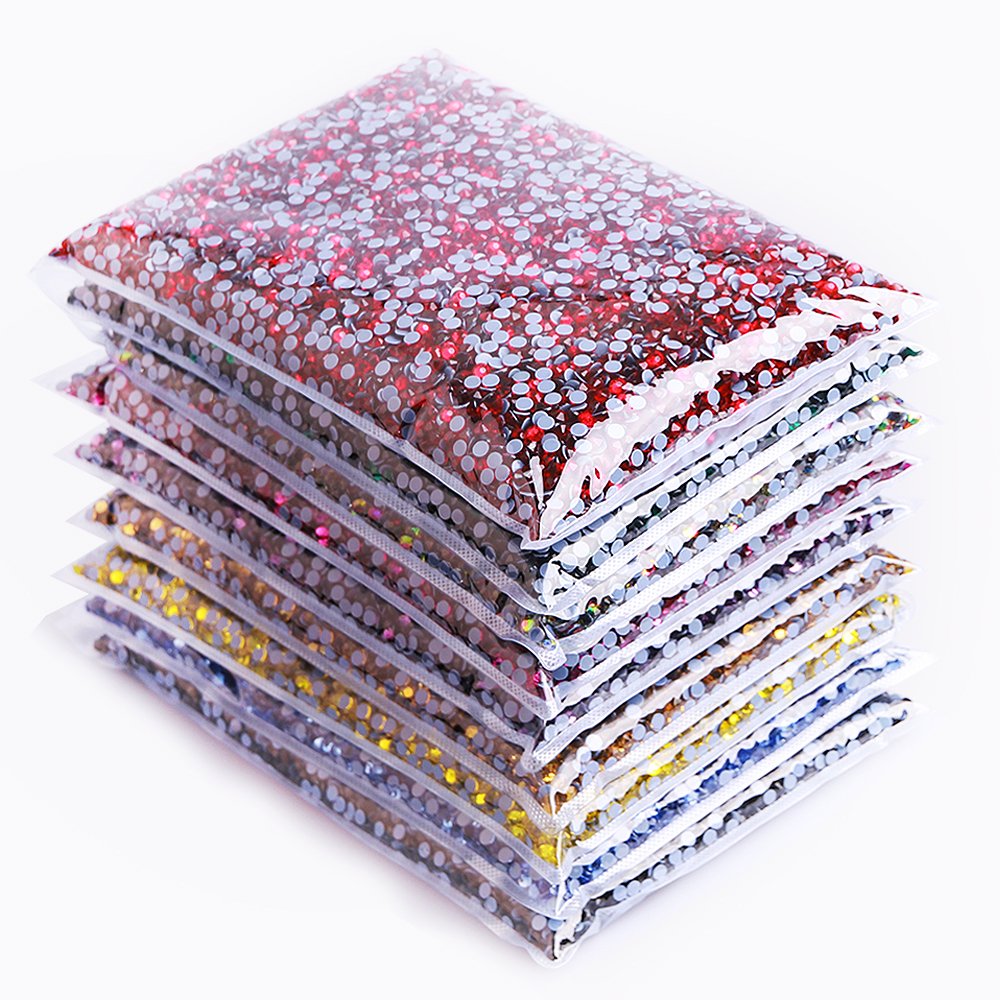
A: For stock colors like Crystal and Crystal AB, the MOQ is usually just one bag (10 gross). For custom colors, it may be higher. However, to optimize shipping costs to South America, we recommend consolidating orders to at least 20kg.
Q: How do you ensure color consistency between batches?
A: We use high-performance automated color sorting machines and maintain strict “Lot Control.” This means if you re-order “Rose Peach” six months later, we match it to the same chemical dye lot as your previous order.
Conclusion: Partnering for Long-Term Growth
Sourcing high-quality rhinestone embellishments is a journey that starts with a technical understanding of the product and ends with a robust logistical strategy. For apparel brands in Colombia and Argentina, the path to premiumization lies in the details. By choosing stones with superior glue for humidity resistance, navigating customs with an experienced partner, and focusing on the ROI of quality, brands can capture the vibrant, shimmering spirit of South American fashion.
As your manufacturing partner in Guangzhou, we are committed to providing the technical expertise and consistent quality needed to help your brand shine in the competitive Latin American market. We understand the unique challenges of the region—from the humidity of the coast to the complexities of the customs office. Together, we can build a supply chain that is as brilliant and resilient as the crystals we produce.
Get a free sample pack and factory pricing – WhatsApp us at +86 13692450325 or request a quote to check stock, bulk pricing, and lead time for your order.
Related reading: