
How to Replace a Single Damaged Hotfix Rhinestone Without Damaging the Surrounding Stones
You have likely encountered the frustration of a single dull or chipped stone marring an otherwise perfect garment. Whether it is a high-impact dance costume or a delicate bridal veil, the desire to fix that one flaw often comes with the fear of ruining the neighboring stones. When you apply heat to a finished garment, you risk activating the adhesive of every stone in the vicinity. If those stones shift even a fraction of a millimeter, the entire design can lose its geometric precision.
At Guangzhou Yiben E-Commerce Co., Ltd., we emphasize that the key to successful repair lies in the “localization of energy.” Because our rhinestones use German-imported grey hot-melt adhesive with a specific melting range of 150-170°C, you have a controlled window for intervention. Unlike cheap yellow glues that become unstable at lower temperatures, the German grey glue requires intentional, concentrated heat to release. By using the right tools and following a strict protocol, you can replace a single SS16 or SS20 stone without a trace of the repair being visible to the naked eye.
Can you spot-fix just one rhinestone on a finished garment
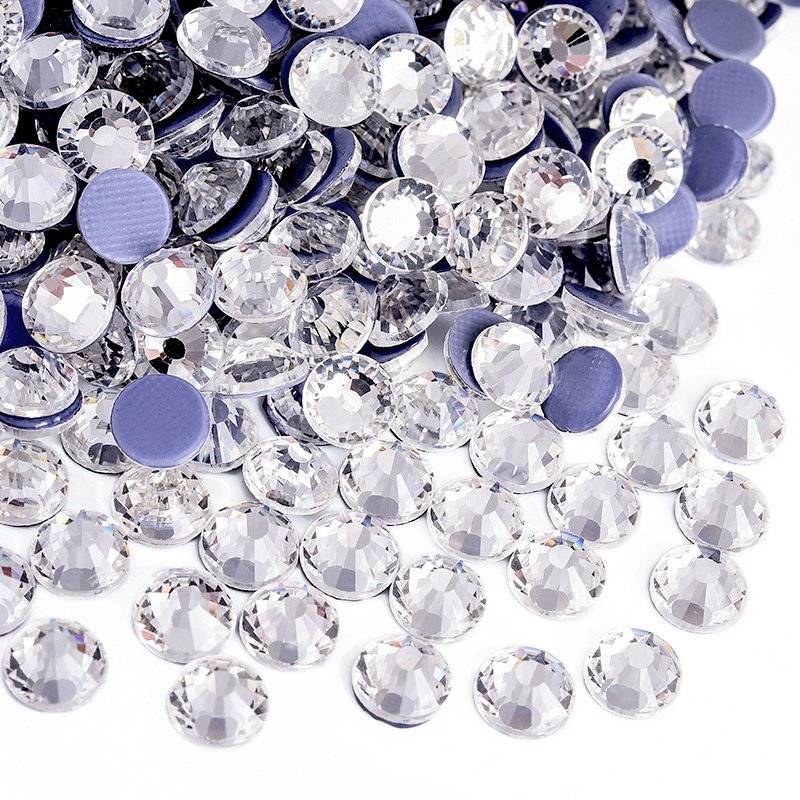
Yes, you can spot-fix a single rhinestone using localized heat from a precision tool like a rhinestone applicator or a soldering iron with a fine tip. The goal is to reach the 150-170°C melting point of the German grey adhesive only for the specific stone being replaced, while keeping the rest of the garment cool.
The process of spot-fixing is a standard procedure in high-end garment manufacturing QC. When you identify a stone that didn’t bond correctly or was damaged during the packing process, you don’t need to scrap the entire piece. Because K9 optical glass has a Mohs hardness of 6-6.5, it is relatively resistant to scratching, but it can chip under extreme mechanical stress. When this happens, the localized heat method allows you to remove the damaged “plug” of adhesive and glass and replace it with a fresh, 12-14 facet precision-cut stone.
The critical factor in a successful spot-fix is the fabric’s heat tolerance. If you are working on cotton, you have more leeway (165°C), but for Spandex or nylon, you must be extremely careful. By shielding the surrounding area with a heat-resistant silicone mat or even a thick piece of cardboard with a small hole cut out, you can focus your heat source exclusively on the target. This ensures the integrity of the garment’s overall design remains undisturbed.
Does reheating a single stone affect the neighboring stones
Reheating a single stone can affect neighboring stones if the heat is not properly localized, potentially causing the adjacent adhesive to soften and the stones to migrate. However, if you use a focused heat source and avoid exceeding 100°C in the surrounding area, the neighboring German grey adhesive will remain solid and secure.
Thermal conductivity varies by fabric. Synthetic fibers like polyester or nylon conduct heat faster than natural cotton, meaning the “splash zone” of your heat source is larger. To prevent neighboring stones from shifting, you must avoid using a broad-nozzle heat gun at high settings. If you must use a heat gun, use a nozzle reducer and keep the temperature between 80-100°C for extraction, only ramping up for the final bond.
We generally advise a “three-reheat limit.” Every time the German grey adhesive is melted and re-solidified, it undergoes a minor chemical change. After three cycles, the bond strength can begin to degrade, potentially leading to a higher loss rate than our standard <2% after 50 washes. When repairing, try to get the placement right on the first try to preserve the maximum structural integrity of the hot-melt bond.
How do you remove one hotfix stone cleanly
To remove one hotfix stone cleanly, apply localized heat to the top of the stone until the adhesive underneath reaches its melting point (approx. 150°C). Once the glue is liquid, use fine-tipped tweezers to lift the stone vertically away from the fabric, ensuring you don’t smear the molten glue onto the surrounding textile.
The “clean lift” is the hardest part of the repair. If you pull the stone at an angle, you risk creating a “spider web” of glue strings that can land on the fabric and become nearly impossible to remove without specialized solvents. To avoid this, we recommend using a specialized rhinestone vacuum tool or very high-quality anti-static tweezers. Once the stone is removed, you may see a small residue of grey glue left in the fibers.
Do not attempt to scrape this residue off while it is cold, as you may damage the fabric fibers. Instead, while the area is still slightly warm, use the tip of your tweezers to gently “peel” the excess glue. Because our German-imported adhesive is designed to survive 50+ machine washes, it is very durable, so precision is key. If the residue is stubborn, a small amount of acetone on a cotton swab can help, but always test this on an inconspicuous area of the garment first to ensure it doesn’t bleed the dye.
What tool is best for precision rhinestone replacement
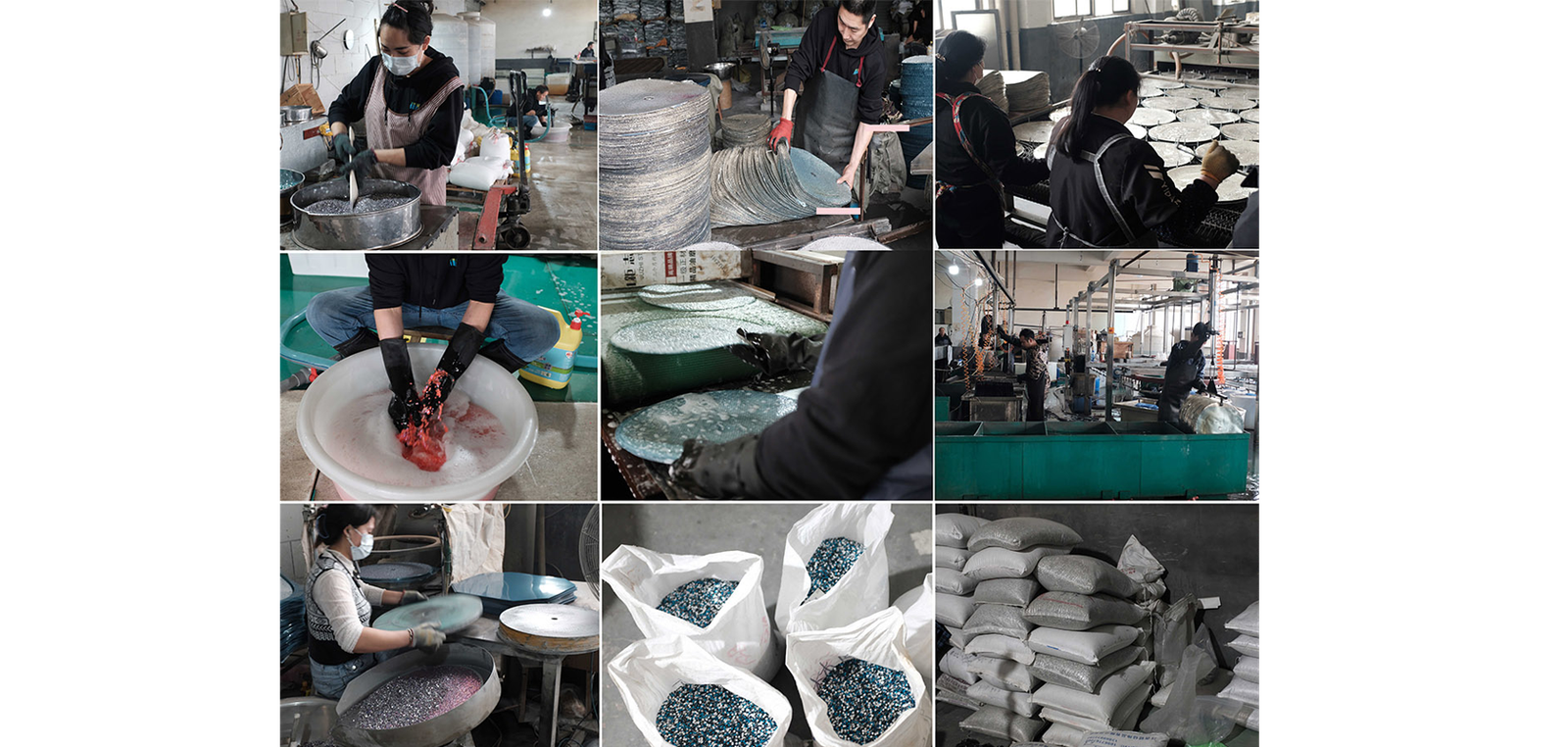
The best tool for precision rhinestone replacement is a handheld hotfix applicator wand with interchangeable tips sized to match the stone (e.g., SS16 or SS20). This tool allows for direct contact heating of the stone’s glass face, transferring heat downward to the adhesive without dispersing it across the fabric surface.
Unlike a flat heat press, which applies universal pressure, an applicator wand gives you manual control over the “dwell time”—how long the heat is applied. This is particularly useful for irregular surfaces like dance costumes or bridal headpieces. The wand’s tip acts as a heat sink, focusing the energy on the K9 glass facets. Since K9 glass has a high refractive index of ~1.9 and excellent thermal properties, it effectively transmits that heat to the German grey glue backing.
For professional factory QC stations, we often see the use of micro-soldering stations with adjustable temperature controls. This allows the operator to set the exact 165°C needed for cotton or 150°C for Spandex. Having this level of control ensures that the replacement stone is applied with the same industrial-strength bond as the original production run, maintaining our OEKO-TEX Standard 100 compliance for the entire finished product.
Can you use a soldering iron for rhinestone repair
Yes, you can use a soldering iron for rhinestone repair, provided it has a clean tip and adjustable temperature settings. Set the iron to approximately 160-180°C and apply it to the top of the stone. The iron’s small contact point makes it an excellent tool for bypassing neighboring stones during a spot-fix.
However, you must be extremely cautious not to touch the fabric directly with the soldering iron tip. A standard garment-grade nylon or polyester will melt instantly at these temperatures. The “soldering iron method” is best reserved for experienced technicians who can hover the tip just above or lightly on the glass facet.
Another trick is to use the side of the iron’s tip to gently nudge a misplaced stone while the glue is still in its liquid state (150-170°C). Because our German grey glue has a high viscosity when melted, it doesn’t “run” as easily as cheap yellow glues, giving you a few seconds of working time to perfect the alignment. Once the iron is removed, the stone will set firmly within seconds as the temperature drops below the solidification threshold.
How do you match the replacement stone to the original
To match a replacement stone, you must verify the material, size, facet count, and color code. Use a 12-14 facet K9 optical glass stone in the same SS size (e.g., SS16) and confirm the color name with your supplier, as “Sapphire” from one manufacturer may differ slightly from another. If you are unsure how SS sizes translate to millimetres, our rhinestone size chart walks through SS6 to SS30 diameters and the typical stone counts per garment type.
Consistency is the hallmark of wholesale quality. If you use a lower-grade acrylic stone to replace a K9 glass stone, the difference will be glaring under stage lights or flash photography. The K9 glass will have a much higher refractive index (~1.9) and a sharper “sparkle” compared to the duller reflection of acrylic (~1.49). Additionally, ensure the facet pattern matches. Our stones are precision-cut with 12-14 facets, creating a specific light-return pattern that is difficult to replicate with 8-facet economy stones.
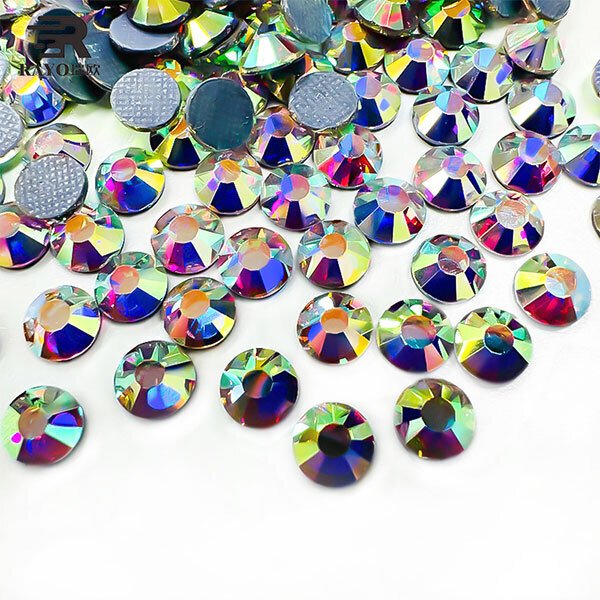
Color matching is equally vital. We stock over 400 colors to ensure our clients can always find a match for their specific production runs. Even within “Crystal AB,” there can be subtle shifts in the iridescent coating. We recommend keeping a “repair kit” from the original batch of stones used in production. This guarantees that the replacement stone has the same lead-free OEKO-TEX certification and color profile as the rest of the 10,000-unit run.
Is it worth repairing one stone or should you replace a whole section
Repairing a single stone is worth it if the damage is isolated and the surrounding stones are secure. However, if the stone fell off due to poor overall adhesion (e.g., incorrect heat settings), it is better to replace the entire section to ensure the garment passes durability tests and maintains consistent quality.
In a factory setting, the decision to repair versus replace is a matter of labor cost vs. material cost. A single stone repair takes about 30-60 seconds of a technician’s time. If a whole section of 50 stones is peeling, the issue is systemic. Likely, the heat press was not reaching the required 150-170°C, or the pressure was unevenly distributed. In these cases, we advise stripping the section—using a professional-grade adhesive remover if necessary—and reapplying a fresh transfer.
For premium garments like bridal wear (2,000-5,000 stones) or competition dance costumes (15,000-30,000 stones), every single stone matters. A single missing stone in the center of a chest piece is a glaring defect. Because our stones and German glue are engineered for less than 2% loss over 50 washes, repairs should be rare. If you find yourself constantly spot-fixing, it’s time to audit your application parameters.
If you need guidance on specific repair scenarios or want to order a professional-grade color matching kit, contact our technical team via WhatsApp at +86 13692450325 or email rhinestonewholesale8@gmail.com. We are here to ensure your rhinestone application is permanent and flawless.
Need a size or color recommendation for your next order? Send us your fabric type, design, and target price — we reply within one business day. WhatsApp +86 13692450325 · rhinestonewholesale8@gmail.com