
K9 Crystal vs Acrylic Hotfix Rhinestones — Which One Survives 50 Industrial Machine Washes
In the world of garment decoration, the term “rhinestone” is often used loosely to describe anything that sparkles. However, for wholesalers and manufacturers, the material composition is the single most important factor in determining a product’s market value and longevity. At Guangzhou Yiben E-Commerce Co., Ltd., we have spent 12 years perfecting the production of K9 optical glass rhinestones. We often encounter clients who are tempted by the lower price point of acrylic stones, only to regret the decision after the first few laundry cycles. Understanding the technical differences between these two materials is essential for any brand that values quality and customer satisfaction. K9 vs acrylic durability connects to the 5 mistakes that cause rhinestones to fall off article.
Does K9 crystal really outperform acrylic rhinestones
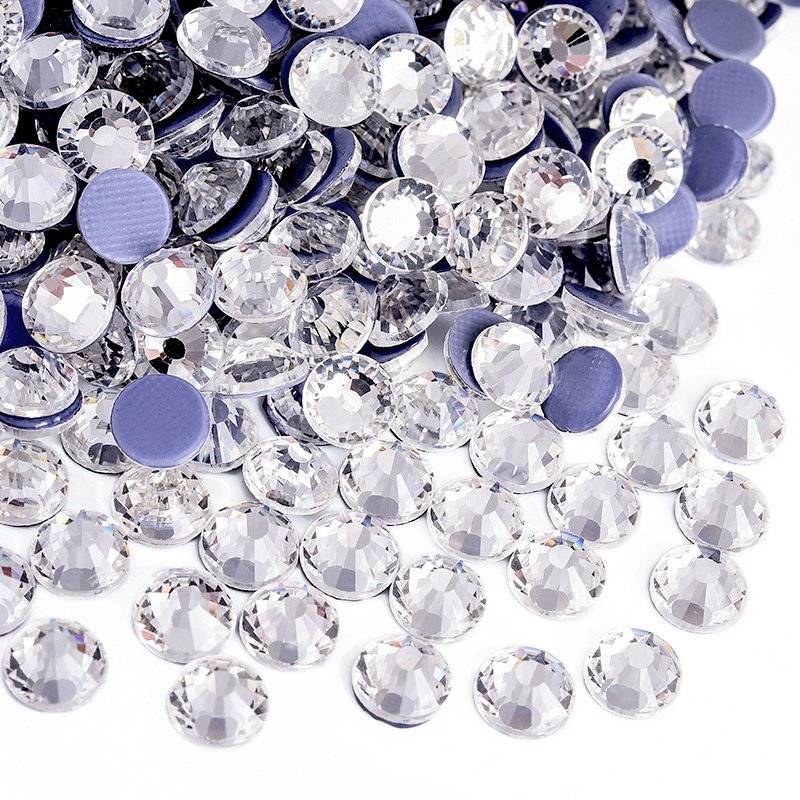
K9 crystal significantly outperforms acrylic rhinestones in every measurable category including clarity, heat resistance, scratch resistance, and adhesive longevity. While acrylic is a plastic polymer, K9 is a high-grade optical glass used in lenses and prisms, offering a level of brilliance and durability that plastic simply cannot replicate.
One of the most immediate differences is weight and feel. K9 crystal has a density of approximately 2.53 g/cm³, giving it a substantial, high-end feel on the garment. Acrylic is much lighter, with a density of around 1.18 g/cm³, which can make a garment feel “cheap” or flimsy. More importantly, K9 glass can withstand the 150-170°C heat required to activate industrial-grade German grey adhesive. Acrylic rhinestones, on the other hand, begin to soften or even melt at temperatures above 130°C, meaning they are often forced to use lower-quality yellow glues that fail prematurely.
Furthermore, our K9 stones are precision-cut with 12-14 facets. Because glass is a rigid material, these facets remain sharp and crisp, reflecting light with mathematical precision. Acrylic is molded rather than cut; its edges are rounded, which scatters light and results in a dull, “plastic” shimmer that lacks the “fire” of real crystal.
What is the refractive index difference between K9 and acrylic
The refractive index of K9 crystal is approximately 1.9, whereas the refractive index of acrylic (PMMA) is only about 1.49. This numerical difference is the reason K9 glass appears significantly brighter and more “alive” under stage or sunlight compared to the relatively flat appearance of acrylic stones.
Refractive index measures how much a material “bends” light. A higher index means more light is reflected back to the viewer’s eye rather than passing through the stone. This is why K9 is the preferred choice for bridal wear and dance costumes. When a dancer moves under spotlights, the 1.9 refractive index of our K9 stones ensures that the sparkles are visible even from the back of an auditorium.
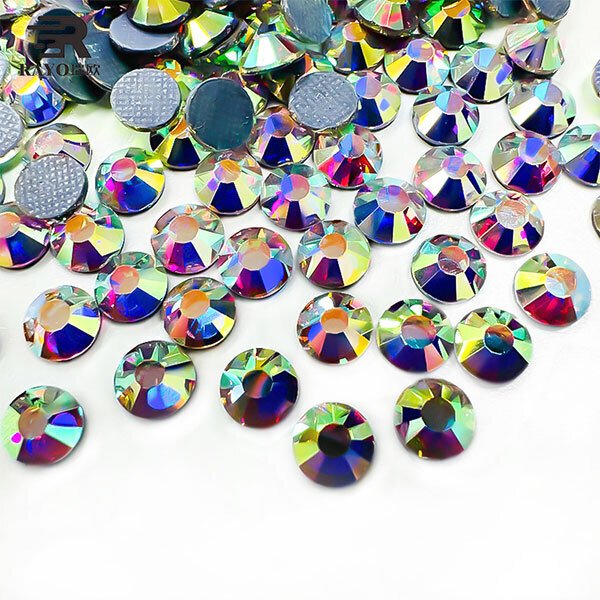
Acrylic’s 1.49 index is closer to that of ordinary window glass. While it may look acceptable in a bag, once applied to fabric, it loses its depth. This is particularly noticeable in “Crystal AB” coatings. On K9 glass, the vacuum-plated AB coating works in harmony with the high refractive index to create a vibrant rainbow effect. On acrylic, the same coating often looks like a thin, oily film because the base material doesn’t provide enough internal reflection to support the iridescent shimmer.
How long do acrylic rhinestones last on clothing
Acrylic rhinestones typically last between 3 to 5 washes before they begin to show significant degradation, including losing their color, scratching, or falling off. In contrast, our K9 crystals with German-imported grey adhesive are tested to survive 50+ machine washes with a stone loss rate of less than 2%.
The failure of acrylic stones is usually two-fold. First, the stones themselves are soft and porous. They absorb detergents and body oils, which causes the plastic to cloud over time. Second, because they cannot withstand high heat, they are usually paired with cheap yellow hot-melt glue. This glue has a low melting point—often below 130°C—which means it can soften in a hot dryer or even while sitting in a car on a sunny day.
In our factory tests, we followed the ISO 6330:2021 industrial washing standards. After 5 washes, the acrylic samples showed over 30% stone loss, and the remaining stones were visibly scratched. The K9 samples, using our SS6-SS30 range and German grey adhesive, remained 98% intact and retained 100% of their original brilliance. For any commercial fashion brand, the “cost per wear” of K9 is actually lower than acrylic because the garment remains sellable for much longer.
Can you tell K9 from acrylic by looking
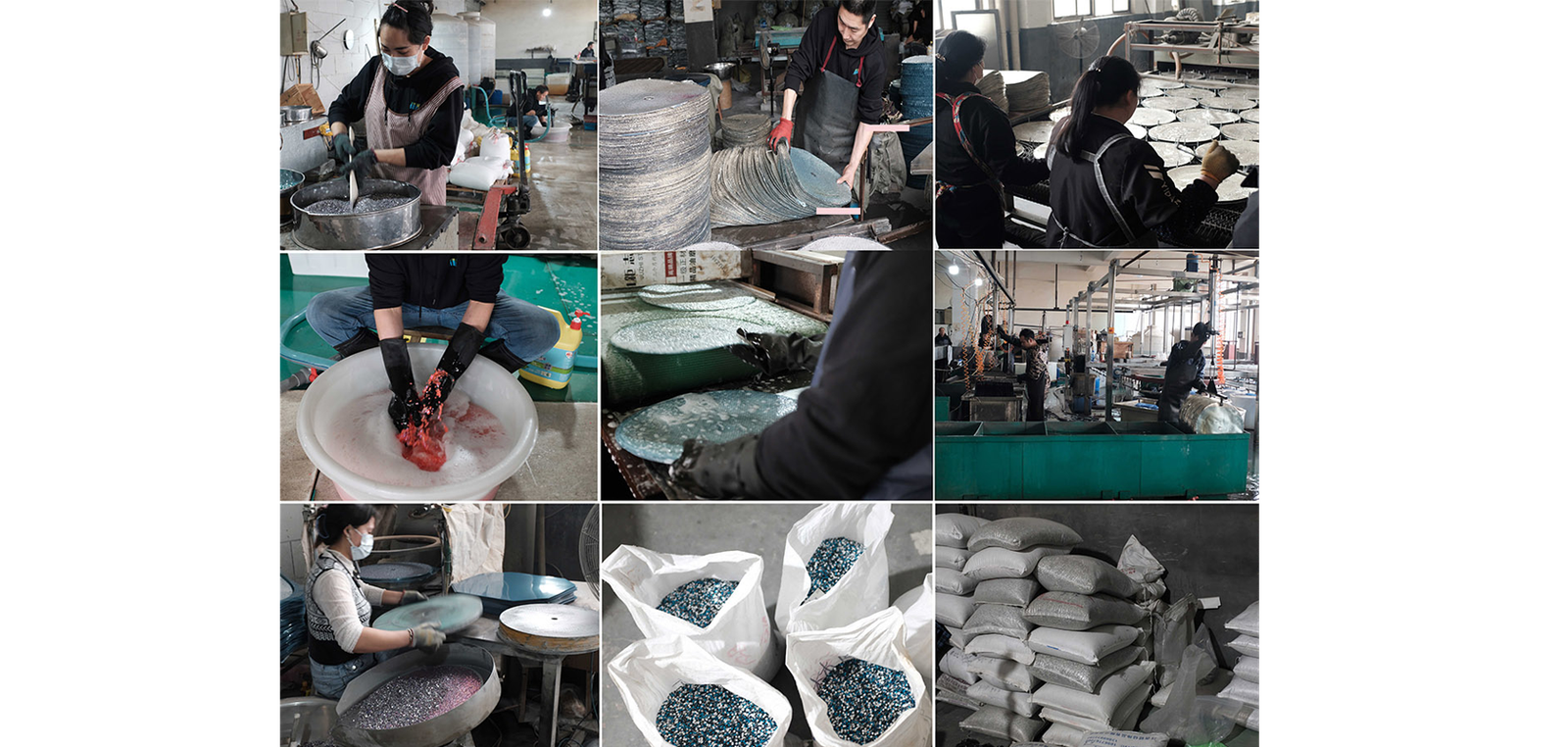
Yes, you can distinguish K9 from acrylic by looking for facet sharpness, light dispersion (rainbow fire), and the color of the adhesive on the back. K9 stones have sharp, distinct edges and a high-refraction “fire,” while acrylic stones have softer, molded edges and a duller, more plastic-like reflection.
Another dead giveaway is the backing. High-quality K9 hotfix stones almost always use a grey or dark green adhesive, which indicates the presence of industrial-grade hot-melt glue. Acrylic stones almost exclusively use a transparent or yellowish glue. If you look at the stones from the side, K9 glass will be perfectly clear, whereas acrylic may show a slight yellow or blue tint in the “water” of the stone.
You can also perform a “sound test.” If you drop a handful of K9 stones onto a glass table, they will produce a high-pitched “tinkling” sound, similar to fine crystal. Acrylic stones will produce a dull, muffled “thud.” As a wholesaler, we provide samples (3-5 days dispatch) so you can perform these tests yourself before committing to a bulk order. We are confident that once you see the 12-14 facet precision of our K9 glass, the difference will be undeniable.
Which type of rhinestone is more scratch-resistant
K9 crystal is significantly more scratch-resistant, with a Mohs hardness rating of 6 to 6.5, whereas acrylic rhinestones have a very low Mohs hardness of only 2 to 3. This means that K9 glass can only be scratched by materials harder than it, such as hardened steel, while acrylic can be scratched by a fingernail or a rough sponge.
This difference in hardness is critical for everyday wear. Think about a rhinestone-decorated handbag or the seat of a pair of jeans. These items are constantly subjected to friction. An acrylic stone will become covered in micro-scratches within days, which scatters light and makes the stone look foggy. K9 glass maintains its polished surface for years.
At Yiben, our K9 stones are also OEKO-TEX Standard 100 certified and lead-free. This means that not only are they physically durable, but they are also chemically stable. They won’t react with the skin or leach harmful substances, even after the surface has been subjected to wear and tear. When you buy K9, you are buying a product that is designed to stay beautiful for the entire lifecycle of the garment.
Do acrylic rhinestones yellow over time
Yes, acrylic rhinestones frequently yellow over time due to UV exposure and oxidation of the plastic polymer. This “ageing” process is irreversible and happens much faster when the stones are exposed to direct sunlight or stored in high-temperature environments.
K9 optical glass is inorganic and UV-stable. It will not yellow, fade, or become brittle, even after decades of exposure to the sun. This is why K9 is the only choice for outdoor items like flags, parade costumes, or swimwear. Cheap yellow adhesive used on acrylic can also “bleed” through the stone as it ages, adding to the yellowed appearance.
Our German grey adhesive is specifically designed to remain neutral in color and won’t stain the K9 crystal or the underlying fabric. We maintain a stock of 400+ colors in our Guangzhou warehouse, and every single one of them—from the lightest “Silk” to the darkest “Jet”—is guaranteed to maintain its true hue for years. Whether you’re shipping by air (5-7 days) or sea, our packaging ensures the stones arrive in pristine, non-yellowed condition.
Is the price difference between K9 and acrylic worth it
The price difference is absolutely worth it for any brand or designer aiming for a professional, high-quality finish. While K9 stones are more expensive than acrylic, the cost is offset by the drastically lower return rates, better brand reputation, and the ability to charge a premium for the finished garment.
Consider the labor cost of applying rhinestones. Whether you apply a 1-cent acrylic stone or a 5-cent K9 stone, the labor time is the same. However, if the acrylic stone falls off after two washes, the entire labor investment is wasted, and the garment is ruined. By using K9 with German grey glue, you are ensuring that your work (and your customer’s money) is protected.
With our low MOQ of just 2 packs per color, even small designers can afford to make the switch to K9. Our factory-direct pricing from Guangzhou ensures that you are getting the best possible value for 100% K9 optical glass. When you consider the 50+ wash durability and the ~1.9 refractive index, the “value” of K9 far outweighs the “savings” of acrylic.
Before you buy, ask your supplier three questions to confirm you are getting real K9 rather than a lookalike: what is the stone’s refractive index range, what glue is applied to the back, and what is the certified stone loss rate after 50 washes. Genuine K9 optical glass reads between 1.8 and 2.0 on a refractometer, while acrylic typically sits below 1.5. In our quality control room, every production batch is checked with a refractometer and a digital caliper for diameter tolerance before it is packed. A supplier who cannot answer these three questions with hard numbers is likely reselling mixed-quality goods, which is exactly the situation that leads to dull, shedding stones on your finished garments.
Need a size or color recommendation for your next order? Send us your fabric type, design, and target price — we reply within one business day. WhatsApp +86 13692450325 · rhinestonewholesale8@gmail.com