
Can You Wear Prescription Glasses with Rhinestones Every Day?
You can wear prescription glasses with rhinestones every day, but only if the stones and the glue underneath them are built for it. The cheap decorated frames sold for $15 at the drugstore start shedding stones within a month because the glue softens below body-heat thresholds and the stones themselves are soft acrylic. Quality frames use K9 optical glass stones backed with a heat-activated gray glue rated for 150–170°C, which holds through daily wear, cleaning, and temperature changes. Here is what to look for before you spend money on a decorated prescription frame, plus how to order one that actually lasts.
Can You Get Prescription Glasses with Rhinestones on the Frame?
Yes, and it works with almost any optical frame that has a thick enough rim and temple to accept stones. The stones go on the temple arms, the outer corners of the front, and sometimes the bridge, but never on the lenses. The key is ordering the frame and the lens separately: you pick a decorated frame you like, then have your optician or an online lens lab cut the prescription into it.
The decoration does not interfere with the lens at all because the stones sit on the frame material, not the lens surface. You can carry the full range of prescriptions, including progressives and high-index lenses, as long as the frame style supports the lens thickness you need. If your prescription is strong, choose a frame with a slightly thicker rim so the lens edge stays hidden and the stones do not get crowded near the lens groove.
One practical note: the optician needs the frame’s exact measurements to cut the lens correctly, and heavily decorated frames sometimes hide the size markings printed inside the temple. Before you send a frame in for lenses, write down the eye size, bridge width, and temple length from the inside arm, or ask the seller for them. Without those numbers the lab has to guess, and a wrong guess shows up as a lens that sits off-center or a frame that does not fit your face properly.
How Do Rhinestones Hold Up on Prescription Eyeglasses?
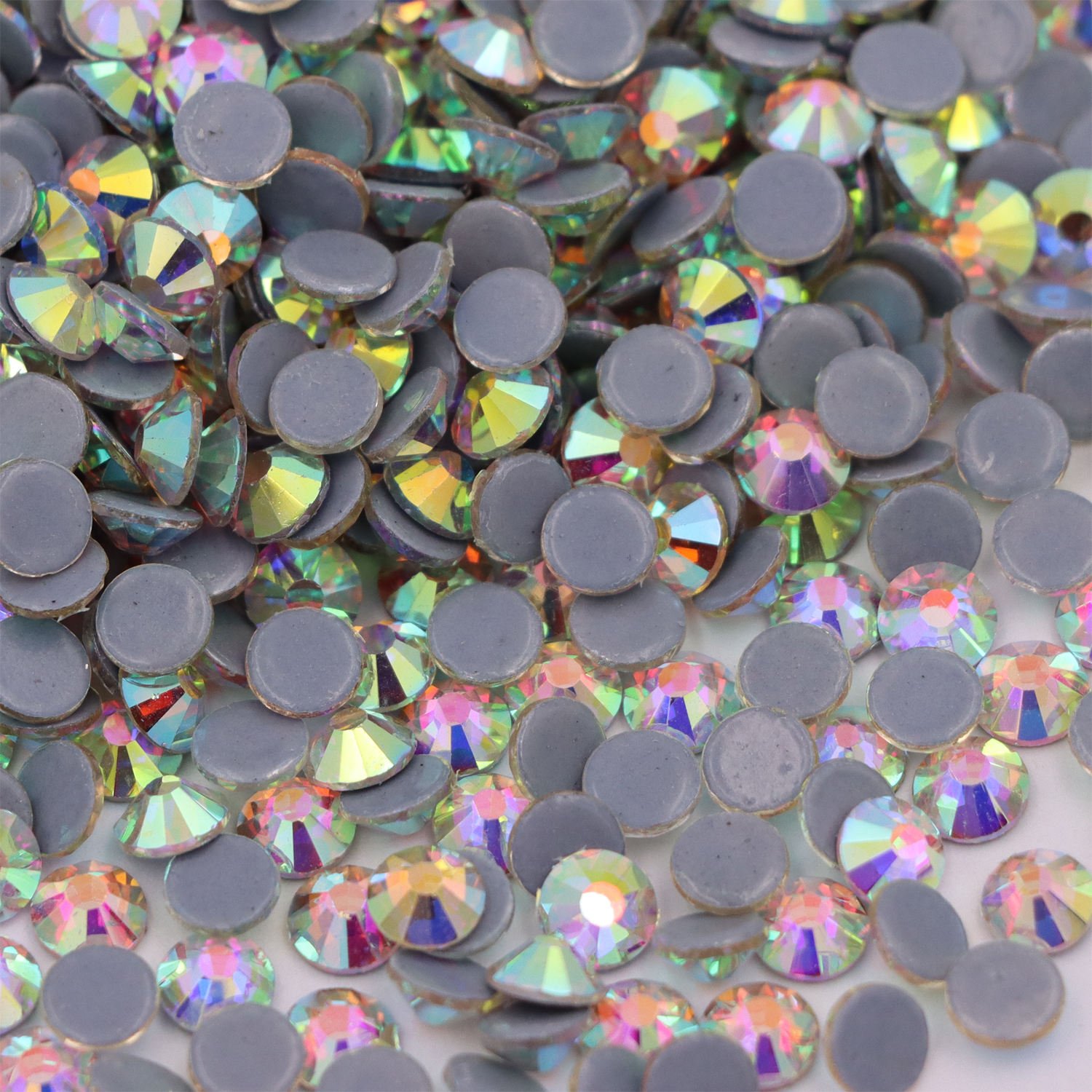
Rhinestone prescription eyeglasses for women hold up well when two things are right: the stone material and the glue. K9 optical glass stones resist scratching with a Mohs hardness of 6 to 6.5, while acrylic stones sit at 2 to 3 and cloud over within months. The glue matters just as much. Stones backed with German-imported gray glue activate at 150–170°C and stay locked after cooling, whereas yellow glue softens below 130°C and releases when the frame warms against your skin.
The practical difference shows up in washing and cleaning tests. K9 stones with gray glue lose under 2% of stones after 50 standardized machine wash cycles, while acrylic stones with yellow glue can lose over 30% after just 5 cycles. For eyeglasses you wear every day and wipe constantly, that gap is the difference between a frame that still looks new next year and one that looks patchy in a month.
Your cleaning habits decide which side of that gap you land on. Alcohol sprays, ultrasonic cleaners, and long soaks are the three fastest ways to kill a decorated frame: alcohol dulls the coating, ultrasonic vibration works stones loose, and soaking softens the adhesive. Wipe the stones with a dry microfiber cloth and clean the lenses with a lens-safe spray that never touches the decorated areas. A thirty-second habit after each wear is all it takes to keep the stones bright and the bond intact.
What Frame Materials Work Best for Rhinestone Prescription Eyeglasses?
Acetate is the best material for decorated prescription frames because it holds heat-set stones firmly and keeps its shape through daily temperature swings. The heat-press process bonds each stone into the acetate surface, so the stones sit flush and do not catch on hair or clothing. Thick acetate rims also give you room for a full stone line without crowding the lens groove.
Metal frames can carry rhinestones too, but they usually need adhesive instead of heat-setting, which limits durability. If you want a metal frame with stones, look for one where the stones are set into bezels or channel grooves rather than glued flat onto the surface. Nylon and ultra-flexible sports frames are the worst choice: the material flexes constantly and pops stones loose. Prescription eyeglass frames with rhinestones belong on rigid acetate or a metal frame with recessed settings, not on anything that bends.
Are Rhinestone Reading Glasses for Women Available in Different Magnifications?
Rhinestone reading glasses for women come in the same magnification range as plain readers, typically +1.00 to +3.50 in quarter-step increments. The stones do not change the optics, so you pick the strength the same way you would for any reading glasses. Many decorated readers are sold as fashion readers with basic spherical lenses, which works fine if you only need them for reading.
If you need a custom prescription rather than an over-the-counter magnification, order a decorated frame and have your own lenses fitted. That route also lets you choose lens coatings like blue-light filter or anti-reflective, which most off-the-shelf fashion readers do not include. Decide first whether you need a true prescription or a simple reading magnification, because that choice determines whether you buy a finished pair or a frame plus lens service.
Check the temple arms before buying a decorated reader. The stones on a cheap reader are often glued flat onto thin plastic, and those arms snap or shed within weeks. A reader worth keeping has the same markers as a good optical frame: acetate arms, heat-set K9 stones, and a hinge that feels firm rather than floppy. Fashion readers are sold as impulse purchases, so the quality spread is enormous even between two pairs that look identical in a photo.

Can You Add Rhinestones to Prescription Sunglasses?
You can, and prescription sunglasses with rhinestones are one of the most practical ways to wear decorated eyewear because the tint hides the lens edge and the stones look intentional against dark lenses. The stones go on the frame arms and front rim exactly as they would on clear glasses, and the decoration does not affect the UV protection of the lens.
Women’s sunglasses with rhinestones also tolerate a heavier stone layout than clear glasses because sunglasses read as a fashion statement in a way that everyday clear frames sometimes do not. A fully encrusted temple on a pair of dark sunglasses looks deliberate; the same temple on clear office glasses can look busy. If you want maximum sparkle without it feeling like too much, put the decoration on a pair of prescription sunglasses instead of your all-day clear pair.
The tint also works in your favor when the lens is thick. A strong prescription in a dark tint hides the lens edge far better than a clear lens does, so you can use a thinner, lighter frame with the stones near the rim. Just make sure the lens itself carries full UV400 protection, because the stones on the frame do nothing for your eyes and the tint alone does not guarantee UV blocking. Cheap fashion sunglasses often skip the UV coating, so confirm it before you pay for a prescription lens in a decorated frame.
Do Rhinestones Affect the Fit or Weight of Prescription Glasses?
A modest line of stones adds almost no weight, because K9 glass stones in the SS10 to SS16 range weigh a fraction of a gram each. A full temple of 40 to 60 stones might add a few grams total, which most people stop noticing within a day. What changes fit more than weight is balance: if you decorate only the front corners heavily, the frame can tip forward, so keep the decoration distributed along the arms as well.
Stone size is the lever that matters most. SS10 stones at 2.8mm and SS16 stones at 4.0mm sit low and comfortable on a temple arm, while larger stones create ridges you feel against your skin. Sunglasses with rhinestones frames can carry larger stones because they are worn for shorter stretches, but for an all-day prescription pair, stick to SS10 and SS16 and skip anything above SS20 at 4.8mm. Place stones only on the outer temple surface, never on the inside where they would press into your head.
Get the frame adjusted after the lenses go in. Any optician can bend the temple tips and nose pads to your face, and that adjustment matters more on a decorated frame because the added weight, however small, changes how the frame sits. A two-minute adjustment stops the frame from sliding down your nose and keeps the stones off your cheeks, where makeup and oils would otherwise dull them. Most people skip this step and then blame the frame for slipping when the real issue is a fit that was never dialed in.
How Do You Order Prescription Glasses with Rhinestones Online?
Order in two parts for the best result. First, buy the decorated frame you want, making sure the seller states the stone material and glue type. Second, send the frame to a lens lab or use the retailer’s own lens-fitting service with your prescription and pupillary distance. That sequence avoids the common mistake of ordering a finished pair with a generic prescription that does not match your eyes.
The same K9 glass stones that you see decorating wine glasses with rhinestone crystals and champagne flutes are the stones to look for on a frame, because they are cut to 12 to 14 facets and coated by vacuum deposition for lasting shine. When you shop, avoid listings that only say “crystal rhinestone” with no material named. Ask for K9 glass or optical glass specifically, confirm the glue is gray glue rated above 150°C, and check the return policy before you commit to a lens fitting.
Keep the frame’s warranty and your lens invoice together after the purchase. If a stone does come loose later, the fix is a two-minute reseat with a hotfix applicator, but matching the exact size and finish is much easier when you know what the original stones were. A seller that lists stone size and material makes future repairs painless; a seller that hides those details leaves you guessing when something inevitably needs a touch-up.
How Much Do Rhinestone Prescription Eyeglasses Cost?
The frame usually costs between $25 and $80 for a decorated style with genuine K9 glass stones, and the lens fitting adds whatever your prescription requires, often $40 to $150 for single-vision or progressive lenses. Readers with simple magnification cost less overall because there is no custom lens lab involved. The wide price spread on the frame side comes down to stone count, facet quality, and whether the stones are AB coated.
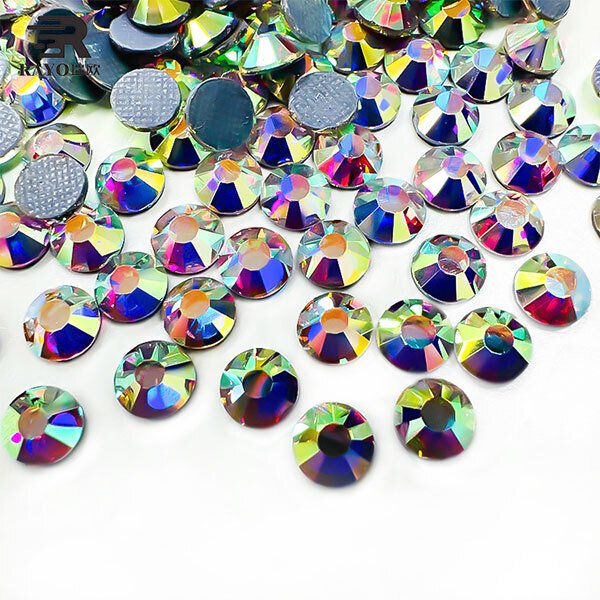
AB coating, applied by vacuum deposition, gives stones that blue-pink-gold flash and costs more than clear stones. A higher stone count also drives the price up fast: a simple arm line might use 30 stones, while an encrusted frame carries hundreds. For a daily-wear prescription pair, a clear K9 stone on acetate is the best value because it holds its look with minimal upkeep. Save the AB-coated, heavily encrusted layout for sunglasses you wear on occasion.
If you are buying decorated frames in quantity to resell or to build a private-label eyewear line, source the stones and frames from a manufacturer. Guangzhou Yiben E-Commerce Co., Ltd. has produced K9 optical glass hotfix stones for 12 years and ships worldwide from its factory, with a minimum order of just two packs per color and size. We machine-cut each stone to 12 to 14 facets, back it with German-imported gray glue, and can supply OEM stones in custom sizes and finishes. Message us on WhatsApp at +86 13692450325 or email rhinestonewholesale8@gmail.com to request samples and a quote, and we will respond within 12 hours.
Need a size or color recommendation for your next order? Send us your fabric type, design, and target price — we reply within one business day. WhatsApp +86 13692450325 · rhinestonewholesale8@gmail.com