
Flat Back Crystals for Jewelry Making How to Choose and Buy Crystal Stones in Bulk
Quick answer Flat back crystals for jewelry making are glass stones with a smooth, unfoiled-or-foiled base that you set into metalwork or glue onto a surface. The ones we make are 100% K9 optical crystal glass, refractive index about 1.9, 12-14 facets, Mohs 6-6.5. They are not natural gemstone cabochons, which are minerals cut from rock and never batch-match in pattern or color. For jewelry, SS10 (2.8 mm) and SS16 (4.0 mm) cover most pieces; SS6 (2.0 mm) handles delicate work and SS20 (4.8 mm) fills bold focal areas. Buy by the bag (1440 pcs) or by kilogram. Stock colors ship the same day, custom colors take 7-15 days.
The search “flat back stones for jewelry” drops you in a fog. Half the results are polished mineral cabochons and half are glass crystal rhinestones, and the two are built on completely different factories. If you are a jewelry brand, a bridal studio or a wholesale buyer sourcing decorative stones at volume, the difference decides your whole supply chain. Which one you actually need, what size, how to hold the stone onto the piece, and how to buy it without a color mismatch ruining a production run — that is what this guide settles.
If you want the supply overview first, our full range of flatback rhinestones wholesale explains packaging, MOQ and colorways in one page. This article goes deeper on the jewelry-specific choices.
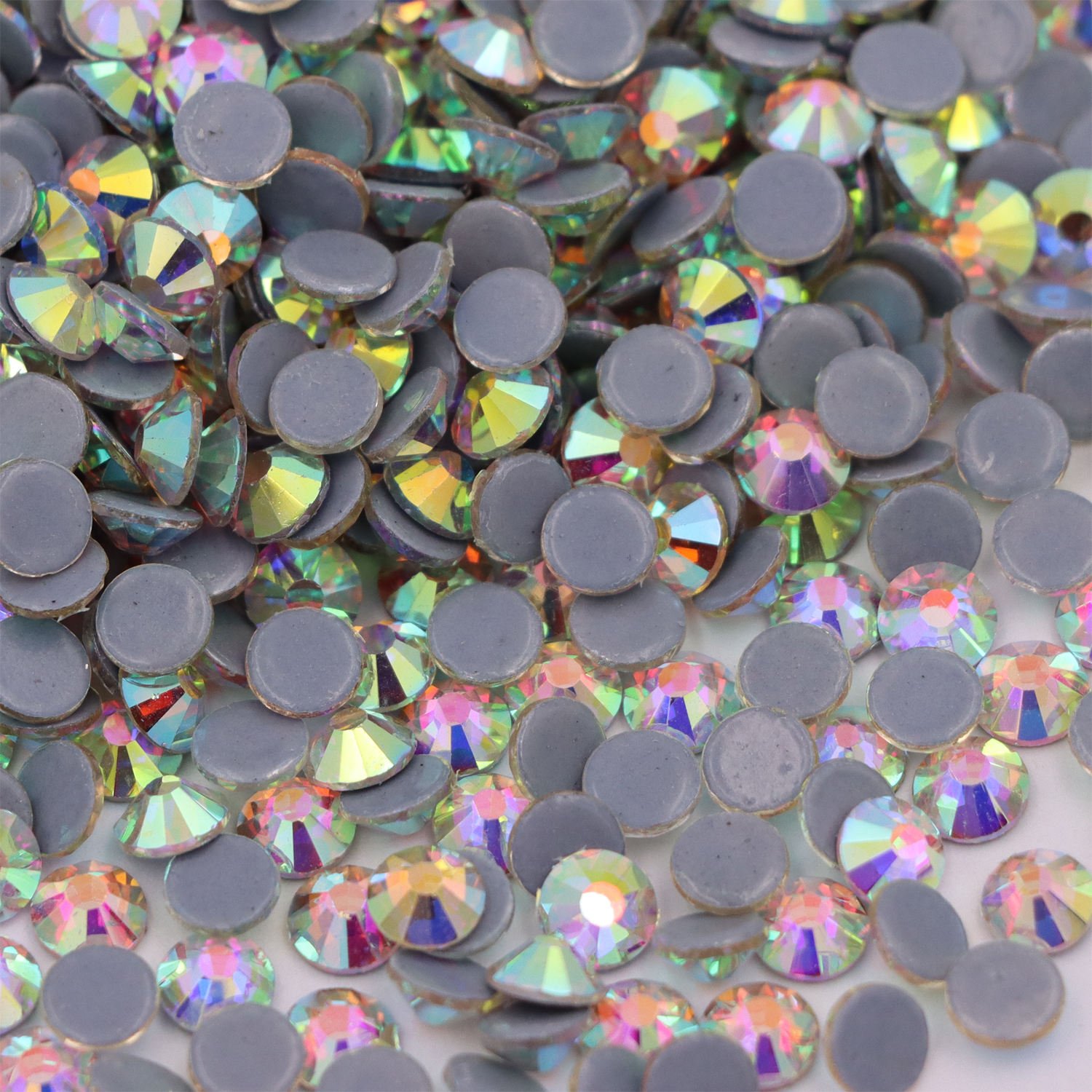
What is the difference between flat back crystals and natural gemstone cabochons
Flat back crystals are manufactured glass with a standardized facet pattern and an engineered foil backing; natural gemstone cabochons are cut and polished mineral slices whose color and internal pattern vary stone by stone. One is a repeatable industrial component, the other is a one-of-a-kind natural material. For bulk jewelry you almost always want the first.
Both are called flat back because both sit flush against a metal base or a surface. That is where the similarity stops.
A natural cabochon — think agate, jasper, quartz, turquoise or moonstone — comes out of the ground. Every piece has its own veining, its own translucency, its own exact shade. If you order 500 of them for a necklace that repeats a motif, no two match, because nature does not batch-produce. That is not a defect. It is what makes mineral cabochons desirable for artisan one-off work. It is also why a factory that produces jewelry in runs cannot treat them as a stable input.
Our flat back crystals sit on the other side of that line, and they are what this whole range of flatback rhinestones wholesale is built around. We pull them from 100% K9 optical crystal glass with a refractive index around 1.9 and a density of 2.53 g/cm³, cut to 12-14 facets. Because the material and the mold are fixed, every stone in a color code looks the same as the next. You can color-match across bags, across reorders, across a 3,000-stone bodice. This article covers glass K9 crystal rhinestones only — the mineral cabochon category is a different business and we do not sell it.
| Glass K9 flat back crystal | Natural gemstone cabochon | |
|---|---|---|
| Material | Man-made optical crystal glass | Mineral cut from rock |
| Facets and shape | Standardized, 12-14 facets | Cut or domed, varies by stone |
| Color consistency | Same shade across every batch | Every stone differs |
| Hardness | Mohs 6-6.5 | Varies widely by mineral |
| Cost and supply | Low, repeatable, bulk | Higher, irregular supply |
| Best for | Production jewelry, bridal, costume lines | Artisan one-off pieces |
If your piece needs the same sparkle repeated 200 times, glass wins. If your piece needs to be a singular object, a cabochon is the right material — just source it from a mineral dealer, not from us.
What sizes of flat back crystals are used in jewelry
SS10 (2.8 mm) and SS16 (4.0 mm) are the two workhorses for jewelry. SS6 (2.0 mm) suits fine detail and small charms, SS20 (4.8 mm) makes a focal point, and SS30 (6.4 mm) is usually too heavy for earrings and rings but works as a single statement stone. Match the stone to the metal, not the other way around.
The size code is the industry’s universal language, so learn it once and you can order from anyone. The number is not a millimeters value for beginners to guess — it is a fixed scale. Here is the pocket reference we send to new jewelry buyers.
| Size | Diameter | Typical jewelry use |
|---|---|---|
| SS6 | 2.0 mm | Delicate pavé, thin bands, small accents |
| SS10 | 2.8 mm | Rings, pendants, earrings, general setting |
| SS16 | 4.0 mm | Necklaces, bangles, statement earrings |
| SS20 | 4.8 mm | Focal stones, bold centerpieces |
| SS30 | 6.4 mm | Single feature stone, oversized designs |
Two practical notes from the bench. First, a stone that is right for a bangle is wrong for a ring — small pieces get knocked against tables and doorframes constantly, and a large stone on a thin band catches on everything. Second, mixing sizes is normal and often better: a run of SS10 with a few SS16 placed as highlights reads as a designed piece rather than a flat field of identical stones. If you need the full scale beyond SS30, our rhinestone sizes SS6 to SS30 reference keeps the whole table in one place.
How do you choose flat back crystals for jewelry
Choose on four things in this order: facet quality, backing, color accuracy, and size. Facets decide the sparkle, the backing decides how much light bounces back, color accuracy decides whether a batch is usable, and size decides how the piece wears. Get the first three wrong and no amount of design work saves the order.
Facet count is where cheap stones expose themselves. A K9 stone is cut to 12-14 facets; budget imitation stones often stop at 8. More facets mean more surfaces to catch and return light, which is the whole point of a decorative crystal. Twelve to fourteen facets on K9 is our standard across every size we run.
The backing is the part most buyers never ask about, and it is the part that controls brightness. On the base of the stone we apply silver, AB (aurora borealis) or gold foil. That reflective layer is what sends light back up through the cut instead of losing it out the bottom. Silver gives the cleanest bright white return. AB throws a rainbow shift on top of the stone’s own color. Gold warms the tone and suits antique or gold-tone settings. The backing also matters for glue-up: the foil sits against the base, so a flat, well-deposited backing gives you a more reliable adhesive bond than a rough or patchy one.
Color accuracy is the make-or-break factor at production scale, and it has its own section below. For size, buy the one that fits the metal you already have, then confirm the stone sits flush and the prongs or bezel close over it cleanly.
What colors and finishes work for jewelry making
We hold over 400 stock colors plus Pantone custom matching, covering crystal clear, AB rainbow, metallic tones and colored crystal. Jewelry leans toward two directions at once: the classic transparency of crystal and the satin pull of metallic finishes for minimal, modern pieces.
Crystal and crystal AB are the two safest stock choices. Crystal reads as a clean white light and works on silver, gold, rose gold and black metal alike — it never fights your setting. Crystal AB adds the rainbow flash and is the single most requested finish for bridal and evening jewelry because it shifts with the light and the angle.
Then come the metallics and the densely saturated colors. Silver, gold and other metallic finishes give a lower-glare, more grown-up sparkle that suits everyday and minimalist lines. On the saturated side, siam, sapphire, emerald, montana and jet let you build a piece around one bold color, and they are common in statement and costume jewelry. We run 400+ of these in stock. Our hotfix rhinestone colors reference maps the color families and their closest matching codes if you are translating a design brief into an order.
If your brand has a fixed house color, Pantone matching is the route. You give us the Pantone reference, we match it, and the color is then locked to that code so reorders stay identical. That is how you keep a signature collection consistent across seasons instead of drifting a shade lighter every time you restock.
How do you keep color consistent across a batch of jewelry crystals
Run a physical Pantone card against every incoming batch and keep a sealed sample of each approved lot. The rule on the production floor is simple: two stones on the same finished piece must never show a visible color difference, and the only way to guarantee that is to compare against a fixed reference before the stones reach the bench.
Consistency is invisible when it works and catastrophic when it fails. Nobody notices that a necklace has 60 identically matched stones. Everyone notices the two pale stones three settings apart. At jewelry-level scale, where stones sit close together on one small surface, the eye compares neighbors directly, so a batch that is “close enough” on the fabric of a gown is not close enough on an earring.
Here is how we handle it. Each color code has a retained reference sample. When a new production lot is made, the stones are compared to that card and to a Pantone reference under standard light before the batch is packed. When a jewelry client places a repeat order, we pull the retained sample and match against it, so the new stones read the same as the old ones. For buyers, the same discipline works on your side: approve one physical sample in your hand, keep it sealed and labeled, and compare every future delivery to it rather than to a screen.
The goal is not “very similar.” It is “indistinguishable side by side on a finished piece.” That is the standard a jewelry-grade crystal order should be held to, and it is worth stating plainly in your purchase notes.
How are flat back crystals sold for jewelry production
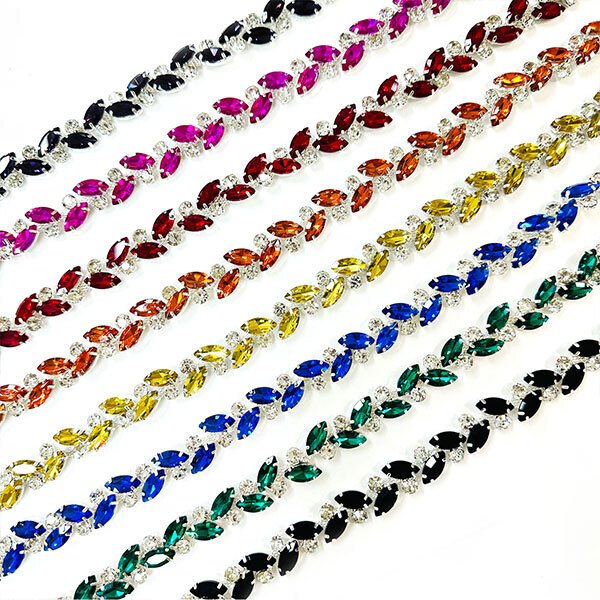
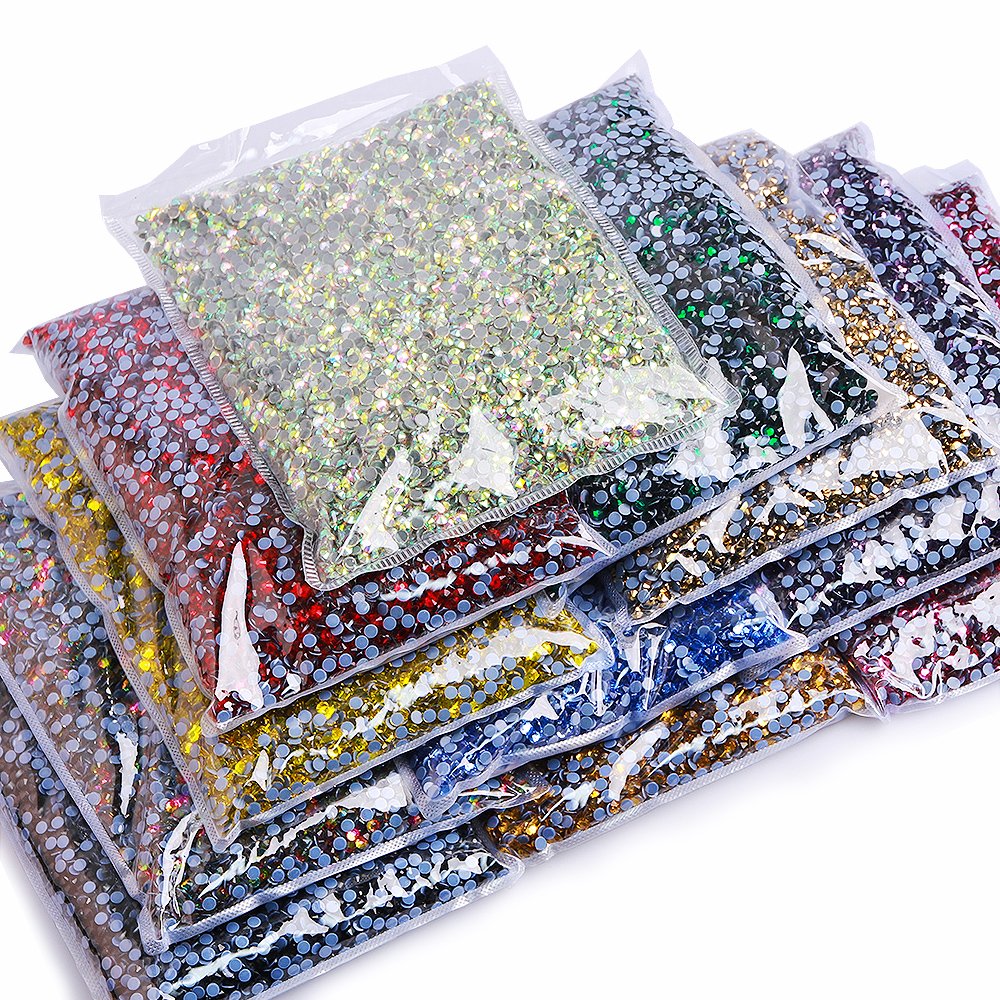
We sell two ways. By the pack, at 1440 pieces per bag, which is one gross and is the standard unit for size-coded crystal. Or loose by the kilogram for buyers who prefer to weigh rather than count. Stock colors ship the same day; custom colors run 7-15 days depending on order volume.
The 1440 count is not arbitrary. It is one gross, a twelfth of the old gross-based trade units, and it is the number the whole rhinestone supply chain has standardized on, so a bag labeled 1440 is directly comparable between suppliers. For a jewelry maker, the pack works well for planning: you can estimate how many packs a run needs once you know the stone count per design.
By the kilogram suits workshops that use a scale at the bench and mix sizes freely, or that want a bulk quantity without counting packs. It is also the more economical format once you are past sample volume. Both formats pull from the same inspected production, so the stones are identical either way — only the unit changes.
| Buying format | Unit | Best for | Notes |
|---|---|---|---|
| By the pack | 1440 pcs (1 gross) | Size-coded, counted runs | Standard trade unit, easy to budget |
| By the kilogram | Loose weight | Mixed sizes, bulk use, bench weighing | Lower unit cost at volume |
Whichever format you pick, the practical question is the same: how many stones your design consumes and how tight your color match has to be. Get a physical sample approved first, then scale to packs or kilos.
What is the MOQ and lead time for bulk jewelry crystals
Our minimum is 2 packs per single color and single size. In-stock colors ship the same day the order is confirmed; custom Pantone-matching orders go out in 7-15 days depending on quantity. That split is the whole reason to order stock colors when a launch is close.
Two packs is a deliberately low floor. It lets a new jewelry brand test a color in real production before committing to volume, and it lets an established brand top up one size without inflating the order. Because it is per color and per size, you can build a mixed order that exactly matches your design instead of buying filler you will not use.
On timing, the two tracks behave differently and you should plan around them. Stock: confirmed by the working day, out the door the same day. Custom: the Pantone match has to be produced and verified, so 7-15 days. If a collection has a fixed launch date, lock your custom colors early and keep your core crystal and AB in stock colors so the bulk of the order can move immediately.
We have run this split for 12 years as a source factory, which is why we can hold the same-day promise on stock rather than quoting it as a hope.
Which setting method works best for flat back crystals in jewelry
Three methods cover almost everything: glue for flat surfaces, bezel or prong setting for stones that must survive wear, and sewing for fabric-backed pieces. The right choice depends on where the stone sits and what will touch it, not on which method is easiest in the moment.
Glue is the fastest and the most flexible. It lets you place stones on curved metal, resin, wood and finished surfaces where you cannot mount hardware. For jewelry that is handled gently — a brooch, a display piece, a hair accessory — a quality adhesive is perfectly adequate. The failure mode to avoid is gluing over the stone’s edge and dulling the facets, or using an adhesive that stays tacky and lets the stone slide.
Bezel and prong settings are the durable route. A flat back stone sits in a closed seat, which is why it pairs naturally with glue and bezel work; if you are weighing that against a pointed-back stone for open prong settings, our flatback vs pointed rhinestones comparison breaks down which base fits which mount. The metal physically holds the stone, so it survives knocks, drops and daily wear, and it can be polished and re-worn for years. This is what you want for rings, bracelets and any piece that takes abuse. You set the stone into the seat, then close the bezel edge or bend the prongs over the girdle. The stone’s standardized size and consistent dimensions make setting predictable, which is another reason jewelry buyers prefer size-coded crystal over irregular mineral.
Sewing is for flat back stones attached to fabric, leather or trim. You pass thread or wire through pre-drilled holes or around a mounted setting. It is slower but it is the most repairable option — a lost stitch can be re-sewn without touching the rest of the piece.
| Method | Survives wear | Best for | Trade-off |
|---|---|---|---|
| Glue | Moderate | Curved or finished surfaces | Fastest, least durable |
| Bezel / prong | High | Rings, bracelets, daily wear | Needs metalwork and labor |
| Sewing | High on fabric | Fabric, leather, trim | Slow, most repairable |
Match the method to the piece. A stone that is glued where it should have been set is the most common cause of a customer complaint that a “crystal fell out.”
What should you check when inspecting flat back crystals for jewelry
Check facet definition, backing coverage, color against your approved sample, and size tolerance before you count quantity. Those four points catch almost every batch problem at the door, and each is fast to run on a sample spread of stones rather than the whole shipment.
Start with a handful of stones on a clean white card. Look at the facets: they should be crisp and even, not blurry or shallow, because soft facets mean fewer sharp light returns. Then flip a stone over and check the backing — it should cover the base evenly, with no bare patches or peeling edges, since that foil is your brightness and part of your glue bond.
Color comes next, and it is a comparison, not a judgment call in isolation. Hold the batch against the approved sample you kept. Under the same light, the difference should be invisible. If your approved sample says crystal AB and the new batch drifts pink or green, flag it before you accept it. Last is size: spot-check a few stones against a caliper or a printed size gauge. A size that runs off by a fraction throws off setting seats and pavé layouts across the whole order.
Do these four checks every time, not only on the first order. Supplier drift is a real risk in this trade, and your sample is the only fixed point.
What are the limits of flat back crystals in fine jewelry
Glass K9 is not diamond and it is not a gemstone, and it should not be sold or worn as one. Two real limits: small crystals on fine chains are easy to knock loose, and at Mohs 6-6.5 the glass will scratch if it repeatedly rubs against harder material like sapphire, diamond or steel.
The first limit is mechanical. A tiny SS6 glued or prong-set onto a delicate chain sits on a thin, flexible structure that swings and collides. Give it room, or move the stone to a soldered setting, or go up a size so it is easier to secure. Small does not automatically mean safer.
The second is hardness. K9 sits at Mohs 6-6.5. It is harder than acrylic, which is far softer, but softer than a diamond or the harder gemstones. A crystal that slides around against harder stones in a jewelry box, or sits next to a harder gem in the same piece, will accumulate fine scratches that dull the surface over time. Store crystal jewelry away from harder pieces and avoid wearing it where it will grind against them.
And the honest scope: these are decorative glass stones for fashion, bridal, costume and accessory jewelry. For that use they are a strong, consistent, repeatable material at a fraction of the cost of gemstone. For fine jewelry meant to hold value, they are the wrong category, and we would rather tell you that up front than sell you the wrong stone.
What This Means for Your Next Order
Pin down four things before you order: which size your design actually needs, which finish suits your metal, how many stones the run consumes, and whether your color is a stock code or a Pantone match. Those four answers turn a vague brief into an order that ships on time and matches on the bench.
Start with a physical sample. Hold SS10 and SS16 against your actual setting, check crystal against crystal AB under your studio light, and approve the one you can live with across a full run. Then scale to packs or kilos with confidence, because you already know exactly what will arrive.
For a 12-hour quote on jewelry grade flat back crystals, message us on WhatsApp at wa.me/8613692450325, call or message +86 13692450325, or email rhinestonewholesale8@gmail.com.
Need a size or color recommendation for your next order? Send us your fabric type, design, and target price — we reply within one business day. WhatsApp +86 13692450325 · rhinestonewholesale8@gmail.com