
The Best Practices for Storing Bulk Rhinestones in a Factory Setting
In the high-volume world of garment manufacturing and B2B rhinestone wholesale, your inventory is more than just sparkling glass—it is a significant financial investment. Whether you are a factory owner, a production manager, or a wholesale distributor, the way you store your bulk hotfix rhinestones directly impacts your profit margins. Improper storage can lead to glue failure, color inconsistencies, and material degradation that can ruin entire production runs. For the full breakdown, see our guide on Custom Hotfix Rhinestones Design.
Storing bulk rhinestones is not as simple as placing bags on a shelf. Because hotfix rhinestones rely on heat-sensitive adhesives (the “grey glue” or “green glue” on the back), they are highly susceptible to environmental factors. In this comprehensive guide, we will explore the best practices for inventory management, environmental control, and organizational strategies to ensure your rhinestones remain in pristine condition from the moment they arrive at your factory until they are applied to the final product.
The Core Vulnerability: Understanding Rhinestone Adhesion and Glue Sensitivity
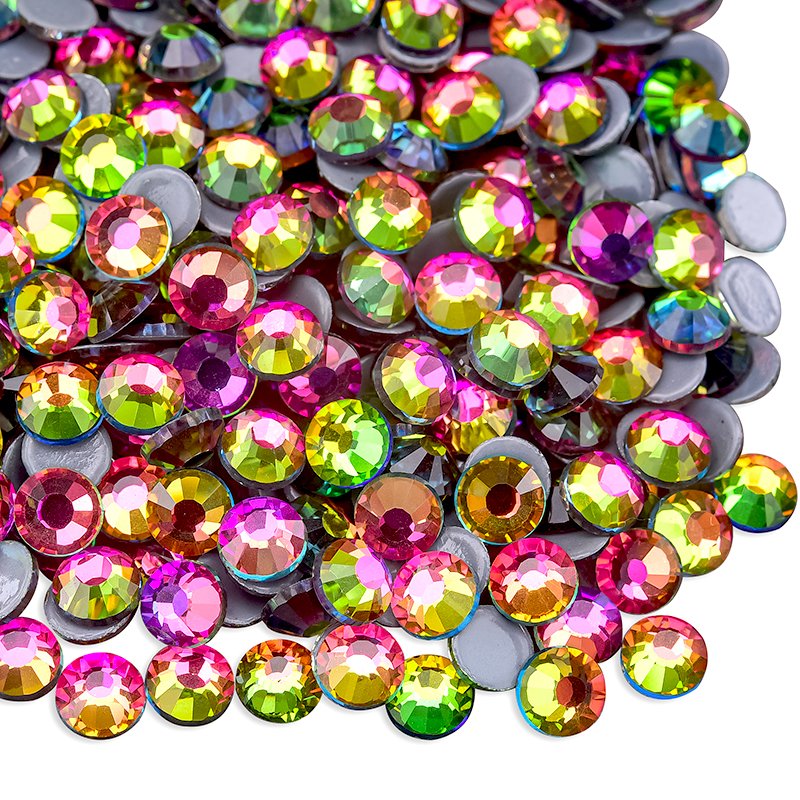
To understand why storage matters, you must first understand the chemistry of a hotfix rhinestone. The “hotfix” refers to the layer of solid glue pre-applied to the flat back of the stone. For premium manufacturers, this is typically a “grey glue” (often German or Korean-engineered) known for its high melting point and strong bond with textiles.
However, this glue is not indestructible. It is a thermoplastic material designed to react to heat, but it is also sensitive to moisture through a process called hydrolysis. When exposed to high humidity for extended periods, the chemical structure of the glue can begin to break down. This results in “dead glue”—glue that either loses its tackiness or, conversely, becomes sticky and messy inside the bag before it is even used. If the glue degrades, the rhinestones will fall off the garment after the first wash, leading to costly returns and a tarnished reputation for your brand.
The Grey Glue Factor
Grey glue is the industry standard for high-end B2B rhinestone production. It is formulated to be stable at room temperature but to melt quickly under a heat press. The problem with grey glue in a factory setting is its porous nature compared to the glass itself. It can absorb ambient moisture. Once moisture is trapped between the glue and the glass surface, the bond is compromised. This is why humidity control is the single most important factor in your storage strategy.
Controlling the Factory Environment: Temperature and Humidity
The ideal warehouse or factory storage area should mimic a climate-controlled office environment rather than a typical industrial garage. To maintain the integrity of bulk rhinestones, you must control two primary variables: Relative Humidity (RH) and Ambient Temperature.
Ideal Humidity Levels (40% – 60%)
Maintaining a relative humidity between 40% and 60% is the “Goldilocks zone” for rhinestone storage. If the humidity exceeds 65%, the risk of glue hydrolysis increases exponentially. Conversely, if the environment is too dry (below 30%), the glue can become brittle, leading to the stones separating from the glue backing during the sorting or shaking process in automatic setting machines.
For factories located in tropical or coastal regions (where many garment factories are situated), industrial-grade dehumidifiers are non-negotiable. These units should be equipped with automatic drainage and digital humidistats to ensure the air remains dry 24/7, even when the factory is closed for the weekend.
Temperature Stability (20°C – 25°C / 68°F – 77°F)
While rhinestones are made of glass and can technically withstand high temperatures, the glue cannot. More importantly, fluctuations in temperature cause condensation. If your factory runs powerful Air Conditioning during the day and turns it off at night, the rapid cooling and heating of the air can cause “sweating” inside sealed plastic bags. This moisture is then trapped directly against the glue.
Aim for a consistent temperature between 20°C and 25°C. Avoid storing rhinestones near heat sources such as steam presses, industrial dryers, or direct sunlight. Heat can cause the glue to soften slightly, making the stones stick together in clumps (blocking), which makes them impossible to use in automatic rhinestone setting machines.
Effective Packaging: From Factory Bags to Airtight Containers
How you package your bulk inventory acts as the last line of defense against the environment. Most wholesalers ship rhinestones in paper envelopes or thin plastic bags. While these are fine for shipping, they are rarely sufficient for long-term factory storage.
The Role of Silica Gel Packs
Every bulk container of rhinestones should include silica gel desiccant packs. These packs work by adsorbing moisture from the air within the container. For B2B applications, we recommend using indicating silica gel (which changes color from blue to pink or orange to green when saturated). This allows your warehouse staff to see at a glance if a container’s environment has been compromised and needs the desiccant replaced.
Choosing the Right Containers
For high-volume factories, we recommend a three-tier containment system:
Shelving and Physical Organization
The physical layout of your storage room affects both the longevity of the product and the efficiency of your staff. A messy warehouse leads to “lost” inventory and aged stock that eventually goes bad.
The 4-Inch Rule for Floor Clearance
Never store bulk rhinestones directly on a concrete floor. Concrete is porous and can “wick” moisture from the ground, creating a micro-climate of high humidity at floor level. All rhinestone inventory should be stored on raised shelving, at least 4 to 6 inches off the ground. Using plastic or powder-coated metal pallets is preferable to wooden pallets, as wood can harbor moisture, mold, and pests.
Avoiding UV Exposure
While the color of high-quality glass rhinestones is generally stable, certain special effects (like AB coatings, Neon colors, or metallic finishes) can be sensitive to prolonged UV exposure. Storing rhinestones in clear bags under bright fluorescent factory lights or near windows can cause the coatings to oxidize or fade over time. Use opaque bins or keep your storage area dimly lit when not in active use.
Vertical Storage and Weight Limits
Rhinestones are surprisingly heavy. A standard 10-gross bag might not seem like much, but a master carton of 100 bags can weigh over 20kg. If you stack bags too high, the pressure on the bottom bags can cause the glue backings to rub together, creating “glue dust” or even causing the stones to chip. Use adjustable steel shelving with clear dividers to prevent crushing and to make it easier for staff to pull individual bags without disturbing the whole stack.
Tracking Dye Lots and Batch Consistency
In the B2B world, color consistency is king. If you are manufacturing 10,000 branded jerseys, all the “Crystal AB” stones must look identical. However, rhinestones are produced in batches, and “Dye Lots” (even in glass production) can vary slightly in hue or “fire” between different production runs.
The Importance of Batch Numbering
Every shipment of rhinestones from your manufacturer should be labeled with a batch number or production date. When the inventory arrives at your factory, your internal SKU (Stock Keeping Unit) system should include this batch number. If you mix Batch A with Batch B on the same garment, the difference might not be visible under factory lights, but it will be glaringly obvious under the retail lights of a department store or in sunlight.
Logistics of Batch Tracking
Implementing a First-In, First-Out (FIFO) System
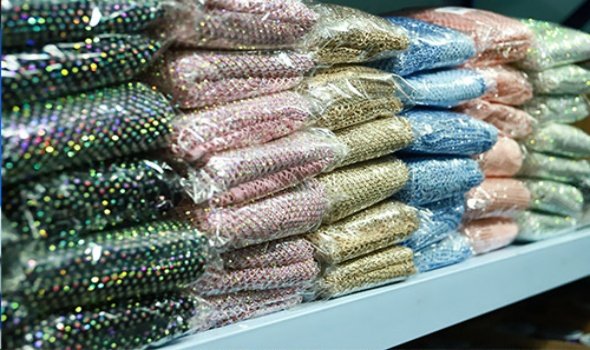
Rhinestones have a shelf life. While the glass lasts forever, the glue is best used within 12 to 18 months of manufacture. To prevent stock from aging out, you must implement a strict FIFO (First-In, First-Out) inventory system.
When new stock arrives, it should be placed at the back of the shelf, while older stock is moved to the front. This ensures that you are always using the oldest viable material first. This is particularly important for specialty colors that are not used daily. Without FIFO, you may find “dead” bags of stones at the back of your shelf three years later, which is essentially throwing money away.
Digital Inventory Management for Rhinestone Wholesalers
If your factory handles more than 50 different types of rhinestones (counting various sizes like SS6, SS10, SS16, and colors), manual tracking is no longer sufficient. You need a digital Inventory Management System (IMS).
Barcoding and SKUs
Assign a unique barcode to every color/size/batch combination. When a production worker needs 50 bags of SS10 Cobalt, they should scan them out of the warehouse. This provides real-time data on your “Burn Rate”—how fast you are consuming specific colors. It also allows you to set “Reorder Points,” so you never run out of a core color in the middle of a major production run.
The “Digital Twin” of Your Storage
Your IMS should tell you exactly which shelf and which bin a specific batch is located on. This reduces the time workers spend searching through bins and minimizes the time the climate-controlled storage door stays open, helping to maintain a stable environment.
Handling and Safety Protocols
The way your staff handles rhinestones before they even reach the heat press can affect their quality. Contamination is a hidden enemy of hotfix glue.
Cleanliness Standards
The oils from human skin can interfere with the bond between the hotfix glue and the fabric. Workers who handle bulk rhinestones should wear lint-free gloves. If they are pouring stones into the hoppers of automatic machines, they should ensure the hoppers are cleaned regularly with compressed air to remove “glass dust” and debris, which can clog the machine and lead to misfires.
Static Electricity Management
In dry environments, plastic rhinestones or the plastic bags they come in can build up a static charge. This causes the stones to jump around, stick to the sides of containers, or flip over—making them a nightmare for automatic setting machines. Using anti-static mats in the storage area and anti-static ionizing blowers in the sorting area can significantly improve production speed.
Troubleshooting Storage-Related Failures
Even with the best practices, mistakes happen. Knowing how to identify storage-related issues early can save you from a production disaster.
How to Spot “Dead” Glue
If you suspect a batch of stones has been exposed to too much moisture, perform a “Snap Test.” Take a stone and try to flick the grey glue off with your fingernail. If the glue is healthy, it should be very difficult to remove and should not flake. If it “pops” off easily as a single disk, or if it feels soft and gummy, the bond has likely been compromised by hydrolysis.
Can You Revive Damp Rhinestones?
If a bag has been left in a humid area, you can sometimes “rescue” the stones by placing them in a vacuum desiccator with fresh silica gel for 48 hours. However, for B2B production, this is risky. It is almost always more cost-effective to use those stones for low-end samples and purchase fresh stock for a major client order than to risk a mass product failure.
Conclusion: Protecting Your Profit Margin Through Discipline
In the B2B rhinestone industry, the difference between a successful manufacturer and one that struggles with quality control often comes down to the details of inventory management. By treating your rhinestones as a climate-sensitive asset, you protect the core of your business.
Implementing a storage strategy that prioritizes humidity control, temperature stability, and batch tracking is not just about keeping the warehouse tidy—it is about ensuring that every stone you sell or apply to a garment performs exactly as intended. Invest in industrial dehumidifiers, use high-quality airtight bins, and enforce a strict FIFO system. These upfront costs and efforts will pay for themselves ten times over in reduced waste, fewer client complaints, and a more efficient factory floor.
Your rhinestones are designed to shine. By following these best practices, you ensure they stay brilliant and securely bonded, protecting your reputation as a high-quality supplier in the competitive global market.
Need a size or color recommendation for your next order? Send us your fabric type, design, and target price — we reply within one business day. WhatsApp +86 13692450325 · rhinestonewholesale8@gmail.com