
Vetting Rhinestone Vendors and Suppliers Before You Commit to a Bulk Order
When a garment factory in Los Angeles gets a quote for hotfix rhinestones that comes in 30% below the market average, one of two things is usually happening, and neither ends well. Either the stone is acrylic dressed up as crystal, or the “vendor” is a middleman who collects a deposit and vanishes when the shipment arrives wrong. Sourcing rhinestones is one of those trades where the mistake is paid for in dollars and in a ruined production run.
This article is a practical vetting checklist, not a directory of names. It walks you through how to tell a factory from a reseller, what to demand in writing before you pay, and how a safe payment is structured. We write this from inside the trade: we have manufactured hotfix rhinestones and glass crystals in Guangzhou for 12 years, so we know exactly where the margins hide.
How to tell a real factory from a reseller
The first filter is not the price. It is the questions. A real factory sends you photos of its production line and warehouse, not just a catalog. It gives you an exact MOQ per color and size. And it can make a counter-sample in your color or Pantone reference within days.
A reseller answers in generalities: “we can do whatever you need,” “price depends on volume,” and you never see a single photo of the shop floor. That last one is the cheapest and most reliable signal. If after two emails you still cannot tell whether that company actually produces anything, stop. Do not hand a reseller a deposit and call it sourcing.
What to demand in writing before you pay
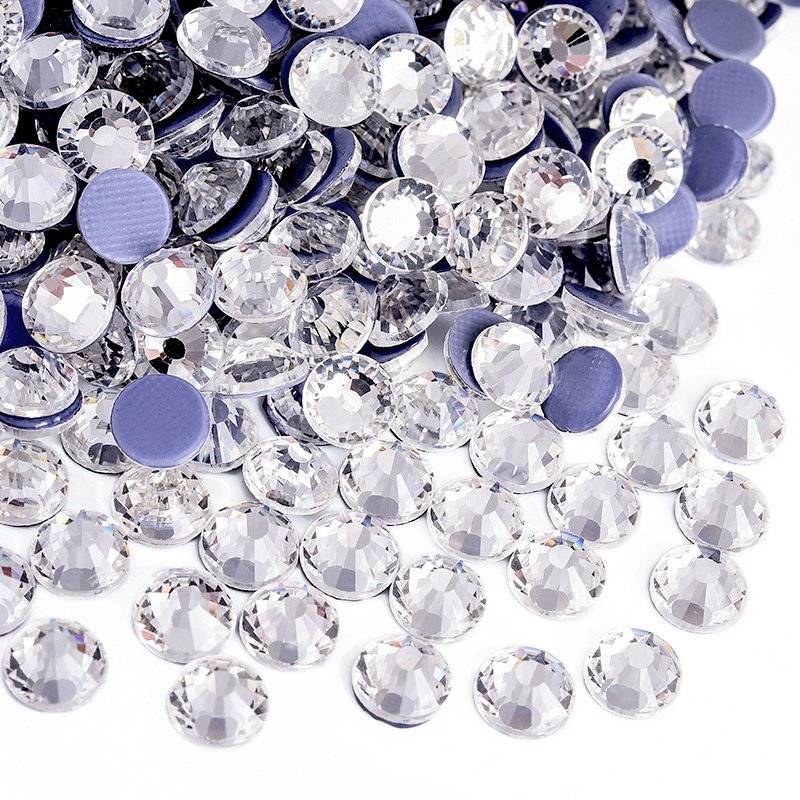
Quality gets fixed before payment, not when the container arrives. Get three things on paper: the core material, the facet count, and the defect policy. The K9 optical crystal we run has a refractive index around 1.9 and 12 to 14 facets per stone; a cheap acrylic sits around 1.49 and scratches with a fingernail.
Also demand that the color be locked to a formula code, not a photo. Batch-to-batch color drift is the single most common complaint in this business, and it only gets prevented when the factory controls the dye formula and sorts stones by color and by lot. If they cannot explain how they repeat a color, they cannot repeat it when you reorder. That is the difference between a vendor you keep and a vendor you survive.
How a safe payment is structured when buying from China
The standard structure is a deposit against dispatch: around 30% upfront to start production, and the balance once the order is ready and inspected. Do not pay 100% upfront to a new vendor, no matter how good the price looks.
Before you pay anything, approve a physical sample of the color and size. That sample is your anchor for comparing the bulk lot when it lands. If a supplier resists sending samples, that is not efficiency. That is a vendor who does not want you to compare. For the full sourcing process from Guangzhou, see our page on partnering with a Guangzhou hotfix rhinestones manufacturer.
What the real minimum order looks like
The MOQ is where resellers pad their margin. Many inflate the minimum to force you to buy more than you need. At the factory, the floor is usually far lower than you expect, because what actually costs money is setting up the color, not the quantity.
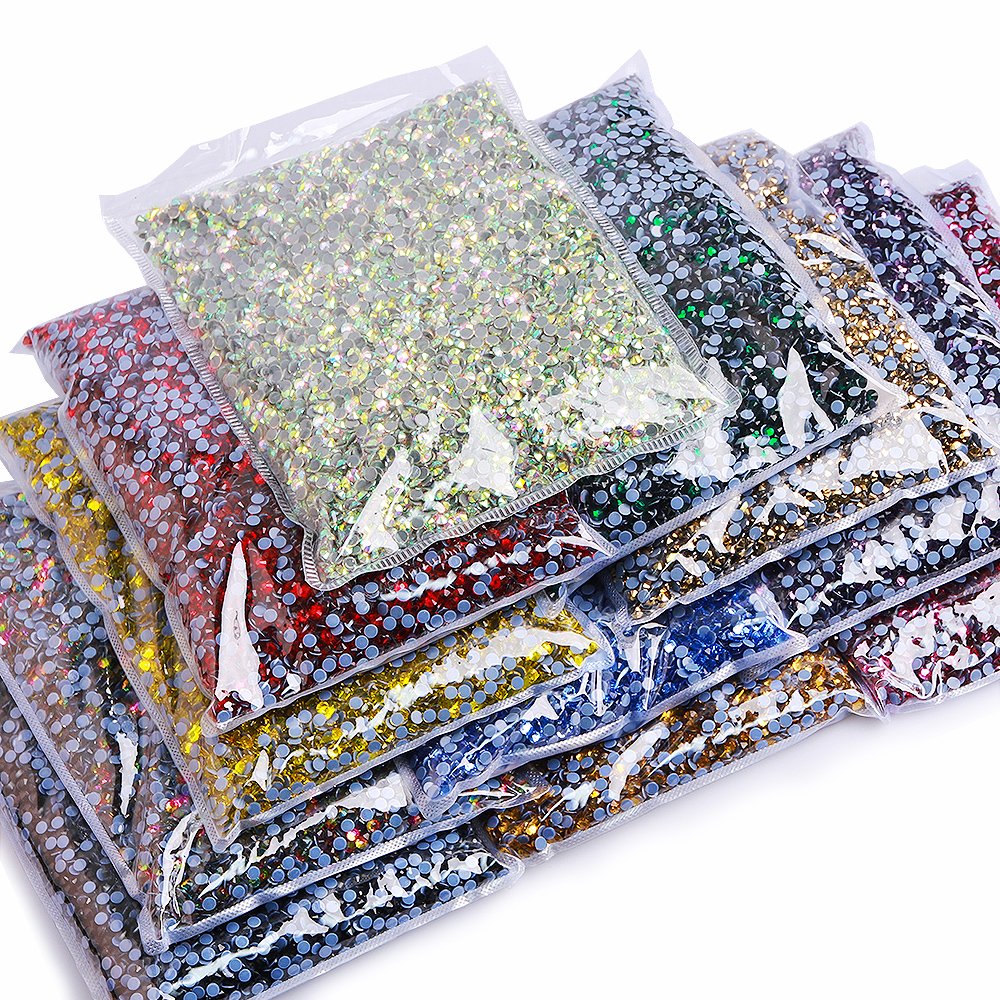
Our MOQ is 2 packs per color and size, around 1,440 pieces per pack in SS16. That covers a large sample run or a first small collection without freezing your capital. If your project is a test, we send loose samples before you commit to the lot. A reasonable minimum should let you start without tying up cash.

What shipping and duty actually cost from Guangzhou
Treat all tariff numbers as a starting point, because rates change and you should confirm them with your own customs broker before quoting a customer. With that caveat, here is the shape of it.
By air, Guangzhou to North America runs 5 to 7 business days with DHL or FedEx. By sea, Guangzhou to the US West Coast is 18 to 25 days, and to the East Coast 25 to 35. The HS code for glass beads is 7018.10. On the US side, that classification carries MFN duty-free status plus a 40% Section 301 additional tariff on Chinese goods, so build that into your landed cost and verify the current rate.
How to spot defects in a 20-piece sample
Four defects account for almost every complaint, and all four are visible in a sample if you know what to look for. First, missing facets: a cheap stone has 8 facets or fewer and reads dull from across the room. Second, an off-center hole or uneven thickness, which makes the stone sit crooked. Third, color that varies within the same pack. Fourth, glue that does not cover the full base, leaving corners that will not adhere.
Ask for a sample of 20 to 30 pieces, not 5, and run them through your hand. If three or more carry a defect, the bulk lot will arrive the same or worse. That 20-piece check costs you a few days and saves you the price of 10,000 bad stones nobody will refund.
What to do before you send your first payment
Close with a short checklist: a verified factory with production photos, an exact MOQ, a color locked to a formula code, an approved physical sample, and a payment structure that does not demand 100% upfront. One miss is tolerable. Two or more, and you keep looking.
We answer on WhatsApp at +86 13692450325 or by email, and we walk you from sample to dispatch. A serious vendor hands you their process in writing and lets you verify every step. If the one you found will not, you already know what to do.
The four most common rhinestone sourcing scams
Knowing the scams ahead of time is half the vetting. The first is the bait-and-switch: a beautiful sample, then a bulk lot of acrylic with 8 facets. The second is the disappearing deposit: a low price, a 100% upfront request, and silence. The third is the “factory” that is actually a trading office with no production floor. The fourth is the batch-drift bait: the first order is flawless, the reorder is a different color and the vendor claims it is “within tolerance.”
All four have the same antidote: verify before you pay, approve a physical sample, and never hand over the full amount to an unverified vendor. A vendor who resists any one of those steps is telling you which scam you are about to fund.
How to audit a factory by video call before you ever visit
You do not need a plane ticket to verify a factory. A live video call, not a pre-recorded tour, does most of the job. Ask to see the production line in real time and watch for three things: color sorting at the packing station, quality checks done with templates rather than by eye, and a current order in progress for another client, shown without revealing their data.
A factory that runs with order shows it in the details. Stones separated by color and lot, a QC bench with a fixed checklist, a warehouse that is not a photo borrowed from somewhere. A factory that improvises shows that too. For a first order or a suspiciously cheap quote, that fifteen-minute call is worth more than any directory listing.
Need a size or color recommendation for your next order? Send us your fabric type, design, and target price — we reply within one business day. WhatsApp +86 13692450325 · rhinestonewholesale8@gmail.com