
Can You Dry Clean Garments Decorated with Hotfix Rhinestones Without Losing Them
You have spent hours or even days meticulously applying thousands of crystals to a high-end gown or a custom performance costume. The result is breathtaking, but the question of maintenance soon follows. When it comes to luxury garments, “Dry Clean Only” is a common label, yet many designers fear that the harsh chemicals and mechanical action of a dry cleaning machine will strip away their hard work. At Guangzhou Yiben E-Commerce Co., Ltd., we have spent 12 years perfecting the bond between K9 optical glass and fabric. We understand the chemistry of adhesion and the physics of the cleaning drum.
Does dry cleaning solvent weaken hotfix adhesive
Dry cleaning solvents like perchloroethylene can weaken low-quality hotfix adhesives by dissolving the polymer bonds, but high-grade German-imported grey hot-melt glue is specifically formulated to resist these chemicals. Our German glue has a melting range of 150-170°C, creating a cross-linked bond that remains stable under standard professional dry cleaning temperatures and chemical exposure. Dry cleaning is only one branch of care; our complete washing and care guide covers hand washing, machine washing, drying and storage in one place.
To understand why some stones fall off while others stay, you must look at the glue’s chemical composition. Cheap “yellow glue” found on budget rhinestones often has a melting point below 130°C. These adhesives are thermoplastic and highly soluble in common dry cleaning fluids. When the garment is agitated in a solvent bath, the solvent penetrates the edges of the glue, causing it to swell and lose its grip on the fibers.
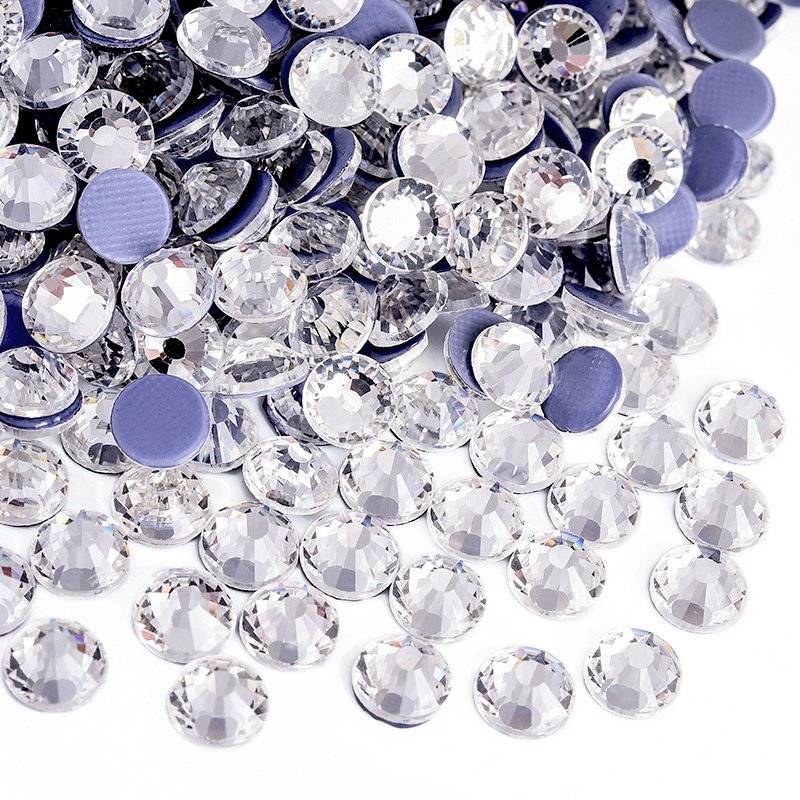
In contrast, the German grey adhesive we use on our K9 rhinestones undergoes a subtle chemical change during the heat-pressing process. When applied at the correct parameters—such as 165°C for 15 seconds on cotton—the glue flows deep into the fabric weave. Once cooled, it forms a resilient barrier. Laboratory tests following the ISO 6330:2021 wash standard show that our crystals experience less than 2% loss even after 50 intensive cycles, whereas inferior alternatives can lose over 30% of their stones in just five washes.
Can a professional dry cleaner remove rhinestones by mistake
Professional dry cleaners do not intentionally remove rhinestones, but the mechanical action of the cleaning drum and high-temperature drying cycles can dislodge stones if they were improperly applied or if the adhesive is substandard. High-pressure steam or aggressive spotting brushes used by inexperienced staff can also catch the facets of the stones and pull them from the fabric.
The risk is particularly high during the “tumbling” phase. Dry cleaning machines are essentially large front-loading washers that use solvent instead of water. As the garment tumbles, it strikes the sides of the drum. If you are using K9 optical glass rhinestones, which have a Mohs hardness of 6-6.5, the stones themselves are quite tough. However, the bond is only as strong as the application.
We often see issues where the heat press was not calibrated correctly. If the pressure was uneven or the temperature didn’t reach the required 150-170°C for the German glue to fully liquefy, the bond is purely superficial. A professional cleaner’s equipment will reveal these weak points instantly. This is why we recommend using a professional heat press rather than a handheld iron for any garment intended for commercial cleaning.
How do you tell your dry cleaner about rhinestone decorations
You should explicitly inform your dry cleaner that the garment features “hotfix” rhinestones with high-temperature adhesive and request a “gentle cycle” or “net bag” processing. Provide them with the specific care requirements, such as avoiding temperatures above 140°C during the pressing or steaming phase, as excessive heat can re-melt the adhesive and cause stones to shift or fall.
Communication is your best defense against garment damage. Many modern cleaners use “GreenEarth” (silicone-based) or hydrocarbon solvents, which are much gentler on adhesives than the traditional perchloroethylene (Perc). By telling your cleaner exactly what they are working with, they can choose the safest solvent path.
It is also helpful to mention the material of the stones. Since our crystals are 100% K9 optical glass with a high refractive index of ~1.9, they can withstand heat and chemicals much better than acrylic or plastic stones (which have a low refractive index of ~1.49 and a Mohs hardness of only 2-3). Glass won’t melt or cloud when exposed to professional cleaning vapors, but the glue is always the “weakest link” that the cleaner needs to manage.

Is hand washing safer than dry cleaning for rhinestone garments
Hand washing is generally safer than dry cleaning because it eliminates the high-impact mechanical agitation and harsh chemical solvents that can degrade adhesives. By using cool water and a mild detergent, you minimize the risk of the glue softening, ensuring the stones remain securely bonded to the fabric for the life of the garment.
When you hand wash, you have total control. You can avoid scrubbing the decorated areas directly and instead let the garment soak. However, even with hand washing, drying is critical. You should never wring a rhinestone-decorated garment. Wringing twists the fabric fibers, which can snap the glue bond. Instead, lay the item flat on a towel to air dry.
For performance costumes, like those used in dance or figure skating, we recommend a “spot wash” approach. Since these garments often use 15,000 to 30,000 SS6 to SS16 rhinestones, the sheer weight of the stones when wet can stretch the fabric. Using our German-imported glue ensures that even if you choose to hand wash, the stones stay put. Our OEKO-TEX Standard 100 certification ensures that no harmful chemicals leach out during the washing process, making it safe for skin contact even after repeated cleanings.
What happens to hotfix glue in perchloroethylene solvent
Perchloroethylene, the most common dry cleaning solvent, acts as a powerful degreaser that can penetrate and soften low-quality thermoplastic glues, leading to adhesive failure. While high-grade German grey glue is highly resistant, prolonged exposure or high temperatures in a Perc bath can eventually lead to a marginal reduction in bond strength if the application was not optimal.
Chemically, Perc is an organochloride. It is excellent at removing oils and waxes, which is why it is so effective for cleaning clothes. But adhesives are also organic polymers. If you use cheap stones with yellow or clear glue, the Perc essentially treats the glue like a “stain” and tries to dissolve it.
At Yiben, we specify the use of German-imported grey glue because it is a polyamide-based adhesive. Polyamides have much higher resistance to dry cleaning solvents compared to the ethylene-vinyl acetate (EVA) based glues found in cheaper products. This technical choice is why our customers in the high-end bridal and evening wear sectors can offer dry cleaning as a viable care option for their clients.
Can you spot clean rhinestone-decorated areas only
Yes, you can spot clean rhinestone-decorated areas using a soft damp cloth and a very mild detergent, avoiding the use of any alcohol-based cleaners or heavy chemicals. This method is the most recommended for minor stains as it preserves the integrity of the glue bond and prevents the stones from being subjected to unnecessary friction or heat.
When spot cleaning, the goal is to clean the fabric *between* the stones without disturbing the stones themselves. A soft-bristled toothbrush can be used to gently move the fabric fibers if there is deep-seated dirt. However, be careful not to catch the edges of the SS6 or SS10 stones.
For professionals, “steaming” is often used to refresh a garment. While steam is generally safe, you must keep the steamer head at least 6 inches away from the crystals. Direct, high-pressure steam can reach temperatures well above the 150°C melting point of the glue. If you steam the back of the fabric directly behind a rhinestone, you could inadvertently liquefy the glue and cause the stone to drop off.
How many dry cleaning cycles can rhinestones survive
High-quality hotfix rhinestones applied with German grey glue can typically survive 30 to 50 professional dry cleaning cycles when handled correctly on a gentle program. In contrast, budget stones with inferior adhesives may begin to fail after just 2 or 3 cycles, showing significant stone loss and a cloudy appearance on the remaining adhesive residue.
Durability is a factor of both the stone and the glue. Because K9 optical glass has a Mohs hardness of 6-6.5, the facets remain sharp and brilliant even after the friction of multiple cleanings. Acrylic stones, on the other hand, scratch easily (Mohs 2-3) and will lose their “sparkle” long before the glue fails.
We have clients in the uniform and corporate apparel industry who require their branded items to be cleaned weekly. By using our SS16 and SS20 stones with the German glue, they achieve a professional look that lasts for years. We always emphasize the importance of the initial application:
Following these parameters ensures the maximum possible lifespan for your decorated garments.
Feature Yiben K9 + German Glue Standard Acrylic + Yellow Glue
Refractive Index ~1.9 (High Brilliance) ~1.49 (Dull)
Hardness (Mohs) 6 – 6.5 2 – 3
Glue Melting Point 150°C – 170°C <130°C
Dry Clean Resistance High (Polyamide base) Low (EVA base)
50 Wash Test Loss <2% >30%
Featured Image Placeholder: A professional dry cleaning environment with a close-up of a rhinestone-encrusted evening gown hanging on a rack.
Need a size or color recommendation for your next order? Send us your fabric type, design, and target price — we reply within one business day. WhatsApp +86 13692450325 · rhinestonewholesale8@gmail.com