
Irish Dance Dress Crystals with K9 Facet Sparkle and Heavy Hold Grey Glue for Stage Lights
In the competitive arena of Irish dance governed by An Coimisiún le Rincí Gaelacha (CLRG) and allied dance federations, a solo championship dress is a masterpiece of textile architecture. Designed to captivate adjudicators across expansive auditorium halls, an elite solo dress features intricate Celtic embroidery, structured stiffened panels, and dense rhinestone embellishments. A single contemporary dress routinely incorporates between 6,000 and 15,000 individual hotfix crystals. Under high-output auditorium spotlights, this dense sea of stones transforms rapid-fire footwork into an explosive visual performance.
However, the extreme physical demands of competitive Irish dance present extraordinary engineering challenges. During hard-shoe treble reels, slip jigs, and aerial leaps, a dancer generates immense kinetic G-forces and violent garment vibrations. If a dressmaker uses low-grade acrylic stones or cheap commercial glue backings, the costume becomes an operational liability. Inferior stones appear milky and lifeless under intense stage wash lights. Even worse, brittle adhesive bonds snap under mechanical shear stress, sending rhinestones scattering across the polished stage floor and resulting in severe judging penalties or costume failure.
At Guangzhou Yiben E-Commerce Co., Ltd., we have spent 12 years manufacturing high-performance hotfix rhinestones engineered for high-impact performance apparel. As explored in our comprehensive analysis of sourcing premium hotfix crystals for UK and Irish couture ateliers, costume makers require precision optical clarity, resilient thermal adhesives, and reliable supply chains to sustain demanding production seasons. By adopting high-grade K9 optical crystal glass and German-imported industrial hotmelt grey glue, Irish dance dressmakers can build costumes that project extraordinary brilliance across auditorium stages while maintaining complete stone retention through years of aggressive competition.
This technical guide details the optical physics, adhesive chemistry, stone sizing strategies, and heat pressing protocols required to build durable, championship-caliber Irish dance dresses.
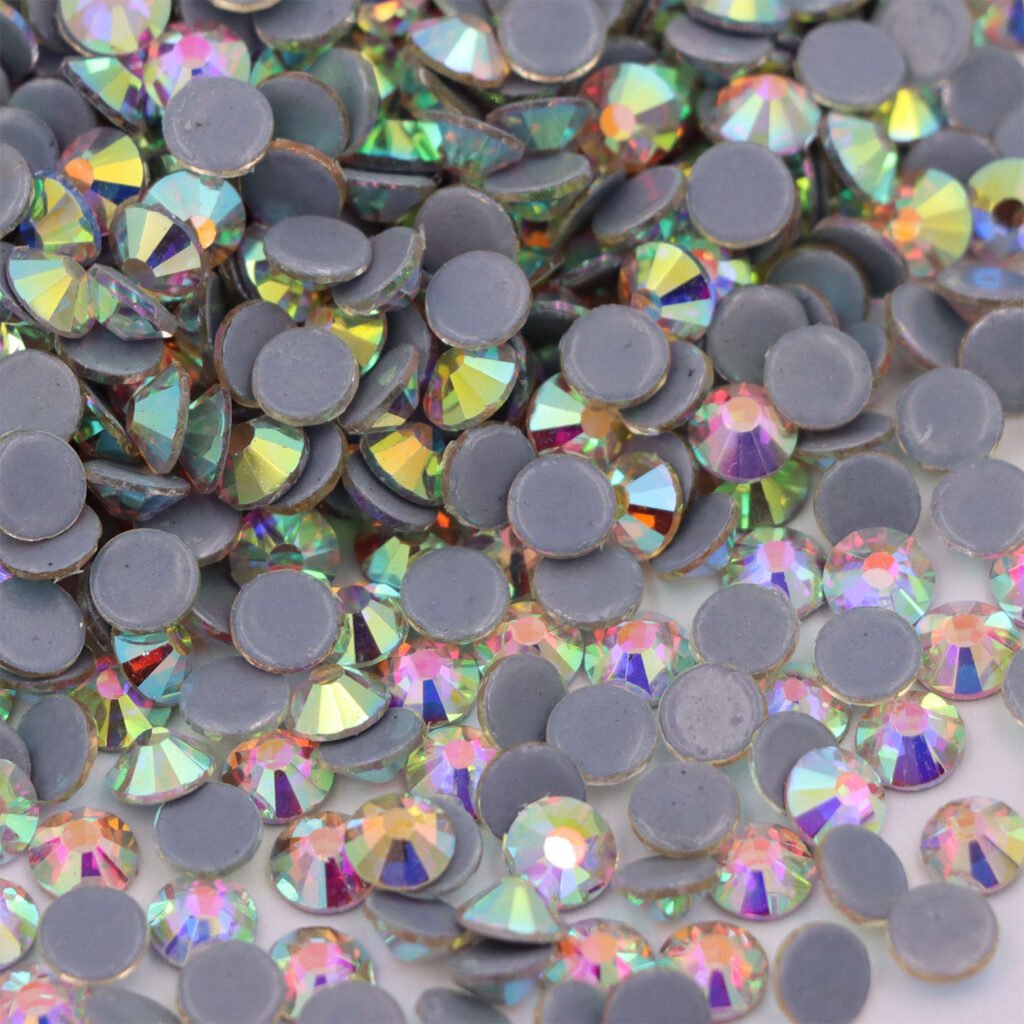
Why Irish Dance Solo Dresses Demand Exceptional Facet Sparkle Under Stage Spotlights
Competition stages present harsh, unforgiving optical conditions. Unlike bridal salons or photo studios where diffused ambient illumination prevails, Irish dance feiseanna take place in large theatres, convention auditoriums, and arena halls illuminated by high-intensity discharge lamps, moving follow-spots, and overhead tungsten beams.
Adjudicators typically sit between 15 and 35 meters back from the stage apron. At that viewing distance, individual small embellishments blur together. The human eye perceives only concentrated bursts of high-contrast, directional light reflection.
The Failure of Plastic and Low-Index Stones
When budget dressmakers cut corners by applying molded acrylic, PMMA, or standard resin rhinestones, the optical result under theatre lights is disappointing: – Low Refraction Index: Acrylic and resin stones have a refractive index of only 1.48 to 1.52. Incident light passes straight through the cloudy plastic body rather than bouncing back to the viewer, creating a dull, plastic appearance. – Rounded Facet Junctions: Plastic stones are molded rather than cut with diamond tooling. Their rounded, soft facet junctions scatter light indiscriminately, preventing focused prismatic refraction. – Thermal and Friction Dulling: During transport in heavy costume travel bags, resin stones abrade against one another, acquiring thousands of micro-scratches that permanently ruin surface clarity.
Optical Dynamics of Yiben K9 Crystal
Guangzhou Yiben manufactures 100% optical K9 borosilicate crystal glass rhinestones specifically engineered to counter stage wash-out: 1. Refractive Index ~1.9: Our high-purity optical formulation achieves an optical density approaching traditional leaded crystal, maximizing the internal refraction of ambient light. 2. 12 to 14 Diamond-Cut Facets: Every stone is cut with precision diamond wheels and flame-polished. The crisp, razor-sharp junctions between the table, star, and pavilion facets ensure clean light refraction. 3. High-Vacuum Aluminium-Silver Mirror: The stone base features a multi-layer metallic mirror that bounces 98.5% of internal light upward through the faceted crown, projecting intense, sharp pinpoint flashes directly toward the judges’ table. 4. Mohs 6.0 to 6.5 Hardness: Yiben K9 crystal resists surface scratching from heavy travel cases, stage floor contact, and repetitive handling, maintaining pristine brilliance season after season.
When an Irish dancer executes sharp, lightning-fast cross-overs and clicks, K9 optical crystal generates a high-frequency scintillation effect, making the dancer appear to glide on pure light.
Strategic Rhinestone Sizing Across Celtic Knotwork, Bodice Crests, and Skirt Panels
Embellishing an Irish dance dress is not a random application of stones; it is a calculated discipline combining visual hierarchy and weight management. Designers mix stone gauges ranging from delicate SS10 crystals up to bold SS30 statement stones to emphasize costume architecture and traditional Celtic knotwork.
| Design Hierarchy Level | Stone Size Gauge | Target Stage Function | Structural Application Technique |
|---|---|---|---|
| 1. Structural Outlines & Focal Medallions | SS20 (4.8 mm) & SS30 (6.4 mm) | Bold, wide-angle stage sparkle outlining primary Celtic knotwork and collar crests | High-contrast linear borders visible from 30+ meters across arena |
| 2. Mid-Scale Shading & Transition Tapering | SS16 (4.0 mm) | Smooth chromatic and dimensional gradients between primary outlines and embroidery | Tapered rows bridging large outline stones to internal panel fills |
| 3. Dense Pavé Infill & Edge Framing | SS10 (2.8 mm) | Micro-dense coverage eliminating visible gaps on fabric panels and scallops | Hexagonal close-packing pavé over stiff satin and velvet panels |
The following table provides dressmakers with a functional breakdown of stone sizing, recommended coverage densities, and estimated weight contributions for a standard championship solo costume:
| Garment Component | Primary Stone Sizes | Typical Quantity Applied | Visual Function on Stage | Estimated Rhinestone Weight (Grams) |
|---|---|---|---|---|
| Stiff Stand-Up Collar & Neckline | SS10, SS16, SS20 | 400 – 800 stones | Frames the dancer’s posture; draws eye to carriage and chin line | ~35 – 70 g |
| Bodice Celtic Knotwork Outlines | SS20, SS30 | 1,200 – 2,500 stones | Creates high-contrast structural borders visible from 30+ meters | ~180 – 380 g |
| Bodice Background Pavé Infill | SS10, SS16 | 2,500 – 5,000 stones | Fills background voids with continuous diamond-like sparkle | ~120 – 260 g |
| Hard Stiffened Skirt Panels (Front/Back) | SS16, SS20, SS30 | 2,000 – 4,500 stones | Highlights panel geometry during kicks; adds kinetic snap to skirt movement | ~250 – 580 g |
| Cape / Back Sash Details | SS16, SS20 | 600 – 1,200 stones | Ensures brilliance during stage turns, leaps, and stage exits | ~60 – 140 g |
| Sleeve Cuffs and Shoulder Caps | SS10, SS16 | 500 – 1,000 stones | Accentuate arm position, shoulder stability, and hand placement | ~30 – 65 g |
| **Total Championship Costume Assembly** | **Mixed SS10 to SS30** | **7,200 – 15,000 stones** | **Full-costume visual dominance under arena spotlights** | **~675 – 1,495 grams** |
By using SS30 stones along primary Celtic knot motifs, dressmakers establish bold visual focal points that break through auditorium distances. Simultaneously, filling adjacent backgrounds with tight SS10 and SS16 pavé clusters eliminates unsightly gaps in the base fabric, presenting an uninterrupted wall of crystal brilliance.
Engineering Kinetic Durability with German Ultra-Bond Grey Glue
The most critical point of failure on any performance dance dress is the adhesive layer. When an Irish dancer lands a hard-shoe treble reel, the sudden deceleration sends sharp shockwaves rippling through the stiffened skirt panels and velvet bodice. Traditional craft glues, yellow-back hotfix resins, and clear EVA glues fail because they cure into brittle, rigid glass-like bonds. Under repeated mechanical impact, these brittle bonds crack, releasing stones during the routine.
Chemical Structure of German Industrial Grey Adhesive
Guangzhou Yiben coats all production hotfix crystals with genuine German-imported industrial hotmelt grey adhesive (German Ultra-Bond Grey Glue). This specialized adhesive is engineered with elastomeric co-polyamides designed specifically for dynamic, flexible textiles: – Melting Point Profile (150°C to 170°C): The grey adhesive activates cleanly across a broad thermal window, liquefying into an ultra-low viscosity fluid at 160°C. – Deep Micro-Filament Encapsulation: Under pneumatic heat press pressure, the melted resin flows around individual synthetic and natural yarn filaments, mechanical interlocking directly into the weave of heavy velvet, dense twill, and stiff buckram. – Elastic Energy Dissipation: Once fully cured, the adhesive layer behaves like high-durometer vulcanized rubber. When the dancer executes violent kicks or stomps, the adhesive flexes microscopically, absorbing and dissipating kinetic shear forces rather than fracturing.
Rigorous Industrial Laundering and Spot-Cleaning Resistance
Irish dance costumes accumulate sweat, cosmetic bronzers, and hairspray over months of competition. Costumes require regular maintenance, spot-cleaning, and gentle hand or machine washing.
In accordance with international testing protocols, Yiben hotfix rhinestones are verified under ISO 6330 standardized industrial washing cycles. Subjected to 50 simulated wash procedures at 40°C in commercial test drums, our hotfix stones demonstrate a total detachment rate of under 2.0%. The German grey adhesive remains impervious to sweat acidity, humidity, and atmospheric oxidation. For an extensive technical breakdown of laboratory testing data, refer to our operational report on preventing rhinestone peeling in industrial laundering under ISO 6330.
Calculating and Balancing Total Rhinestone Weight on Structured Costumes
A championship solo dress is an engineered garment where weight distribution directly impacts athletic performance. Applying 10,000 to 14,000 stones introduces between 1.0 and 1.5 kilograms of dead glass weight onto a dress that already weighs 1.5 to 2.5 kilograms due to heavy velvets, stiff buckram interlinings, and embroidery threads.
If this stone weight is concentrated improperly, the garment creates biomechanical strain: 1. Neckline and Collar Sagging: Concentrating large SS30 stones exclusively around the front bodice or stand-up collar pulls the neckline forward, forcing the dancer to expend extra energy maintaining mandatory upright posture. 2. Skirt Distortion and Drag: Heavy stone clusters applied below the hip line on flexible side panels can cause the structured skirt to tilt, wobble, or drag during high kicks.
Principles of Costume Weight Balancing
To ensure athletic comfort and flawless garment drape, dressmakers should apply three fundamental weight balancing rules:
1. Center of Mass Anchoring: Concentrate the densest stone weight (SS20 and SS30 knotwork) directly over the pelvic girdle and lower torso, where the dancer’s body naturally carries core mass. This stabilizes the dress against the dancer’s hips without distorting upper-body carriage. 2. Structural Panel Reinforcement: Never apply heavy stone clusters onto unsupported single-ply stretch fabrics. Back heavily rhinestoned zones with high-density non-stretch polyester stabilizer or fused horsehair canvas to distribute stone mass evenly across structural seamlines. 3. Counter-Balancing the Back Panel: When embellishing a dense front bodice, ensure the rear cape or back skirt panel carries equivalent stone mass. This symmetrical distribution prevents the back of the dress from riding up during energetic movement.

Thermal Application Protocols for Heavy Velvet, Dense Brocade, and Stiffened Panels
Traditional garment embellishment relies on simple flatbed pressing. However, Irish dance dresses utilize complex, heat-resistant, multi-layered textiles including structured velvet, stiffened embroidery brocades, and dense buckram panels. Applying heat improperly can crush velvet pile, scorch delicate metallic threads, or result in incomplete glue melting.
To guarantee maximum adhesion without compromising luxury fabrics, workshops must follow a precise dual-sided thermal pressing protocol.
Dual-Sided Thermal Pressing Parameter Matrix
| Textile Substrate | Top Platen Temp (°C) | Bottom Platen / Reverse Temp (°C) | Pneumatic Pressure (bar / psi) | Cycle Dwell Time (Seconds) | Protective Cover Method | Cooling & Peel Procedure |
|---|---|---|---|---|---|---|
| Cotton-Base Heavy Velvet (Plush Pile) | 155°C – 160°C | 160°C – 165°C | Medium (2.5 – 3.0 bar / 35–40 psi) | 12s Top, 8s Reverse | Velvet needle board or plush towel beneath pile; Teflon sheet on top | 100% Complete Cold Peel; lift transfer flat at 180° angle |
| Metallic Embroidery Brocade | 160°C – 165°C | 160°C | Medium-Firm (3.2 – 3.5 bar / 45–50 psi) | 14s Top, 6s Reverse | 0.5mm Silicone release sheet to distribute pressure evenly | Cold peel; inspect glue ring along stone perimeter |
| Stiff Buckram Skirt Composite | 165°C – 170°C | 160°C | Firm (3.5 – 4.0 bar / 50–55 psi) | 15s Top, 10s Reverse | Dual Teflon sheets; apply heat from reverse to draw glue deep | Complete cold peel; ensure panels remain flat while cooling |
| 4-Way Stretch Lycra Side Inserts | 150°C – 155°C | None (standard lower platen) | Light-Med (2.0 – 2.5 bar / 30 psi) | 10 – 12 seconds | Single Teflon sheet; ensure fabric is completely unstretched | 100% Cold Peel; do not stretch panel while warm |
Critical Heat Press Best Practices for Studios
– The Reverse Heat Method: When working with dense, multi-layered skirt panels, heat applied solely from the top must penetrate through the thick glass stone body before reaching the adhesive base. Applying primary heat from the reverse side of the garment allows thermal energy to activate the German grey glue directly through the fabric weave, creating a volcanic bond without overheating the crystal facets. – The Velvet Needle Board: Never press plush velvet directly against a hard flat metal platen. Always place a velvet needle board (flock board) beneath the garment face-down, allowing the pile to rest between needles without being flattened into an unsightly shiny patch. – Strict Cold Peel Enforcement: Prematurely peeling carrier tape while the adhesive remains warm stretches molten glue filaments, breaking the hermetic seal around the stone perimeter. Allow every pressed garment section to cool completely to room temperature (2 to 3 minutes) before gently peeling the carrier film back at a 180-degree angle.
Sourcing Factory-Direct K9 Rhinestones for Irish Dance Studios and Dressmakers
For commercial dressmaking studios across Ireland, the UK, and international dance hubs, procuring rhinestones through domestic craft shops or third-party resellers severely constrains profit margins. Purchasing small gross packs at local retail stores inflates raw embellishment costs to upwards of £400 to £800 per costume.
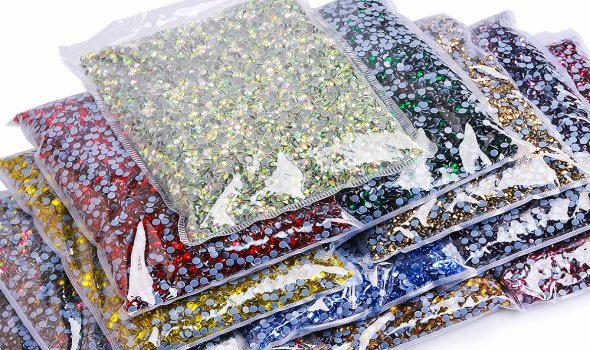
By partnering directly with Guangzhou Yiben, independent designers and established costume ateliers access factory-direct pricing, guaranteed batch consistency, and reliable logistics: 1. Low Minimum Order Quantities: Our production baseline is established at just 2 wholesale packages (20 gross / 2,880 stones) per color and size, allowing studios to sample new colorways and test sizing gradients without committing heavy capital. 2. Same-Day Dispatch for In-Stock Colors: Over 400 catalog shades and sizes (SS6 to SS30) ship from our Guangzhou warehouse the same business day payment clears. 3. Door-to-Door Air Express Logistics: We ship directly via DHL Express, FedEx Priority, and UPS Worldwide. Consignments arrive at studio doorsteps in Dublin, Cork, Belfast, Manchester, and London within 3 to 5 business days, complete with compliant customs documentation under HS Code `7018.10.00`. 4. Master Color Matching: When building matching team costumes or replenishing seasonal stones, our digital spectrophotometers guarantee color accuracy to within Delta E < 0.8, eliminating noticeable batch discrepancies.
By mastering the principles of sourcing bulk hotfix rhinestones directly from China, Irish dance costume ateliers elevate their design capabilities while dramatically increasing studio profitability.
Frequently Asked Questions on Irish Dance Costume Rhinestones
Why is German grey glue preferred over clear hotmelt adhesive for Irish dance dresses?
Clear EVA hotmelt adhesives cure into rigid, crystalline bonds that lack elastic recovery. Under the violent kinetic shockwaves and hard-shoe stomps of Irish dancing, brittle clear glue fractures, shedding stones during performance. German industrial grey glue incorporates elastomeric co-polyamides that maintain dynamic flexibility, absorbing shock and flexing with heavy velvet and stiff brocade without breaking.
How many rhinestones are typically needed to decorate a championship solo dress?
A modern championship solo dress typically requires between 6,000 and 15,000 rhinestones, depending on dancer height, skirt silhouette, and design density. A balanced costume incorporates approximately 2,000 to 4,000 SS20/SS30 stones for primary Celtic knotwork and structural crests, combined with 4,000 to 10,000 SS10/SS16 stones for background pavé infill and border framing.
Can hotfix rhinestones be safely applied to heavy dance velvet without ruining the pile?
Yes, provided dressmakers use proper equipment and pressing techniques. Always place a velvet needle board (flock board) beneath the plush fabric face, or press from the reverse side of the garment using a firm silicone pad. Keep top platen temperatures between 155°C and 160°C, apply medium pressure (2.5 to 3.0 bar), and enforce a strict 100% cold peel protocol.
How quickly can replacement stones be delivered to Ireland for an upcoming feis emergency?
Catalog stock colors and standard stone sizes ship from Guangzhou Yiben the same day payment clears. Dispatched via DHL Express Priority or FedEx Priority, emergency orders deliver door-to-door to Dublin, Shannon, Cork, or Belfast within 3 to 5 business days.
Explore Connected Costume Sourcing Resources
To expand your atelier’s technical expertise and streamline wholesale procurement across the UK, Ireland, and global markets, review our dedicated operational guides:
– Regional Sourcing Hub: Discover the strategic overview of sourcing premium hotfix crystals for UK and Irish couture ateliers for comprehensive landed cost comparisons and customs frameworks. – Factory Direct Procurement: Review our master guide on sourcing bulk hotfix rhinestones directly from China to evaluate source factory quality standards and global logistics options. – Wash Durability Engineering: Detailed laboratory wash testing data and thermal activation curves in our report on preventing stone loss in industrial laundering under ISO 6330. – Express Courier Logistics: Shipping rate calculations, transit time charts, and clearance procedures in our guide to DHL vs FedEx vs air freight for bulk rhinestone orders. – Ballroom and Bridal Embellishment Guide: Upcoming dedicated technical feature on maintaining absolute Crystal AB color consistency across repeat costume production runs.
Need a size or color recommendation for your next order? Send us your fabric type, design, and target price — we reply within one business day. WhatsApp +86 13692450325 · rhinestonewholesale8@gmail.com