
What Are the Best Rhinestones for Clothing
Ask ten people why their rhinestone shirt shed its crystals and nine of them will blame the wash. They are wrong. The real answer is almost always the stone itself: cheap acrylic on a low-melt glue was never going to survive, no matter how gently it was laundered. Choosing the best rhinestones for clothing is a materials decision, not a care decision, and once you know the difference between glass and acrylic, grey glue and yellow glue, and the right size for your fabric, every piece you buy or make will last years instead of weeks. This guide walks through the grades, the sizes, and the designs that actually hold up.
What type of rhinestones are best for clothing?
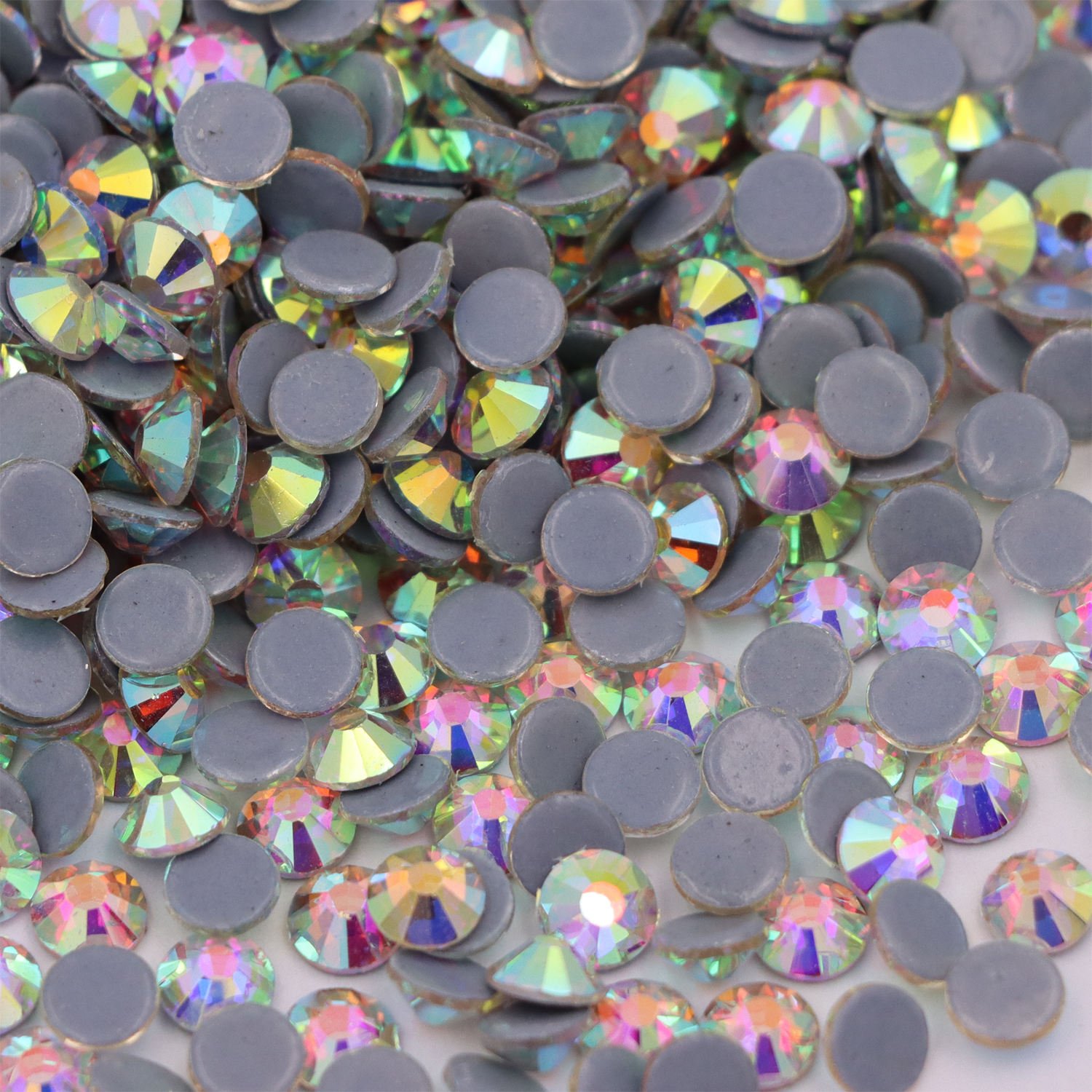
K9 optical glass hotfix rhinestones are the best choice for clothing because they outshine and outlast every cheaper option. Their refractive index sits around 1.9, they are cut with 12 to 14 facets, and they hold their fire through dozens of washes when paired with a proper glue.
Acrylic and resin stones are cheaper and lighter, but they lose the comparison on every metric that matters for clothing. Acrylic has a refractive index around 1.49 and usually carries eight facets or fewer, so it reads flat and slightly milky under light. Its Mohs hardness of 2 to 3 means it scratches and dulls in normal wear, where K9 glass at 6 to 6.5 resists the abrasion of everyday movement. For a garment you wear and wash, glass is not a luxury; it is the difference between a piece that looks new in a month and one that looks new in a year.
What is the difference between K9 glass and acrylic rhinestones?
The difference between K9 glass and acrylic rhinestones comes down to light, hardness, and durability. K9 glass bends light with a refractive index near 1.9 and survives washing, while acrylic refracts at about 1.49, scratches easily, and dulls fast.
You can spot the difference in seconds. K9 glass feels cold and heavy for its size, and its facets are crisp enough to catch light from a distance. Acrylic is lighter, warmer to the touch, and the facets look softer, as if the stone were slightly out of focus. Under a loupe, glass shows 12 to 14 clean cuts; acrylic shows eight or fewer. The wash test settles it every time: K9 glass on German grey glue survives 50 standard machine washes at under 2 percent stone loss, while acrylic on a yellow glue can shed over 30 percent after five. If the piece costs suspiciously little, it is acrylic, and the savings will show up on your laundry-room floor.
What size rhinestones should I use for shirts?
For shirts, use SS6 at 2.0mm for fine all-over shimmer, SS10 at 2.8mm for a balanced sparkle, and SS16 at 4.0mm for bold motifs and lettering. Larger SS20 and SS30 stones work as accents but start to feel heavy and stiff on a lightweight tee.
Size changes both the look and the wearability. A full chest of SS6 stones reads as a subtle glittering texture and moves with the fabric, while the same area in SS16 becomes a solid, structured panel. For rhinestone designs for t shirts, most printers and designers keep lettering and outlines in SS10 or SS16, then fill backgrounds with SS6 to keep the piece from becoming a stiff plate. Rhinestone for gowns follows the same logic scaled up, since a bodice can carry SS16 to SS20 stones where a tee cannot. Match the stone size to the fabric weight: heavier denim and outerwear take SS16 and up comfortably, while fine jersey and silk want SS6 and SS10.

How do hotfix rhinestones work?
Rhinestone hot fix stones work through a heat-activated glue already applied to the back of each stone, which melts and bonds to fabric when pressed at the right temperature and pressure. The stone, the glue, and the fabric fuse into a single unit once cooled.
The glue is the part most buyers never check, and it is the part that fails first. German grey glue melts at 150 to 170 degrees Celsius, which gives it a wide, forgiving working window and a strong final bond. Cheap yellow glue softens below 130 degrees, so it re-melts in a hot car, a dryer, or under a heat press set for a different fabric. The press settings matter too: cotton and denim bond best at 165 degrees Celsius and 40 PSI for about 15 seconds, spandex at 150 degrees and 30 PSI for 12 seconds, and silk at 140 degrees for 10 seconds under a protective sheet. Match all three, and the bond outlasts the garment.
How many rhinestones do I need for a shirt?
A shirt needs anywhere from a few hundred stones for a small chest logo to several thousand for a full front or back panel. A useful reference is that a fully stoned square foot takes roughly 576 stones at SS16, which scales down for smaller motifs and up for larger sizes.
For planning, work backward from the design area. A small star or letter might use 300 to 800 stones, a name across the back 800 to 2,000, and a full-back graphic 5,000 or more. When you buy stones, add a buffer of 10 to 15 percent for drops, mis-picks, and replacements, because a stone lost during application is gone for good. Buying in packs rather than singles keeps the math simple, and a supplier with a two-pack minimum per color and size, roughly 1,440 pieces per pack at SS16, lets you stock several designs without overbuying. If you are covering an entire garment, compare loose stones against rhinestone fabric by the yard, which arrives pre-stoned and can be faster for full-panel work, though it costs more per square foot and limits you to the seller’s patterns.
How do I keep rhinestones from falling off clothes?
Keep rhinestones from falling off clothes by starting with K9 glass on German grey glue, pressing at the correct temperature for the fabric, and then washing inside out on cold with air drying. When the stone and the bond are right, nothing else is required.
The failures break down predictably. Stones fall off because the glue never fully bonded at the press, because the glue re-melted in the dryer, or because the stone itself was acrylic and the glue was the cheap yellow kind. Friction is the other killer, so turn garments inside out before washing and skip anything that rubs hard against the stoned area, like backpack straps or a tight seatbelt. If a stone does come loose, reapply a replacement with a heat press or hand applicator while the garment is flat, and never use fabric glue, which dries stiff and leaves a white halo that looks worse than the missing stone.
What rhinestone designs work best for shirts and t-shirts?
The rhinestone designs for shirts that hold up best are bold, closed shapes with clean edges: single stars, initials, short words, and outlined logos. Fine, intricate patterns lose their impact at arm’s length and are harder to keep aligned during application.
Contrast is what makes a design read. A crystal or AB star on a black tee pops instantly, while the same design on white fabric disappears unless you add an outline or switch to a colored stone. Rhinestone designs for clothing follow the same principle: pick a shape the eye can read in one glance, then place it high on the chest or centered on the back where it stays flat against the body. Avoid placing stones on seams, zipper tracks, or high-stretch zones like the underarm, because those areas flex constantly and will shed stones no matter how well the piece is made.
How do I use rhinestone patches, letters, and buttons?
Rhinestone patches for clothing, rhinestone letters for clothing, and rhinestone buttons for clothing are the fastest way to add sparkle without stoning an entire garment. Patches and letters apply as ready-made motifs, while buttons replace plain closures with crystal hardware.
Patches and letters usually come as pre-made hotfix transfers you press in one pass, which makes them forgiving for beginners because the spacing and alignment are already done for you. Check the backing before you buy: a motif made with K9 stones on grey glue will outlast a printed imitation that has stones glued to a vinyl sheet. Rhinestone buttons are a separate category, small and sturdy, and they upgrade a shirt or blazer with far less effort than a full embellishment. For a quick win, a single rhinestone star patch on a pocket or sleeve reads as intentional design and takes minutes to apply.
What about rhinestone studs and star patches?
Rhinestone studs for clothing are individual flatback or pointed stones that attach by glue or metal prongs, and a rhinestone star patch clothing motif is simply a pre-arranged star made from those studs. Both work well on structured pieces like denim, leather, and heavy outerwear.
Studs suit fabrics where hotfix does not, because leather and coated synthetics cannot take heat. A metal-pronged stud punches through denim and locks in place, while glue-on flatbacks work on surfaces a press cannot reach. Star patches combine the two advantages: they arrive fully formed, so you get a clean star shape without laying out dozens of individual stones, and you can sew or glue them onto almost anything. If you want the look of a stoned jacket without the hours of placement, a star patch on each shoulder is the shortcut.
—
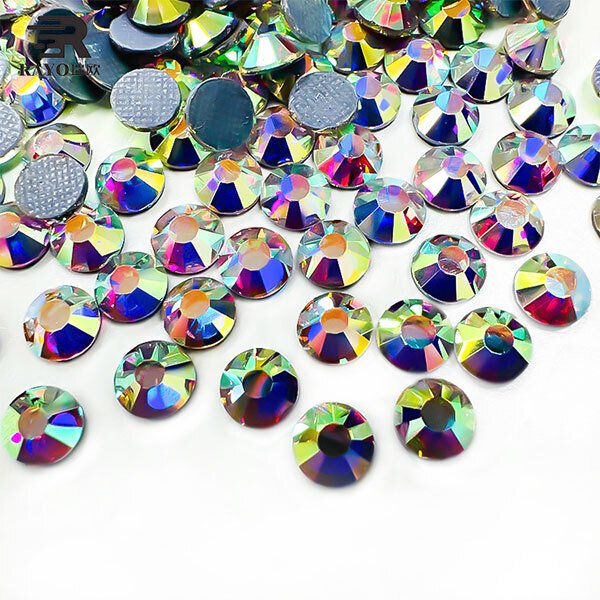
For buying loose stones or ready-made motifs, grade is everything, and that is where a manufacturer beats a reseller. Guangzhou Yiben E-Commerce Co., Ltd. has made K9 optical glass hotfix rhinestones for 12 years, with German grey glue, 12 to 14 facets, and OEM color options, and we ship worldwide from Guangzhou with a two-pack minimum per color and size. Send your design list or size and color spec for a color chart and pricing. Reach us on WhatsApp at +86 13692450325 or email rhinestonewholesale8@gmail.com.
Need a size or color recommendation for your next order? Send us your fabric type, design, and target price — we reply within one business day. WhatsApp +86 13692450325 · rhinestonewholesale8@gmail.com