
How Rhinestone Glasses for Women Are Made, Styled, and Maintained
A pair of rhinestone glasses for women costs anywhere from $12 for a mass-produced frame to over $200 for a designer version, yet both can look nearly identical on a website. The difference hides in the stone material, the glue behind each stone, and the facet count on the crystal. Cheap acrylic stones lose their shine after a few wears and shed within weeks. K9 optical glass stones hold their sparkle through daily wear and dozens of washes. This guide walks through how these frames are built, how to spot quality before you buy, and how to keep the stones from falling out.
What Are Rhinestone Glasses for Women Made Of?
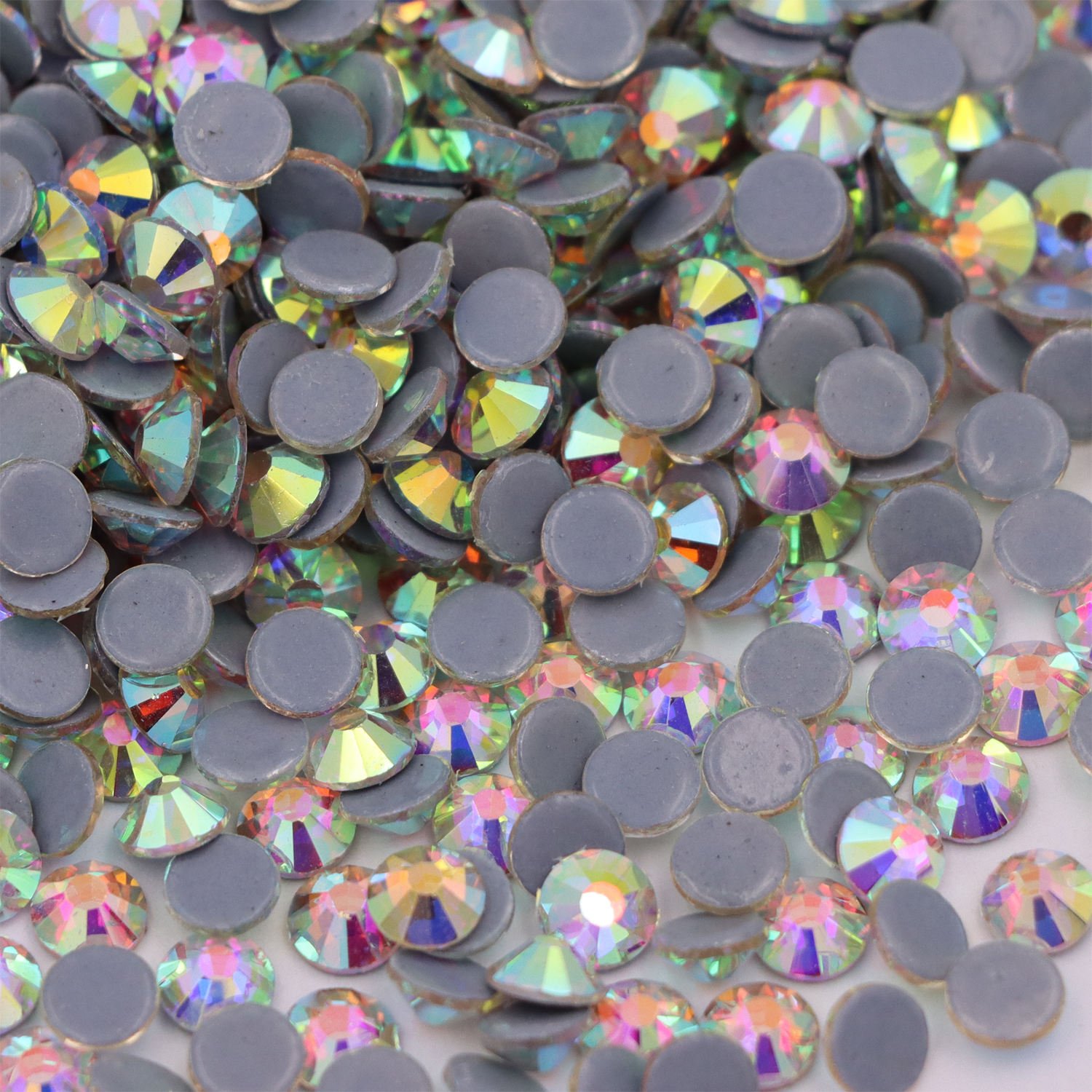
Most rhinestone glasses for women are built on an acetate or metal frame, then decorated with either K9 optical glass stones or acrylic “rhinestones” that only imitate crystal. K9 glass has a refractive index of roughly 1.9, while standard glass sits around 1.5 and acrylic lands near 1.49. That higher index is what makes K9 stones throw off the sharp, rainbow-like fire you notice across a room. Acrylic stones reflect light too, but the effect looks flat and plastic up close because the material simply does not bend light the same way.
The frame material matters just as much as the stones. Acetate frames hold heat-set stones well and keep their shape through temperature changes. Thin metal frames often rely on adhesive instead, which limits how securely the stones sit. When you shop, ask the seller what the stones are made of. A clear answer naming “K9 glass” or “optical glass” tells you more than a vague “crystal rhinestone” ever will.
How Are Rhinestones Attached to Eyeglass Frames?
The attachment method separates frames that last from frames that shed. On acetate and some metal frames, stones are applied with a hotfix process: each stone carries a heat-activated adhesive on its flat back, and a heated tool presses it into the frame at the right temperature. The adhesive that matters here is the glue, not the heat alone. Quality hotfix stones use a gray glue that activates around 150–170°C, which keeps the stone locked in after it cools.
Cheaper stones use a yellow glue that softens below 130°C. That lower melting point means body heat, a sunny car, or a hot drink can loosen the bond over time. On metal frames you will sometimes see stones glued with liquid adhesive instead. Glue-set stones are fine for light wear but far less durable than heat-set stones on acetate. If a seller cannot tell you how the stones were applied, treat that as a warning sign.
Consistent pressure is the part most people skip. A hotfix machine presses each stone for a set number of seconds at a set temperature, and that repeatability is what keeps a line of stones even and secure. Hand-application with a household iron or a hobby applicator works, but the results vary stone to stone because pressure drifts. Frames decorated on a production line with calibrated heat and pressure hold their stones far longer than frames touched up by hand. That consistency is also why a factory-decorated frame and a DIY-decorated frame can look identical on day one and completely different after a season of wear.
Stone size also shapes how the finished frame looks. Eyeglass frames use the smaller end of the hotfix range because there is not much surface to work with: SS6 at 2.0mm, SS10 at 2.8mm, SS16 at 4.0mm, and SS20 at 4.8mm. On a temple arm, SS10 and SS16 are the workhorses, large enough to read as sparkle yet small enough to follow a curved frame line without gaps. SS6 works as filler between larger stones or for a fine line on thin metal frames, while anything above SS20 starts to look chunky and adds weight the temples were not built to carry. A consistent size reads as intentional, and a random mix reads as cheap even when every stone is high quality.
Can You Add Rhinestones to Prescription Eyeglasses?
You can, and many eyeglass frames with rhinestones start as plain prescription frames. The stones get applied to the temple arms and the outer corners of the front rim, never over the lenses themselves. Adding stones to your own existing frames is possible with a hotfix applicator and quality stones, but the result depends on the frame material. Acetate accepts heat-set stones cleanly; thin metal and some nylon frames will not hold them without adhesive.
If you wear prescription glasses with rhinestones every day, choose stones placed on the temple arms rather than the bridge. Stones on the bridge can press against the skin and trap makeup or sunscreen, which dulls them faster. Stone placement on the arms also keeps the weight low so the frame does not tip forward. For readers and sunglasses the same rule applies: decorations should sit where they do not touch your face.
How Much Do Rhinestone Eyeglass Frames Cost?
Rhinestone eyeglass frames for women run from around $15 to $40 at the entry level, $60 to $120 for mid-range frames with genuine K9 glass stones, and $150 and up for designer or custom pieces. The price gap mostly reflects three things: the stone material, the number of stones, and the facet count. K9 glass stones carry 12 to 14 machine-cut facets, while cheap imitation stones often have 8 facets or fewer. More facets mean more surfaces catching light, which is what you are actually paying for.
The number of stones drives cost too. A simple temple-arm design might use 30 to 60 stones, while a fully encrusted frame front and both arms can carry several hundred. When a frame looks heavily decorated but costs $12, the stones are almost certainly acrylic. Acrylic has a Mohs hardness of 2 to 3, so it scratches and clouds quickly. K9 glass sits at 6 to 6.5 on the same scale, which resists the scuffs that make cheap frames look worn.
Readers and sunglasses usually cost less to produce than optical frames because there is no prescription lens involved, so the decoration budget stretches further. A $40 pair of rhinestone reading glasses often carries more and better stones than a $40 optical frame, simply because the lenses are not eating into the cost. If sparkle is the priority and you only need magnification, readers are the better value per stone. That logic helps when you compare frames across a catalog and wonder why two $40 pairs look so different in person.

Why Do Rhinestones Fall Off Eyeglass Frames?
Stones fall off for two reasons: weak glue and heat. The yellow glue used on budget stones softens well below the temperatures a hotfix machine reaches, so the bond never fully cures. K9 stones with gray glue, set at the correct temperature and pressure, hold through routine wear and cleaning. In standardized wash tests, K9 stones with gray glue show a stone-loss rate under 2% after 50 machine wash cycles. Acrylic stones with yellow glue can lose more than 30% after just 5 cycles.
Heat is the other culprit. Leaving your rhinestone glasses for women in a hot car, on a sunny windowsill, or near a hair dryer can soften the adhesive and let stones shift or pop off. Store frames in a case at room temperature and take them off before blow-drying your hair. If a stone does come loose, a hotfix applicator can reseat a replacement stone in seconds, but matching the exact size and color takes care. Keep the original size in mind when you buy spares.
How Do You Clean Rhinestone Glasses Without Losing Stones?
Clean the lenses with a lens-safe spray and a microfiber cloth, and clean the rhinestones separately with a soft, dry cloth. Avoid soaking the frame in water, ultrasonic cleaners, and alcohol-based sprays on the decorated areas. Ultrasonic cleaners vibrate at frequencies that can work stones loose from adhesive. Alcohol can cloud the AB coating, which is applied by vacuum deposition rather than a simple spray, so it sits on the stone surface in a thin, delicate layer.
Wipe the stones gently in one direction instead of scrubbing. If makeup or sunscreen builds up around the stones, use a barely damp cloth on the frame only, then dry it immediately. The coating and glue both dislike prolonged moisture, so never leave the frame sitting in water. A few seconds of care after each wear keeps the stones bright and the glue intact for years.
What Face Shapes Suit Rhinestone Glasses for Women?
Round faces look best with angular or cat-eye frames where the stones trace the upper corners, which adds lift. Square faces pair well with round or oval frames whose stones soften the jawline. Heart-shaped faces suit bottom-heavy frames, while oval faces can wear almost any shape. The stones themselves should follow the frame line rather than cluster in one spot, because an even line draws the eye along the frame and balances your features.
Color is the other styling lever. Clear AB-coated stones read as neutral and match everything, while colored stones like amethyst or emerald turn the glasses into a statement piece. If you want one pair that works for daily wear, pick a neutral frame with clear stones and save the colored frames for occasions. Women’s eyeglasses with rhinestones have a habit of becoming the first thing people notice, so let the stone placement flatter your face rather than compete with it.
Frame finish changes the whole effect too. Matte black or tortoise acetate makes clear stones pop like they are floating, which suits professional settings. Rose gold or champagne metal warms up the sparkle and leans feminine without being loud. High-shine black frames double the reflection, so the stones read brighter but the overall look can tip into evening wear fast. Match the finish to where you will actually wear the glasses most often, and the rhinestones will look intentional instead of costume-y.
What Is the Difference Between AB Coated and Clear Rhinestones?
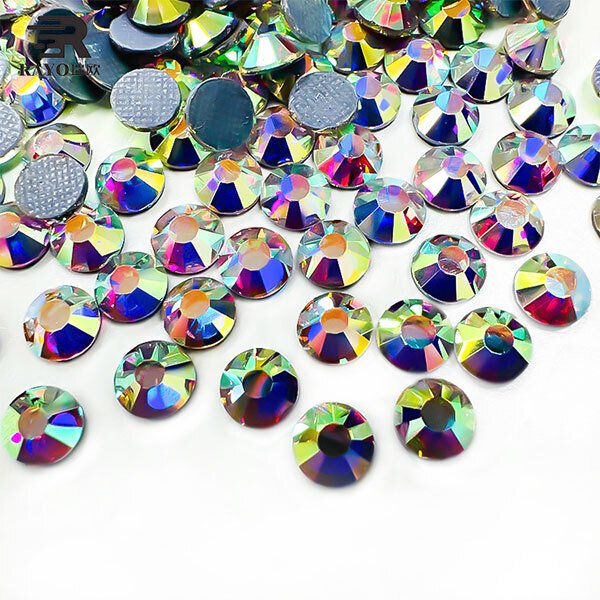
Clear rhinestones sparkle from the facets alone, while AB coated stones add a thin iridescent film that throws off blue, pink, and gold flashes as the frame moves. AB coating is applied by vacuum deposition, a process that evaporates the coating material in a vacuum chamber so it bonds to the stone in an even, microscopic layer. That is a very different result from a sprayed finish, which sits on top and rubs off quickly with handling.
For eyeglass frames, AB stones read as more glamorous and catch light even in dim rooms, while clear stones look crisp and classic. The tradeoff is maintenance: the AB film is delicate, so alcohol and abrasive cloths can dull it. If the frame will be worn daily and cleaned often, clear stones hold their look longer. If the glasses are for evenings and events, AB stones deliver more visible sparkle for the money. Many women keep one of each so the clear pair handles everyday wear and the AB pair handles everything else.
If you resell eyewear or design a private-label line, source the frames and stones from a manufacturer rather than a finished-goods retailer. Guangzhou Yiben E-Commerce Co., Ltd. has made K9 optical glass hotfix stones for 12 years and ships globally from its factory, with a low minimum order of two packs per color and size. That means you can test a small batch of stone colors on your own frames before committing to volume, and request OEM cuts and packaging for your brand.
We machine-cut our K9 stones to 12 to 14 facets, apply AB coating by vacuum deposition, and back every stone with German-imported gray glue rated for 150–170°C. The result is a rhinestone that stays put through washing and daily wear, which is exactly what customers complain about with cheap stones. Reach out on WhatsApp at +86 13692450325 or email rhinestonewholesale8@gmail.com to request samples and a price list, and we will quote within 12 hours.
Need a size or color recommendation for your next order? Send us your fabric type, design, and target price — we reply within one business day. WhatsApp +86 13692450325 · rhinestonewholesale8@gmail.com