
How to Source and Apply Iron On Rhinestone Appliques for Commercial Garment Production
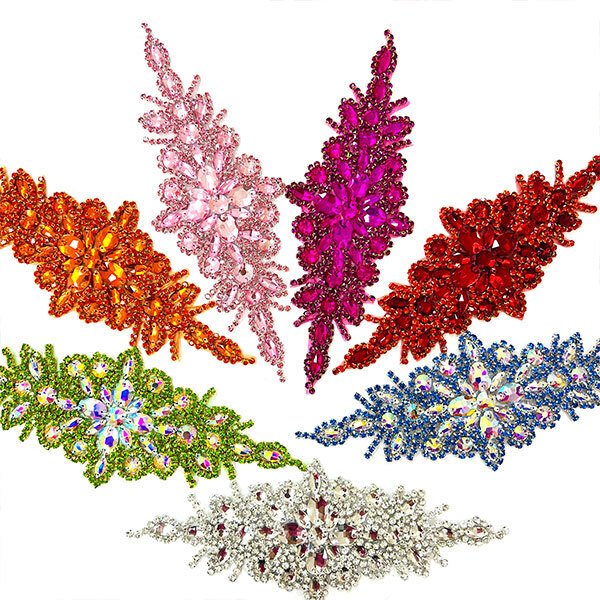
Commercial apparel manufacturers and bespoke atelier designers face a constant bottleneck when executing complex crystal embellishments: manual hand-setting of individual stones takes hours per garment, inflating labor costs and creating unavoidable alignment variances across production runs. Iron on rhinestone appliques, pre-aligned rhinestone transfer motifs, and multi-element decorative patches solve this operational challenge by consolidating thousands of precision-cut crystals into a single, heat-activated transfer sheet. When sourced from a verified source manufacturer and applied using calibrated industrial heat press parameters, a full-chest bridal motif or heavy-duty jacket back piece can be permanently fused in under 15 seconds with zero stone shedding across standard retail wash cycles.
Executing high-volume crystal applications without quality defects requires a deep technical understanding of backing adhesives, substrate thermal tolerances, and pressure distribution. Applying excess heat scorches sensitive synthetic fibers like nylon mesh and spandex, while insufficient dwell time leaves the hot-melt adhesive semi-solid, causing motif edges to delaminate during standard laundering. This technical manufacturing guide provides garment factory managers, costume designers, and apparel sourcing directors with the exact material specifications, heat transfer parameters, and quality control protocols necessary to achieve permanent, retail-grade crystal embellishment at scale.
What Makes a Commercial-Grade Iron On Rhinestone Applique Durable
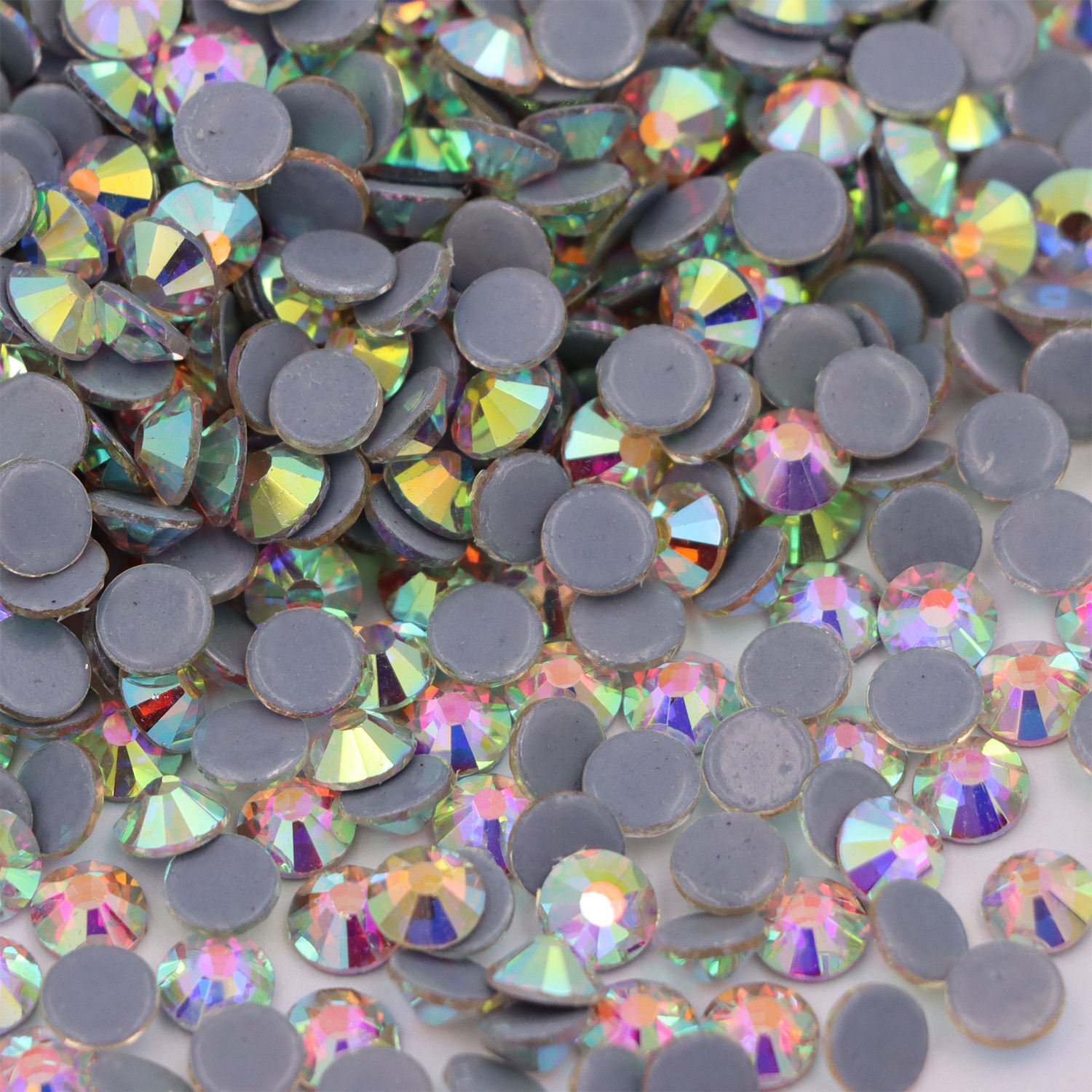
Commercial-grade iron on rhinestone appliques withstand over 50 industrial washing cycles with a stone loss rate under 2% when built with optical-grade K9 crystal glass and pre-coated with German high-temperature hot-melt grey glue. In contrast, cheap decorative transfers using resin stones and low-grade yellow adhesive degrade after 3 to 5 washes.
The durability of any iron on rhinestone motif depends entirely on two physical components: the structural integrity of the crystal and the chemical formulation of the hot-melt backing. At Guangzhou Yiben, we manufacture transfer appliques using 100% optical K9 crystal glass. K9 glass features a high refractive index of approximately 1.9, a density of 2.53 g/cm³, and a Mohs hardness rating of 6.0 to 6.5. This composition ensures that each stone retains its sharp 12 to 14 machine-cut facets under mechanical friction, without clouding, scratching, or chipping during industrial finishing or dry cleaning.
| Adhesive Performance Property | German Industrial Grey Glue | Standard Commercial Yellow Glue |
|---|---|---|
| Melting Temperature Range | 150°C to 170°C (302°F to 338°F) | 110°C to 130°C (230°F to 266°F) |
| Optimal Factory Press Temperature | 160°C (320°F) | 130°C (266°F) |
| Wash Durability Standard (ISO 6330) | 50+ Industrial Wash Cycles | Under 5 Domestic Wash Cycles |
| Average Stone Loss Rate | Less than 2% | Greater than 30% |
| Chemical Solvent Resistance | Highly Resistant to Professional Dry Cleaning | Dissolves in Standard Cleaning Solvents |
| Elastic Recovery on Stretch Fabrics | Superior Flexibility (Bonds with Knits) | Rigid & Brittle (Cracks under Stretch) |
The adhesive layer serves as the structural bridge between the smooth glass backing and the porous textile yarn. Standard consumer transfers frequently utilize cheap yellow or transparent EVA-based glues that melt at low temperatures (110°C to 130°C). While easy to activate with a household iron, these low-melt adhesives remain brittle upon cooling and easily dissolve when exposed to warm wash water, detergent surfactants, or fabric softeners.
Our industrial appliques utilize pre-coated German-engineered grey hot-melt adhesive with a higher melting threshold of 150°C to 170°C. When subjected to calibrated pneumatic pressure on a commercial heat press, this adhesive transitions into a low-viscosity liquid state, penetrating deep into the inter-fiber spaces of the garment fabric. Upon cooling, it forms a flexible, cross-linked mechanical anchor that flexes naturally with the knit or weave of the garment, passing strict ISO 6330:2021 domestic and commercial laundering test standards.
To explore standard stone dimensions for motif layout planning, consult our comprehensive Rhinestone Sizes SS6 to SS30 Reference before preparing your production vector art.
How Do You Apply Rhinestone Appliques to Sensitive Garment Fabrics
To apply iron on rhinestone appliques to sensitive fabrics without burning delicate fibers, set the heat press to the specific melting point of the adhesive (145°C to 165°C), apply 30 to 40 PSI of pneumatic pressure, and utilize a bottom-up reverse heat press technique through the back of the garment.
Commercial garment production incorporates a wide spectrum of textile compositions, from heavy 14 oz denim and dense 100% cotton fleece to heat-sensitive 4-way stretch spandex, polyester mesh, and delicate silk chiffon. Applying a uniform heat setting across all apparel types leads to severe manufacturing defects: scorching synthetic yarns, leaving shiny press marks (platen glaze), or failing to deliver enough thermal energy through thick fabrics to liquefy the glue base.
The table below outlines the proven factory baseline parameters for fusing hotfix rhinestone appliques across core garment fabric categories:
| Fabric Substrate Category | Press Temperature | Pneumatic Pressure | Dwell Time (Top / Reverse) | Protective Thermal Buffer |
|---|---|---|---|---|
| 100% Heavy Cotton Canvas | 165°C (329°F) | 40 – 45 PSI (Medium-Firm) | 12s Top + 8s Reverse | Standard Teflon Sheet |
| Polyester & Poly-Cotton Blends | 155°C (311°F) | 35 – 40 PSI (Medium) | 12s Top + 6s Reverse | High-Temp Teflon Release Sheet |
| Spandex, Lycra & Dancewear | 150°C (302°F) | 30 – 35 PSI (Medium-Light) | 10s Top + 8s Reverse | Silicone Foam Pad + Kraft Paper |
| Silk Chiffon & Fine Tulle Mesh | 140°C – 145°C | 25 – 30 PSI (Light) | 8s Top + 10s Reverse | Lower Carrier Teflon Barrier |
| Denim & Twill Outerwear | 165°C – 170°C | 45 – 50 PSI (Firm) | 15s Top + 10s Reverse | Direct Press with Top Teflon |
The Two-Stage Reverse Pressing Technique
For luxury evening wear, bespoke gowns, and high-elastic dance costumes, top-down heating can crush delicate fabric piles or leave unsightly indentations from the transfer tape edges. In our Guangzhou testing facility, we recommend the two-stage reverse pressing method:
First, position the rhinestone applique on the garment face. Lower the heated top platen with light pressure (25 PSI) at 150°C for 5 to 7 seconds. This initial tack partially activates the glue, fixing the stones in their exact coordinates without overheating the fabric surface.
Second, invert the garment so the back of the fabric faces the heated platen. Apply full recommended pressure (35 to 45 PSI) at 160°C for 10 to 12 seconds. Because textile fibers conduct heat rapidly, thermal energy penetrates directly into the glue reservoir on the flat rhinestone base, drawing the liquefied polymer straight into the yarn core.
Third, allow the clear silicone transfer tape to cool completely down to ambient room temperature before peeling it away slowly at a 180-degree angle. Cold peeling prevents lifting partially cured stones off the substrate.
For factory buyers evaluating new suppliers for customized motifs and transfers, review our operational checklist on How to Choose a Hotfix Rhinestone Factory in China to ensure your supplier maintains strict in-house adhesive testing laboratories.
How Can Garment Factories Combine Pearl and Rhinestone Appliques without Cracking Pearls
Garment factories combine half-pearls and faceted glass rhinestones by placing a 5mm high-density heat-resistant silicone foam pad beneath the transfer and utilizing reverse-side heating to prevent direct platen contact with delicate faux-pearl coatings.
The integration of faux pearls alongside brilliant K9 crystals—commonly known as pearl and rhinestone applique—is a signature aesthetic across bridal couture, baptismal gowns, and luxury evening wear. However, standard flat heat presses exert rigid, unyielding force across uneven surfaces. Because half-pearls generally have a higher dome profile than SS10 or SS16 flatback rhinestones, a solid steel heating platen concentrates 100% of the downward mechanical force solely onto the pearl apexes. This crushes delicate ABS acrylic pearls, chips iridescent nacre coatings, and leaves adjacent rhinestones with zero downward pressure, preventing their adhesive from bonding to the cloth.
| Multi-Material Challenge | Risk on Rigid Platen Press | Silicone Bedding Solution |
|---|---|---|
| Height Discrepancy (Pearls vs Stones) | Pearls take 100% load; stones receive 0 PSI | 5mm silicone yields, equalizing downward pressure |
| Fragile Pearl Surface Finish | Top platen heat blisters nacre coating | Reverse-side heating delivers thermal energy through cloth |
| Differential Thermal Expansion | Uneven shrinkage warps design geometry | High-tack reinforced silicone carrier locks coordinates |
To eliminate pearl breakage and achieve uniform crystal adhesion across multi-dimensional appliques, production lines must adopt three engineering adjustments:
Replace rigid rubber lower platens with a 5mm to 8mm soft silicone compensating pad. Under pressure, higher pearl domes press gently into the resilient pad without cracking, allowing the heating platen to descend flush against the lower-profile K9 rhinestones.
Utilize a bottom-heated press or invert the entire garment assembly. Heating through the fabric back directs thermal energy straight into the flat bases of both the pearls and crystals, eliminating the need to expose painted pearl surfaces to scorching top heat.
Multi-material appliques combine disparate elements that expand at varying thermal rates. Guangzhou Yiben utilizes reinforced, high-tack carrier films that hold both curved pearl cabochons and precision-faceted glass stones locked in rigid spatial alignment throughout the heating cycle.
Can You Integrate Iron On Rhinestones with DTF Transfers
You can seamlessly integrate iron on rhinestone appliques with Direct-to-Film (DTF) printed graphics by either pressing the DTF graphic first, peeling its film, and heat-fusing the rhinestone overlay in a second press, or utilizing a pre-engineered windowed transfer system for single-step bonding.
The fusion of vivid DTF full-color graphics with sparkling glass crystal highlights—known in the apparel industry as hybrid rhinestone transfers—is among the fastest-growing embellishment trends for high-end streetwear, festival apparel, and collegiate sportswear. However, printing directly beneath a rhinestone creates a weak bond: hotfix glue is designed to anchor into porous textile fibers, not slick cured DTF polymer powder. Fusing rhinestones directly over solid DTF ink layers frequently leads to stone delamination under heavy wash agitation.
| Workflow Comparison Metric | Two-Step Layered Method | Single-Step Knockout Window Method |
|---|---|---|
| DTF Print Application | Standard transfer at 145°C, cold peel | Pre-printed with 0.5mm stone knockout circles |
| Layer Alignment Process | Manual visual overlay of rhinestone film | Self-registering direct window placement |
| Rhinestone Adhesive Anchor | Bonds to DTF top powder layer | Fuses directly into exposed textile yarns |
| Factory Production Speed | 2 Separate Pressing Cycles (28s total) | Single Unified Pressing Cycle (12s total) |
| Laundering Durability Standard | 25 to 30 Domestic Washes | 50+ Industrial Laundering Cycles |
| Target Apparel Market | Promotional & Fast Fashion | Retail Streetwear & Activewear Uniforms |
The Professional Knockout Window Method
To achieve maximum retail durability on high-volume production runs, our design engineering team recommends the Knockout Window Approach:
In your vector graphics software, create a dedicated rhinestone layer. Generate 0.5mm negative expansion cutouts (knockout circles) in the underlying DTF print file corresponding exactly to the stone coordinates.
Print the DTF transfer with the stone placement areas left blank, exposing bare fabric yarns beneath each rhinestone coordinate.
Position the cured DTF film on the garment, place the transparent rhinestone applique directly into the registered knockout windows, and press the entire assembly at 155°C (311°F) for 12 seconds at 40 PSI.
The hot-melt grey glue liquefies directly into the exposed, untreated textile yarn fibers while the DTF adhesive bonds seamlessly to adjacent surfaces, producing an indestructible hybrid garment that withstands aggressive laundering without peeling.
If your fashion brand plans to scale custom motif production across both flat transfers and dimensional appliques, explore our specialized capabilities in Private Label OEM Rhinestone Manufacturing and Custom Transfers.

What Should Designers Consider When Customizing Rhinestone Motifs for Suits and Jackets
When customizing rhinestone appliques for structured garments like suits and denim jackets, designers must account for fabric weight, pattern seam clearance, flexible interlining support, and high-abrasion resistance across active garment friction zones.
Heavy-duty garments such as denim outerwear, tailored blazers, leather motorcycle jackets, and formal tuxedos require a distinct engineering approach compared to standard knit t-shirts. Structured garments undergo continuous mechanical stress, bending across elbows, stretching across shoulder yokes, and experiencing friction along lapels and sleeve cuffs.
| Outerwear Design Constraint | Technical Engineering Requirement |
|---|---|
| Seam Margin Clearance Buffer | Minimum 15mm clearance from armholes, zippers, and thick flat-felled seams |
| Stone Size Gradient Distribution | SS6 to SS10 on flexible curved joints; SS16 to SS30 on flat center panels |
| Fabric Support & Weight Interlining | Substrates under 220 GSM require woven non-stretch fusible interlining |
| High-Friction Abrasion Zones | Eliminate heavy stones from underarm gussets and inner sleeve contact faces |
| Backing Carrier Film Tackiness | Extra high-tack silicone carrier for textured twill, canvas, and heavy denim |
Key Engineering Rules for Outerwear Appliques
Never place rhinestones directly over thick flat-felled denim seams, pocket flaps, or sleeve joints. The uneven thickness of structural seams prevents the heat press platen from exerting flat pressure, resulting in unbonded stones along seam edges. Maintain a strict 15mm clearance buffer around all structural seams in your vector artwork.
Across high-mobility zones such as jacket elbows and suit shoulder armscyes, specify smaller stone sizes (SS6 to SS10). Smaller stones create a pliable, fluid mosaic that articulates smoothly with arm movement. Reserve larger, heavier crystals (SS20 to SS30) for rigid, flat display areas such as the center-back panel or lapel fronts.
Fine wool suitings and lightweight linen blends can buckle or stretch under the physical weight of heavy, multi-thousand-stone appliques. Apply a lightweight, non-stretch woven fusible interlining to the interior of the garment panel prior to heat pressing. This distributes the physical load evenly across the warp and weft yarns, preserving the crisp silhouette of the tailoring.
Heavy denim (12 oz to 16 oz) acts as a thermal insulator. When applying large back-panel motifs, increase the press dwell time to 15 seconds face-down, followed immediately by 10 seconds of high-pressure (50 PSI) reverse pressing from inside the unlined jacket to ensure total glue penetration through the heavy twill weave.
To review cost structures, bulk carton packaging volumes, and container load logistics for mass-market fashion programs, refer to our Wholesale Hotfix Rhinestones B2B Sourcing Guide.
How Does Guangzhou Yiben Produce Custom Rhinestone Transfers at Scale
Guangzhou Yiben manufactures custom iron on rhinestone appliques and transfers at scale through automated CNC template cutting, high-speed pneumatic stone-setting machines, 100% optical inspection, and rapid 24 to 48 hour digital proofing and sampling.
As an established source factory with over 12 years of specialized hotfix manufacturing experience in Baiyun District, Guangzhou, we operate modern automated production lines capable of outputting over 50,000 custom transfer sheets daily. We bridge the gap between bespoke creative design and industrial-scale apparel manufacturing, providing international fashion brands, dancewear producers, and uniform suppliers with factory-direct pricing and uncompromised quality assurance.
| Manufacturing Stage | Factory Equipment & Operational Standard | Quality Assurance Checkpoint |
|---|---|---|
| 1. Vector File Digitization | CAD stone spacing & color separation | Automated stone count and spacing check |
| 2. Template Matrix Milling | High-speed precision CNC template engraving | 0.05mm stone pocket tolerance verification |
| 3. Automated Stone Setting | Vacuum-assisted automated setting machines | 10,000 stones/hour placement speed |
| 4. Optical Alignment Inspection | High-intensity backlit audit tables | Manual removal of inverted or flawed stones |
| 5. Thermal Carrier Lamination | Calibrated silicone carrier bed application | Bubble-free pressure bonding validation |
| 6. Thermal Chamber & Wash Audit | ISO 6330 industrial washing machine testing | 50-cycle stone loss rate strictly under 2% |
| 7. Protective Packaging | Moisture-barrier polybags & rigid cartons | Master carton export compliance check |
Our B2B Manufacturing & Sourcing Capabilities
Provide your vector artwork (AI, PDF, DXF, or CDR), and our engineering team generates computerized stone layout proofs within 12 hours. Physical pre-production samples are assembled, fused to your sample fabric swatches, and dispatched via express air freight within 24 to 48 hours.
Select from over 400 in-stock colorways across standard clear, Crystal AB, metallic hematite, neon, and custom Pantone-matched hues. We support diverse geometric flatback shapes, including teardrops, navettes, baguettes, and square stones integrated into single unified transfer sheets.
Every custom applique sheet undergoes high-intensity backlit inspection to detect missing stones, inverted facets, or adhesive voids. Finished sheets are interleaved with protective silicone release paper, sealed in moisture-barrier polybags, and packaged in rigid corrugated export master cartons (HS Code `7018.10.00`).
We accommodate emerging designer collections with low prototype minimums (from 20 pieces per custom design) while providing high-volume capacity for multinational garment contracts exceeding 100,000 units with guaranteed 5 to 7 day production turnarounds.
Frequently Asked Questions About Iron On Rhinestone Appliques
What is the difference between an iron on rhinestone applique and a loose hotfix rhinestone?
An iron on rhinestone applique is a pre-assembled decorative motif where hundreds or thousands of hotfix rhinestones are arranged in an exact artistic pattern on a single transparent heat-resistant adhesive carrier sheet. Loose hotfix rhinestones are individual stones that must be placed one by one onto fabric using a handheld applicator wand, manual tweezers, or a custom stencil. Appliques reduce garment embellishment time by over 90% in commercial manufacturing environments.
How do you wash garments embellished with iron on rhinestone transfers?
Garments with properly applied iron on rhinestone appliques should be turned inside out before laundering to protect crystal facets from rubbing against washing machine drums. Wash on a gentle cycle in cold or lukewarm water (maximum 40°C / 104°F) using mild liquid detergent without bleach or fabric softeners. Tumble dry on low heat or hang to air dry. Never dry clean with harsh trichloroethylene solvents, which can dissolve hot-melt glue compounds.
Why do some rhinestones fall off after the first wash?
Rhinestones fall off garments primarily due to three manufacturing errors: insufficient press temperature that fails to fully liquefy the adhesive, inadequate pneumatic pressure that prevents the glue from penetrating fabric yarns, or peeling the carrier film while the transfer is still hot. Utilizing cheap yellow glue rather than industrial-grade German grey hot-melt adhesive also causes rapid adhesive breakdown when exposed to standard laundry detergents.
Can you apply rhinestone appliques using a standard domestic iron?
While a standard household iron can apply small individual rhinestone patches, it is not recommended for commercial garment production or large appliques. Household irons lack uniform heat distribution across their soleplates, cannot measure precise surface temperature, and rely on inconsistent manual human pressure. Commercial garment production requires a calibrated pneumatic or manual swing-away heat press to ensure 100% bond integrity.
What is the HS code and tariff rate for importing rhinestone appliques from China?
Iron on rhinestone appliques, hotfix crystal motifs, and glass crystal embellishments are classified under Harmonized System (HS) Code `7018.10.00` (Glass beads, imitation pearls, imitation precious stones, and similar glass smallwares). In the European Union the standard import tariff rate is approximately 3.7%, while the United States applies MFN-free treatment plus a Section 301 surcharge on Chinese-origin goods, though exact duties depend on country-specific trade agreements and classification rulings.
Source Commercial Rhinestone Appliques Directly from Guangzhou Yiben
Ready to eliminate production bottlenecks, reduce labor overhead, and elevate your apparel collections with brilliant, factory-direct iron on rhinestone appliques? Partner directly with Guangzhou Yiben for precision K9 crystal quality, German hot-melt adhesive reliability, and fast global turnaround.
– Direct Factory WhatsApp: +86 13692450325 – Official B2B Sourcing Email: rhinestonewholesale8@gmail.com – Manufacturing Facility: Hebian Subdistrict, Baiyun District, Guangzhou, Guangdong, China – Sample Support: Free sample swatch charts and custom motif digital proofs available for verified apparel manufacturers and wholesale buyers.
Need a size or color recommendation for your next order? Send us your fabric type, design, and target price — we reply within one business day. WhatsApp +86 13692450325 · rhinestonewholesale8@gmail.com