
Wholesale Hotfix Rhinestones for Australian Gymnastics, Calisthenics and Swimwear Makers
Across Australia and New Zealand, competitive athletic performance is defined by explosive power, technical precision, and dazzling visual presentation. From the elite artistic gymnastics arenas in Melbourne and Brisbane to the storied calisthenics state championships in Adelaide, Ballarat, and Melbourne, and the sun-drenched coastal hubs of Sydney, the Gold Coast, and Perth where custom synchronized swimming and competitive dancewear ateliers thrive, garments must endure extraordinary physical stress. Competition leotards, calisthenics dresses, and custom swimwear are not static exhibition pieces. They are high-performance engineering garments that twist, stretch up to 200% under explosive body movements, and face relentless exposure to perspiration, chlorinated water, and repeated laundering.
For costume directors, club apparel coordinators, and bespoke swimwear ateliers across Australia, sourcing dependable hotfix rhinestones presents a persistent commercial and technical hurdle. A competition leotard can feature anywhere from 1,500 to over 5,000 individual crystals. When an athlete performs a double layout on the gymnastics floor or an intricate apparatus routine on the calisthenics stage, a shower of shedding crystals is catastrophic. It ruins the visual impact, risks points deductions for uniform malfunction, and compromises the professional reputation of the apparel maker.
Compounding this technical demand is the commercial reality of the Australian marketplace. Sourcing embellishments through local craft retailers or domestic intermediaries often saddles costume makers with markups of 300% to 500% for repackaged stock lots, frequent mid-season dye-lot variations, and crippling supply shortages right before national championships. At Guangzhou Yiben E-Commerce Co., Ltd., we bring 12 years of specialized hotfix rhinestone manufacturing experience directly to Australian apparel brands, club dressmakers, and high-performance leotard workshops. By pairing high-grade K9 optical crystal glass with German-engineered elastic hotmelt grey glue, we provide direct factory supply that withstands severe mechanical stretch, resists chlorine and sweat corrosion, and drastically reduces procurement budgets. Exploring direct China rhinestone manufacturing delivers the technical reliability, custom color matching, and volume pricing essential for dominating the demanding Australasian dance and athletic wear sectors.
—
The Sourcing Dilemma for Australian Leotard and Swimwear Designers
Escalating Local Markups in Melbourne and Sydney Wholesale Districts
Independent costume ateliers and club committees in Australia face an isolated supply chain. Traditional craft supply shops in major metropolitan centers like Melbourne, Sydney, and Brisbane, as well as suburban haberdashery chains, cater primarily to retail hobbyists. When buying rhinestones domestically, costume makers frequently encounter prices ranging from A$25 to A$55 per gross (144 stones) for European branded crystals, or A$12 to A$20 per gross for middle-tier glass stones repackaged in small plastic envelopes.
For an Australian calisthenics club commissioning 80 team leotards, each requiring 2,500 stones, the total crystal requirement exceeds 1,380 gross. Sourcing through domestic retail intermediaries inflates material costs to astronomical levels, pricing bespoke designers out of club bids or forcing them to compromise on design density. Furthermore, local suppliers maintain shallow inventory buffers. If a club qualifies for the national finals in Queensland and needs 15 additional uniforms, local shops routinely report six- to eight-week backorders, or supply subsequent batches manufactured with noticeable dye-lot deviations that clash under stage lighting.
When designers turn to generic e-commerce marketplaces to reduce costs, they face the opposite extreme: low-purity soda-lime glass or molded acrylic stones coated with brittle, generic adhesive. These budget options fail rapidly under athletic conditions, turning cloudy under halogen stage lights, melting during heat application, or dropping off the garment during the very first floor routine.
Fabric Stress Realities in High Energy Calisthenics and Gymnastics
Calisthenics is a uniquely Australian performance discipline combining elements of rhythmic gymnastics, ballet, apparatus manipulation, and theatrical dance. Together with competitive cheerleading and artistic gymnastics, it subjects garments to extreme dynamic tension. The foundation textiles for these costumes are heavyweight four-way stretch Spandex, Lycra, and stretch illusion mesh, typically composed of 80% to 85% Nylon (Polyamide) and 15% to 20% Elastane.
| Performance Discipline | Primary Textile Composition | Peak Fabric Elongation | Mechanical Stress on Adhesive Bond |
|---|---|---|---|
| Artistic Gymnastics | Heavy Lycra Foil | 150% – 180% | Violent snaps and tumbling |
| Calisthenics and Dance | Mesh and Velvet | 120% – 160% | Torso twisting and lunges |
| Synchronized Swimming | Chlorine Resistant Poly-Lycra | 160% – 200% | Water drag and extension |
| Competitive Cheer | Sublimated Spandex | 140% – 180% | Stunting friction |
During a leap, back handspring, or apparatus swing, the garment fabric over the athlete’s shoulder blades, ribcage, and lower spine elongates up to 180% of its relaxed dimension. While the elastane fibers stretch effortlessly, a rigid crystal does not. The entire mechanical shear force concentrates directly along the adhesive interface between the crystal base and the textile fibers. If the adhesive lacks intrinsic elasticity and high-temperature elongation memory, the bond fractures instantly. What begins as a single dislodged crystal quickly cascades into an entire motif line peeling away.
—
Surviving 200 Percent Fabric Stretch Without Adhesive Failure
Why Standard Craft Adhesives Snap on 4-Way Stretch Spandex and Lycra
The fundamental reason ordinary hotfix crystals shed from gymnastics leotards is chemical incompatibility. Standard commercial rhinestones traded through retail hobby channels utilize cheap, clear ethylene-vinyl acetate (EVA) hotmelt glue backings. EVA adhesives are designed for non-elastic casual wear, such as cotton t-shirts and denim jackets. They possess low tensile modulus, low shear strength, and virtually zero elastic recovery.
When EVA glue is heated, it melts into a shallow, brittle pool. Upon cooling, it forms a rigid, glassy barrier on top of the fabric knit rather than penetrating and encapsulating the individual elastane filaments. As soon as an athlete dons the leotard and stretches the fabric to 150% or 200%, the rigid EVA bond cannot flex. Micro-cracks propagate across the adhesive bed, breaking the mechanical anchor. Under repeated movement and body warmth, the crystals pop off cleanly, leaving ugly glue residues on the fabric surface.
| Feature or Behavior | Generic Clear EVA Glue | German Industrial Grey Glue |
|---|---|---|
| Polymer Structure | Ethylene-Vinyl Acetate Copolymer | Modified Thermoplastic Polyamide |
| Elastic Elongation Limit | Less than 40% (Snaps under tension) | Greater than 220% (Stretches with Lycra) |
| Fiber Encapsulation | Superficial surface adhesion | Deep filament root encapsulation |
| Bond Flexibility at 20°C | Rigid, brittle, prone to crack | Flexible, rubbery, high damping |
| Tensile Shear Bond Strength | 1.4 – 1.8 N/mm | 4.6 – 5.8 N/mm |
| ISO 6330 Wash Durability | Fails after 3–5 wash cycles | 50 industrial washes (less than 2% loss) |
| Chlorine Resistance | Softens, turns yellow in water | Inert, impervious to pool chemicals |
German Polyamide Grey Glue with Elastic Thermoplastic Memory
To solve stone shedding on high-stretch athletic wear, Guangzhou Yiben coats its entire range of hotfix crystals with an imported German-engineered industrial hotmelt grey adhesive. Synthesized from modified high-molecular-weight polyamide, this formulation is engineered specifically for dynamic technical textiles.
The German grey glue exhibits an activation melting point between 150°C and 170°C, with a calibrated operating temperature of 140°C to 160°C depending on fabric heat tolerance. Crucially, upon full crystallization, the adhesive achieves an extraordinary elongation recovery threshold exceeding 220%. When the Lycra fabric stretches beneath the crystal, the polyamide adhesive bed elongates plastically with the textile fibers without shearing or micro-fracturing. As the fabric relaxes back to rest, the adhesive returns to its original dimension, maintaining a vice-like grip on both the glass crystal foil and the nylon-elastane weave.
Furthermore, our adhesive formulation adheres strictly to rigorous industrial wash durability standards. When subjected to standard ISO 6330 laundering protocols (equivalent to 50 domestic machine washes at 30°C to 40°C), our stones demonstrate a retention rate exceeding 98%, ensuring that custom dancewear survives intensive training seasons and multi-round championship schedules intact.
Pre-Production Stretch Testing to Eliminate Stone Bridging
In high-end leotard manufacturing, stone shedding is frequently caused by application errors rather than glue defects. The most common error in Australian workshops is stone bridging—placing crystals so closely together on an unstretched garment that their adhesive margins fuse into a continuous, rigid line. When the athlete puts on the suit and stretches the fabric, the rigid bridge cannot lengthen, tearing the stones off the fabric or ripping the delicate Lycra weave.
To prevent stone bridging and guarantee zero defect production, we recommend Australian ateliers execute a standardized pre-production stretch protocol:
1. Pre-Stretching the Substrate: Stretch the leotard bodice or sleeve panel over an appropriately sized foam board or cardboard form (expanding the garment by 15% to 20% of its relaxed dimension) before applying heat transfers or hand-setting stones. 2. Spacing Verification: Maintain a minimum clearance of 0.8 mm between stones (approximately the thickness of a thumbnail) on high-tension zones such as the upper chest, hips, and back curves. 3. The 24-Hour Polymerization Window: Polyamide hotmelt glue reaches initial tactile hold in seconds, but requires a full 24 hours at room temperature (20°C to 24°C) to complete its molecular cross-linking and achieve peak tensile shear strength. Never stretch, wear, or wash a garment within 24 hours of heat pressing. 4. The Transverse Snapping Test: After 24 hours, grip the embellished fabric sample with both hands and snap-stretch it horizontally to 150% elongation three consecutive times. High-quality German grey glue will flex smoothly without audible cracking or corner lifting.
—
Precision Pressing Protocols That Prevent Fabric Scorching
The Heat Sensitivity Barrier of Poly-Spandex and Holographic Foils
Australian gymnastics and calisthenics leotards frequently utilize striking specialty fabrics, including metallic holographic foils, wet-look Lycra, ombré sublimated Spandex, and sheer mesh panels. These modern synthetics are exceptionally heat-sensitive.
Standard polyester melts at approximately 250°C, but Elastane (Spandex/Lycra) begins thermal degradation and structural breakdown at temperatures as low as 155°C to 160°C. Exposing fine Lycra to excessive heat causes irreversible damage: – Fiber Glazing: The elastane filaments melt on the surface, creating shiny, reflective scorch patches that permanently disfigure dark or matte fabrics. – Loss of Elastic Snap: Overheating denatures the elastomer molecules, leaving the fabric permanently baggy and stretched out around the pressed motif area. – Foil Dulling: Holographic and metallic foil overlays delaminate or turn milky when subjected to direct top-plate heat.
The 140 to 150 Degree Extended Dwell Curve for Temperature-Sensitive Lycra
To safely bond hotfix crystals to heat-sensitive performance textiles without scorching, Australian dressmakers must abandon the generic “high heat for 10 seconds” rule. Instead, our technical team recommends an extended-dwell, moderate-temperature pressing curve:
| Substrate Material | Temperature Range (°C) | Dwell Time (Seconds) | Pressure (kg/cm²) | Pressing Method and Heat Path |
|---|---|---|---|---|
| Heavy Nylon-Lycra (80/20) | 150°C – 155°C | 14 – 16 sec | 3.0 (Medium) | Top or Reverse |
| Metallic / Foil Lycra | 140°C – 145°C | 18 – 20 sec | 2.5 (Medium) | Reverse Press |
| Stretch Illusion Mesh | 140°C – 145°C | 12 – 14 sec | 2.0 (Light) | Top with Teflon Sheet |
| Sublimated Poly-Spandex | 145°C – 150°C | 15 – 18 sec | 3.0 (Medium) | Top with Protective Sheet |
By lowering the platen temperature to 140°C–145°C and extending the dwell time to 18–20 seconds, heat conducts steadily through the stone and glue bed without creating a localized thermal spike that scorches the Lycra fibers. When working with metallic foil fabrics, reverse pressing (applying heat from the underside of the fabric while supporting the stones on a soft silicone pad) shields the delicate surface foil from direct contact with the heated metal plate.
Protective Workstation Setup with Silicone Pads and Teflon Sheets
A professional costume workshop requires a properly configured heat press workstation to achieve uniform pressure across garments with thick seams, zippers, and leg elastic bands:
– Soft Silicone Foam Lower Base: Standard flat press beds distribute uneven pressure when a leotard has overlapping seams or binding. A 5 mm to 8 mm soft silicone sponge lower pad allows raised seams to sink in, ensuring equal pressure across every individual stone in the transfer sheet. – Virgin PTFE (Teflon) Cover Sheets: Never allow a metal heating plate to touch exposed performance fabric. Place a fresh, clean PTFE sheet over the transfer film to distribute heat evenly and prevent adhesive fumes from condensing back onto the fabric. – Cool-Peel Discipline: After pressing, remove the garment from the heat press and allow it to cool completely to room temperature before peeling off the clear transfer carrier tape. Peeling the film while the glue is still warm exerts upward tensile pull on the molten adhesive, breaking the fiber seal before it solidifies.
—
Arena Fire and Chlorine Resistance with K9 Optical Crystal Architecture
Achieving 1.9 Refractive Sparkle Under High-Intensity Arena Floodlights
In Australian calisthenics and competitive gymnastics, judging is conducted from substantial distances across cavernous sports arenas such as Melbourne’s Hisense Arena or the Gold Coast Sports and Leisure Centre. Costumes are illuminated by high-bay metal halide, sodium, or modern LED arena floodlights that cast intense, broad-spectrum illumination.
Under these punishing lighting conditions, optical purity is paramount. Ordinary resin or plastic stones absorb light, appearing as flat, dull dots that fade into the background. Standard soda-lime commercial glass (refractive index ~1.5) provides modest surface glint but lacks dramatic dispersion.
| Material Formulation | Refractive Index Rating | Mohs Hardness Rating | Visual Impact Under High Arena Floodlights |
|---|---|---|---|
| Molded Acrylic / Resin | 1.48 – 1.50 | 2.0 – 2.5 | Foggy, easily scratched |
| Commercial Soda-Lime Glass | 1.51 – 1.54 | 5.0 – 5.5 | Moderate, flat reflection |
| Middle Tier DMC Glass | 1.58 – 1.62 | 5.5 – 6.0 | Clear, limited fire |
| Yiben K9 Optical Crystal | ~1.90 | 6.0 – 6.5 | Intense diamond fire |
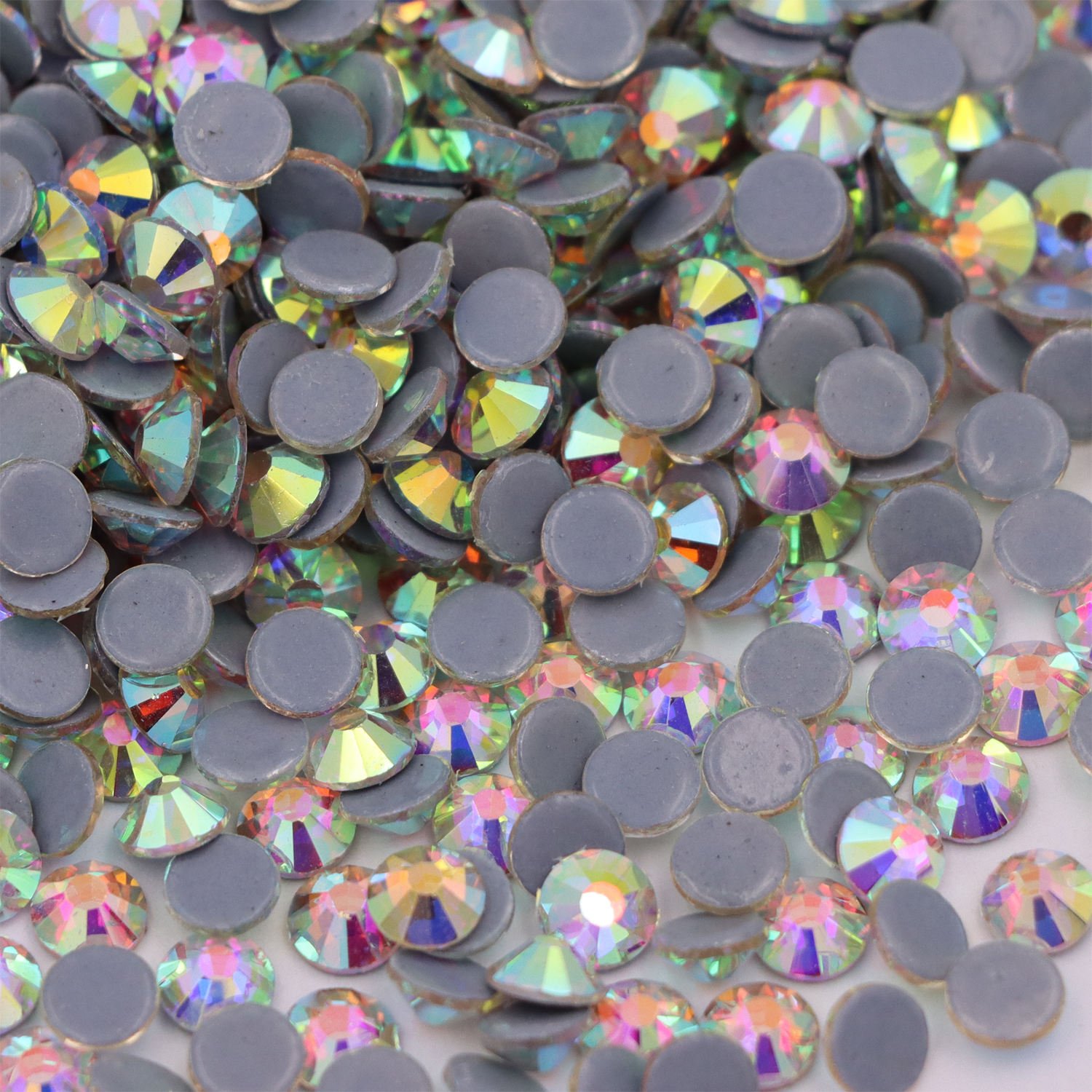
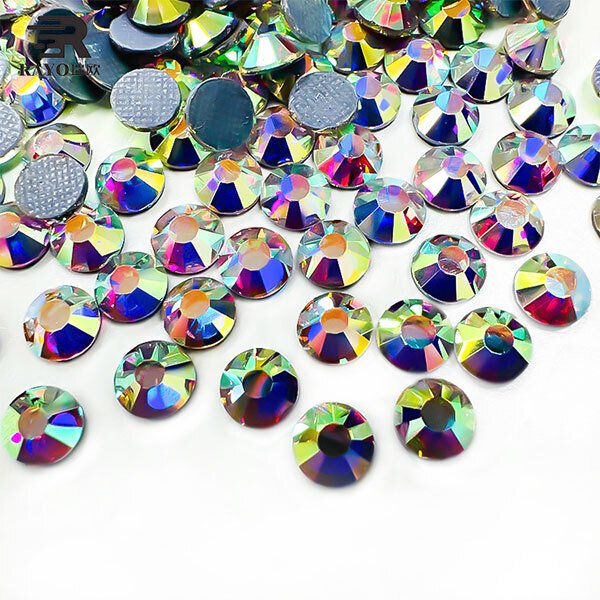
Guangzhou Yiben manufactures its premium hotfix rhinestones exclusively from 100% K9 optical borosilicate crystal glass. With an extraordinary refractive index of approximately 1.9 and a surface hardness of Mohs 6.0 to 6.5, K9 crystals capture high-bay arena lighting and split it into sharp, rainbow-colored spectral highlights. Each crystal features precision-cut 12 to 14 symmetrical facets with microscopic planar edge definitions. As an athlete tumbles across the mat or spins an apparatus, the facets ignite with dynamic scintillation, ensuring that costumes catch every ray of arena light and deliver maximum visual impact to judges and spectators alike.
SS10 to SS20 Sizing Matrix for Dynamic Athletic Movement
Balancing sparkle intensity against garment weight is a critical discipline for costume designers. Applying oversized stones to lightweight stretch mesh weighs down sleeves, restricts arm elevation, and causes the fabric to sag unattractive around the chest. Conversely, using tiny stones exclusively on large skirt panels or bodice designs dissipates visual energy from a distance.
Through 12 years of supplying global dancewear and athletic apparel makers, we have established an optimized size matrix:
– SS10 (2.7 mm to 2.9 mm): The precision choice for intricate scrollwork, team typography, dense shading transitions, and edge borders on illusion mesh sleeves where minimal weight is mandatory. – SS16 (3.8 mm to 4.0 mm): The undisputed workhorse size for Australian competition leotards. It provides exceptional optical fire and coverage speed while remaining light enough to permit unimpeded dynamic tumbling. – SS20 (4.6 mm to 4.8 mm): Used strategically to anchor main design lines, burst patterns across the chest, and collar accents that require commanding visibility from 30 meters away. – SS30 (6.3 mm to 6.5 mm): Reserved as high-impact standalone accents at key anatomical focal points (shoulders, waist crests, hair bows) or for calisthenics skirt borders.
Hermetic Silver Mirror Vacuum Plating for Chlorine and Sweat Resistance
For Australian synchronized swimming teams, surf life saving pageant apparel, and custom bikini designers, water exposure represents the ultimate durability test. Standard craft rhinestones rely on cheap chemical-dip aluminum backing foils protected by a thin lacquer.
When exposed to swimming pool water containing dissolved chlorine (sodium hypochlorite), or ocean saltwater with high saline concentrations, the chlorine ions penetrate porous lacquer coatings within hours. The aluminum mirror oxidizes into aluminum oxide, turning the backing black and creating the unsightly “dead crystal” effect common on cheap swimwear. Sweat and bodily oils compound this corrosion, breaking down the glue interface.
To protect against chemical and water degradation, Yiben coats its K9 crystals using advanced multi-layer vacuum magnetron sputtering. Beneath the German grey adhesive lies a hermetically sealed, ultra-pure silver reflective mirror layer capped by a specialized copper-free anti-oxidation barrier. This dense metallic barrier prevents chlorine ions, bromine, and saline moisture from attacking the reflective backing. Whether subjected to vigorous ocean surf, chlorinated competitive pools, or hours of sweat in dance rehearsals, our crystals maintain their mirror-bright reflectivity without blackening, discoloration, or delamination.
—
Landed Cost Analysis Factory Direct Air Cargo to Australia vs Local Distributors
Breaking Down the Math on a 50-Gross Dance Leotard Production Run
To understand the financial transformation of factory-direct procurement, consider a mid-sized Australian dance studio or leotard maker producing a seasonal run of 60 competition uniforms. Each uniform requires approximately 2,000 stones across various sizes, representing a total requirement of 120,000 crystals (approximately 833 gross).
When sourcing through traditional Australian craft retailers or local crystal importers, small-batch markups and domestic warehousing overhead are passed directly to the customer. When sourcing directly from Guangzhou Yiben via express air cargo, the atelier eliminates domestic distributor margins while gaining direct access to comprehensive factory stock:
| Cost Element | Australian Craft Reseller | Guangzhou Yiben Factory Direct |
|---|---|---|
| Unit Price (SS16 K9 Quality) | A$14.50 – A$28.00 per Gross | A$4.20 – A$6.50 per Gross |
| Subtotal (100 Gross Order) | A$1,450.00 – A$2,800.00 | A$420.00 – A$650.00 |
| Local Shipping and Packaging | A$25.00 – A$40.00 | Included in Express Freight |
| Door-to-Door Air Express | N/A (Domestic post) | A$75.00 – A$95.00 (DHL 3–5 Days) |
| Australian Import GST (10%) | A$145.00 – A$280.00 (Built-in) | A$49.50 – A$74.50 (Paid at import) |
| Customs Clearance / Duty | A$0.00 (Domestic transaction) | A$0.00 (Under A$1,000 threshold) |
| Total Landed Investment | A$1,620.00 – A$3,120.00 | A$544.50 – A$819.50 |
| Net Savings per Order | Baseline Benchmark | A$1,075.50 – A$2,300.50 (Save 60%–73%) |
By transitioning to factory-direct supply, the atelier saves between 60% and 73% on crystal procurement costs. These substantial savings can be redirected into premium fabrics, reinvested into workshop machinery, or leveraged to offer highly competitive pricing to dance schools and calisthenics clubs across Victoria, New South Wales, and Queensland.
—
Australian Customs Compliance, GST Regulations, and Express Logistics
Understanding the A$1000 Low-Value Duty-Free Threshold and 10 Percent GST
A frequent hesitation among Australian atelier owners considering direct overseas sourcing is anxiety surrounding customs clearance, import taxes, and paperwork. In reality, Australia maintains one of the most streamlined, predictable low-value import frameworks in the world:
1. The A$1,000 Customs Duty-Free Threshold (De Minimis): Under Australian customs regulations, imported consignments with a customs value equal to or less than A$1,000 (approximately US$650 to US$680) are exempt from customs import duty and do not require a formal Import Declaration. 2. Harmonized Tariff Classification (HS Code 7018.10.00): Hotfix glass crystals are correctly classified under HS Code `7018.10.00` (*Glass beads, imitation pearls, imitation precious or semi-precious stones and similar glass smallwares*). Even for shipments exceeding A$1,000, Australia’s standard customs duty rate on this tariff heading is generally 5% or 0% under qualifying trade frameworks. 3. The 10% Australian Goods and Services Tax (GST): Since July 2018, Australia requires 10% GST on low-value imported goods. For typical orders, express couriers (such as DHL or FedEx) collect the 10% GST electronically or handle it seamlessly via our pre-cleared customs documentation. Yiben provides clean, professional commercial invoices clearly detailing the HS code, itemized gross weights, and accurate transaction values, ensuring that your parcel clears Australian Border Force inspection without administrative holds.
For high-volume apparel factories and large regional suppliers ordering multi-thousand-gross production runs that surpass A$1,000, our logistics department provides comprehensive guidance on international air cargo and courier rates, coordinating direct door-to-door transit with all import clearances managed effortlessly.
Air Express Transit Times to Melbourne, Sydney, Brisbane, and Perth
In the fast-paced competitive dance and gymnastics calendar, delivery speed is non-negotiable. Australian designers cannot afford to wait weeks for ocean freight when choreography deadlines loom.
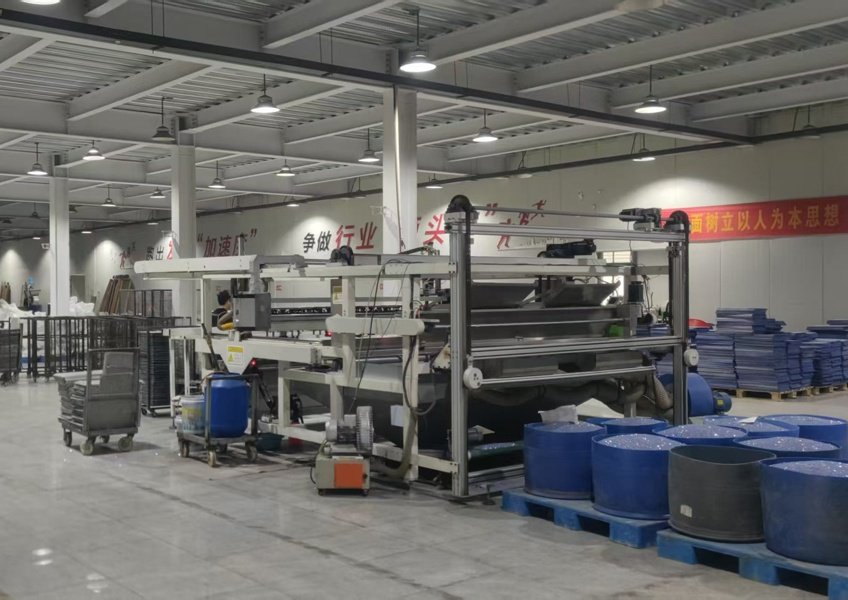
Guangzhou Yiben’s production facility and central warehouse are located in Baiyun District, Guangzhou, situated less than 30 minutes from Guangzhou Baiyun International Airport (CAN)—one of Asia’s largest international air freight super-hubs. We leverage direct daily express flights to major Australian capital cities:
| Destination Hub | Courier Partner | Typical Transit Door-to-Door | Processing Schedule |
|---|---|---|---|
| Sydney (SYD / NSW) | DHL Express / FedEx | 3 – 5 Days | Same-Day Dispatch |
| Melbourne (MEL / VIC) | DHL Express / FedEx | 3 – 5 Days | Same-Day Dispatch |
| Brisbane (BNE / QLD) | DHL Express / FedEx | 4 – 5 Days | Same-Day Dispatch |
| Perth (PER / WA) | DHL Express / FedEx | 4 – 6 Days | Same-Day Dispatch |
| Auckland (AKL / New Zealand) | DHL Express / FedEx | 4 – 6 Days | Same-Day Dispatch |
For all in-stock catalog colors and sizes, our warehouse fulfills and dispatches orders the exact same day payment clears. An atelier in Melbourne or Sydney placing an order on Monday morning typically receives their crystal shipment directly at their studio door by Thursday or Friday afternoon—faster than many interstate domestic parcels shipped across Australia.
—
Streamlined Wholesale Sampling and Direct Factory Ordering for Australian Clubs
Color Consistency Across Competition Seasons and Pantone Matching
For Australian calisthenics clubs and gymnastics teams, uniform consistency is an absolute imperative. When a club orders 60 leotards in January, they must have absolute certainty that subsequent re-orders for new team members in June, or replacement uniforms for the national finals in October, will match the initial batch with surgical precision.
Generic stockists often mix crystal lots from different cottage-industry kilns, resulting in noticeable shade variations—an “Emerald” that shifts to olive green, or a “Crystal AB” that casts yellow rather than vibrant cyan and magenta.
| Capability Area | Factory Specification Details | |
|---|---|---|
| Core Crystal Material | 100% Optical Grade K9 Crystal Glass (Refractive Index ~1.9) | |
| Adhesive Formulation | German Industrial Polyamide Hotmelt Grey Glue (ISO 6330) | |
| Standard Size Spectrum | SS6, SS10, SS12, SS16, SS20, SS30, SS34, SS40 | |
| Stock Color Inventory | 400+ Standard Colors, Metallic Coatings, and AB Effects | |
| Custom Dye-Lot Matching | Exact Pantone TPX/TCX Color Formulations and Motif Sheets | |
| Dispatch Timeline | In-Stock: Same-Day Dispatch \ | Custom Runs: 7–15 Days |
| Global Delivery Partners | DHL Express, FedEx Priority, Dedicated Air Express |
At Yiben, our high-volume automated electric melting furnaces and continuous optical annealing lehrs maintain uniform thermal profiles. Every batch is graded with spectrophotometers to eliminate dye-lot shifts. We maintain over 400 active stock colors, metallic specialty shades, and multi-tone AB finishes. Furthermore, for major apparel brands and athletic federations, we offer custom glass melting to match specific Pantone codes, alongside custom hotfix transfer motif fabrication that arrives ready for single-step heat press application.
Securing Factory Sample Cards and Volume Inquiries
Transitioning to a factory-direct supply partnership begins with hands-on material verification. We invite Australian dancewear designers, gymnastics apparel brands, and calisthenics dressmaking committees to inspect our physical quality firsthand:
1. Request Physical Sample Cards: Order our comprehensive master color ring and physical hotfix sample cards displaying authentic K9 cuts, facet profiles, and German grey adhesive bases across all standard sizes. 2. Submit Your Design or Technical Requirements: Send us your costume sketches, required stone counts, target fabric swatches, or vector artwork for custom rhinestone motifs. 3. Receive an Itemized B2B Quotation: Our international sales engineering team will return a complete, transparent quotation within 24 hours, including itemized crystal costs, exact air express freight to your Australian postcode, and customs clearance guidance.
Equip your athletes with arena-commanding brilliance and industrial-grade stretch retention. Contact Guangzhou Yiben E-Commerce Co., Ltd. today via WhatsApp or email to request your free sample card and transform your costume production economics.
—
Frequently Asked Questions from Australian Dancewear and Swimwear Makers
How do K9 hotfix crystals compare to European crystal brands under sports arena floodlights
European crystal brands are renowned for optical precision, but their retail pricing is prohibitive for high-density competitive uniforms, often costing four to six times more than factory-direct alternatives. Our K9 optical borosilicate crystal glass delivers an identical refractive index (~1.9) and 12 to 14 facet precision geometry. Under high-bay arena metal halide or LED floodlights, the optical dispersion and brilliance are virtually indistinguishable to judges and spectators, providing arena-grade visual impact at a fraction of the cost.
Will hotfix crystals stay attached to four-way stretch Lycra during dynamic athletic routines
Yes, provided they are backed with industrial-grade polyamide hotmelt adhesive rather than generic craft glue. Our imported German grey adhesive possesses an elastic elongation recovery exceeding 220%. When an athlete lunges, tumbles, or arches and the Lycra fabric stretches up to 180%, the adhesive flexes plastically with the underlying elastane fibers. Under standard ISO 6330 laundering tests, our stones demonstrate over 98% retention across 50 wash cycles.
What temperature setting should be used on heat-sensitive holographic spandex to avoid scorch marks
For delicate synthetics like metallic foil Lycra, wet-look spandex, or stretch illusion mesh, do not exceed 140°C to 145°C. Instead of short high-heat cycles, apply an extended-dwell pressing curve of 18 to 20 seconds at medium pressure (2.5 kg/cm²) using a silicone lower pad and a virgin PTFE Teflon cover sheet. Where possible, use reverse pressing from the underside of the fabric to shield the delicate top foil from direct contact with the heated platen.
Do Australian costume studios have to pay import duties on crystal orders shipped from China
For consignments with a customs value equal to or less than A$1,000, Australian customs regulations provide complete exemption from import duties under the low-value De Minimis threshold. Standard 10% Australian GST applies and is collected seamlessly through DHL or FedEx express courier billing. Glass hotfix stones are classified under HS Code 7018.10.00, and our export department provides compliant commercial invoices for smooth border clearance.
How quickly can Guangzhou Yiben deliver wholesale crystal orders to Melbourne or Sydney
All catalog stock colors and standard sizes (SS6 to SS30) ship the exact same day payment clears. Via DHL Express or FedEx Priority direct from our Guangzhou facility, typical transit time to Sydney, Melbourne, Brisbane, and Adelaide is 3 to 5 business days door-to-door. Australian ateliers frequently receive our shipments faster than standard interstate domestic post.
Need a size or color recommendation for your next order? Send us your fabric type, design, and target price — we reply within one business day. WhatsApp +86 13692450325 · rhinestonewholesale8@gmail.com