
The Future of Eco-Friendly Glue in Hotfix Rhinestone Manufacturing
In the fast-paced world of garment accessories, a revolution is occurring right beneath the surface—specifically, on the back of every hotfix rhinestone. As global fashion brands shift toward sustainable practices, the demand for eco-friendly, lead-free, and OEKO-TEX-compliant components has reached an all-time high. To understand the science and the future of this transformation, we sat down with Dr. Lin Chen, a Senior Chemical Engineer with over 15 years of experience in polymer science and hot-melt adhesive R&D for the Guangzhou textile industry. The future of eco-friendly adhesives connects to our certified high-volume sourcing guide.
This interview dives deep into the technical shift from traditional chemical adhesives to the next generation of “green” glues, exploring how manufacturers are balancing performance with environmental responsibility.
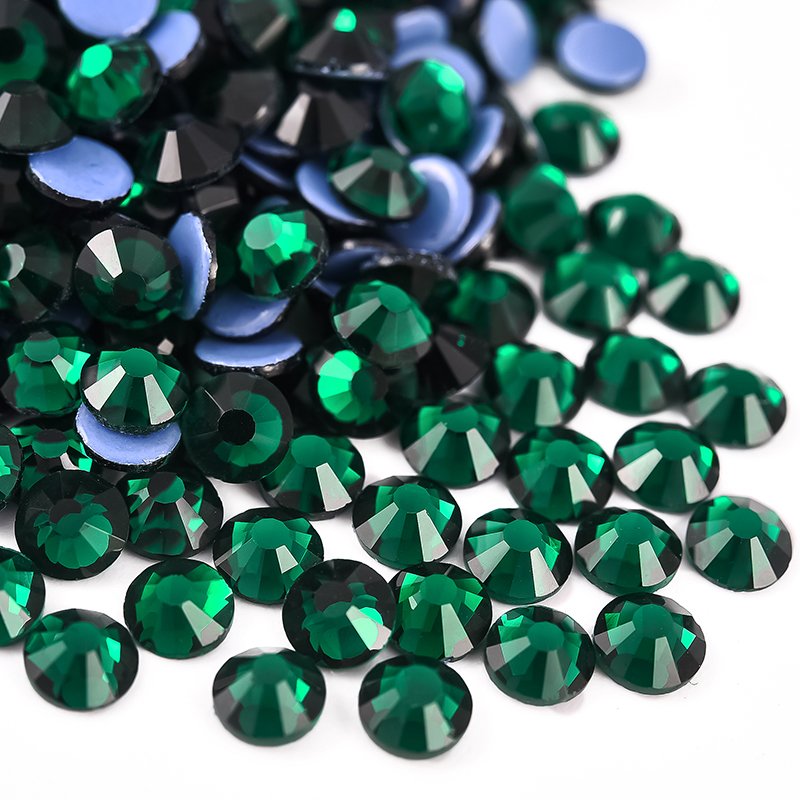
The Evolution of Hot-Melt Adhesives: A Technical Overview
Interviewer: Dr. Chen, thank you for joining us. To start, could you explain what exactly makes a “hot-melt” adhesive for rhinestones unique compared to other glues used in the textile industry?
Dr. Lin Chen: It’s a pleasure to be here. Hot-melt adhesives, or HMAs, are essentially thermoplastics. In the context of hotfix rhinestones, we are looking for a very specific set of properties. The glue must be solid at room temperature, melt rapidly when heat is applied—usually via a heat press or ultrasonic tool—and then bond instantly to the textile fibers as it cools. What makes rhinestone glue unique is the need for “wash-fastness” and “dry-clean resistance” while maintaining a low melting point so as not to damage delicate fabrics like silk or polyester blends.
For decades, the industry relied on Ethylene-Vinyl Acetate (EVA) or Polyamide-based glues. While effective, the early versions often contained phthalates and other heavy metals to improve flexibility and bonding strength. Today, we are moving toward modified Polyurethane (TPU) and specialized Copolyester glues that offer superior bonding without the toxic baggage.
The Shift Toward “Green” Glue: Why Now?
Interviewer: We hear the term “eco-friendly” a lot in marketing. From a chemical engineering perspective, what defines “green” glue in the rhinestone industry today?
Dr. Lin Chen: “Green” in our lab means three things: non-toxicity, low VOC (Volatile Organic Compound) emissions during application, and compliance with international safety standards like REACH and CPSIA. But the biggest driver is the elimination of lead and phthalates. In the past, lead was sometimes used in the manufacturing process of the glue itself or the rhinestone backing to achieve certain refractive properties or to stabilize the adhesive at high temperatures.
The “Why Now?” is driven by two forces. First, regulation. The European Union’s REACH regulation and the US Consumer Product Safety Improvement Act (CPSIA) have set incredibly low thresholds for lead and restricted substances in children’s wear. Second, brand accountability. Major retailers like Inditex (Zara), H&M, and Adidas have their own Restricted Substances Lists (RSL) that are often stricter than government laws. If a Guangzhou manufacturer wants to supply a global brand, their glue must be beyond reproach.
Demystifying OEKO-TEX Standard 100 for Rhinestones
Interviewer: Our B2B clients frequently ask for OEKO-TEX Standard 100 certification. Can you break down what this actually tests for in a hotfix rhinestone?
Dr. Lin Chen: OEKO-TEX Standard 100 is one of the world’s best-known labels for textiles tested for harmful substances. When we send our hotfix rhinestones for testing, the lab isn’t just looking at the glass—they are analyzing the glue layer and the interface between the glass and the adhesive.
They test for over 100 parameters, including:
For high-end garment manufacturers, achieving Product Class I (suitable for babies and toddlers) is the gold standard. It requires the lowest possible detection levels of these chemicals. Our recent R&D has focused on a new Copolyester glue that passes Class I comfortably, ensuring that even if a child were to come into contact with the embellished garment, there is zero risk of chemical migration.
The Lead-Free Challenge: Maintaining Performance
Interviewer: There’s a common misconception that “lead-free” or “eco-friendly” glues don’t stick as well as the old-school chemical versions. Is there any truth to that?
Dr. Lin Chen: That was true about ten years ago. When we first started removing lead and certain solvent-based additives, we saw a drop in the “peel strength” and the glue’s ability to withstand high-temperature industrial washing (60°C and above). The glue was more brittle and didn’t penetrate the fabric fibers as deeply.
However, polymer science has caught up. We now use cross-linking agents that activate during the heat-press process. These agents create a 3D molecular network that “locks” the rhinestone onto the fabric. In our current lab tests, our eco-friendly TPU-based glues actually outperform traditional EVA glues in wash-cycle endurance. We’ve seen stones remain attached after 50+ industrial wash cycles, which is far beyond the standard requirement for most fashion garments.
Technical Deep Dive: The Chemistry of the Bond
Interviewer: Let’s get technical for a moment. What is happening at the molecular level when a designer presses one of your hotfix stones onto a garment?
Dr. Lin Chen: It’s a process of mechanical interlocking and molecular diffusion. When the heat press hits 150°C to 170°C, the solid adhesive reaches its “melt flow” state. The viscosity drops, allowing the glue to flow into the microscopic gaps between the textile fibers. If it’s a porous fabric like cotton, the glue wraps around individual threads. On synthetic fabrics like nylon or polyester, we rely more on the chemical affinity between the glue and the fiber.
The “secret sauce” in our eco-friendly glue is the balance of Open Time and Setting Time. If the glue sets too fast, it doesn’t have time to “wet” the fabric. If it stays liquid too long, the stone will slide or “ghost” across the fabric during the cooling phase. By manipulating the molecular weight distribution of the polymers, we can fine-tune these times to suit different application methods, whether it’s a high-speed automatic motif machine or a manual heat press.
Lead-Free Standards: Beyond the Surface
Interviewer: When a buyer hears “lead-free,” they usually think of the glass crystal. How does the glue factor into the lead-free status?
Dr. Lin Chen: This is a critical point. A “lead-free” rhinestone can still fail a lead test if the glue or the vacuum-plated foil backing contains lead. In the past, some manufacturers used lead-based pigments in the grey glue to give it a specific color or to mask impurities. We have completely eliminated this. We use organic pigments and inert fillers to achieve the desired grey or transparent look of the adhesive without compromising the “lead-free” claim of the final product. When we say lead-free, we mean the entire assembly: glass, foil, and glue.
Manufacturing in Guangzhou: Leading the Global Shift
Interviewer: Guangzhou is the heart of the hotfix rhinestone industry. How are local manufacturers adapting to these global green standards?
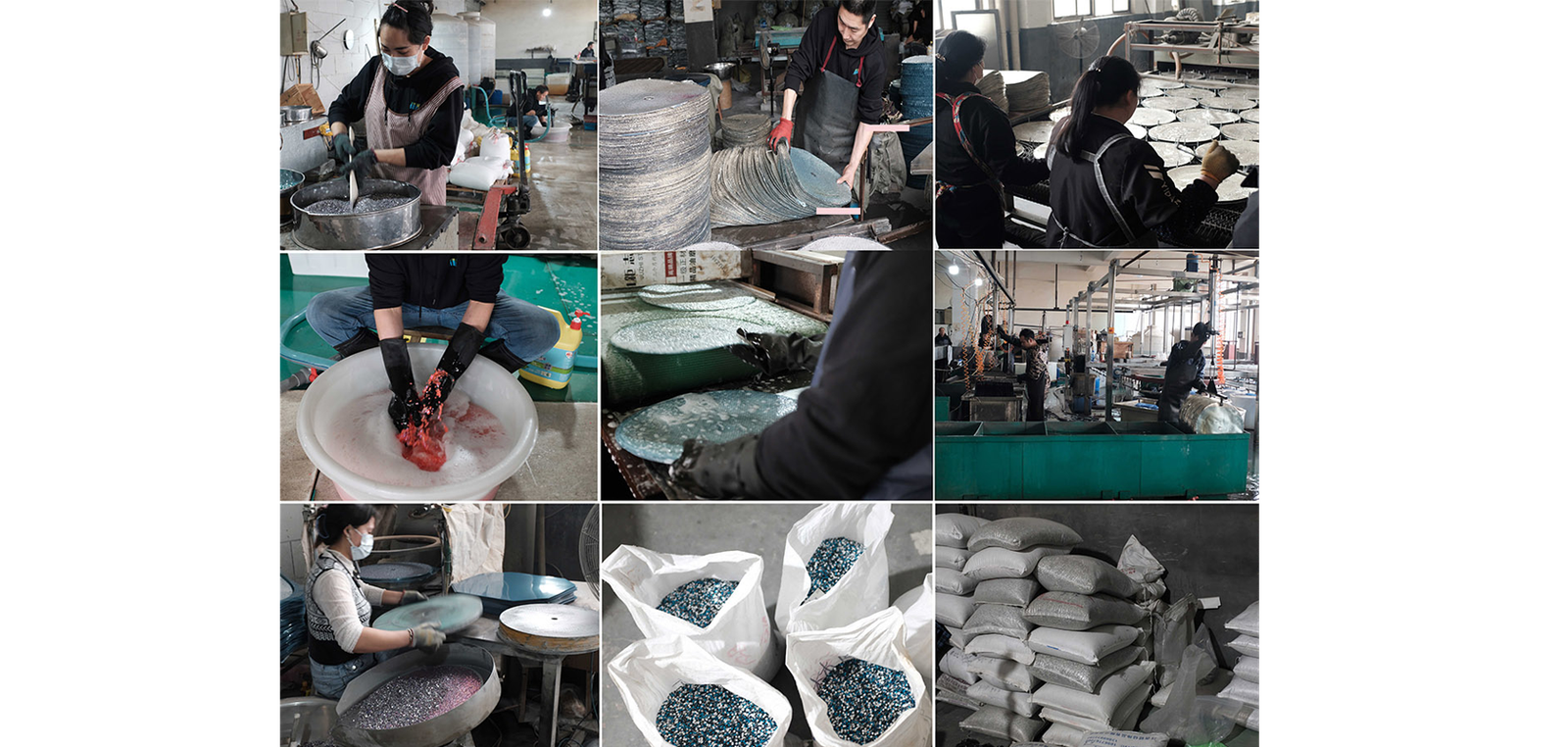
Dr. Lin Chen: The transformation in Guangzhou over the last five years has been remarkable. We are seeing a “flight to quality.” Smaller workshops that couldn’t afford the R&D for compliant glues are being replaced by sophisticated factories with in-house testing labs. At our facility, we have invested heavily in Gas Chromatography-Mass Spectrometry (GC-MS) equipment to test every batch of raw adhesive we receive. We don’t just trust the supplier’s certificate; we verify it.
Guangzhou manufacturers are also innovating in application technology. We are developing glues that melt at lower temperatures (120°C-130°C) to accommodate the rise of sustainable “low-heat” synthetic fabrics that would melt under traditional hotfix temperatures. This saves energy for the garment factory and reduces the risk of fabric damage.
Cost vs. Sustainability: The B2B Reality
Interviewer: For a B2B wholesaler or a garment factory, the bottom line is always a concern. Is eco-friendly glue significantly more expensive?
Dr. Lin Chen: There is a slight premium—usually 5% to 10%—for the high-grade raw materials required for OEKO-TEX compliant glues. However, when you look at the “total cost of quality,” the eco-friendly option is actually cheaper. Think about the cost of a garment recall if a batch of shirts fails a lead test for a major retailer. Or the cost of stones falling off because of poor-quality, cheap glue. By investing in high-performance green glue, manufacturers avoid these catastrophic risks. Furthermore, as the scale of production for these new polymers increases, the price gap is closing every day.
The Future: Bio-Based and Circular Adhesives
Interviewer: What is the next frontier for hot-melt glues in the rhinestone industry?
Dr. Lin Chen: We are currently researching bio-based hot-melts. These are adhesives where a portion of the petroleum-based polymers is replaced with plant-derived materials, such as castor oil or soy-based resins. The goal is to reduce the carbon footprint of the glue production process.
Another area of interest is “reversible” bonding. As the industry moves toward a circular economy, brands want to be able to recycle garments. This means being able to remove the rhinestones cleanly at the end of the garment’s life so the fabric and glass can be processed separately. Developing a glue that is permanent during the consumer’s use phase but can be “de-bonded” with a specific trigger—like a certain enzyme or a specific heat frequency—is a very exciting challenge we are working on.
Advice for Buyers: How to Spot Quality Green Glue
Interviewer: Finally, Dr. Chen, what advice would you give to B2B buyers looking to source eco-friendly hotfix rhinestones?
Dr. Lin Chen: I have three main pieces of advice:
Interviewer: Dr. Chen, thank you for sharing your expertise. It’s clear that the future of hotfix rhinestones is not just about the sparkle, but the science behind the stick.
Dr. Lin Chen: Exactly. We want our clients to know that their designs are held together by the most advanced, safe, and sustainable chemistry available today.
Summary of Key Technical Specifications for Eco-Friendly Glue
Conclusion
The shift towards eco-friendly hot-melt adhesives is more than just a trend; it is a fundamental shift in the garment industry’s supply chain. As we have learned from Dr. Chen, the technological advancements in polymer science now allow manufacturers in Guangzhou to produce hotfix rhinestones that are as durable and brilliant as they are safe for the environment. For B2B buyers, understanding the nuances of OEKO-TEX compliance and the chemistry of lead-free glues is essential for staying competitive in a global market that increasingly values sustainability.
By choosing suppliers who prioritize R&D and rigorous testing, garment brands can ensure that their products not only shine on the runway but also meet the highest safety standards for consumers worldwide. The future of hotfix rhinestones is green, and it is a future where performance and responsibility go hand-in-hand.
Need a size or color recommendation for your next order? Send us your fabric type, design, and target price — we reply within one business day. WhatsApp +86 13692450325 · rhinestonewholesale8@gmail.com