
How to Troubleshoot Uneven Heating on Industrial Heat Press Machines
For any professional apparel manufacturer, the industrial heat press is the heartbeat of production. Whether you are applying high-end Swarovski hotfix crystals or bulk wholesale rhinestones from a Guangzhou supplier, the quality of the finished garment depends entirely on three variables: time, temperature, and pressure. However, in a high-volume factory setting, even the most robust industrial machines can develop performance issues over time.
One of the most frustrating and costly problems is uneven heating. When one section of your heating platen is cooler than the others—a phenomenon known as “cold spots”—the results are disastrous. Rhinestones may fall off after a single wash, the hotfix glue might not melt properly, or the fabric itself could suffer from scorching due to overcompensation in other areas. In this comprehensive guide, we will walk through the professional steps to troubleshoot and fix uneven heating on your industrial heat press to ensure perfect rhinestone adhesion every time.
In the B2B sector, consistency is everything. When you are processing orders of 10,000 units or more, a 1% failure rate in adhesion can mean 100 ruined garments and a significant financial loss. Understanding the mechanics of your heat press is the first step toward achieving a zero-defect production line.
1. The Science of Rhinestone Adhesion: Why Temperature Precision is Non-Negotiable
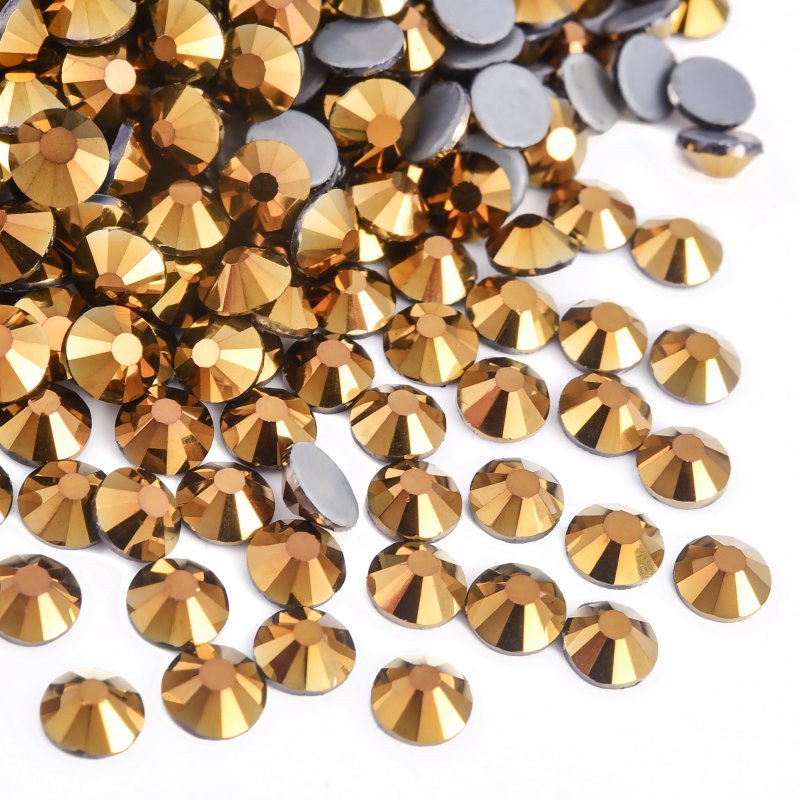
To troubleshoot a heat press effectively, one must first understand the chemistry of the “Hotfix” process. Most professional-grade rhinestones use an Ethylene-Vinyl Acetate (EVA) or Polyurethane (PU) based hot-melt adhesive. These adhesives are designed to be inert at room temperature but liquefy rapidly when exposed to a specific thermal threshold.
2. Essential Toolset for Factory Maintenance and Troubleshooting
Diagnostic accuracy is impossible without the right equipment. For a factory maintenance team, the following tools are mandatory for maintaining a fleet of industrial heat presses:
3. Step 1: Systematic Temperature Mapping and Identification of Cold Spots
The first step in troubleshooting is to move beyond the machine’s built-in digital display. The built-in sensor is usually located in the center of the platen and does not reflect the temperature of the corners or edges.
The 9-Point Calibration Method:
4. Step 2: Diagnosing Electrical Failures and Component Wear
If your 9-point map reveals a significant cold spot, the problem is likely electrical. Industrial heat presses use “Calrod” style heating elements—resistive wires encased in a protective metal sheath—that are either bolted to the platen or cast directly into the aluminum.
Checking the Heating Elements:
Using your multimeter, check the resistance (Ohms) of the heating elements. A reading of “OL” (Open Loop) indicates a break in the internal wire, meaning that specific heating circuit is dead. If the heating elements are cast-in, you will need to replace the entire upper platen. If they are replaceable, ensure you use the correct wattage to match the other elements.
The Role of the Solid State Relay (SSR):
The SSR is the “switch” that turns the heat on and off based on the thermostat’s signal. In a high-volume factory, these relays cycle thousands of times a day. Failure Mode 1: The SSR fails in the “OFF” position. The machine will not heat up at all. Failure Mode 2: The SSR fails in the “ON” position. The machine will heat up until it reaches dangerous temperatures, often melting the silicone pad or scorching the fabric. Regularly check the heat sink attached to the SSR; if it is excessively hot, the relay may be near failure.
5. Step 3: Assessing Platen Flatness and Mechanical Warping
In many cases, the “cold spot” is actually a “pressure spot.” If the heating platen is not perfectly flat, it cannot transfer its heat to the rhinestone. Heat transfer requires physical contact (conduction). Even a gap of 0.5mm can significantly reduce the amount of heat reaching the hotfix glue.
Why Platens Warp:
Industrial presses are subjected to tons of force. Over time, the constant expansion and contraction of the aluminum, combined with high pneumatic pressure, can cause the metal to “bow” in the center. This is particularly common in machines that are used at their maximum pressure settings for extended periods.
The Straight-Edge Procedure:
6. Step 4: Maintaining the Lower Silicone Pad and Foam Insulators
The lower platen of a heat press is just as critical as the top. The silicone pad serves as the counter-pressure surface. If the pad is uneven, the heat transfer will be inconsistent.
Common Pad Issues in B2B Production:
Maintenance Tip:
Always use a Teflon sheet (PTFE) to cover both the upper and lower platens. This prevents glue from sticking to the surfaces. Furthermore, consider rotating your silicone pads every 3 months and replacing them entirely every 12 months to maintain optimal “squish” for rhinestone embedding.
7. Step 5: Calibrating Pneumatic Pressure for Heavy-Duty Adhesion
For industrial-grade rhinestone application, manual “clamshell” presses are often insufficient. Most factories use pneumatic (air-powered) heat presses. These machines use an air cylinder to provide the force. However, the pneumatic system itself requires maintenance to ensure even heating.
Air Pressure and Thermal Conductivity:
Heat transfer is directly proportional to pressure. If your pneumatic cylinder is not providing consistent force, the heat will not be “driven” into the fabric. The Moisture Problem: Compressed air contains moisture. If your factory does not have an air dryer/filter system, water can enter the cylinder, causing internal corrosion and sluggish movement. This leads to “soft” presses where the platen doesn’t lock down with full force. Regulator Fluctuations: If multiple machines are connected to one compressor, a drop in line pressure can cause one machine to press with 60 PSI while another only gets 40 PSI. This results in batch-to-batch inconsistency. How to Check Pressure Distribution: Use the “Paper Test.” Place a strip of paper in each of the four corners of the press. Close the machine. If you can pull a strip out while the press is locked, your platen is not level. You must adjust the leveling bolts (usually found on the four corners of the lower platen assembly) until all four strips are held with equal force.
8. Troubleshooting Fabric-Specific Heat Transfer Issues
Sometimes the machine is fine, but the “uneven heating” is a result of the material being pressed. As a B2B wholesaler, you must advise your clients on the thermal properties of different textiles.
9. Advanced Electrical Troubleshooting: PID Controllers and Sensors
Modern industrial presses use PID (Proportional-Integral-Derivative) controllers. Unlike a simple thermostat that just turns on and off, a PID controller calculates how much power to send to the elements to maintain a perfectly flat temperature line.
If your machine is “overshooting” its target temperature (e.g., you set it to 160°C but it hits 180°C before cooling down), the PID settings may need to be “autotuned.” Most digital controllers have an autotune function that runs the machine through several heating cycles to learn its thermal mass and adjust its power delivery accordingly.
The Thermocouple Type:
Ensure your machine is using a “Type K” or “Type J” thermocouple that is rated for industrial temperatures. A frayed sensor wire is the #1 cause of “Err” messages on heat press displays. Always keep a spare thermocouple in your factory’s maintenance shop.
10. Conclusion: Implementing a Total Productive Maintenance (TPM) Strategy
Troubleshooting uneven heating is not a one-time event; it is a continuous process of quality assurance. For a B2B rhinestone manufacturer, the heat press is the final link in the quality chain. You can have the highest quality lead-free rhinestones in the world, but if your heat press has a 10-degree cold spot, the product will fail.
To summarize your maintenance routine: Verify temperature with an external contact probe weekly. Inspect silicone pads for wear and “dead zones” monthly. Level the platens using the paper test or pressure film quarterly. Clean heating surfaces daily to prevent glue buildup and thermal insulation. By treating your heat press as a precision instrument rather than a blunt tool, you ensure that every garment leaving your factory meets the highest standards of durability and brilliance. This commitment to technical excellence is what separates world-class B2B suppliers from the rest of the market. Invest in your maintenance, and your rhinestones will stay exactly where they belong—permanently bonded to perfection.
Whether you are managing a small boutique production or a massive industrial garment factory, these troubleshooting steps will keep your equipment running at peak efficiency, ensuring your hotfix applications are as enduring as your designs.
A practical troubleshooting sequence starts with the most common cause: the heating element. Measure the temperature across the platen with a surface thermometer at five points; a healthy press shows less than 5°C variation. If one corner is consistently cold, the heating element on that side is failing or the wiring connection is loose. Next, check the pressure—if the platen does not close evenly, the lower bed may have warped from repeated hot use. Finally, inspect the silicone pad for hardened spots. Each of these checks takes under ten minutes and can be done between production runs without stopping the line.
Prevention beats repair in industrial heat press operation. Schedule a full maintenance window every 500 operating hours: clean the platen with a non-abrasive cleaner, inspect the heating element connections, verify the thermostat with a surface probe, and lubricate the pressure mechanism per the manufacturer manual. Log every maintenance action with the technician name and date. Factories that follow this rhythm consistently report far fewer mid-run failures, because most uneven heating problems start as small drift that only becomes visible after hundreds of presses. A few minutes of routine inspection between batches keeps the production line moving and protects the bond quality of every German grey adhesive application.
When in doubt, run a test press on a scrap fabric before starting a production batch. A 10-second test on the same material tells you instantly whether the platen is heating evenly, whether the pressure is balanced, and whether the adhesive activates correctly. This habit costs almost nothing but eliminates the risk of discovering uneven heating after hundreds of garments have already been pressed. The reference settings for the most common fabrics are in our rhinestone heat transfer temperature and settings guide.
Need a size or color recommendation for your next order? Send us your fabric type, design, and target price — we reply within one business day. WhatsApp +86 13692450325 · rhinestonewholesale8@gmail.com