
Texas Garment Manufacturers’ Guide to Sourcing Bulk Hotfix Crystals
The Texas Garment Boom: Why Hotfix Crystals are a Multi-Billion Dollar Opportunity
From the high-fashion boutiques of Dallas to the massive industrial parks of Houston and the specialized western wear manufacturers in Fort Worth, the Texas garment industry is undergoing a significant transformation. As domestic manufacturing sees a resurgence and the demand for personalized, high-value apparel skyrockets, Texas garment manufacturers are increasingly looking for ways to differentiate their products. One of the most effective ways to add perceived value and luxury to apparel is through the strategic use of hotfix crystals. Sourcing directly from the Guangzhou hotfix rhinestones manufacturer is the common thread in all our buyer guides.
For large-scale apparel decorators in the Lone Star State, sourcing is not just about finding a “pretty” product; it is about finding a reliable, industrial-grade partner who can provide consistency, volume, and technical support. This guide is designed specifically for Texas garment factory owners, production managers, and sourcing specialists who need to navigate the complexities of bulk hotfix crystal procurement and application.
The Competitive Landscape: Dallas and Houston as Apparel Hubs
Texas is home to some of the most diverse apparel manufacturing sectors in the United States. Dallas has long been a center for fashion and wholesale, while Houston serves as a critical logistics hub with a growing community of independent and large-scale clothing brands. For these manufacturers, the pressure to deliver high-quality products under tight deadlines is immense.
Whether you are producing high-performance cheerleading uniforms, bespoke western-style denim, or corporate promotional gear, the quality of your embellishments can make or break your reputation. Hotfix crystals, when sourced correctly, offer a permanent, brilliant solution that survives industrial washing and heavy wear. However, the wrong choice in adhesive or crystal quality can lead to product recalls and lost contracts. That is why understanding the technical specifications of bulk hotfix crystals is paramount for Texas businesses.
The Science of Adhesion: Why Grey Glue Stability is Non-Negotiable
In the world of industrial hotfix application, the adhesive is just as important as the crystal itself. For years, the industry standard for high-end hotfix stones has been the “Grey Glue” (frequently a high-performance German or high-grade Chinese formulation). For a Texas garment manufacturer running 24/7 production lines, grey glue stability is the difference between a profitable run and a disaster.
What is Grey Glue?
Grey glue is a specialized heat-activated adhesive that is pre-applied to the flat back of the crystal. Unlike cheaper transparent or yellow glues, high-quality grey glue is designed to provide a “mechanical lock” on various fabric types, from heavy denim to delicate spandex. It is characterized by its high melting point and its ability to penetrate the fibers of the garment, creating a bond that is often stronger than the fabric itself.
Stability and Shelf Life
For manufacturers in Houston, where humidity can be a factor, glue stability is critical. Poor-quality adhesives can become brittle over time or lose their bonding properties if stored in non-climate-controlled warehouses. When sourcing bulk hotfix crystals, you must ensure that the manufacturer uses a stabilized glue formula that can withstand the temperature fluctuations during transit from Guangzhou to Texas and subsequent storage in local facilities. Our factory ensures that every batch undergoes rigorous “pull-testing” and thermal stability checks to guarantee that the glue remains active and reliable for up to 24 months in storage.
Industrial Heat Press Application: Scaling Your Production
Manual application with a handheld wand is fine for hobbyists, but for a Texas factory processing 10,000 units a week, efficiency is everything. Large-scale apparel decorators typically utilize multi-head automatic rhinestone setting machines or industrial-grade pneumatic heat presses.
Optimal Settings for Bulk Runs
While every fabric is different, the “Golden Rule” for industrial hotfix application generally falls within these parameters:
- Temperature: 160°C to 180°C (320°F to 355°F).
- Pressure: 4 to 6 bars (Medium to High pressure).
- Time: 10 to 15 seconds, depending on the stone size (SS6 vs. SS20).
For Dallas-based sportswear manufacturers using synthetic moisture-wicking fabrics, a lower temperature and longer dwell time are often preferred to prevent “scorching” or “shining” of the fabric. Conversely, for Houston-based denim manufacturers, higher pressure and temperature are necessary to force the adhesive into the thick cotton weave.
The Importance of Cooling Time
A common mistake in high-volume production is moving the garment too quickly after pressing. The grey glue needs to “set.” In an industrial environment, using a cooling station or simply allowing the garments to lie flat for 20 minutes before folding ensures that the bond reaches its maximum strength. This step is crucial for maintaining quality control across thousands of units.
Sourcing Strategies: The Direct-from-Guangzhou Advantage
Why should a Texas manufacturer look all the way to Guangzhou, China? The answer lies in the nexus of manufacturing capability and price. Guangzhou is the global capital of rhinestone production, housing the most advanced factories that specialize in high-index glass and premium adhesives.
Eliminating the Middleman
By sourcing directly from a Guangzhou hotfix rhinestone manufacturer, Texas businesses can bypass 30-50% markups from local distributors. More importantly, direct sourcing allows for custom production runs. If you need a specific shade of “Texas Orange” or a custom stone size for a proprietary design, a direct factory partnership is the only way to achieve it.
Transparency in the Supply Chain
Large B2B buyers require transparency. When you work directly with us, you get access to batch testing reports, lead-free certifications (essential for Prop 65 compliance), and real-time production updates. This level of communication is vital for Texas production managers who need to coordinate with marketing and sales departments in the U.S.
Inventory Management for High-Volume Texas Apparel Plants
Managing a massive inventory of small, high-value items like hotfix crystals requires a disciplined approach. For a garment factory in Dallas or Houston, stockouts can halt a production line, costing thousands of dollars in downtime.
The “Safety Stock” Formula
We recommend our Texas partners maintain a “Safety Stock” of 20% of their quarterly requirement for core colors like Crystal, Crystal AB, and Jet Black. Given the 10-14 day shipping window from Guangzhou to Texas via air freight, having this buffer prevents bottlenecks. For sea freight shipments (which take 30-40 days to the Port of Houston), the safety stock should be increased to 40%.
SKU Optimization
To simplify inventory, many large decorators standardize their designs around 3-4 key sizes (e.g., SS6, SS10, SS16, SS20). By limiting the variety of sizes, you can order larger volumes of each SKU, triggering higher wholesale discounts and simplifying the storage process in your warehouse.
Bulk Discounts and Cost-Volume Analysis for B2B
In the B2B sector, the price per gross (144 stones) is the primary metric. However, for Texas manufacturers, the true cost includes shipping, customs duties, and the “yield” (the percentage of stones that successfully bond without falling off). Cheaper stones often have a higher failure rate, which increases the labor cost of repairs.
Tiered Pricing Structures
Most reputable manufacturers offer tiered pricing based on the total order weight or the total number of bags (usually 10-gross or 50-gross bags). For a large-scale project, such as a state-wide cheerleading uniform contract, ordering 1,000+ bags can drop the unit price by as much as 25% compared to small-batch orders. Texas businesses should look for “Full Container Load” (FCL) or “Less than Container Load” (LCL) pricing if their volume justifies it.
ROI on High-Quality Stones
If a $50 crystal application adds $150 to the wholesale price of a western jacket, the ROI is clear. However, if 5% of those stones fall off during shipping to the retailer, the brand damage outweighs the profit. Investing in premium grey glue stones reduces the “returns and allowances” budget line item, which is a major concern for CFOs of Texas garment companies.
Texas-Specific Applications: Western Wear and Beyond
The “Texas Style” is iconic, and hotfix crystals play a major role in its modern evolution.
Western and Rodeo Apparel
In cities like Fort Worth, the demand for embellished denim, leather, and western shirts is perennial. Hotfix crystals are preferred over sew-on stones because they don’t catch on the fabric and are more comfortable for the wearer. The industrial heat press allows for intricate patterns of “rhinestone dust” or bold geometric designs that define high-end western fashion.
Cheer, Dance, and Sports Uniforms
Texas is the heart of American cheerleading and dance team culture. These garments require extreme durability and maximum sparkle. High-index glass crystals from Guangzhou provide the “stage brilliance” required for large arenas in Dallas or San Antonio. Because these garments are often made of high-stretch Lycra or Spandex, the elasticity of the grey glue is the most critical technical requirement.
Promotional and Corporate Gear
Houston’s corporate sector often uses embellished apparel for high-end events and branding. A subtle use of hotfix crystals on a polo shirt or a tote bag can transform a generic promotional item into a luxury gift, increasing brand affinity for Texas-based corporations.
Quality Control and Lead-Free Standards
For Texas manufacturers exporting their goods or selling to large national retailers like Neiman Marcus (headquartered in Dallas), compliance is key. The Consumer Product Safety Improvement Act (CPSIA) and California’s Prop 65 have strict limits on lead content in children’s products and general apparel.
Lead-Free Rhinestones
Our Guangzhou factory specializes in “Lead-Free” hotfix crystals that meet and exceed U.S. safety standards. While traditional leaded glass provides slightly more “fire,” modern lead-free glass technology has closed the gap significantly. We provide the necessary documentation for Texas manufacturers to pass audits from major retailers and government agencies.
The “Wash Test”
Before any bulk shipment leaves our facility, we perform standardized wash tests (ISO 105-C06). We simulate 20+ industrial wash cycles to ensure that the grey glue stability holds firm. We encourage our Texas partners to perform their own “in-house” testing on their specific fabric blends before committing to a 50,000-unit production run.
Logistics: Shipping from Guangzhou to the Gulf Coast
The logistics of moving 500kg of glass crystals halfway across the world can be daunting. However, the infrastructure between China and Texas is robust.
Air Freight vs. Sea Freight
For urgent replenishment, air freight to DFW or IAH is the standard. It is fast (5-7 days) but expensive. For scheduled, high-volume production, sea freight to the Port of Houston is the most cost-effective method. Many of our larger Texas clients utilize a “hybrid” model: 20% by air to keep production moving, and 80% by sea to maximize their margins.
Customs and Duties
Hotfix crystals fall under specific HTS codes (Harmonized Tariff Schedule). Understanding these codes and the current trade environment is essential. We assist our clients by providing accurate commercial invoices and packing lists to ensure smooth clearance through U.S. Customs at Texas ports of entry.
The Role of Automation in Modern Texas Garment Factories
As labor costs in the United States continue to rise, Texas garment manufacturers are increasingly turning to automation to maintain their competitive edge. In the realm of hotfix crystal application, this means moving away from manual placement and toward advanced robotics. Automated rhinestone setting machines can place thousands of crystals per hour with sub-millimeter precision, a feat that is impossible to replicate by hand at scale.
For a factory in Dallas or Houston, investing in an automated setter is a significant capital expenditure, but the ROI is typically realized within 12 to 18 months. These machines require high-quality, uniform crystals to function correctly. Cheaper, “off-grade” crystals often have slight variations in size or irregular edges that can jam the machine’s vacuum nozzles, leading to costly downtime. When we supply our Texas B2B partners, we ensure that every stone is machine-cut with precision facets, ensuring they are “automation-ready” for the most advanced production lines in the world.
Overcoming Common Application Challenges in Texas Factories
Even with the best equipment and the highest quality stones, production managers in Texas may face specific environmental and technical challenges. One of the most common issues is “Strike-Through,” where the adhesive from the hotfix crystal bleeds through the fabric and sticks to the back of the garment or the press plate.
Preventing Strike-Through
To prevent this, especially on the lightweight fabrics often used for Houston’s summer apparel, we recommend using a Teflon sheet or a specialized heat-resistant barrier between the layers of the garment. This not only protects the fabric but also ensures a more even distribution of heat, which is essential for activating the grey glue’s chemical bond.
Managing Fabric Finishes
Many modern fabrics in the Texas market come pre-treated with water-repellent or stain-resistant coatings. These finishes can sometimes inhibit the adhesive’s ability to “bite” into the fibers. For large-scale production, it is vital to perform a “rub test” or a “dry-clean test” on a sample from every new fabric batch. If the finish is too slick, a slight increase in dwell time or a specialized adhesive formulation may be required. Our technical team in Guangzhou works closely with Texas manufacturers to troubleshoot these issues, often providing custom-glued batches tailored to specific fabric requirements.
The Future of Hotfix: Custom Transfers and 3D Effects
The industry is moving beyond individual stone placement. The next big trend for Texas manufacturers is the “Custom Hotfix Transfer.” Instead of placing stones one by one, we can create pre-arranged designs on a heat-resistant carrier sheet. This allows a Texas factory to apply a complex, 500-stone design in a single 15-second press, drastically reducing labor costs.
Furthermore, the integration of different materials—such as combining hotfix crystals with metallic studs or neon-colored stones—is creating 3D textures that are highly sought after in the Houston streetwear scene and Dallas’s contemporary fashion market.
Conclusion: Choosing a Partner for the Long Haul
For a Texas garment manufacturer, the decision of where to source bulk hotfix crystals is a strategic one. It is about more than just the price per bag; it is about the reliability of the supply chain, the technical superiority of the adhesive, and the ethical standards of the factory. By choosing a manufacturer in Guangzhou that understands the specific needs of the Texas market—from the heat press settings required for heavy denim to the lead-free certifications needed for national retail—you are positioning your business for long-term growth.
The Texas apparel industry is a powerhouse of creativity and industrial might. With the right embellishment partner, there is no limit to how much “shine” you can bring to the market. Whether you are in Dallas, Houston, Austin, or El Paso, the future of your garment production starts with the quality of the smallest details: the hotfix crystals that make your designs truly stand out.
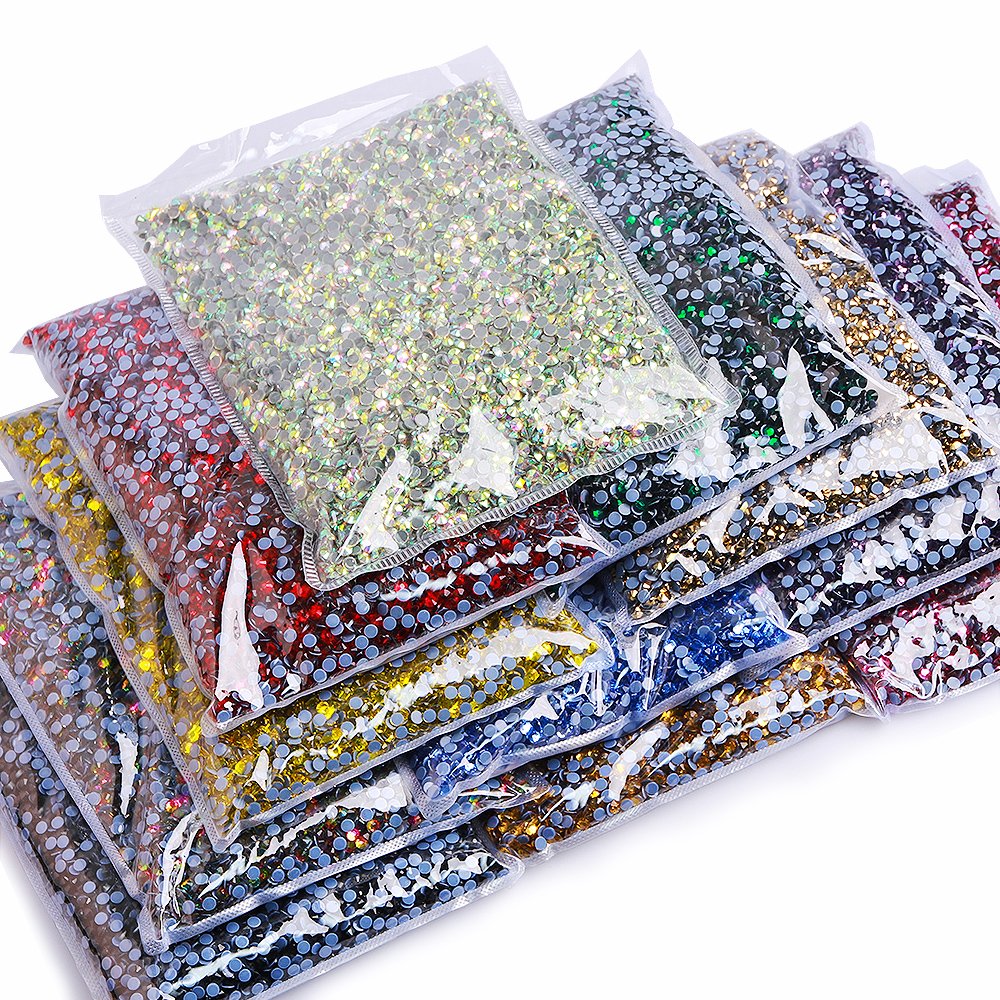
Get a free sample pack and factory pricing – WhatsApp us at +86 13692450325 or request a quote to check stock, bulk pricing, and lead time for your order.
Related reading: