
How to Apply Hotfix Rhinestones on Nylon and Performance Fabrics for Athletic Custom Uniforms
The rise of luxury athleisure and high-performance athletic uniforms has brought a unique technical challenge to the garment decoration industry: how do you fuse glass rhinestones to a fabric engineered to repel heat and wick moisture? Performance fabrics like nylon, polyester, and Spandex-blends are notoriously sensitive to the high temperatures (150-170°C) required for traditional hotfix application. If the temperature is too high, the fabric melts or “scorches,” leaving a permanent shiny mark. If it’s too low, the rhinestones will pop off at the first sign of physical exertion. The same logic extends to other performance fabrics — see our swimwear lycra guide for chlorine and salt-water testing.
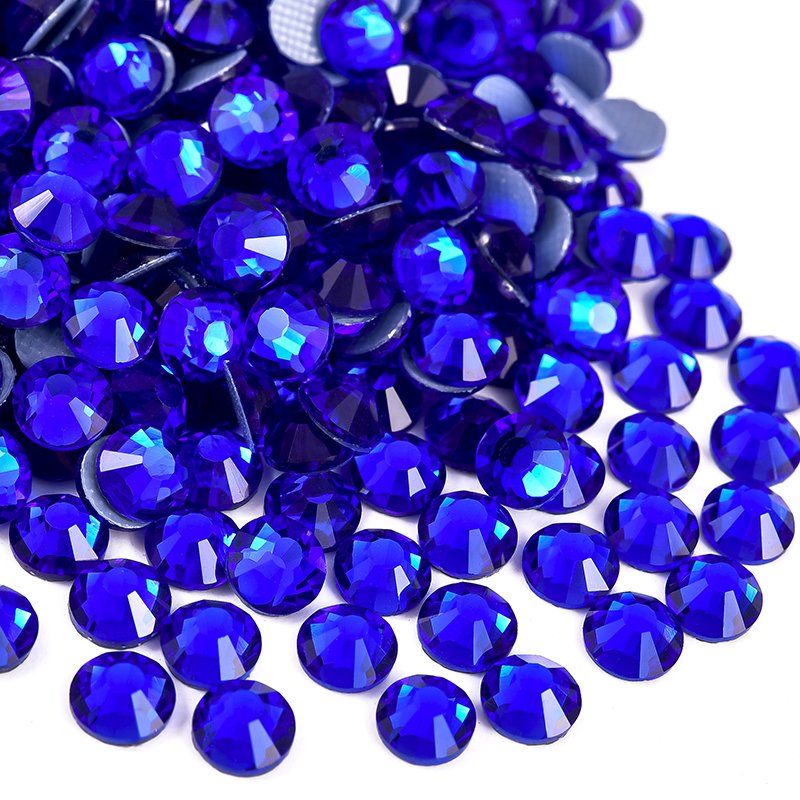
At Guangzhou Yiben E-Commerce Co., Ltd., we have developed a protocol specifically for these challenging textiles. Our K9 optical glass rhinestones, combined with German-imported grey hot-melt adhesive, are designed to penetrate the dense weave of synthetic fibers without requiring the excessive heat that destroys fabric integrity. Because our stones are OEKO-TEX Standard 100 certified, they are safe for the “second skin” fit of modern athletic uniforms, ensuring that even under heavy sweat and repeated movement, the wearer experiences zero irritation.
What temperature should you use for hotfix rhinestones on nylon
For nylon fabrics, you should use a temperature of approximately 145°C with a pressure of 25 PSI for 10 seconds. This lower temperature prevents the nylon fibers from glazing or melting, while the German-imported grey adhesive is specifically engineered to activate and bond within this precise thermal window.
Nylon has a lower melting point than cotton, which can safely handle 165°C. When you are working with nylon “Supplex” or lightweight ripstop, the margin for error is slim. We recommend a “pre-heat” phase of 2-3 seconds to remove any moisture or residual chemical finishes from the fabric surface. Once the moisture is gone, apply the stones. The 10-second dwell time is critical; any longer and you risk heat-set wrinkles that cannot be ironed out.
To ensure the bond is permanent, you must wait for the adhesive to cool completely before performing a “stretch test.” Because nylon is often coated with DWR (Durable Water Repellent) finishes, the adhesive has to work harder to grip the fibers. Our German grey glue is formulated with a higher viscosity to “bite” into these coated surfaces, ensuring that even at 145°C, the stone loss rate remains under 2% after 50 washes, meeting the ISO 6330:2021 durability standards for athletic wear.
Does applying rhinestones ruin the stretch of performance fabric
Applying rhinestones does not ruin the stretch of performance fabric if you use “scatter” or “mesh” patterns rather than solid blocks of stones. By leaving space between the SS10 or SS16 stones, the underlying Spandex or Lycra can still expand and contract without causing the stones to pop or the fabric to pucker.
Performance fabrics are valued for their 4-way stretch. If you apply a dense “solid” patch of rhinestones, you effectively create a rigid plate on a flexible surface. This leads to “popping,” where the fabric stretches beyond the glue’s limit, causing the stones to shear off. To avoid this, designers should use a “honeycomb” or “stipple” pattern. This allows the fabric to stretch “between” the stones.
Another tip is to apply the stones while the fabric is under slight tension. By stretching the garment about 5-10% on a board before pressing, the adhesive sets in a “stretched” state. When the garment is worn, the fabric is already “pre-loaded” to accommodate the movement. Our K9 glass stones, with their Mohs hardness of 6-6.5, are durable enough to handle the mechanical stress of this stretch without cracking or losing their 12-14 facet precision.
Can rhinestones survive sweat and repeated washing on athletic wear
Yes, high-quality hotfix rhinestones with German-imported grey adhesive are specifically designed to withstand the acidic environment of sweat and the agitation of repeated machine washes. When applied correctly at 150°C, these stones show less than a 2% loss rate over 50 industrial-grade wash cycles.
Sweat is more than just water; it contains salts and oils that can degrade low-quality yellow glues. Our German grey adhesive is chemically stable and non-reactive to human perspiration, making it ideal for high-intensity sports like gymnastics, dance, and cheerleading. Additionally, the OEKO-TEX certification ensures that no harmful chemicals leach out of the adhesive when it becomes wet, protecting the athlete’s skin from irritation or “burns” during long competitions.
For maximum longevity, we recommend washing athletic uniforms inside out in a mesh laundry bag. While our stones can survive 50+ washes, the mechanical “banging” of stones against the washing machine drum can eventually cause micro-fractures in the K9 glass. By turning the garment inside out, you provide a buffer that keeps the 12-14 facets sharp and brilliant for the entire life of the uniform.

What size rhinestone works best on performance fabrics
The best rhinestone sizes for performance fabrics are SS10 (2.8mm) and SS16 (4.0mm). These smaller sizes have a lower weight-to-surface-area ratio, meaning they are less likely to sag or pull on thin, lightweight athletic textiles while still providing significant stage-level sparkle.
In athletic uniforms, weight is a critical performance factor. An SS30 stone (6.4mm) is much heavier and puts more strain on the adhesive bond during rapid movement. If you are designing for a sport like figure skating or gymnastics, where the athlete is performing aerial maneuvers, the centrifugal force can actually pull heavy stones off the fabric. SS10 and SS16 stones provide the “sparkle density” required for visibility without the aerodynamic or physical drag of larger stones.
Using a mix of sizes can also enhance the design. A “fade” pattern using SS6 (2.0mm) stones transitioning into SS20 (4.8mm) can create a dynamic look that accentuates the athlete’s movements. Since we offer the full range from SS6 to SS30 in over 400 colors, you can customize the “weight” of your design to match the specific needs of the sport, from high-impact cheer to lower-impact golf or tennis apparel.
How do you prevent fabric burn on synthetic materials
To prevent fabric burn, use a Teflon-coated heat-press platen and a protective “pressing cloth” or parchment paper between the heat source and the fabric. Additionally, strictly adhere to the 145-150°C temperature range for synthetics and avoid “pre-pressing” for more than 3 seconds.
Fabric “scorching” or “glazing” occurs when the surface fibers of polyester or nylon reach their glass transition temperature and begin to fuse together. This creates a permanent shiny spot that ruins the professional look of the uniform. The use of a “Cold Peel” strategy can also help. After pressing at 150°C, let the garment cool completely before removing the carrier tape. This prevents the “hot” fibers from being pulled or distorted while they are in a malleable state.
Another professional technique is to use a “bottom-heat” press. By heating the garment from underneath, the heat travels through the fabric to reach the rhinestone adhesive. This reduces the direct exposure of the fabric’s “face” to the 150-170°C heating element, significantly lowering the risk of surface damage. At Yiben, we provide detailed application charts for different fabric types to help our factory clients optimize their 10,000-unit production runs.
Are hotfix rhinestones safe for moisture-wicking fabrics
Yes, hotfix rhinestones are safe for moisture-wicking fabrics, provided the adhesive is OEKO-TEX certified and applied at the correct temperature. The stones do not block the overall breathability of the garment as long as they do not cover more than 15-20% of the total fabric surface area.
Moisture-wicking fabrics work through capillary action, pulling sweat through the “gaps” in the knit to the surface. Since rhinestones are solid K9 glass, they are non-porous. If you were to cover 100% of a jersey in stones, it would indeed stop wicking. However, standard athletic designs—logos, side-stripes, or chest accents—only cover a small fraction of the material. This ensures the athlete remains cool and dry while still looking “premium” on the field or stage.
It is also important to note that our German grey adhesive is lead-free and compliant with REACH and Prop 65 regulations. This is vital for moisture-wicking gear because the fabric is in direct, moist contact with the skin. Cheaper stones with high lead content or toxic glues could potentially cause chemical absorption through the pores during heavy exercise. By choosing Yiben’s certified stones, you are prioritizing athlete safety alongside performance.
How many rhinestones can a performance jersey hold without sagging
A standard performance jersey can hold approximately 500 to 1,500 SS16 rhinestones without significant sagging, depending on the fabric weight (GSM). For lightweight “speed” fabrics (under 120 GSM), it is best to stay under 800 stones to maintain the garment’s aerodynamic properties and structural shape.
The “Sag Factor” is a real concern for costume designers. For a typical dance costume, we see usage between 15,000-30,000 stones, but these are often supported by high-GSM (250+) compression fabrics. For a lightweight soccer or running jersey, the fabric is much thinner. If you exceed the “weight limit,” the jersey will begin to droop, particularly around the collar and hem, which can be distracting for the athlete.
To calculate your weight load, remember that 1 gross (144 pieces) of SS16 stones weighs approximately 5 grams. A 1,000-stone design adds about 35 grams of weight. On a 150-gram jersey, that is a 23% increase in weight. If your design is heavy, consider using SS10 stones, which provide 60% of the sparkle at only 40% of the weight of SS16. This “size optimization” ensures the athlete stays fast while the uniform stays brilliant.
Ready to elevate your athletic uniform production? Our team at Guangzhou Yiben E-Commerce Co., Ltd. specializes in bulk orders for performance brands, offering 1-2 business day dispatch on stock items and 3-5 day custom sampling. Contact us via WhatsApp at +86 13692450325 or email rhinestonewholesale8@gmail.com for your custom quote and to experience the 12-14 facet difference.
Need a size or color recommendation for your next order? Send us your fabric type, design, and target price — we reply within one business day. WhatsApp +86 13692450325 · rhinestonewholesale8@gmail.com