
How to Calculate the Landed Cost of Wholesale Rhinestones from China
For B2B buyers, fashion designers, and large-scale craft distributors, sourcing hotfix rhinestones from China—specifically from manufacturing hubs like Guangzhou and Yiwu—is the gold standard for quality and affordability. However, a common mistake many importers make is equating the factory unit price with the total cost of the product once it reaches their warehouse. If you only look at the invoice from your Chinese supplier, you are ignoring a significant portion of your expenses, which can lead to shrinking profit margins or even financial losses. Landed cost math for African imports is applied on the South African garment accessories page.
This is where Landed Cost comes into play. Understanding how to calculate the true landed cost is essential for pricing your products correctly, managing your inventory budget, and deciding which shipping method is best for your business. In this comprehensive guide, we will break down every component of the landed cost for wholesale rhinestones, from the factory floor in Guangzhou to your doorstep.
What is Landed Cost and Why Does It Matter for Rhinestone Importers?
Landed cost is the total price of a product or shipment once it has arrived at the buyer’s door. It includes the original price of the product, all transportation fees (both international and local), customs duties, taxes, insurance, currency conversion fees, and any handling charges. For a high-volume product like hotfix rhinestones, even a $0.05 difference in landed cost per gross can result in thousands of dollars in lost profit over a year.
Why is this critical for B2B rhinestone buyers?
Step 1: Understanding the Factory Unit Price (Incoterms)
The first number you see on a Proforma Invoice is the unit price. However, in the B2B world, that price is always tied to an Incoterm (International Commercial Terms). The two most common terms you will encounter when importing from China are EXW and FOB.
EXW (Ex Works)
In an EXW agreement, the supplier is only responsible for making the goods available at their factory or warehouse. You, the buyer, are responsible for everything else: picking up the goods, transporting them to the port, customs clearance in China, and all international shipping. While EXW prices look the lowest on paper, they place the most logistical burden on you.
FOB (Free On Board)
In an FOB agreement (usually FOB Guangzhou or FOB Shenzhen), the supplier covers the cost of transporting the rhinestones to the port and handling the initial export customs clearance in China. Once the goods are “on board” the ship or plane, the responsibility shifts to you. For most B2B buyers, FOB is the preferred choice because Chinese factories are more efficient at handling domestic transport and export documentation within their own country.
Impact on Rhinestones: Rhinestones are dense but small. A “bag” of SS16 hotfix rhinestones (10 gross or 1,440 stones) might weigh around 100 grams. If you are buying 5,000 bags, that is 500kg. The difference between EXW and FOB for a 500kg shipment from a Guangzhou factory to Nansha Port can be several hundred dollars in local trucking and document fees.
Step 2: International Shipping and Freight Costs
Shipping is often the largest component of your landed cost after the product itself. When importing rhinestones from China, you have three primary options: Air Express, Air Freight, and Sea Freight.
1. Air Express (DHL, FedEx, UPS)
This is the fastest method (3-7 days) and is often “door-to-door.” For rhinestones, Express is excellent for high-value/low-weight items like Premium Glass or Lead-Free stones. Landed Cost Factor: High cost per kg, but saves on customs brokerage fees since the carrier handles most of it.
2. Air Freight
Different from Express, Air Freight involves shipping from airport to airport. You will need to hire a customs broker to clear the goods at your local airport and arrange for “last-mile” delivery to your warehouse. Landed Cost Factor: Mid-range cost. Economical for shipments between 100kg and 500kg.
3. Sea Freight (LCL vs. FCL)
Sea freight is the most cost-effective for large bulk orders (over 500kg or 1 CBM). LCL (Less than Container Load): Your rhinestones share space with other people’s goods. You pay based on the volume (cubic meters). FCL (Full Container Load): You rent the entire container (20ft or 40ft). Rare for rhinestones unless you are a major global distributor. Landed Cost Factor: Lowest shipping cost per unit, but includes many “hidden” port fees (terminal handling, docking fees, etc.) that can surprise new buyers.
Understanding Volumetric Weight vs. Gross Weight
One of the most common pitfalls for rhinestone importers is failing to understand Dimensional (Volumetric) Weight. Logistics companies (especially Air Express and Air Freight) charge you based on whichever is greater: the actual weight of the boxes or the space they occupy.
For example, if you order 10,000 sheets of rhinestone heat transfers, they might be light, but they require large, flat boxes. The volumetric weight formula is usually (Length x Width x Height in cm) / 5000 for Express. If your shipment’s actual weight is 20kg but its volumetric weight is 35kg, you will be billed for 35kg. When calculating your landed cost, always ask your Guangzhou supplier for the carton dimensions as well as the weight to avoid an unexpected shipping bill.
Step 3: Import Duties and Tariffs
This is where many importers get caught off guard. Governments tax imports based on the Harmonized System (HS) Code of the product.
Identifying the HS Code for Rhinestones
For hotfix rhinestones (made of glass), the most common HS codes are:
Calculating the Duty Amount
The duty is usually a percentage of the Customs Value. In the US, the customs value is typically the FOB price. In the EU and UK, it is often the CIF price (Product + Insurance + Freight).
Example (US Import): If the duty rate for glass rhinestones is 5%, and you are importing $10,000 worth of rhinestones from China: $10,000 x 5% = $500.
Section 301 Tariffs (China to USA)
If you are a US-based buyer, you must account for Section 301 “China Tariffs.” Currently, many glass products from China fall under List 4A, which may carry an additional 7.5% tariff. This means your total duty could be 12.5% (5% base + 7.5% additional). Always check the latest USTR updates or consult a broker.
Step 4: Customs Clearance and Brokerage Fees
Unless you are using an Express carrier for a small shipment, you cannot “clear” customs yourself. You must hire a Licensed Customs Broker.
Common fees include:
Step 5: Domestic Inland Transportation and Port Fees
The “last mile” is the final leg of the journey—from the port or airport to your warehouse. If you are importing via LCL Sea Freight, your goods will arrive at a CFS (Container Freight Station). You will have to pay for:
The “Hidden” Sea Freight Port Fees for LCL
New importers are often lured by incredibly low sea freight rates from China—sometimes as low as $50 per cubic meter (CBM). However, the shipping rate is only half the story. When your rhinestone shipment arrives at the destination port (e.g., Los Angeles, London, or Sydney), the Destination Handling Charges (DHC) can be three or four times higher than the ocean freight itself.
Common destination port fees include:
When calculating landed cost for LCL, always double your ocean freight estimate or ask your forwarder for a “all-in” arrival quote to avoid these shocks.
Why Guangzhou is the Strategic Choice for Global Rhinestone Sourcing
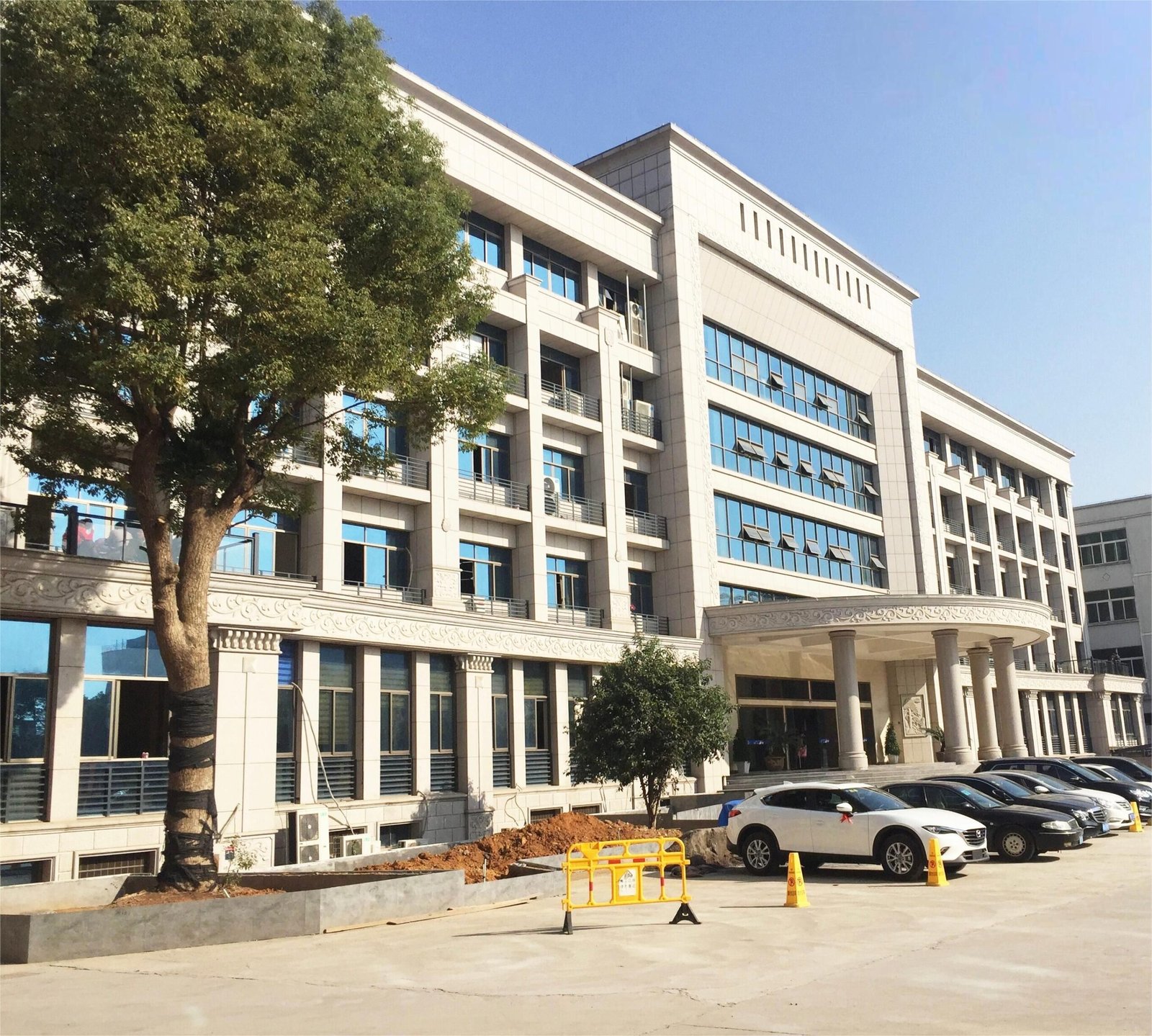
Guangzhou is more than just a city; it is the global epicentre for garment accessories. Sourcing from Guangzhou provides several logistical advantages that directly lower your landed cost compared to other regions like Yiwu or inland China.
1. Proximity to Major Ports
Guangzhou is home to Nansha Port and is only a few hours away from Shenzhen (Yantian) and Hong Kong. This proximity reduces the “inland transit” portion of your FOB costs. When your factory is close to a major hub, the trucking fees from the warehouse to the port are minimal, which is why many Guangzhou suppliers can offer very competitive FOB terms.
2. Established Consolidation Infrastructure
Because so many rhinestone and fashion manufacturers are clustered in districts like Panyu and Haizhu, local logistics companies have perfected the art of LCL consolidation. They can group your rhinestone order with other fashion accessories, ensuring that your goods are packed efficiently and shipped frequently, reducing your wait times and warehouse storage costs.
3. Specialized Packaging Expertise
Guangzhou factories understand the needs of high-end international markets. They use reinforced, moisture-resistant cartons and vacuum-sealed bags. This superior packaging reduces the risk of “Damage-at-Sea,” which is a hidden cost often overlooked. A damaged shipment that must be returned or discarded can skyrocket your true landed cost for that quarter.
Step 6: Hidden Costs (Insurance and Bank Fees)
1. Cargo Insurance
Never ship wholesale rhinestones without insurance. Rhinestones are susceptible to moisture damage if not packed correctly, and boxes can be crushed or lost. Insurance usually costs about 0.5% to 1% of the total shipment value. It is a small price to pay for peace of mind.
2. Payment and Currency Fees
If you pay your Chinese supplier via T/T (Telegraphic Transfer), your bank will charge a wire fee ($30 – $50). Additionally, if you are paying in USD but your home currency is CAD, EUR, or AUD, you must account for the 2-3% currency conversion margin the bank takes.
The Master Formula: Calculating Total Landed Cost
To find the true cost of your rhinestones, use this formula:
Landed Cost = (A + B + C + D + E + F + G) / Total Units A = Total Product Price (Invoice Value) B = International Freight Costs (Shipping) C = Insurance D = Import Duties and Tariffs E = Customs Brokerage and Administrative Fees F = Inland Transportation (Delivery to your door) G = Payment/Currency Fees
Case Study: Calculating Landed Cost for a Bulk Rhinestone Order
Let’s look at a realistic scenario for a B2B buyer in the United States.
The Order: – Product: 500 Bags of SS16 Hotfix Rhinestones (A-Grade Glass). – Quantity: 10 Gross per bag (Total 5,000 Gross). – Factory Price: $2.00 per bag (FOB Guangzhou). – Weight: Approx. 50kg. – Shipping: Air Express (DHL).
Breaking Down the Costs:
Total Landed Cost: $1,000 + $450 + $10 + $125 + $50 + $40 = $1,675.00
Calculating the Cost Per Gross (144 Stones)
Total Units: 5,000 Gross $1,675.00 / 5,000 = $0.335 per gross.
The Insight: Even though the factory price was $0.20 per gross ($2.00 per bag of 10 gross), the actual cost is $0.335. If you priced your items based on the $0.20 figure, you would be ignoring 40% of your actual expenses!
Strategies to Reduce Landed Cost for Wholesale Rhinestones
Once you understand how to calculate these costs, you can start looking for ways to reduce them.
1. Consolidate Your Shipments
Shipping one 500kg shipment via Sea Freight is significantly cheaper than shipping five 100kg shipments via Air Freight. If you source from multiple factories in Guangzhou, use a third-party logistics (3PL) provider in China to consolidate all your goods into one shipment.
2. Optimize Packaging
Rhinestones are often packed in plastic bags, then small boxes, then large cartons. Ask your manufacturer to use high-density packing. Reducing the “volumetric weight” of your cartons can save you hundreds of dollars in air freight costs.
3. Choose the Right Incoterm
While FOB is standard, if you have a great relationship with a Chinese freight forwarder, switching to EXW might save you money if the factory’s “local handling fee” for FOB is inflated.
4. Verify HTS Classification
Ensure your broker is using the correct code. Misclassifying glass rhinestones as “jewelry” instead of “imitation stones” could result in a much higher duty rate and potential fines.
Conclusion: Data-Driven Sourcing is the Key to Success
Calculating the landed cost of wholesale rhinestones from China might seem tedious at first, but it is the hallmark of a professional B2B operation. By moving beyond the factory invoice and accounting for shipping, duties, and brokerage, you gain a competitive advantage. You can negotiate better with suppliers, choose more efficient shipping routes, and—most importantly—ensure that your business remains profitable in the long run.
The next time you request a quote from a factory in Guangzhou, don’t just ask for the price per bag. Open your spreadsheet, factor in the logistics, and calculate your true landed cost. Your bottom line will thank you.
Need a size or color recommendation for your next order? Send us your fabric type, design, and target price — we reply within one business day. WhatsApp +86 13692450325 · rhinestonewholesale8@gmail.com