
HS Code for Baby Clothes and Child-Safe Rhinestones From Guangzhou
A children’s boutique in Melbourne had a full shipment of rhinestone bodysuits flagged at the border because the crystals were tested for adult lead limits, not the child-specific ones. The goods were compliant. The documentation was not. Baby and children’s apparel sits under tighter classification and tighter safety rules than any other garment category, and the two systems overlap in ways that trip up experienced importers. This page covers the codes for baby clothes, kids’ wear, costumes, and the crystal components that decorate them, written for buyers who need to clear goods without a recall waiting on the other side.
What is the HS code for baby clothes?
Baby clothes occupy their own headings rather than sharing the adult apparel codes, and the HS code for baby clothes is 6111 for knitted garments and 6209 for woven garments. Within those headings, cotton baby clothes fall under 6111.20 or 6209.20, and synthetic baby clothes under 6111.30 or 6209.30. The dividing line between “baby” and “children’s” is a physical size threshold, and most tariff schedules define babies as garments for children up to around 86 centimeters in height. That size test, not the marketing label, decides whether a bodysuit sits on 6111 or on the children’s chapters.
What is the HS code for baby clothing in the knitted chapter?
Knitted baby clothing sits on heading 6111, and the HS code for baby clothing in knitted form is 6111.20 for cotton, 6111.30 for synthetic fibers, and 6111.90 for other materials such as wool or blends. This heading covers bodysuits, rompers, sleepsuits, booties, and baby hats as long as the garment is knitted and sized for infants. The knitted versus woven distinction matters because 6111 and 6209 carry different duty treatment in some markets, and a buyer who classifies a woven romper under the knitted heading is handing customs an easy reason to re-examine the carton.
What is the HS code for children’s clothing?
The HS code for children’s clothing leaves the baby headings once the garment exceeds infant sizing, moving to the same chapters as adult apparel but under size-specific subheadings. Girls’ woven dresses sit in 6204.40 through 6204.49, girls’ knitted dresses in 6104.40 through 6104.49, and boys’ woven or knitted garments occupy the corresponding men’s headings 6203 or 6103. The child-specific subheadings within those chapters carry different duty rates than adult sizes in several countries, which is why the invoice must state the age or size range clearly on every line.
What is the kids clothes HS code?
The kids clothes HS code spans multiple chapters because children’s apparel borrows the adult structure, with 6103 and 6203 for boys and 6104 and 6204 for girls, plus 6111 and 6209 for the baby range. A practical shortcut is to identify the construction first, then the wearer’s gender, then the fiber, and read the code off that path. A girls’ knitted cotton dress becomes 6104.42. A boys’ woven cotton shirt becomes 6205.20. The kids wear HS code for a hoodie is 6110.20 for cotton or 6110.30 for synthetic, the same heading adults use, because knit tops share one heading regardless of age once past the baby threshold. The kids clothing hs code is not a single number but a small family of headings you can learn once and reuse across every order.
What is the kids dress HS code?
The kids dress HS code follows the girls’ dress subheadings, with a knitted girls’ dress under 6104.41 for cotton or 6104.43 for synthetic, and a woven girls’ dress under 6204.42 for cotton or 6204.43 for synthetic. Girls’ dresses are the single most common children’s import line in the rhinestone and party-wear trade, so this code appears on invoices constantly. If the dress is sized for a baby under the height threshold, it reverts to 6111 or 6209, and the same physical garment in two sizes can legitimately sit on two different headings.
What is the HS code for kids accessories?
The HS code for kids accessories depends entirely on the accessory type, because hair bows, hats, belts, and bags each have their own chapter. Knitted baby hats fall under 6111, while children’s hats fall under 6505, hair accessories under 9615, and small fabric bags under 4202. Rhinestone hair clips and crystal tiaras for pageants typically classify under 9615 as hair ornaments, and loose rhinestones for decorating those accessories fall under 7018.10. The accessory side is where a single order can legitimately span five headings, so group like items on the invoice instead of writing one catch-all line.
What is the HS code for costumes?
The HS code for costume depends on whether the item is a wearable garment or a festive novelty article. Constructed children’s dress-up costumes made of textile and intended as clothing fall under Chapter 61 or 62 like any other garment, while flimsy festive costumes and carnival novelties often classify under Chapter 9505 as festive articles. The US customs authority has issued rulings drawing this line by construction quality and durability, and a costume with finished seams and a proper closure reads as apparel while a disposable polyester sheet with a printed design reads as festive goods. The distinction changes the duty and the flammability testing path, so confirm it before a Halloween line ships.
What is the kids clothes HSN code?
The kids clothes HSN code in India mirrors the international HS, with baby garments under HSN 6111 or 6209, girls’ dresses under 6104 or 6204, and boys’ wear under 6103 or 6203. The hsn code for children clothes and the kids clothing hsn code are the same six-digit numbers a US or EU broker uses, with two additional Indian digits appended for GST classification. A multi-country seller can keep one master product table with the six-digit codes and let each market’s system add the national suffix, which avoids the confusion of maintaining three different code lists for one inventory.
What is the HSN code for a kids clothing set?
A kids clothing set shipped as a single retail unit, such as a top and short set, classifies under the essential character rule, and the hsn code for kids clothing set follows the garment that gives the set its character, usually the top. A knitted cotton girls’ set therefore lands on HSN 6104 or 6110 depending on the dominant piece, not on a separate “set” code, because the HS does not have a standalone heading for coordinated children’s sets. If the pieces ship separately and are sold separately, they take their own codes, and the cleanest invoices list each piece on its own line with its own value.
What are the HS codes for clothing across the baby and kids range?
The hs codes for clothing run a wide spread once you move past the baby headings, but they follow a repeatable pattern: Chapter 61 for knitted garments and Chapter 62 for woven garments, with cotton, synthetic, and other-fiber subheadings inside each. Baby clothes sit on 6111 and 6209, girls’ dresses on 6104 and 6204, boys’ wear on 6103 and 6203, and accessories scatter across 6505, 9615, and 4202 depending on the item. Building a single reference table of your product lines with their six-digit codes and letting each market add its national suffix is the fastest way to stop re-researching the same classification every time a new order ships.
Does the wedding decoration HSN code apply to clothing embellishment?
The wedding decoration hsn code does not apply to clothing embellishment, because decoration services are classified as services under India’s SAC system rather than as goods under the HS. If you hire a vendor to decorate a venue or a gown as a service, that transaction uses the hsn code for wedding decoration services under the services accounting code, not a goods heading. The rhinestones themselves, as physical goods, always fall under 7018.10 whether they end up on a child’s dress or a bridal gown. Keeping the goods code and the services code separate on your records is the clean way to handle a business that both sells stones and offers the decorating labor.
What is the rhinestones HS code for children’s garments?
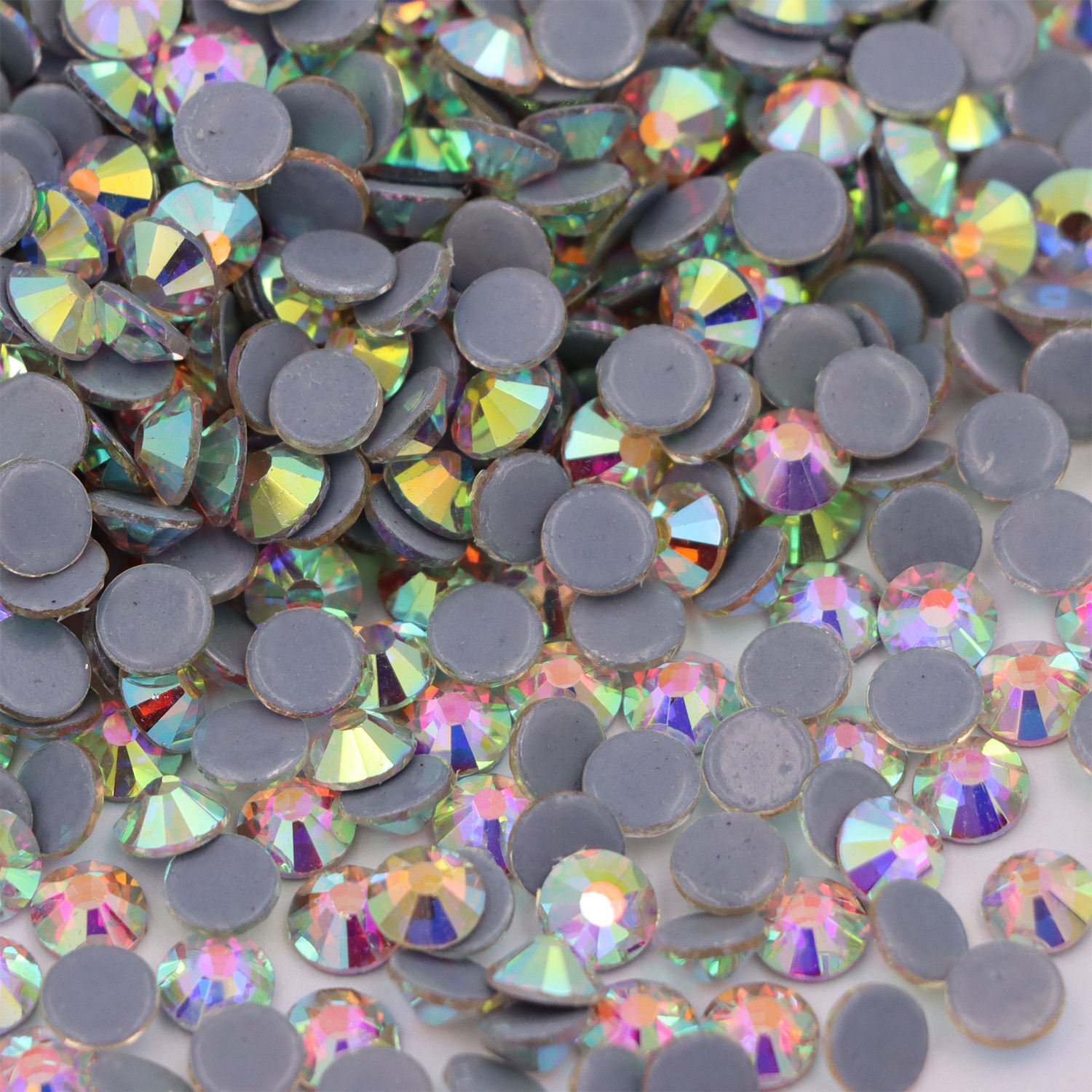
Loose rhinestones for decorating children’s clothing fall under the rhinestones hs code 7018.10, the same heading used for adult apparel stones, because the tariff does not distinguish by end use at the six-digit level. What changes for children is compliance, not classification. Under the US CPSIA, children’s products must keep lead below 100 parts per million in accessible components, and our Guangzhou factory certifies stones for infant use at below 30 parts per million under OEKO-TEX, with our lead-free line running below 1 part per million. California’s Proposition 65 tightens the exposure limit further, so a buyer selling into California should request the lead-free grade as standard.
How do child-safe rhinestones differ from standard stones?
Child-safe rhinestones use the same K9 optical glass and German gray glue as our adult line, but the raw material batch is screened and certified to a lower lead threshold, under 30 parts per million for infants and under 1 part per million for the lead-free grade. The optical quality does not drop, because the refractive index stays around 1.9 and the cut keeps twelve to fourteen facets, which is the same brightness you get on a bridal stone. The difference is documentation: every child-safe batch ships with a test report you can hand to a CPSIA audit, and that paper trail is what keeps a compliant shipment from being treated as a non-compliant one.
Why does lead content matter for baby clothes rhinestones?
A baby puts fabric in its mouth, and a rhinestone that sheds from a onesie becomes a swallowing and lead-exposure risk in one motion. US CPSIA caps lead at 100 parts per million for accessible components, and the EU’s rules for articles intended for children under three are stricter still. Our infant-grade stones test below 30 parts per million and survive a fifty-cycle wash test with under 2 percent loss, which means the stone stays attached and the small amount of lead that could theoretically migrate stays far below any limit. For a children’s brand, those two numbers together are the difference between a product you can defend and a recall you cannot.
What safety tests do baby clothes rhinestones need?
Baby clothes rhinestones need lead testing, and depending on the market, testing for other restricted substances and for wash durability. US CPSIA caps lead at 100 parts per million in accessible components, the EU’s rules for articles intended for children under three are stricter still, and California’s Proposition 65 sets its own exposure threshold that effectively pushes buyers toward a lead-free grade. Our infant stones test below 30 parts per million under OEKO-TEX, our lead-free line runs below 1 part per million, and every batch ships with the report so you can hand documentation to a customs or marketplace audit instead of scrambling after a hold.
How do you classify baby clothes with rhinestone trim?
Baby clothes with rhinestone trim keep their garment classification, because the applied crystals are decoration rather than the product’s essential character, so a knitted cotton onesie with stones still clears under 6111.20. The stones only take their own heading 7018.10 when they ship loose as a separate product, and a buyer who imports both the garments and the loose stones in one container should invoice them on separate lines with separate codes. The compliance rules, however, follow the stones wherever they land, so the child-specific lead limits apply to the trim even when the garment code does not change.
What is the minimum order for child-safe rhinestones?
Our minimum is two packs per color and size, around 2,880 pieces of SS16, and the child-safe grade carries the same low MOQ as the standard line because the compliance screening happens at the batch level rather than per order. A children’s brand can sample the compliant stones across a full color range for a modest outlay before scaling to production, with air freight to North America landing in five to seven working days and sea freight in eighteen to twenty-five. Payment is a 30 percent T/T deposit with the balance before dispatch, and orders leave the warehouse within one to two days.
Get baby clothes HS codes and compliant stone pricing in one reply
The codes split cleanly once you learn the size threshold: 6111 and 6209 for babies, the adult chapters with child subheadings for bigger kids, 7018.10 for loose rhinestones, and 9505 for festive costumes. The compliance side is where children’s imports actually fail, so lock in a supplier who certifies lead below 30 parts per million for infant goods and below 1 part per million for the lead-free grade. For current pricing on child-safe SS6 through SS20 stones, test reports for your market, or help classifying a mixed baby and kids shipment, message our Guangzhou team on WhatsApp at +86 13692450325 or email rhinestonewholesale8@gmail.com and we will send a quote within twelve hours.
Need a size or color recommendation for your next order? Send us your fabric type, design, and target price — we reply within one business day. WhatsApp +86 13692450325 · rhinestonewholesale8@gmail.com