
How to Apply Hotfix Rhinestones on Any Fabric
Applying hotfix rhinestones is a game of three numbers: temperature, pressure, and time. Cotton takes 165°C at 40 PSI for 15 seconds. Spandex drops to 150°C at 30 PSI for 12 seconds — push it hotter and the fiber itself burns. Silk sits at 140°C at 20 PSI for 10 seconds, always under a protective sheet. Get those three numbers right for your fabric and the stones stay through wash after wash. Get them wrong, and no stone — however good the crystal — survives the first cycle. For the full breakdown, see our guide on Custom Hotfix Rhinestones Design.
The full chain is below: tools, a settings table, fabric-by-fabric technique, fixes for the three failures that cause the most rework, and wash care. Each section links to the deeper guide for that problem, so this page works as the map.
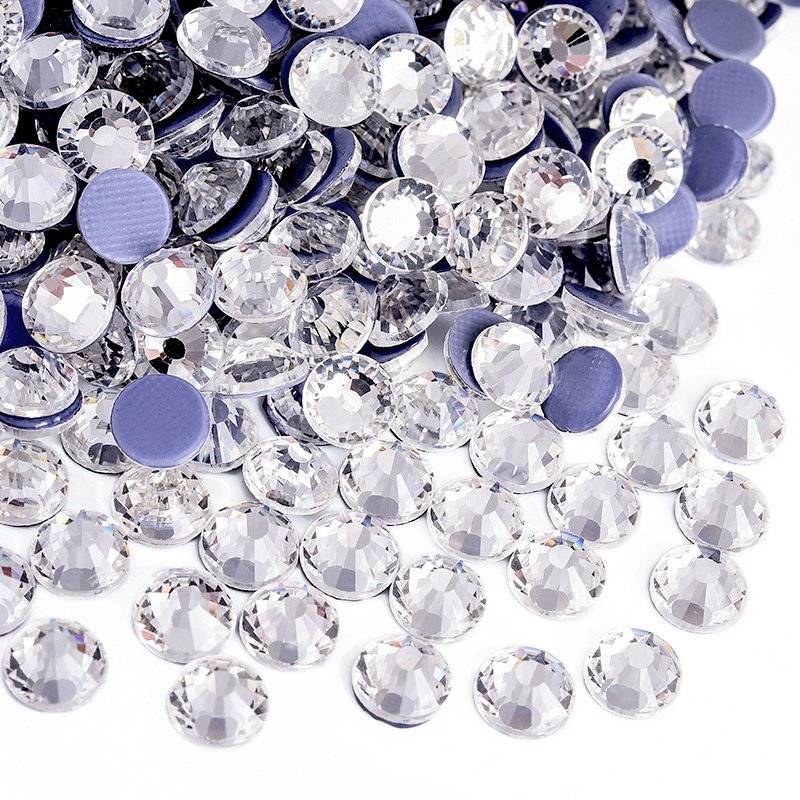
What You Need Before You Start Applying Hotfix Rhinestones
You can apply hotfix stones with a short list: the stones, a heat source, and a flat, heat-safe surface. Production work extends it.
The heat press is the backbone of any real volume. It holds a set temperature and delivers the same pressure every press — the two things that decide batch consistency. A rhinestone applicator wand reaches spots a press can’t, and tweezers plus a silicone mat cover positioning. A Teflon sheet between the platen and the stones protects the facets, stops glue from sticking to the press, and keeps heat from scorching delicate fabric.
For the complete rundown — including the items that separate professional results from hobby results — see our ten essential tools every garment factory needs for hotfix rhinestone application. Still choosing machinery? Our review of heat press machines for rhinestone transfers compares what each price tier buys you.
Hotfix Rhinestone Settings at a Glance — Temperature, Pressure, and Time
Use this as your working table. Figures are starting points for K9 glass stones with industrial-grade hot-melt adhesive — calibrate them on a scrap swatch of your actual fabric before pressing a full garment.
| Fabric | Temperature | Pressure | Time | Critical note |
|---|---|---|---|---|
| Cotton | 165°C | 40 PSI | 15 s | Pre-press to remove moisture first |
| Denim | 165–170°C | 45 PSI | 15–18 s | Give seams and pockets extra dwell |
| Spandex / Lycra | 150°C | 30 PSI | 12 s | Never exceed — the fiber burns |
| Nylon / performance knits | 155°C | 35 PSI | 12 s | Reduce heat on printed nylon |
| Silk | 140°C | 20 PSI | 10 s | Always under a Teflon sheet |
| Mesh / tulle | 150°C | 25 PSI | 10 s | Light pressure so stones don’t sink |
| Velvet | 140°C | 20 PSI | 8–10 s | Protect the pile from crushing |
| Leather | 150°C | 40 PSI | 8–10 s | Test a scrap first; bond is surface-deep |
Two patterns run through the table. Heat and time trade off — a lower temperature needs longer dwell, and short time at high heat is how garments get burned. Pressure matters more than most tutorials admit: enough pressure seats the stone into the fabric so the glue can flow around fibers; too little leaves the bond on the surface. For warm-up routines, platen calibration, and the checks to run before each shift, our factory manager’s checklist for operating a heat press covers it in detail.
What Temperature Do You Set a Heat Press for Rhinestones?
Set the heat press between 140°C and 165°C depending on the fabric, with 160°C as the working default for most garments. The number you’re actually targeting is the adhesive’s activation window of 150–170°C — where the hot-melt glue flows into the fabric and sets — so anything in that range works as long as the fabric tolerates it.
Cotton and denim sit comfortably at the top of the range. Spandex, silk, and anything heat-sensitive must run at the bottom. The chemistry explains why: industrial-grade German grey adhesive activates at 150–170°C and is worked around 160°C, while economy yellow glue softens below 130°C and lets go under heat or sunlight. The fiber has its own limit. Spandex degrades around 230°C, polyester around 260°C — but silk is the trap, with a ceiling near 170°C. Set silk at cotton’s 165°C and you’re working right at that threshold, which is why the table drops it to 140°C.
Do You Need a Heat Press, or Can You Use a Regular Iron?
A regular iron works for small projects — a single garment, a handful of stones, a repair. It cannot hold temperature and pressure steady enough for consistent production, which is why every factory eventually owns a press.
If you go the iron route, the technique is the same with stricter discipline: highest synthetic-safe setting, firm pressure for the full dwell time, and never slide — come down on the stone straight. An iron’s biggest failure is wandering temperature, so uneven stones usually mean the iron, not the glue, is the culprit. For decorators weighing whether to stay with iron-on methods at all, our comparison of alternatives to heat transfer vinyl lays out where hotfix stones fit against HTV.
How to Apply Hotfix Rhinestones on Cotton and Denim
Cotton is the easiest fabric to get right: it takes heat well and its weave gives the adhesive plenty of grip. Press at 165°C, 40 PSI, for 15 seconds — but pre-press the area first to drive out moisture, the silent killer of cotton application. Wet fiber turns to steam under the platen and lifts the glue before it can bond.
Denim needs slightly more heat and time because the weave is dense and the seams thick. Pockets, collars, and hems absorb heat differently from body panels, so press the flat areas first and re-press seams with a few extra seconds. Denim also hides a trap: the surface finish can sit between the glue and the fabric, so test the actual jacket fabric, not the swatch from the bolt end. For the full sequence — including why some jackets need a sacrificial press cloth — see our step-by-step on applying hotfix rhinestones to denim jackets without damaging the fabric.
How to Apply Hotfix Rhinestones on Stretchy Fabrics — Spandex, Lycra, and Performance Knits
Stretch fabric is where application either works or destroys the garment. The rule: 150°C, 30 PSI, 12 seconds, and never more. The glue must cross its activation point, but the fiber is the limiting factor — spandex burns and stiffens when pushed past its tolerance, and a burned panel doesn’t recover.
Two extra moves make the difference on Lycra. First, stabilize the fabric: place it on the platen without stretching it, so the glue bonds to relaxed fiber instead of pre-stretched fiber that snaps back and cracks the bond line. Second, let the stone cool under light pressure before moving the garment — hot glue is still fluid and will shift if handled immediately. Swimwear adds its own chemistry — chlorine and salt water attack the glue line differently — and our guide to applying hotfix rhinestones on swimwear Lycra that survives chlorine and salt water covers those choices. For athletic uniforms, nylon-based performance knits need a different profile; that’s covered in our guide to hotfix rhinestones on nylon and performance fabrics.

How to Apply Hotfix Rhinestones on Silk, Mesh, and Velvet
Delicate fabrics ask for lower heat, lower pressure, and a protective layer — the three adjustments that separate a clean application from a ruined garment.
Silk: 140°C, 20 PSI, 10 seconds, always under a Teflon sheet. The sheet spreads the heat and stops the platen from glazing the surface. Mesh and tulle: the same heat zone but lighter pressure, 25 PSI or less, because the open weave lets stones sink through if you push down. Press lightly so the stone rests on the fabric plane, not in it. Velvet is the opposite problem — the pile. Heavy pressure crushes the nap permanently, leaving a flat shadow around every stone. Positioning hotfix rhinestones on velvet without crushing the pile walks through the low-pressure technique and the pressing order.
One rule for all three: never press the second side of a garment without checking what’s underneath. Hooks, zippers, and seam tapes concentrate heat and can leave an imprint that ruins the finish.
Why Do My Hotfix Rhinestones Keep Falling Off?
Stones fall off for three reasons, in this order of likelihood: the temperature never reached the adhesive’s activation point, the dwell time was too short for the glue to flow, or the fabric carried a finish — silicone, softener, or sizing — that blocked the bond. The stone itself is rarely the cause.
The first check is the glue. Quality stones use industrial hot-melt adhesive — typically the German grey formulation that activates at 150–170°C. Economy stones carry yellow glue that softens below 130°C and releases under heat, sunlight, or a few wash cycles. The gap is measurable: in ISO 6330 wash testing, K9 crystal stones with grey adhesive survive 50+ standard 40°C cycles with under 2% loss, while cheap acrylic stones with yellow glue shed more than 30% after just five. Losing stones before the fifth wash? Check the glue and the temperature before the fabric.
The second check is glue residue. A clean release with no residue means the glue never bonded — a temperature or finish problem. A stone that comes off with glue attached bonded and released — a wash or abrasion problem. Different failure, different fix.
How to Fix an Uneven Rhinestone Press Without Starting Over
An uneven press is usually a machine problem in disguise. Before you rip stones off and start again, check three things: platen parallelism (a shimmed corner delivers less pressure), temperature drift across the platen surface, and worn padding under the fabric.
Most uneven results come from the platen not meeting the fabric squarely. Check the machine first, because re-pressing will reproduce the same pattern. If the platen is true, you can often re-press the underdone areas for a short second pass rather than removing stones. The salvage sequence — what can be re-pressed, what must be replaced, and how to lift a single stone without damaging the garment — is in our guide to fixing an uneven hotfix rhinestone press without starting over. For heat distribution problems, how to troubleshoot uneven heating on industrial heat press machines covers the diagnosis in depth.
Can You Machine Wash Clothes with Hotfix Rhinestones?
Yes — with the right adhesive, applied at the right temperature, rhinestone-decorated garments survive machine washing. The ISO 6330 standard at 40°C normal cycle is the benchmark, and stones with proper hot-melt adhesive pass it comfortably.
Your side of the bargain is the care routine. Turn the garment inside out so stones don’t rub against the drum or each other. Use cold water and a gentle cycle — heat softens the glue, and a hot wash weakens a bond line fastest. Skip the fabric softener: it leaves a film that reduces future adhesive strength and dulls the crystal. Dry flat or on low heat, and never iron directly over the stones — the glue will remelt and shift them. Washing correctly is what separates the under-2% figure from the 30% one.
What This Means for Your Next Project
The application chain is learnable in a day and profitable for years. Tools, the three numbers, fabric technique, troubleshooting, wash care — every step has a deeper page linked above.
When you’re ready to source stones, buy the adhesive quality into the purchase from the start. Stones with industrial-grade hot-melt adhesive cost more per pack than economy alternatives and far less per stone that survives. Guangzhou Yiben has cut K9 glass crystal hotfix rhinestones for 12 years, runs its own production and coating lines, and wash-tests production batches before packing. Want to verify your fabric’s parameters before you commit? Send us a swatch — we’ll press test stones at your settings and send back the wash results. Reach us at rhinestonewholesale8@gmail.com or WhatsApp +86 13692450325 with your fabric type and design; we’ll confirm the right temperature, pressure, and time — and a quote — within 12 hours.
FAQ
What temperature do you set a heat press for rhinestones? Between 140°C and 165°C depending on the fabric, with 160°C as the working default. The target is the adhesive’s activation window of 150–170°C.
Why do my hotfix rhinestones keep falling off? Most often the temperature never reached the glue’s activation point, the dwell time was too short, or a fabric finish blocked the bond. Economy yellow glue, which softens below 130°C, is another common cause.
Can you machine wash clothes with hotfix rhinestones? Yes, when stones are applied with industrial-grade hot-melt adhesive at the correct temperature. Turn the garment inside out, wash cold on a gentle cycle, and skip fabric softener.
How long do hotfix rhinestones last on fabric? Quality stones with proper adhesive survive 50+ standard washes in ISO 6330 testing with under 2% loss. Cheap stones with economy glue lose more than 30% within five washes.
Do hotfix rhinestones work on stretchy fabric? Yes, at 150°C / 30 PSI / 12 seconds on spandex and Lycra. Higher heat burns the fiber and destroys stretch recovery.
Need a size or color recommendation for your next order? Send us your fabric type, design, and target price — we reply within one business day. WhatsApp +86 13692450325 · rhinestonewholesale8@gmail.com