
Custom Hotfix Rhinestone Motifs and Transfers for US Streetwear Brands Turnaround MOQ and Heat Application
In contemporary American streetwear, crystal embellishment has evolved from a vintage novelty into a core design language. From luxury streetwear labels in Los Angeles and New York to independent graphic brands across Miami, Atlanta, and Toronto, bold rhinestone motifs, gothic typography, cross emblems, and chrome starburst patterns dominate premium collections.
However, scaling rhinestone streetwear from limited sample runs to commercial production lines presents critical manufacturing challenges. Applying thousands of individual loose crystals by hand is commercially impossible for brands fulfilling wholesale retailer orders. Sourcing pre-assembled transfer sheets through domestic US trim merchants often entails crippling costs, limited stone sizes, and lead times reaching four to six weeks. Furthermore, when heat-pressing transfer sheets onto heavyweight 400 GSM to 500 GSM French terry hoodies or mineral-washed cotton fleece, amateur transfer glues frequently fail, causing graphic lettering to delaminate and peel after two domestic wash cycles.
As explored in our comprehensive operational guides on wholesale hotfix rhinestones for US and Canadian apparel brands and sourcing bulk hotfix rhinestones directly from China, establishing direct factory relationships transforms brand economics. When combined with rigorous chemical safety under CPSIA lead safety compliance for children’s wear and dance leotards and precise stone sizing as examined in our guide on specifying bulk crystals for cheerleading uniforms and competitive dancewear, custom transfer sheets empower streetwear labels to scale rapidly.
At Guangzhou Yiben E-Commerce Co., Ltd., we have spent 12 years manufacturing commercial-grade hotfix rhinestones and automated transfer motifs in Guangzhou, China. We partner directly with North American streetwear brands, private label decorators, and apparel export manufacturers. This guide outlines the exact production roadmap, digital file requirements, turnaround timelines, and industrial heat press parameters required to produce flawless custom rhinestone transfer sheets.
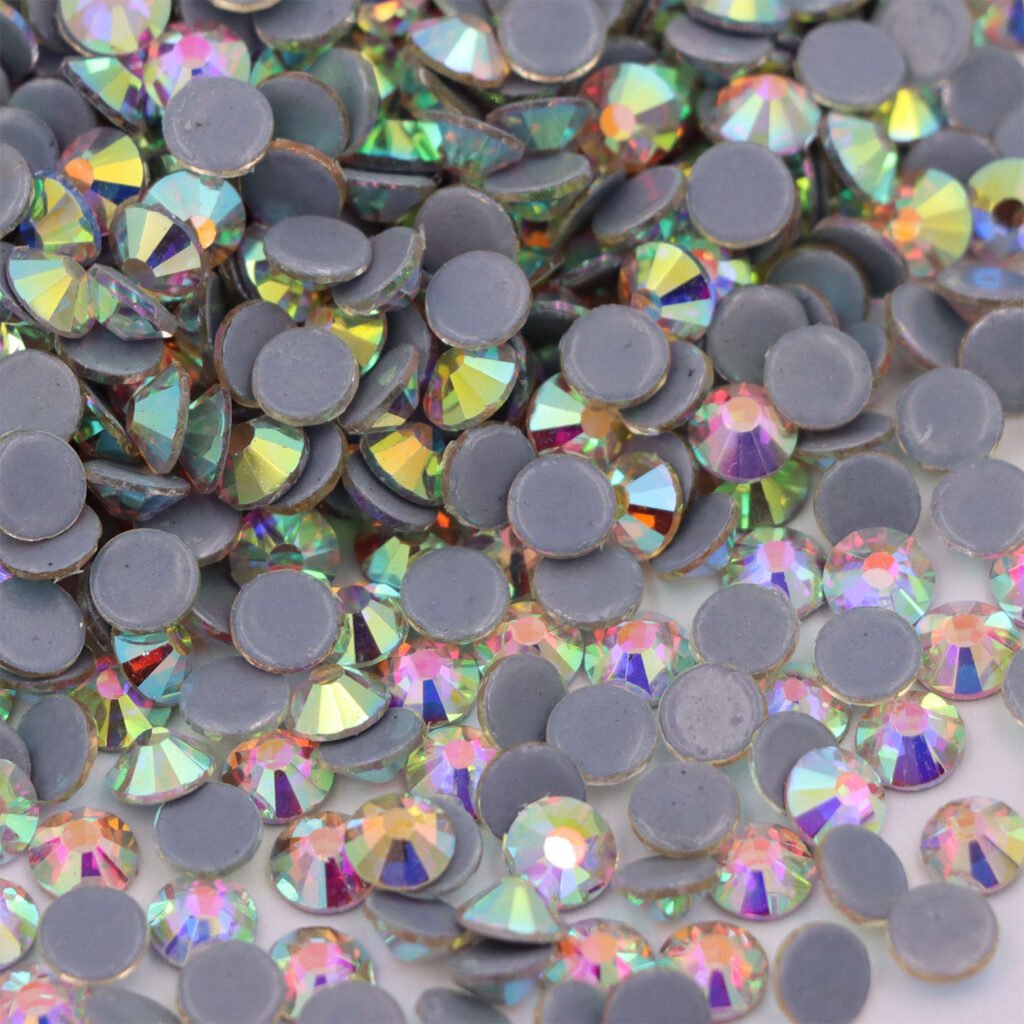
The Production Reality of Custom Hotfix Transfers vs Loose Stone Setting
For streetwear brands producing collections of 200 to 5,000 garments, manufacturing speed and graphic precision are non-negotiable.
Why Loose Stone Application Fails at Scale
While manual stone setting with hand-held hotfix wands or physical brass stencils is suitable for one-off artisanal samples, it collapses under commercial production pressure: * Severe Labor Bottlenecks: A complex streetwear back-piece containing 2,800 crystals across three stone sizes (SS6, SS10, and SS20) requires 30 to 45 minutes of manual labor per garment. * Geometric Inconsistency: Hand-placed stones exhibit inevitable spatial drift, causing lettering baselines to skew and team logos to look distorted across different garment sizes. * Uneven Thermal Bonding: Hand wands deliver inconsistent heat and zero pneumatic pressure, resulting in high rates of premature stone detachment.
The Automated Custom Motif Sheet Solution
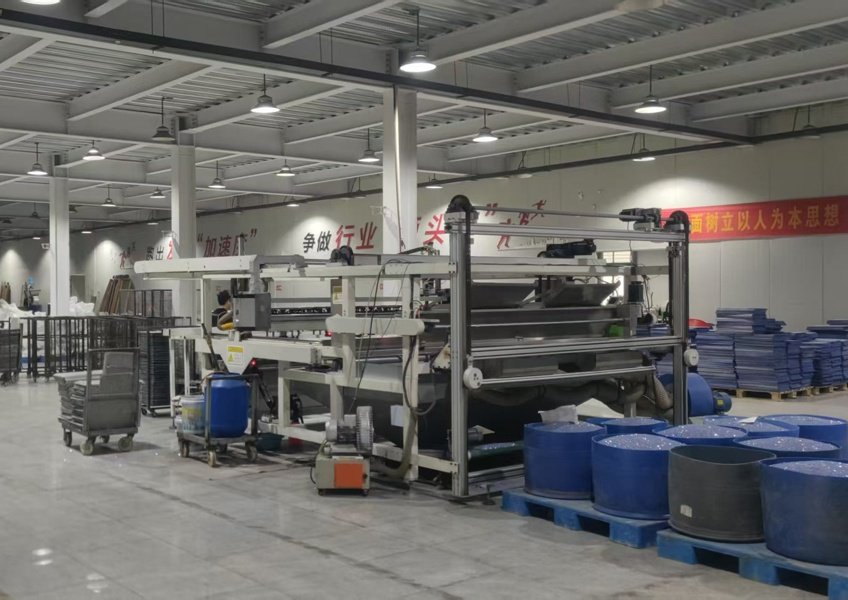
Custom hotfix transfer sheets resolve these production bottlenecks. In our Guangzhou factory, computer-guided pneumatic placement machines arrange thousands of stones onto heat-resistant, high-tack silicone mylar transfer film. The finished motif arrives at your workshop as a self-contained transfer sheet: 1. Single-Press Application: The decorator positions the transfer sheet onto the hoodie or tee and activates a pneumatic heat press for 16 seconds. Every crystal bonds simultaneously. 2. Perfect Geometric Uniformity: Digital computer numerical control (CNC) placement guarantees that every sweatshirt produced across a 2,000-piece production run matches the master vector artwork down to 0.1 millimeter. 3. Multi-Gauge and Multi-Color Integration: Complex designs can seamlessly combine micro-pavé SS6 stones, crisp SS10 text outlines, and high-impact SS20 focal fills within a single unified transfer sheet.
| Workflow Stage | Production Phase | Engineering Action | Industrial Quality Benchmark |
|---|---|---|---|
| Stage 1: Vector Ingestion | Pre-Press Artwork Review | Inspect Adobe Illustrator / EPS vector paths, line tolerances, and curves | Ensures baseline clearance >0.3 mm between stone perimeters |
| Stage 2: Digital Conversion | Automated Stone Digitizing | Converts line vectors into exact coordinate grids for SS6, SS10, SS16, or SS20 | Algorithmic stone spacing optimization for maximum fill density |
| Stage 3: High-Speed Assembly | CNC Pneumatic Pick-and-Place | Multi-head pneumatic vacuum nozzles place stones onto high-tack Mylar carrier | 1,200 stones/minute placement speed with 0.1 mm precision |
| Stage 4: Optical QA | Automated Vision Inspection | High-resolution CCD cameras scan for missing stones, inverted facets, or glue voids | Automatic rejection of misaligned or defective crystal transfers |
| Stage 5: Export Packing | Flat Protective Dispatch | Interleaved with non-stick silicone release paper in rigid master cartons | Prevents adhesive cross-contamination or stone shifting in air cargo |
Sourcing Economics Direct Factory vs US Domestic Transfer Jobbers
Many emerging streetwear brands rely on regional screen-printing brokers or domestic transfer shops in Los Angeles, New York, or Dallas. While convenient, domestic brokers add steep markups and suffer from extended lead times because they often outsource the actual stone assembly to overseas factories before reselling to the brand.
| Production Parameter | US Domestic Transfer Broker | Direct Factory with Guangzhou Yiben | Strategic Business Advantage |
|---|---|---|---|
| Average Cost per Sheet (Large Back Graphic, ~2,500 Stones) | $12.00 – $18.50 USD | $3.80 – $5.20 USD | 65% to 75% direct unit cost reduction |
| Minimum Order Quantity (MOQ) | 100 to 250 sheets per design | 50 sheets per design | Lower inventory risk on new streetwear drops |
| Sample Turnaround Time | 14 to 21 business days | 3 to 5 business days | Faster design validation and lookbook shoots |
| Bulk Production Turnaround | 3 to 5 weeks | 7 to 10 business days | Rapid in-season replenishment during drops |
| Stone Material Standard | Mixed craft-grade soda-lime glass | 100% Optical K9 borosilicate crystal | True diamond fire under urban flash photography |
| Adhesive Engineering | Standard EVA craft glue | German industrial hotmelt grey glue | Resists machine laundering without peeling |
| Color Range Flexibility | 20 to 40 standard jobber colors | 400+ production shades + custom Pantone | Authentic alignment with seasonal brand palettes |
By establishing a direct factory account with Guangzhou Yiben, independent streetwear brands cut embellishment expenditures by nearly two-thirds while gaining access to agile, weekly replenishment cycles.
Digital Vector Preparation and File Specifications
To convert a streetwear graphic into an automated rhinestone transfer, design departments must prepare vector files according to specific mechanical constraints. Rhinestones are three-dimensional, rigid cylinders of glass; they cannot be scaled continuously like screen-printed ink.
1. Acceptable File Formats
Our engineering department accepts: * Adobe Illustrator (.AI): Preferred format with all fonts converted to outlines. * Encapsulated PostScript (.EPS): Standard vector format with unlinked raster elements removed. * Vector PDF (.PDF): High-resolution vector output exported with Illustrator editing capabilities preserved.
2. Minimum Line Width and Negative Space Clearances
Because stones occupy physical space, vector lines that are too narrow cannot accommodate even the smallest hotfix stones. * Minimum Path Thickness: For clean stone placement, path widths must accommodate at least one row of SS6 stones (2.0 mm diameter) plus a mandatory 0.3 mm perimeter safety margin, requiring a minimum stroke width of 2.6 mm. * Negative Space Between Elements: To prevent stones from crowding and popping off during heat pressing, maintain a minimum clearance of 0.8 mm to 1.2 mm of negative space between adjacent design elements or contrasting color boundaries. * Sharp Corner Treatments: Extremely sharp acute angles (such as the tip of a gothic letter or star) cannot hold a round stone at the exact vertex. Our digitizing software automatically rounds sharp internal vertices slightly to maintain clean stone spacing.
3. Combining Stone Sizes for Streetwear Graphics
Professional streetwear transfer sheets utilize hierarchical stone sizing: * SS6 (1.9 mm – 2.1 mm): Used for fine serif details, intricate script lettering, drop shadows, and subtle dot-matrix fading. * SS10 (2.8 mm – 3.0 mm): The workhorse stone for standard graphic outlines, typography strokes, and solid fill patterns. * SS16 and SS20 (3.9 mm – 4.8 mm): Used for high-impact outer borders, center starburst highlights, and bold focal accents.
| Stone Gauge | Metric Diameter | Minimum Stroke Width Required | Best Streetwear Application | Visual Impact Profile |
|---|---|---|---|---|
| SS6 | 1.9 – 2.1 mm | 2.6 mm | Intricate script text, gothic serifs, shading | Subtle micro-pavé brilliance |
| SS10 | 2.8 – 3.0 mm | 3.5 mm | Standard typography, brand logos, primary fills | Crisp, readable graphic outlines |
| SS16 | 3.8 – 4.0 mm | 4.8 mm | Heavy framing, bold text, outerwear graphics | Pronounced light dispersion |
| SS20 | 4.6 – 4.8 mm | 5.8 mm | Center stars, cross medallions, bold focal points | Dramatic theatrical flash |
Carrier Tape Science and Packaging for Air Transit
A major vulnerability in imported rhinestone transfer sheets is shifting stones during international shipping. If low-tack transfer tape is used, stones slide out of alignment when boxes are jostled during air transit, resulting in defective motifs that cannot be pressed.
High-Tack Heat-Resistant Silicone Mylar Film
Guangzhou Yiben uses premium Japanese-engineered silicone mylar carrier film: * Optimal Viscosity Tack: The carrier tape provides strong surface adhesion that locks the polished table of each crystal firmly in position during handling, cutting, and positioning on garment panels. * Thermal Resistance to 200°C: The clear carrier film does not shrink, bubble, or release toxic plasticizer fumes when subjected to 165°C heat press platens. * Clean Release Characteristics: Once cooled, the film releases cleanly from the fabric and stone facets without leaving sticky adhesive residue or clouding the crystal fire.
Export Master Packaging
To ensure custom transfer sheets land at North American workshops in factory-pristine condition: * Every transfer sheet is backed with a smooth white siliconized release liner that shields the exposed hotmelt glue from dust and moisture. * Sheets are bundled in lots of 25, sealed inside moisture-barrier poly envelopes, and placed between rigid 5 mm corrugated stiffener boards to prevent bending. * Master export cartons are constructed from reinforced double-wall corrugated cardboard and shipped via DHL Express or FedEx Priority, arriving in North America within 3 to 5 business days, fully documented for seamless clearance under US Section 321 de minimis regulations as detailed in our guide on DHL vs FedEx air cargo for bulk rhinestone shipments.
Heat Press Parameters for Heavyweight Streetwear Textiles
Applying hotfix rhinestone transfers to premium streetwear requires a completely different technical approach than decorating lightweight activewear. Modern streetwear staples feature dense, heavy fabrics that absorb heat and resist glue penetration: * Heavyweight French Terry: 380 GSM to 500 GSM loop-back knits. * Brushed Back Fleece: 400 GSM cotton-poly fleece with thick interior nap. * Vintage Mineral Washed Tees: 240 GSM to 280 GSM single jersey treated with garment dye or acid wash finishes.
The Double-Press Application Protocol
Standard single-sided heat pressing often fails on thick fleece because the dense cotton pile insulates the fabric, preventing the glue from reaching its full 160°C melting point. Guangzhou Yiben engineers prescribe a standardized double-press protocol for commercial streetwear production:
| Pressing Phase | Operating Parameters | Equipment Setup | Mechanical Action & Purpose |
|---|---|---|---|
| 1. Fabric Pre-Press (Front) | 165°C, 5 seconds, 4.5 bar | Direct platen contact on bare fabric | Flattens cotton surface fuzz and exhausts trapped ambient moisture |
| 2. Primary Transfer Press (Front) | 165°C – 170°C, 16 – 18 seconds, 4.5 – 5.0 bar | Mylar carrier face-up with Teflon cover sheet | Initial liquefaction of German grey glue through silicone transfer tape |
| 3. Mandatory Cold Peel | Room temperature cooling (~45 seconds) | Flat cooling table | Allows molten polymer to solidify; peel carrier sheet at sharp 180° angle |
| 4. Secondary Reverse Anchor Press | 165°C, 8 – 10 seconds, 5.0 bar | Garment turned inside out; heat applied directly to reverse | Drives adhesive directly into core yarn interstices without glass insulation |
The secondary reverse press is the crucial differentiator. By applying direct platen heat to the back of the fabric, heat travels unobstructed through the cotton fleece directly into the underside of the glue pool. The high pneumatic pressure forces the molten polyurethane elastomer deep around the internal cotton fibers, creating an unbreakable mechanical anchor.
In standardized laundering evaluations conforming to preventing stone loss in industrial laundering with ISO 6330 wash tests, streetwear hoodies pressed with this double-press technique endure over 50 harsh wash cycles with zero stone shedding.
| Streetwear Garment Type | Fabric Weight & Construction | Primary Heat Press Temp | Primary Dwell Time | Platen Pressure | Secondary Reverse Press | Peel Temperature |
|---|---|---|---|---|---|---|
| Heavyweight Hoodie | 450 GSM French Terry Cotton | 168°C (334°F) | 16 – 18 sec | 4.8 bar | 8 – 10 sec @ 165°C | Completely Cold Peel |
| Brushed Fleece Crewneck | 400 GSM Cotton / Poly Fleece | 165°C (329°F) | 18 sec | 4.5 bar | 10 sec @ 165°C | Completely Cold Peel |
| Heavy Boxy T-Shirt | 260 GSM Carded Cotton Jersey | 162°C (324°F) | 14 – 16 sec | 4.0 bar | 6 sec @ 160°C | Warm or Cold Peel |
| Vintage Washed Garment | Acid / Mineral Washed Cotton | 165°C (329°F) | 15 sec | 4.2 bar | 8 sec @ 165°C | Completely Cold Peel |
Color Matching, Custom Plating, and Hybrid Embellishment Trends
Leading North American streetwear brands constantly push the visual boundaries of hotfix embellishments by combining crystal textures with traditional print mediums.
1. Hybrid Screen Print and Rhinestone Registration
A powerful trend across streetwear collections is layering rhinestone transfers over multi-color plastisol or water-based screen prints. * To ensure perfect registration, the screen-printed underbase should be cured completely before rhinestone transfer application. * Avoid applying thick silicone or rubberized high-density screen inks directly beneath rhinestone placement zones, as silicone inks resist hotmelt adhesive bonding. * Use our digital vector templates to create a 0.5 mm ink-free knockout channel beneath large stones, ensuring the German grey glue bonds directly to the porous cotton substrate rather than the cured ink film.
2. Custom Color Plating and Metallic Finishes
While standard Crystal Clear and Crystal AB remain timeless streetwear classics, contemporary designers frequently demand specialized colorways: * Jet Hematite and Metallic Chrome: Deep mirror-coated dark metallic stones that deliver an aggressive, industrial look on black fleece. * Matte Black and Satin Shimmer: Low-reflection, tactile stones favored by minimalist luxury streetwear lines. * Custom Pantone Formulations: In our Guangzhou vacuum-plating laboratory, we formulate custom electroplated finishes matching seasonal textile colors starting at a modest 50 gross trial threshold.
—
Technical Sourcing Knowledge Matrix
To help apparel brands, streetwear decorators, and fashion entrepreneurs navigate the global trim supply chain, Guangzhou Yiben maintains an extensive technical documentation library:
* North American Regional Supply Architecture: Review logistics, Section 321 de minimis entry, and domestic distributor cost comparisons in Wholesale Hotfix Rhinestones for US and Canadian Apparel Brands Factory Direct Supply Quality and Compliance. * Global Sourcing Master Guide: Review comprehensive factory procurement workflows in How Global Apparel Manufacturers Source Bulk Hotfix Rhinestones Directly from China. * Chemical Safety and Toxicological Standards: Master federal childrenswear compliance in CPSIA Lead Safety Compliance for Rhinestones in US Children’s Wear and Dance Costumes Under 90 ppm Limit. * Athletic and Performance Sizing Guide: Explore stone gauge selection and weight calculation models in Specifying Bulk Crystals for Cheerleading Uniforms and Competitive Dancewear SS16 to SS30 Sizing and Sparkle Durability. * Industrial Wash Testing Protocols: Master commercial wash resistance and heat press calibration in Preventing Stone Loss in Industrial Laundering With ISO 6330 Wash Tests and Heat Press Curves. * Air Logistics and Courier Transit Times: Calculate door-to-door transit timelines and fuel surcharge formulas in DHL vs FedEx vs Air Cargo for Bulk Rhinestone Orders With Shipping Rates and Transit Times.
—
Request Custom Vector Digitizing and Sample Transfer Proofs
Scale your upcoming streetwear collection with factory-direct custom hotfix rhinestone transfer sheets. Upload your vector artwork to Guangzhou Yiben E-Commerce Co., Ltd. for automated stone-count calculation, digital layout proofing, and volume quotations within 24 hours.
* WhatsApp: +86 13692450325 * Email: rhinestonewholesale8@gmail.com * Guangzhou Facility: Hebian Subdistrict, Baiyun District, Guangzhou, Guangdong, China
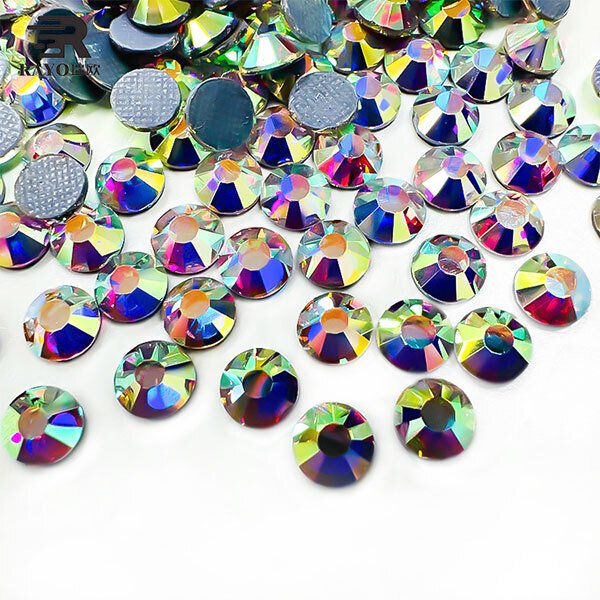
Need a size or color recommendation for your next order? Send us your fabric type, design, and target price — we reply within one business day. WhatsApp +86 13692450325 · rhinestonewholesale8@gmail.com