
How to Create Seamless Gradient Color Transitions with Hotfix Rhinestones on Bridal Wear
Gradient patterns, also known as ombre effects, are among the most sought-after techniques in high-end bridal couture. By transitioning from a dense concentration of deep-toned or shimmering rhinestones into a light scattering of clear crystals, designers can create visual interest that moves with the fabric. At Guangzhou Yiben E-Commerce Co., Ltd., we specialize in manufacturing the K9 optical glass crystals that make these transitions possible. With a refractive index of ~1.9, our stones provide the “high-water” sparkle necessary for bridal wear, ensuring that even the subtlest color shift is captured under ceremony lighting.
What is a gradient rhinestone layout pattern
A gradient rhinestone layout pattern is a design technique where the density or color of the stones gradually changes across a specific area of a garment. In bridal wear, this usually involves a “fade-out” effect where stones are clustered tightly at the waist or neckline and slowly disperse toward the hem or shoulders.
The beauty of a gradient lies in its ability to mimic natural light reflection. To achieve a professional look, you cannot simply stop placing stones at a certain point; you must use a mathematical approach to spacing. For instance, if you are covering a bridal bodice, you might use approximately 2000 to 5000 SS16 and SS20 mixed stones. The densest part of the gradient might see stones placed touching each other, while the “scattered” end might have one stone every square inch.
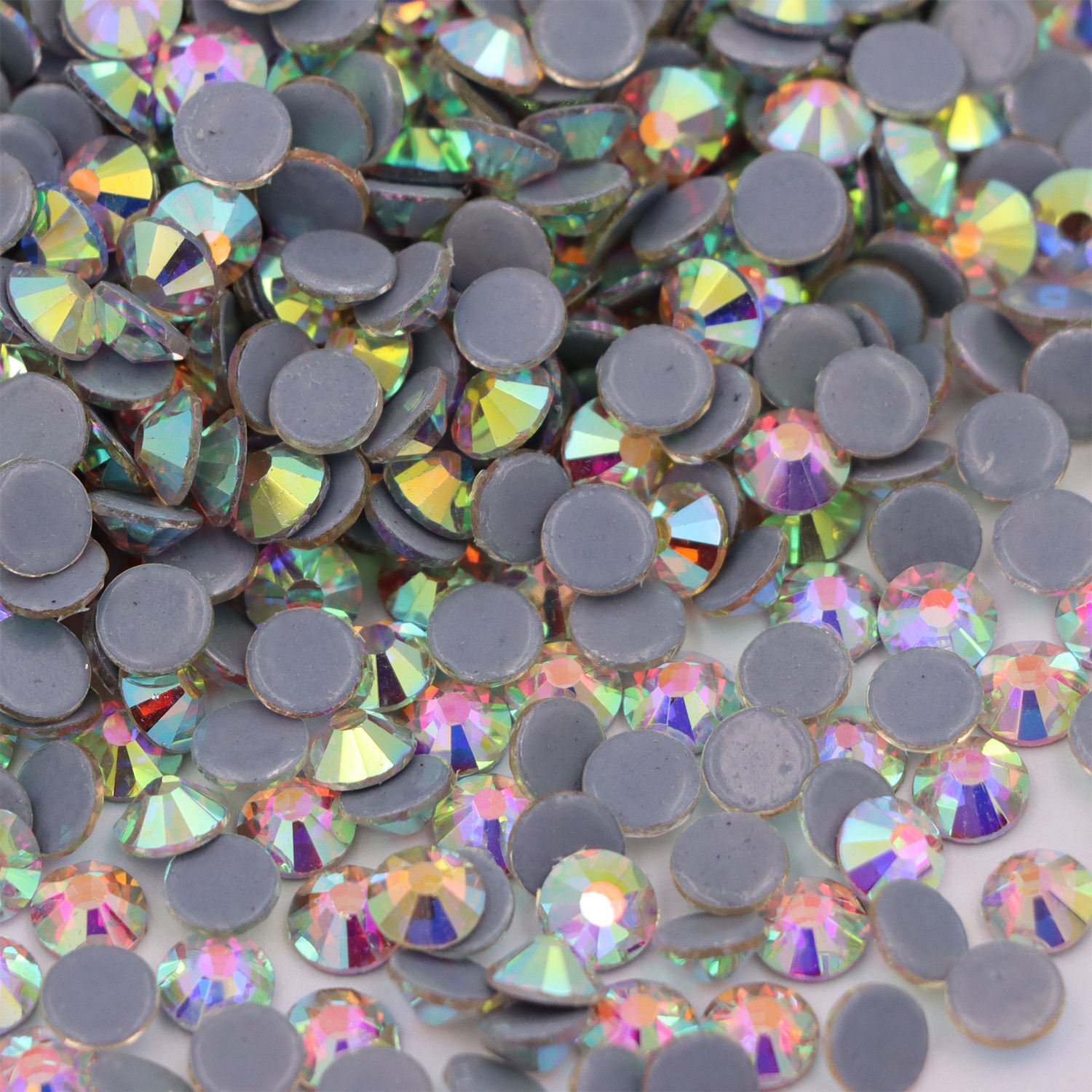
When planning a gradient, color selection is paramount. Using our range of 400+ stock colors, you can select three or four shades that share a common undertone. A popular bridal transition starts with a rich Silver Night at the base, moves into a subtle Silk or Cream, and finishes with the brilliant fire of Crystal AB. Because our K9 stones are precision-cut with 12-14 facets, they catch the light from multiple angles, helping to bridge the visual gap between two different colors.
How do you blend two rhinestone colors smoothly on fabric
You blend two rhinestone colors smoothly by creating an “interlocking” zone where both colors are used in equal proportions before one eventually dominates. Instead of a hard line where one color ends and another begins, you mix the colors in a transition area of about 2 to 4 inches.
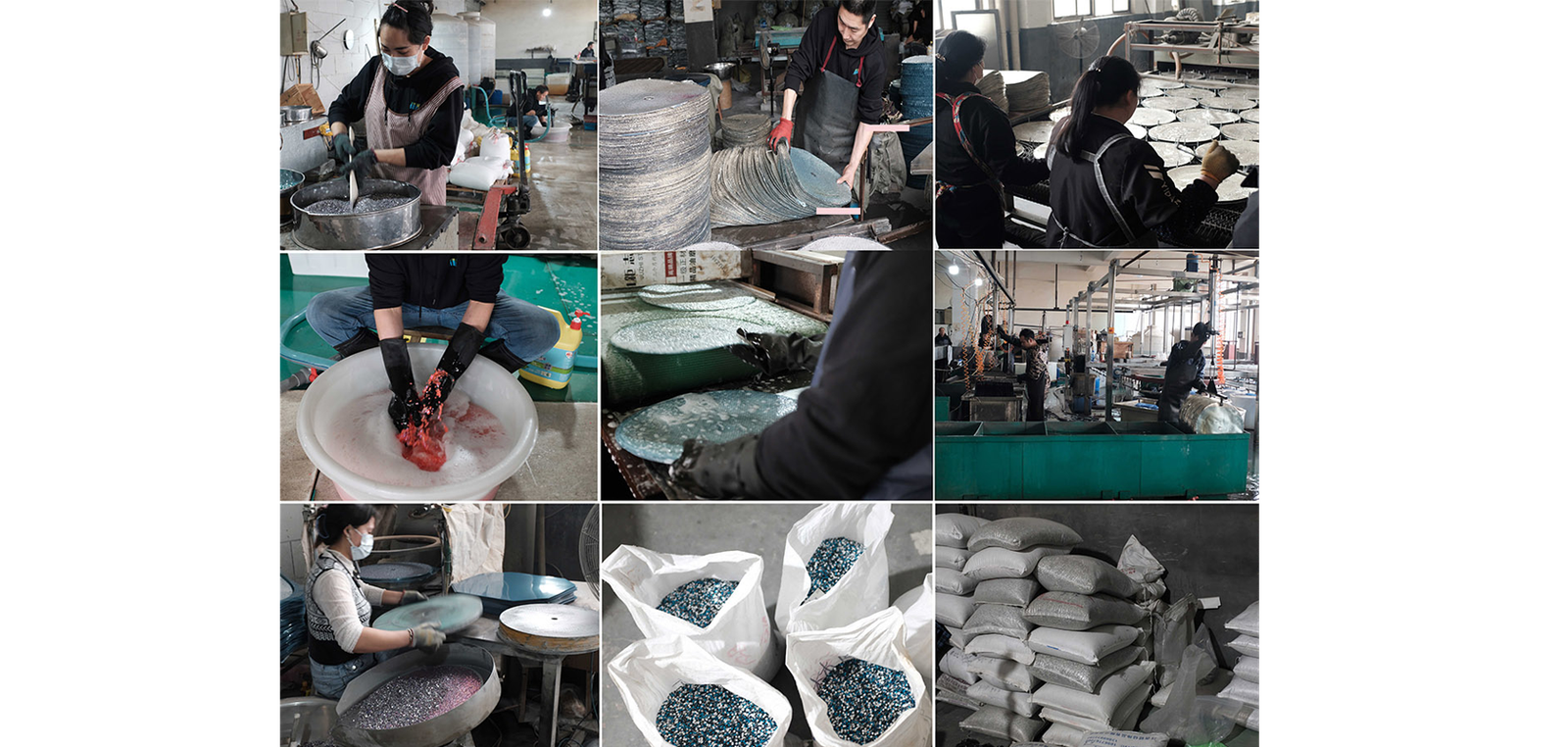
Technically, this is known as the “stipple” method. You start with 100% of Color A. After an inch, you introduce 10% of Color B. After another inch, it becomes 30% Color B and 70% Color A. By the time you reach the midpoint of the transition, you are at a 50/50 mix. This gradual shift fools the human eye into seeing a seamless flow. For bridal gowns, where the fabric is often delicate tulle or silk, using our German grey adhesive is crucial. It melts at 150-170°C and provides a flexible bond that doesn’t stiffen the fabric, allowing the gradient to drape naturally.
Another trick is to use “bridge” colors. If you are moving from a deep Blue Zircon to a clear Crystal, you might use a few Light Sapphires or Aquamarines in the middle. Because our stones are OEKO-TEX Standard 100 certified, they are safe for direct contact with skin, which is important for the illusion necklines often found on modern bridal dresses where the gradient might sit directly against the bride’s chest or back.
What size combination creates the best ombre effect
The best ombre effect is created by mixing multiple sizes, specifically SS6 (2.0mm), SS10 (2.8mm), and SS16 (4.0mm). Using smaller stones in the transition zones allows you to fill the tiny gaps between larger stones, creating a more sophisticated and dense visual texture that looks more like a fabric finish than a stuck-on decoration.
In professional bridal design, SS20 (4.8mm) and SS30 (6.4mm) are often used as the “anchor” stones in the densest part of the design. As the gradient fades, you drop down to SS10 and finally SS6. The smaller the stone, the more “dust-like” the effect becomes. For a one-square-foot area of full coverage, you would need roughly 576 SS16 stones. However, in a gradient, that number varies wildly.
Using varied sizes also helps with the weight distribution of the gown. A full bodice of SS30 stones would be incredibly heavy and might cause the delicate bridal fabric to sag. By tapering down to SS6 at the edges, you reduce the mechanical stress on the fibers. Our SS6-SS30 full range availability in our Guangzhou warehouse means you can get all the matching sizes you need in one batch, ensuring color consistency across all diameters.
How many rhinestones does a bridal gradient design need
A typical bridal gradient design requires between 2,000 and 15,000 rhinestones, depending on the length of the transition and the desired density. A partial bodice gradient usually takes 2,000-5,000 SS16/SS20 stones, while a full-length skirt fade can easily exceed 30,000 stones.
To calculate your needs, consider that 1 square foot of full coverage using SS16 stones requires about 576 pieces. If your gradient covers 5 square feet but averages only 20% density across that area, you would need around 576 stones. However, most designers prefer a much richer look. We recommend ordering in bulk packs (typically 1440 pcs per pack for SS16) to ensure you don’t run out mid-project. Our MOQ is just 2 packs per color per size, making it easy to stock up on the various sizes needed for a complex ombre.
Remember to account for “spillage” and errors. Even with our high-quality German adhesive that survives 50+ machine washes, you may want to have extras on hand for the final fitting. When you are working on a $5,000 wedding dress, the cost of the rhinestones is a small investment for the massive increase in perceived value a well-executed gradient provides.
Can you mix Crystal AB with solid colors in a gradient
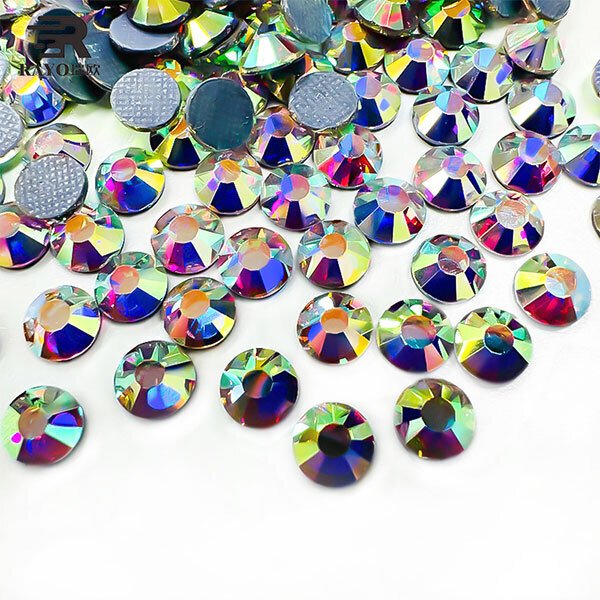
Yes, mixing Crystal AB with solid colors is the industry standard for creating “luminous” gradients. The Aurora Borealis (AB) coating adds a rainbow-like shimmer that reflects the surrounding colors, making it the perfect “blender” stone to sit between two different solid shades.
At Yiben, our Crystal AB stones use a premium vacuum coating process rather than a cheap spray-on finish. This is a critical distinction for bridal designers. Vacuum coating is more durable and provides a more consistent color shift. When you mix a vacuum-coated AB stone with a solid color like Rose Water Opal, the AB coating picks up the pink hues of the Opal, creating a bridge that makes the transition look natural rather than disjointed.
Be careful with the ratio. If you use too much Crystal AB, it can overpower the subtle beauty of the solid bridal colors. We suggest a ratio of 1 AB stone for every 3 solid stones in the transition area. Since our stones are lead-free and compliant with California Prop 65, you can use them on any part of the gown without worrying about safety regulations or skin irritation.
What fabric base works best for gradient rhinestone patterns
The best fabric bases for gradient rhinestone patterns are stable, medium-weight materials like bridal satin, heavy silk crepe, or reinforced illusion tulle. These fabrics provide the structural support needed to hold the weight of thousands of crystals without stretching or tearing.
When applying to tulle—a bridal favorite—extra care must be taken. SS6 (2.0mm) stones are ideal for lightweight tulle because their smaller surface area and lower weight prevent the mesh from sagging. If you are using SS16 or SS20 for a bolder gradient, ensure the tulle is “doubled up” or backed with a stabilizer during the heat press process.
Our German grey glue is perfect for these applications because it requires a specific temperature range of 150-170°C. For spandex-heavy bridal laces, you would drop the temperature to 150°C and press for 12 seconds to protect the elastic fibers. The glue’s ability to survive 50+ washes is less about the washability and more about the “permanent” nature of the bond; once it’s on a bridal gown, it’s not coming off, which is the peace of mind every designer needs.
How do you plan a gradient layout before applying
You plan a gradient layout by sketching the density zones directly onto the fabric with disappearing ink or by creating a digital template. Laying the garment flat and physically placing the stones before applying heat allows you to visualize the color flow and make adjustments to the spacing.
Professional designers often use “transfer film” to prepare the gradient. You place the rhinestones upside down onto the sticky film, which allows you to move whole sections of the gradient at once. This is especially helpful when working with the SS6-SS30 size range, as you can see how the different diameters interact.
At our factory in Guangzhou, we often help clients with OEM/ODM custom designs where we provide the pre-arranged transfer motifs. If you are doing it yourself, use a “counting grid” to ensure the density remains consistent across symmetrical parts of the dress, like the left and right sides of a bodice. This level of planning ensures that the final result looks like a high-end luxury item rather than a DIY project. With 400+ colors in stock, your creative possibilities for bridal gradients are virtually limitless.
One practical tip for large bridal runs: produce a 10cm sample swatch of the gradient on the actual fabric before starting the full gown. Because the perceived depth of an ombre changes dramatically between daylight and ballroom spotlights, a physical sample lets you and the bride confirm the transition ratio before committing thousands of stones. If the sample shows a harsh color step, adjust the interlocking zone from 2 inches to 4 inches or introduce a mid-tone bridge color from our stock. This pre-production step is the single fastest way to avoid costly rework on a bespoke piece.
Need a size or color recommendation for your next order? Send us your fabric type, design, and target price — we reply within one business day. WhatsApp +86 13692450325 · rhinestonewholesale8@gmail.com