
Best Practices for Mass-Producing Rhinestone Apparel at Factory Scale
In the high-stakes world of B2B garment manufacturing, scaling a rhinestone apparel line is far more complex than simply “adding sparkle.” Whether you are a large-scale clothing factory in Guangzhou or an emerging streetwear brand looking to move from small batches to mass production, the transition requires a radical shift in mindset. You are moving from artisanal application to industrial-grade consistency.
Rhinestones—particularly hotfix rhinestones—are a premium embellishment that adds significant perceived value to a garment. However, they also introduce several points of failure: stones falling off after the first wash, uneven patterns, scorched fabric, and massive delays due to inefficient template creation. To succeed at a B2B scale, where orders often reach tens of thousands of units, you must implement standardized, factory-level protocols.
The global demand for embellished apparel is at an all-time high, driven by the resurgence of Y2K aesthetics and the growth of “ultra-fast fashion” which relies heavily on visual texture. In the Guangzhou manufacturing hub, we see thousands of containers leaving daily, yet the difference in quality between the top-tier factories and the lower-tier workshops is vast. For a wholesaler, “quality” isn’t just a buzzword—it is the difference between a repeat client and a devastating chargeback.
This comprehensive guide dives deep into the top five best practices for mass-producing rhinestone apparel, focusing on the technical nuances that separate a “cheap DIY look” from professional, export-quality garments.
1. Workflow Optimization: The Design-to-Production Pipeline
Efficiency in mass production begins long before the first heat press is turned on. It starts at the design table. In a factory environment, every second saved in the application process translates into thousands of dollars in labor cost reduction over a large order.
Designing for Mass Brushing
When creating a rhinestone motif, designers often focus solely on the aesthetic. For mass production, you must design for “brushability.” Brushing is the process where loose rhinestones are swept over a template until they fall into the pre-cut holes. If your design has stones too close together (less than 0.5mm to 1mm apart, depending on the stone size), stones will jump out of their holes or “bridge” across two holes, causing errors that require manual intervention.
Nesting and Material Efficiency
For large-scale orders, you aren’t just cutting one template; you are cutting dozens to keep multiple workers brushing simultaneously. Optimize your “nest” on the template flock material to minimize waste. A 5% reduction in template material waste can save significant overhead when you are producing thousands of designs per month. Use professional nesting software (often integrated with Graphtec or GCC plotters) to fit as many motifs as possible onto a single sheet of flock.
Compliance and Material Sourcing
In B2B production, especially for the US and EU markets, compliance is non-negotiable. You must choose between standard lead-contained glass and lead-free crystals. CPSIA regulations in the United States and REACH in the European Union have strict limits on lead content in children’s apparel. Your workflow must include a verification step where the raw material batch numbers are logged against the order to ensure full traceability in case of a compliance audit.
2. The Science of Hotfix: Temperature, Pressure, and Time Calibration
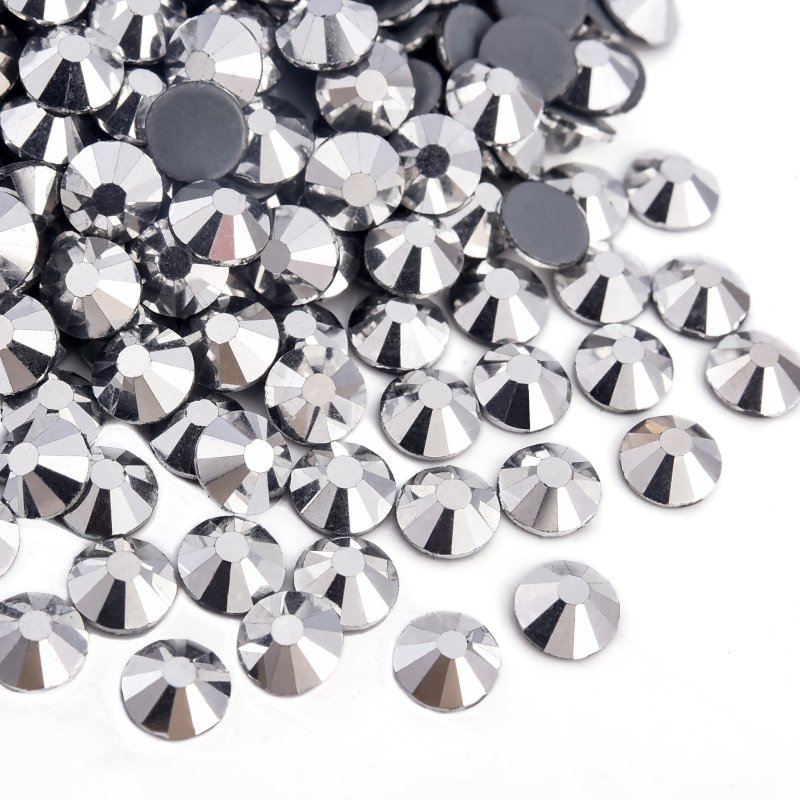
The most common complaint in the rhinestone industry is “the stones won’t stay on.” This is almost always a failure of calibration. A hotfix rhinestone is essentially a glass or lead-free crystal with a pre-applied layer of solid glue on the back. To create a permanent bond, that glue must be melted into the fibers of the fabric and then allowed to cool and “lock.”
The Golden Triangle of Heat Pressing
Every factory must have a documented “Pressing Matrix” for different fabric types. You cannot use the same settings for a 100% cotton hoodie and a polyester-spandex gym legging.
Pneumatic vs. Manual Presses
For mass production, manual heat presses are insufficient. They rely on the physical strength of the operator, which leads to fatigue and inconsistent pressure throughout an 8-hour shift. Pneumatic (air-powered) heat presses are mandatory for B2B scale. They provide a constant, measurable PSI (pounds per square inch) and allow the operator to handle two platens at once (dual-shuttle system), doubling the output per hour.
Reverse Pressing Technique
In high-end manufacturing, we often recommend “Reverse Pressing” for thicker garments. By turning the garment inside out and pressing from the back of the fabric, the heat reaches the glue directly through the fibers rather than having to travel through the insulating glass of the rhinestone. This ensures a much more consistent bond and protects the stones from direct heat exposure.
3. High-Efficiency Template Flocking and Brushing
In a manual setup, a worker might brush one template at a time. In a B2B factory, we use semi-automated or fully automated brushing machines. The key to success here is the “Template Flock.”
Choosing the Right Template Material
Don’t use thin vinyl for mass production. High-quality “Magic Flock” (a thick, fuzzy material) is essential. The “fuzz” or flocking on the material creates a “dam” that catches the stones and guides them into the holes. It also helps dissipate static electricity, which is the enemy of efficient stone brushing.
Template Maintenance
Templates are assets. After a production run of 1,000 units, a template will accumulate lint and adhesive residue. They must be cleaned with a specialized lint roller or compressed air. Store templates flat, interleaved with silicone paper, in a temperature-controlled environment. A warped template will lead to uneven stone application in the next batch.
Transfer Tape Selection
Once the stones are brushed into the template, you use “Transfer Tape” (also known as Hotfix Tape) to lift them off. For mass production, use a medium-tack silicone-based tape. If the tack is too high, it might pull the flocking off the template; if it’s too low, stones will fall off during transport to the heat press station. Always test the tape on a sample piece of the fabric to ensure it doesn’t leave a sticky residue after pressing.
4. Rigorous Quality Control: The 3-Step Inspection Protocol
Quality control (QC) in rhinestone apparel is not a final step; it is an ongoing process. A single missing stone in a 1,000-stone design can lead to a customer return. In B2B, returns are expensive and damaging to your reputation.
Step 1: The Light Table Inspection
Before any transfer is applied to a garment, it must pass through a light table inspection station. Workers slide the transfer over a backlit glass table. The bright light makes any empty hole or “flipped” stone (glue-side up) immediately obvious. This is the most critical stage for catching errors before they become permanent. In advanced factories, we now use AI-powered cameras that scan the transfer and flag missing stones with a red laser pointer for the operator to fix.
Step 2: Adhesion Testing (The “Rub Test”)
After the first 10 units of a new batch are pressed, they should be subjected to a “Rub Test.” Once cooled, a worker should vigorously rub their thumb or a specialized plastic tool over the design. If any stones move or pop off, it indicates that the temperature/pressure settings are incorrect for that specific fabric batch. Fabric batches can vary in their “sizing” (chemical coatings), which can interfere with glue bonding.
Step 3: The Wash Test (The 24-Hour Rule)
The ultimate test of a B2B rhinestone garment is the washing machine. The 24-Hour Rule: Wait at least 24 hours after pressing before washing. The glue needs this time to fully cure and “grip” the fibers. Washing too early is the #1 cause of stone loss in the consumer’s first wash. The Torture Test: For every 500 units produced, take one random sample and put it through a “Torture Test.” Wash the garment at 40°C-60°C inside out, followed by a tumble dry. If the design loses more than 1% of its stones, the batch fails QC and must be re-evaluated. We also recommend a “pH test” on the detergent used, as high-alkalinity soaps can degrade certain types of rhinestone glue.
Color Consistency and Dye Lots
In B2B, a client might order “Crystal AB” stones today and another batch three months later. Rhinestones have “dye lots” just like fabric. To ensure color consistency, always buy stones in bulk for a specific contract. If you must switch batches, perform a side-by-side color comparison under a D65 light box (standard daylight) to ensure the sparkle and hue match perfectly.
5. Packaging and Logistics for Bulk Rhinestone Shipments
Shipping rhinestone garments is different from shipping standard printed tees. Rhinestones are essentially glass, and they are heavy. If not packed correctly, the “faces” of the rhinestones can rub against each other during transit, causing scratches or even knocking stones loose through friction.
The Interleaving Method
Never fold a rhinestone garment so that the stones touch other stones. Always use acid-free tissue paper or thin plastic “interleaving” sheets between the folds. This prevents the stones from interlocking and being “pulled” off when the garment is eventually unfolded by the customer. For high-end “boutique” orders, we recommend individual polybagging with a cardboard insert to keep the garment rigid.
Moisture and Humidity Control
If you are exporting from a humid climate like Guangzhou to a drier climate, moisture can affect the adhesive properties of the glue over time if the garments are stored for months. Use high-quality silica gel desiccant packs in every polybag and every master carton to keep the environment stable. Excess humidity can also “cloud” lower-quality glass stones, making them look dull upon arrival.
Master Carton Reinforcement and SKU Management
Rhinestones add significant weight to a box. A standard “single-wall” cardboard box will often collapse or burst during international shipping. Box Strength: Use “Double-Wall Corrugated” (BC flute) cartons and reinforced cross-weave tape. Weight Limits: Keep master cartons under 15kg (approx. 33 lbs). Even though a box can hold more, the sheer density of rhinestone garments makes them difficult to handle for delivery drivers, increasing the chance of the box being dropped. Labeling: For B2B logistics, every box should have a clear SKU label, a “Fragile” sticker, and a “Do Not Use Blade to Open” warning. Cutting through a box with a box cutter is a common way garments (and their rhinestone designs) get ruined in the warehouse.
The Future: AI and Sustainability in Rhinestone Production
As we look toward the future of garment manufacturing, two trends are emerging: automation and sustainability.
Robotic Application
New “Direct-to-Garment” rhinestone machines are being developed that bypass the transfer tape stage entirely. These machines use robotic arms to place stones directly onto a pre-glued garment. While currently too slow for mass production, they represent the future of “mass customization.”
Eco-Friendly Adhesives
The industry is moving toward “bio-based” hotfix glues that contain fewer petroleum products. For brands focusing on sustainability, sourcing these eco-friendly options is a great way to differentiate themselves in a crowded market. Additionally, using “Lead-Free” crystals is becoming the default standard rather than the exception, as global regulations tighten.
Conclusion: Building a Scalable Embellishment Operation
Mass-producing rhinestone apparel is a dance between artistic design and industrial precision. By optimizing your workflow, calibrating your heat presses, using high-quality template materials, enforcing a strict 3-step QC process, and packaging with care, you can build a reputation for quality that attracts high-value B2B clients.
In the competitive Guangzhou wholesale market, it isn’t the cheapest price that wins in the long run—it’s the factory that can deliver 50,000 units with zero missing stones and 100% wash-fastness. Success in this niche requires an obsession with detail. From the microns of a laser cut to the PSI of a pneumatic press, every detail counts. Implement these five best practices today, and watch your production efficiency—and your client satisfaction—soar.
As a factory owner or production manager, your goal is to make the complex look easy. With these standardized protocols, you aren’t just selling clothes—you’re selling reliability, consistency, and the unmistakable sparkle of professional craftsmanship.
Need a size or color recommendation for your next order? Send us your fabric type, design, and target price — we reply within one business day. WhatsApp +86 13692450325 · rhinestonewholesale8@gmail.com