
7 Common Mistakes to Avoid When Sourcing Rhinestones from China
The global garment and accessories industry relies heavily on China as the primary hub for rhinestone manufacturing. With cities like Guangzhou and Yiwu acting as massive distribution centers, B2B buyers—ranging from high-street fashion brands to boutique craft suppliers—flock to these markets for competitive pricing and high-volume production. However, importing rhinestones is not as simple as clicking “buy” on a wholesale platform. The “shining” surface of this industry often hides complexities that can lead to significant financial loss and brand damage.
As an expert manufacturer based in Guangzhou, we’ve seen countless buyers fall into the same traps. From misidentifying material grades to underestimating the chemistry of hotfix glue, these errors can result in garments that lose their shine after one wash or, worse, crystals that fall off entirely. In this comprehensive guide, we break down the 7 most common mistakes B2B buyers make when sourcing rhinestones from China and provide actionable strategies to ensure your sourcing remains profitable and high-quality.
Mistake 1: Prioritizing Low Prices Over Glue Quality (Hotfix Specifics)
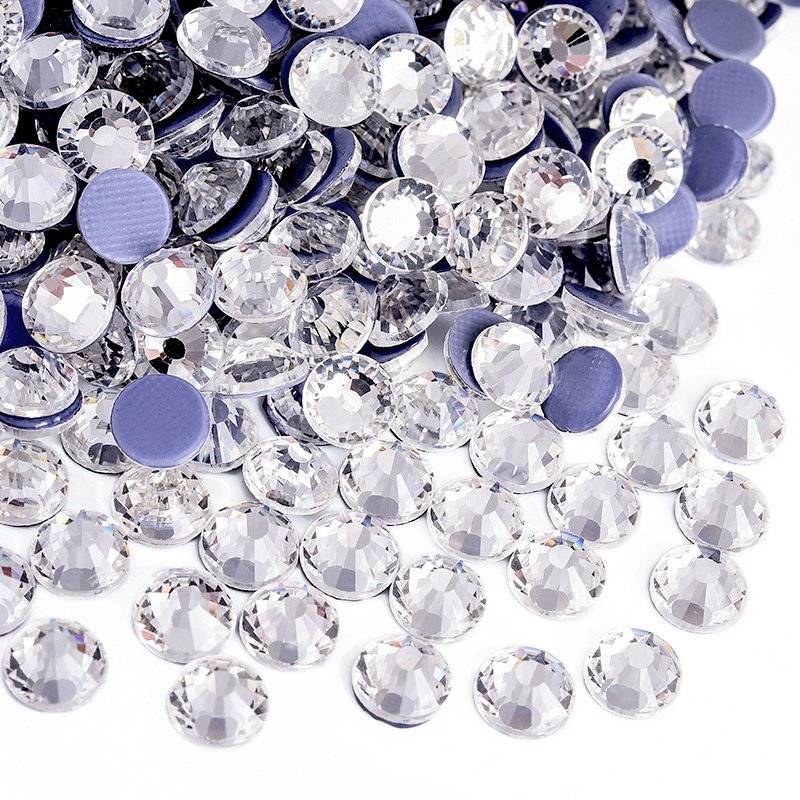
For B2B buyers sourcing hotfix rhinestones, the crystal is only half of the product. The glue on the back (the “hotfix” element) is what determines the longevity of the final garment. One of the biggest mistakes we see is buyers focusing solely on the “shimmer” of the stone while ignoring the adhesive backing. In a race to find the lowest price per gross, buyers often end up with stones backed by low-grade, generic glue that lacks the proper bonding chemistry.
The Hidden Costs of Cheap Glue: Low-quality glue often has a lower melting point or, conversely, requires excessive heat that damages the fabric. If the glue doesn’t penetrate the fibers of the textile correctly, the rhinestones will fall off during standard wear or shipping. For a fashion brand, this leads to expensive returns and a tarnished reputation. High-quality hotfix rhinestones typically use German-made glue (often characterized by a grey or greenish tint) or premium domestic glues specifically formulated for high-temp bonding.
Pro Tip: Always ask your supplier for the brand of glue used. Premium manufacturers in Guangzhou will specify whether they use original German glue or a high-grade polyurethane alternative. Don’t just settle for “standard hotfix glue.” Demand samples and perform a “pull test” after heat-pressing to ensure the bond is permanent.
Mistake 2: Falling for “Fake” K9 Glass and Material Confusion
In the world of Chinese rhinestones, “K9” is a buzzword that is frequently misused. K9 glass is a high-quality optical crystal used for premium stones because of its high refractive index and clarity. However, because K9 carries a higher price tag, many unscrupulous suppliers label standard soda-lime glass or even acrylic (plastic) stones as “K9 Grade” or “AAAAA Crystal.”
Distinguishing Between Grades: Standard glass stones are molded and then polished, often leaving “mold marks” or rounded edges that don’t catch the light as sharply as K9 crystal. K9 glass, on the other hand, is machine-cut with precision facets (often 12 or 14 facets) that mimic the brilliance of Swarovski. If the price for “K9 stones” seems too good to be true—falling closer to the price of resin stones—it is almost certainly not genuine K9 glass.
The Risk: Low-grade glass or resin stones will lose their luster over time. Resin stones are particularly susceptible to scratches and chemical dulling. If your brand is positioning itself in the mid-to-high-end market, using fake K9 materials will immediately lower the perceived value of your products.
Mistake 3: Neglecting Rigorous Wash and Heat Tests
Many B2B buyers approve a shipment based on how the stones look in a plastic bag. This is a critical error. Rhinestones are meant to be applied to clothing, and clothing is meant to be washed. Neglecting a professional wash test is perhaps the fastest way to encounter a mass-production disaster.
Standard Wash Test Protocols: When sourcing from China, you should request (or conduct yourself) a 10-cycle wash test at 40°C or 60°C. High-quality hotfix rhinestones from Guangzhou should be able to withstand repeated industrial washing without the stones falling off or the silver/gold foil backing peeling away (the “mercury effect”).
Heat Press Sensitivity: Another common issue is the reaction of the stone’s coating to heat. Some cheap AB (Aurora Borealis) coatings will crack or discolor when subjected to the 160°C-180°C temperatures required for heat-pressing. Without a heat-sensitivity test, you might discover that your iridescent blue stones have turned into a dull yellow after they come out of the press.
Mistake 4: Misunderstanding MOQs and Lead Time Realities
A common friction point between international buyers and Chinese manufacturers is the Minimum Order Quantity (MOQ). Buyers often expect factory-direct pricing for small, varied orders. However, rhinestone manufacturing is a high-volume process involving massive glass furnaces and vacuum-plating machines for color coatings.
Why MOQs Matter: If you are requesting a custom color or a specific facet cut that isn’t in stock, the factory must run a new batch. This requires cleaning the machines and calibrating the plating process, which isn’t cost-effective for small quantities. When a buyer tries to force a lower MOQ on a manufacturer, the manufacturer might agree but then “cut corners” on quality to make the order profitable—perhaps by using leftover glass or cheaper glue batches.
The Buffer: Always account for lead times. While “in-stock” items can ship in 3-5 days, custom production can take 15-25 days. Buyers who wait until the last minute often end up paying for air express shipping, which can cost more than the rhinestones themselves, or they settle for whatever low-quality stock is available at a local market stall.
Mistake 5: Poor Communication on Color Batch Consistency (The Dye Lot Issue)
Glass is a semi-natural product, and the colors are created through the addition of metallic oxides. This means that “Crystal AB” from Batch A might look slightly different from “Crystal AB” from Batch B. In the B2B world, this is known as a variation in the “dye lot.”
The Mistake: Buyers often re-order a color months later and expect a 100% match. If your garment production spans across multiple months or involves different factories, even a 5% difference in hue will be visible if the stones are placed side-by-side. Many buyers fail to specify that they need “color consistency across all batches” or fail to provide a “master sample” for the factory to match against.
Solution: Use professional color standards. While Pantone isn’t perfect for glass, providing a physical “gold sample” (a sample from a previous successful order) to the factory is essential. Before any mass production begins, ask the factory to send a photo of the new batch against the master sample under D65 standard lighting.

Mistake 6: Ignoring Manufacturer Certifications and Audit Reports
Is your supplier a factory or a middleman? In Guangzhou, thousands of trading companies operate out of small offices, posing as large-scale manufacturers. While trading companies can be helpful for small orders, they often lack control over the actual production line, leading to the quality fluctuations mentioned above.
Compliance and Safety: For B2B buyers in the EU or USA, compliance is non-negotiable. Rhinestones can contain lead or cadmium, which are restricted under REACH and CPSIA regulations. A common mistake is assuming that “Lead-Free” stones are actually lead-free just because the supplier says so. Without a recent SGS or OEKO-TEX certification, you are taking a massive legal risk.
Factory Audits: If you are placing a large-volume order, ignoring a factory audit is a mistake. A legitimate manufacturer will have ISO9001 certifications and be willing to undergo a BSCI or Sedex audit. This ensures that the rhinestones are produced ethically and in a facility with proper quality control (QC) checkpoints.
Mistake 7: Failing to Request Pre-Shipment Gold Samples
The “Bait and Switch” is a rare but painful reality in international sourcing. You receive a beautiful, high-quality sample in the mail, approve it, pay the deposit, and then receive 50 cartons of inferior products. This often happens because the buyer didn’t insist on a pre-shipment “gold sample.”
The Gold Sample Strategy: Before the final payment is made and the goods are loaded onto a ship or plane, the manufacturer should pull a random sample from the actual production run and send it to you. This is your “Gold Sample.” It confirms that the mass production matches the initial prototype. Many buyers skip this to save a few days of shipping time, only to regret it when the container arrives at their warehouse.
Third-Party Inspection: For very large orders, consider hiring a local inspection agency in Guangzhou or Shenzhen to visit the factory. They can check the facets, the glue color, the stone count per bag (often a hidden area of fraud), and the packaging strength before the goods leave the factory floor.
Conclusion: Building a Sustainable Sourcing Partnership
Sourcing rhinestones from China offers unparalleled variety and value, but success requires a professional approach. By avoiding these seven common mistakes, you transition from a “transactional buyer” to a “strategic partner.” Remember that in the rhinestone industry, quality is built on the details: the refractive index of the glass, the chemical bond of the glue, and the transparency of the manufacturer.
Focus on long-term relationships with established manufacturers in hubs like Guangzhou. Request certifications, insist on testing, and never sacrifice the integrity of your product for a few cents’ difference in price. When you find a supplier that understands the technical nuances of K9 glass and premium hotfix adhesives, you’ve found a partner that will help your brand shine for years to come.
Mistake 8: Misinterpreting Packaging Weights and Quantities (The Count Discrepancy)
In the wholesale rhinestone trade, quantities are often sold by “Gross” (144 stones) or “Big Gross” (1,728 stones), but many B2B buyers from other industries are more accustomed to buying by weight (kilograms). This leads to a common mistake: assuming that the stone count per bag is consistent across all suppliers. Because rhinestones are manufactured in high volumes, many factories pack by weight rather than counting each individual stone. If a factory uses slightly thicker glass or a different foil backing, the “weight per gross” changes, and you might find your bag of SS16 stones contains 1,300 pieces instead of the expected 1,440.
The Packaging Trap: Some low-end suppliers purposely use heavy plastic bags or excessive desiccant packs to inflate the shipping weight, making the buyer think they are receiving more product. Conversely, others may “short-count” the bags by 5-10%, which adds up to massive losses over a large container shipment. When sourcing from Guangzhou, always clarify if you are buying by a guaranteed count or by a net weight of the stones alone (excluding packaging).
B2B Strategy: Request that your supplier provides the “Net Weight per Big Gross” for every size you order. During your QC inspection, weigh ten random bags from the shipment. If the weight variance is greater than 2%, you have a potential quantity dispute. Professional manufacturers should have automated counting and weighing machines that maintain a 99.5% accuracy rate.
Case Study: The $50,000 Glue Disaster
To illustrate the gravity of these mistakes, consider the case of a mid-sized apparel brand that sourced 500,000 Crystal AB hotfix rhinestones for a new denim jacket line. The buyer prioritized a quote that was $0.15 cheaper per big gross than their regular Guangzhou supplier. The samples looked perfect—shiny and well-faceted. However, the buyer failed to perform a rigorous wash test on the mass-production batch.
Three weeks after the jackets hit the retail floors, the returns started pouring in. Under the stress of regular laundry cycles, the low-grade glue on the rhinestones became brittle and began to flake off the denim. The brand was forced to recall the entire line, costing them over $50,000 in lost revenue, logistics fees, and damage to their reputation. The “savings” from the cheaper stones amounted to less than $2,000—a negligible gain compared to the catastrophic loss. This serves as a stark reminder that in B2B rhinestone sourcing, the cheapest option often ends up being the most expensive.
B2B Sourcing Checklist for China Rhinestones:
By following these steps, you ensure that your investment in Chinese rhinestones translates into high-quality, durable, and sparkling finished products that satisfy your customers and protect your bottom line.
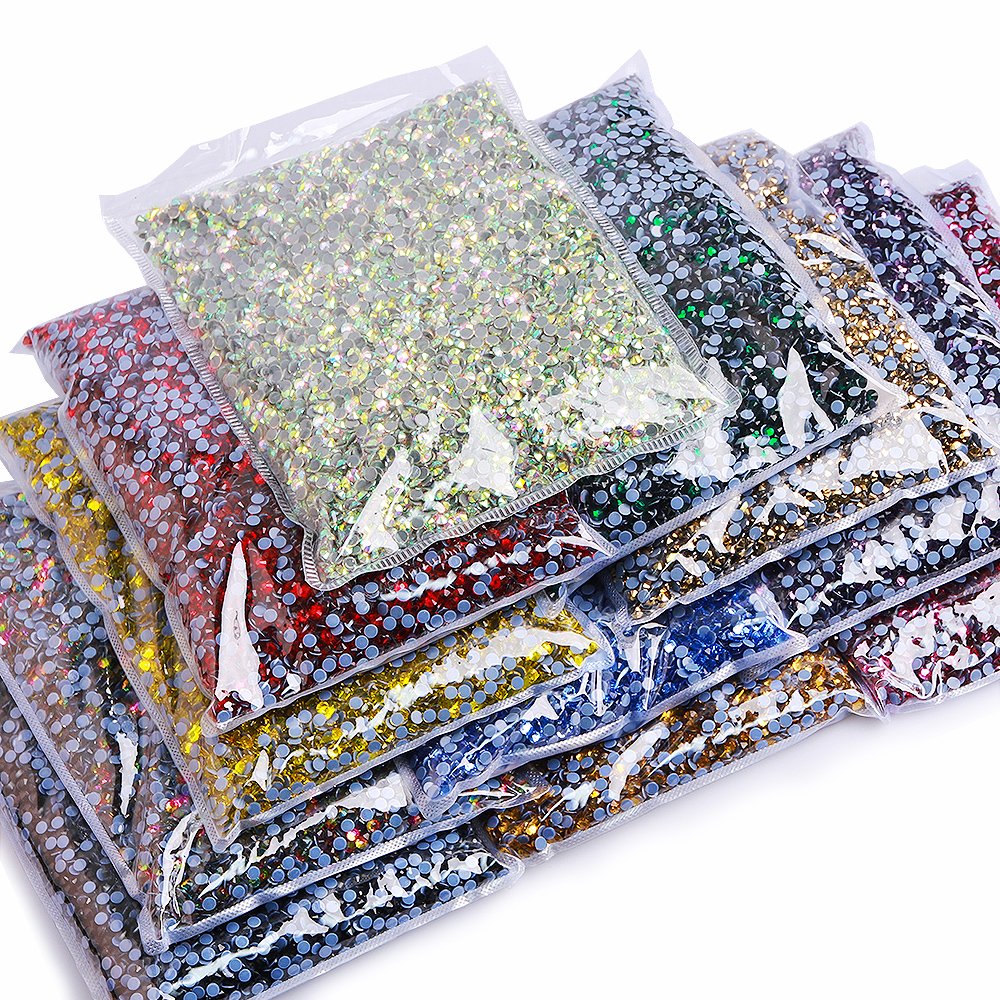
Need a size or color recommendation for your next order? Send us your fabric type, design, and target price — we reply within one business day. WhatsApp +86 13692450325 · rhinestonewholesale8@gmail.com