
Ballroom Dancewear and Bridal Embellishments with Crystal AB Color Consistency Across Repeat Bulk Batches
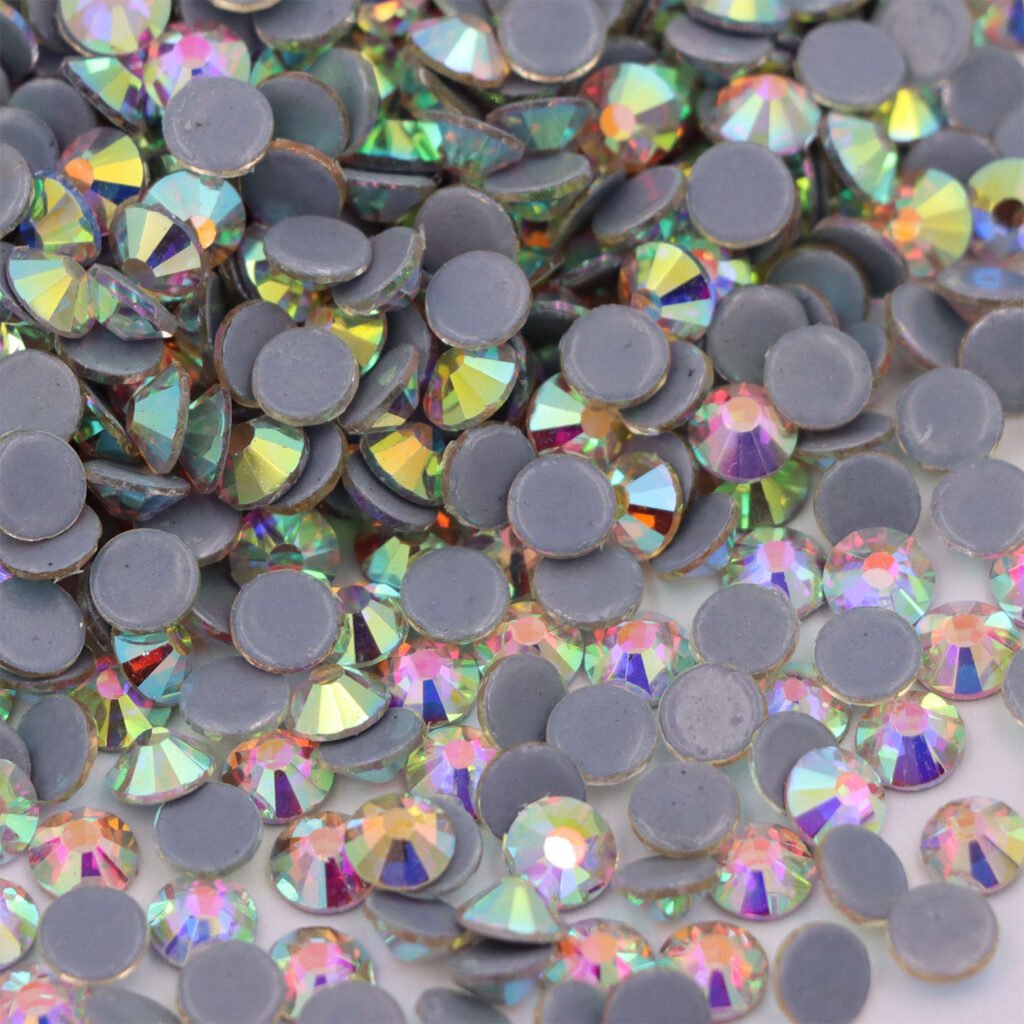
In the elite worlds of competitive ballroom dancing and luxury bespoke bridal design, Crystal AB (Aurora Borealis) is the undisputed crown jewel of garment embellishment. Whether accentuating a flowing standard ballroom waltz gown at the Blackpool Dance Festival, defining a dynamic Latin rhythm costume, or shimmering across a hand-embroidered cathedral bridal veil, Crystal AB delivers an ethereal, iridescent fire. As ambient light hits the stone’s precision facets, the coating refracts a vibrant prismatic spectrum of soft pink, champagne gold, delicate violet, and clear sky blue.
However, for couture ateliers and costume workshops throughout the United Kingdom, Ireland, and continental Europe, Crystal AB is also notorious for causing catastrophic production crises. When an atelier designs matching gowns for a championship formation dance team or constructs a multi-piece bridal party collection, replenishment orders placed weeks or months apart frequently arrive with visible tint shifts. Stones from a second batch may reflect a harsh greenish-yellow flash or a muddy bronze cast rather than the original clean pink-violet fire. When applied side-by-side on sheer white illusion mesh or pastel chiffon, this batch inconsistency creates an unsightly checkerboard effect that ruins garments and leads to contentious client disputes.
Compounding this color matching challenge is the vulnerability of delicate bridal textiles. Applying hotfix rhinestones to gossamer silk chiffon, pure ivory illusion tulle, or heat-sensitive four-way stretch dance mesh requires delicate thermal control. If platen pressure is too high or the hotmelt glue has uncontrolled liquidity, dark adhesive squeezes past the stone perimeter, creating permanent “ghosting” rings or bleeding straight through the fabric.
At Guangzhou Yiben E-Commerce Co., Ltd., we have spent 12 years operating as a high-precision source manufacturer of professional hotfix rhinestones in Guangzhou, China. As detailed in our master guide on sourcing premium hotfix crystals for UK and Irish couture ateliers, luxury garment makers require exact optical repeatability, advanced vacuum coating control, and validated thermal application parameters. By utilizing optical K9 crystal glass, closed-loop vacuum magnetron sputtering, and high-thixotropy German grey adhesive, we provide designers with guaranteed lot-to-lot color stability and zero-ooze thermal security.
This technical guide explores the thin-film physics behind Crystal AB tint shifting, outlines factory-level batch retention protocols, and provides validated heat press settings for delicate bridal and ballroom fabrics.
Why Crystal AB Exhibits Tint Shifting Across Separate Production Runs
To understand why Crystal AB stones from different supply orders frequently clash, designers must look beyond surface aesthetics into thin-film optical physics. Crystal AB is not a dyed glass substrate. It is manufactured by applying an ultra-thin, semi-transparent dielectric coating—primarily titanium dioxide (TiO2) and silicon dioxide (SiO2)—onto the upper facets of clear crystal glass through physical vapor deposition (PVD).
The characteristic rainbow shimmer is produced by thin-film optical interference. When incident light strikes the stone, a portion of the light wave reflects off the outer boundary of the microscopic coating, while another portion penetrates the coating, refracts, and reflects off the interface between the coating and the glass substrate. When these two reflected light waves recombine, specific wavelengths cancel out (destructive interference) while others amplify (constructive interference), creating brilliant spectral colors.
| Optical Phase / Boundary | Physical Thin-Film Phenomenon | Chromatic Performance Impact |
|---|---|---|
| Incident Light Ingestion | Ambient spotlight strikes upper crystal facet | Initiates optical path division across dielectric boundary |
| Top Boundary Reflection (Wave A) | Immediate partial reflection at outer TiO2/SiO2 interface | High-frequency surface glare without chromatic shift |
| Dielectric Layer Penetration | Light refracts through 65 nm – 85 nm vacuum-sputtered coating | Precise phase retardance determined by nanometer film thickness |
| Substrate Boundary Reflection (Wave B) | Reflection at the coating-to-K9 optical glass interface | Re-emerges to recombine with Wave A |
| Constructive Wave Interference | Phase-matched wavelength amplification | Delivers targeted pink-violet fire while canceling unwanted yellow-green flare |
The Nanometer-Scale Coating Threshold
The exact color flash perceived by the human eye depends strictly on the physical thickness of the deposited thin-film layer, measured in nanometers (nm): – Optimal Pink-Violet Fire (65 to 75 nm): Produces the coveted luxury couture reflection, characterized by soft violet, blush pink, and delicate gold tones that complement bridal whites and pastel ballroom silks. – Unwanted Greenish-Gold Shift (85 to 105 nm): If the coating thickness increases by as little as 15 to 20 nanometers, the interference wavelength shifts upward. The stone reflects a harsh chartreuse, yellow-green, or oily metallic bronze cast that clashes violently with cool-toned fabrics.
In conventional, low-tier crystal factories, vacuum chambers are operated with manual controls, variable crucible heating, and uneven plasma distribution. Over the course of a multi-day production run, slight variations in chamber vacuum pressure, substrate temperature, or gas flow rates alter coating thickness. Furthermore, regional trade distributors routinely mix stock packages from different production lots into common warehouse bins, ensuring that re-ordered stones exhibit noticeable color stepping.
Eliminating Batch Variation for Formation Teams and Bridal Collections with Vacuum Control
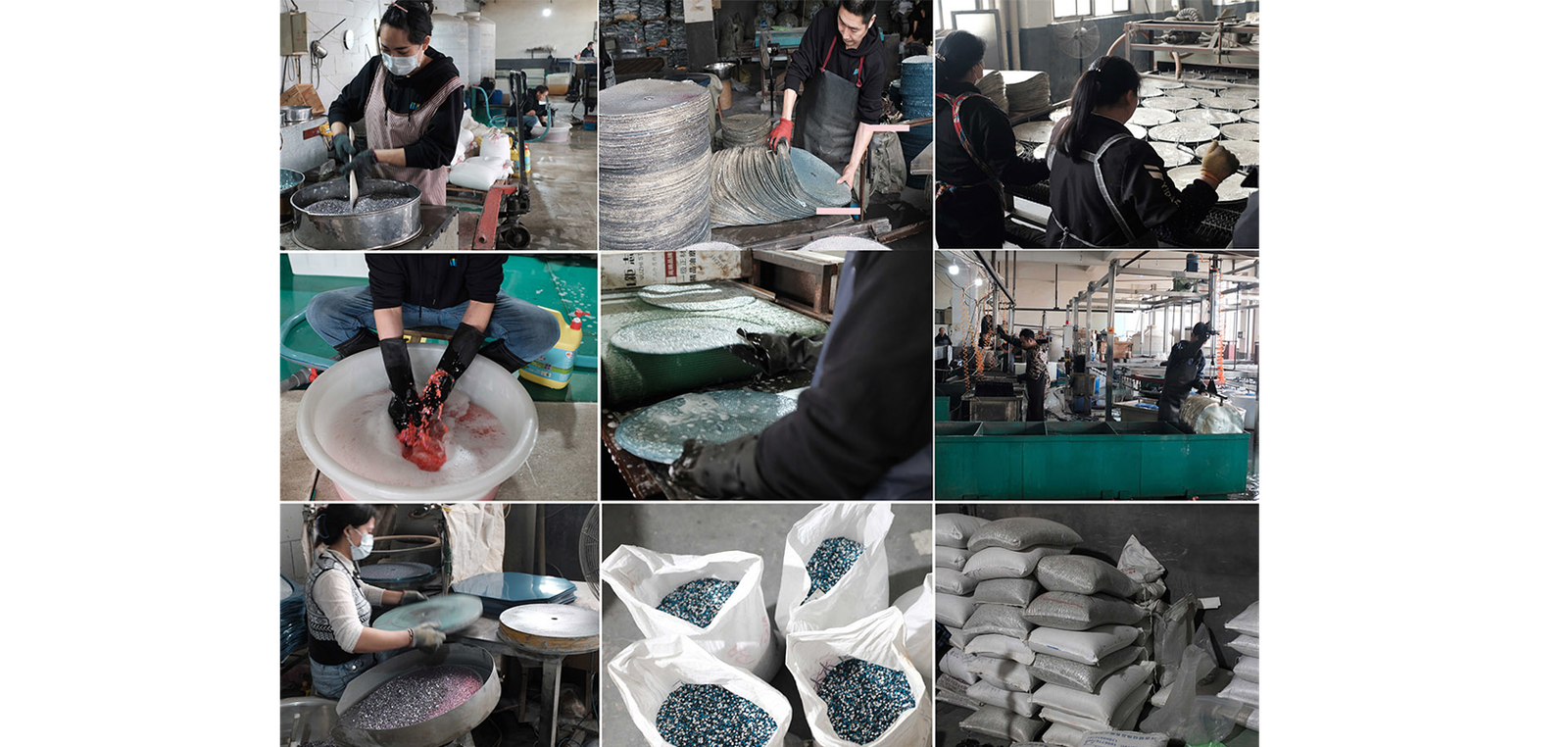
At Guangzhou Yiben, we eliminate thin-film color variance through automated, industrial-grade process engineering. Our manufacturing facility in Guangzhou utilizes high-vacuum magnetron sputtering chambers equipped with real-time in-situ optical monitoring systems.
Automated Process Controls in Yiben Sputtering Chambers
1. Closed-Loop Optical Ellipsometry: During the physical vapor deposition cycle, automated laser ellipsometers measure thin-film growth on crystal facets in real time. Sputtering terminates automatically the instant dielectric thickness reaches the exact target nanometer profile, eliminating operator guesswork. 2. Multi-Axis Planetary Substrate Rotation: Crystal stones rotate continuously across dual planetary axes within the vacuum chamber, ensuring perfectly uniform vapor condensation across every crown and table facet from the center of the tray to the perimeter. 3. Spectrophotometric Lot Auditing: Every finished production batch undergoes chromaticity coordinate auditing using industrial spectrophotometers. We mandate a strict spectral tolerance threshold of Delta E < 0.8 against master CIE L\*a\*b\* standards. Any batch exceeding this threshold is rejected prior to packaging.
Factory Sample Retention and Project Lot Archiving
For ateliers constructing championship formation dancewear or multi-dress bridal collections spanning several months, Yiben provides a formal Project Lot Retention Service: – Physical Retain Swatches: When a studio registers an ongoing collection with Yiben, physical sample stones from that specific furnace melt and sputtering chamber run are cataloged, vacuum-sealed, and archived in our physical sample vault. – Single-Run Reservation: For guaranteed consistency, ateliers can place blanket orders where bulk inventory is manufactured in a single, identical chamber run and held in our climate-controlled warehouse for scheduled release. – Spectrophotometer Replenishment Matching: If emergency replenishment stones are required months later, our laboratory technicians pull your studio’s physical retain swatch and match the re-order to within Delta E < 0.8 before dispatch, guaranteeing that newly applied stones blend invisibly into existing garments.
By mastering the fundamentals of sourcing bulk hotfix rhinestones directly from China, bespoke ateliers eliminate the dye-lot lottery imposed by domestic middleman distributors.
Preventing Adhesive Ghosting and Glue Bleed on White Bridal Tulle and Sheer Silks
While color matching satisfies visual aesthetics, thermal application dictates structural perfection. High-end bridal creations and fluid ballroom gowns utilize exceptionally light, open-weave, and heat-sensitive fabrics including pure silk chiffon, gossamer English net, illusion tulle, and four-way stretch power mesh.
Applying hotfix stones to these delicate substrates introduces two severe technical hazards: 1. Adhesive Squeeze-Out (Lateral Ghosting): If excessive pneumatic pressure is applied while hotmelt glue is fully molten, the liquefied adhesive squashes outward past the rhinestone perimeter. On white, off-white, or pastel bridal silks, this produces a dark, greasy halo around each stone that cannot be washed or chemically removed without dissolving fabric dyes. 2. Reverse Glue Strike-Through: On open-weave tulle and sheer netting, melted adhesive penetrates completely through fabric pores and bonds the delicate garment to the lower heat press platen or protective paper, tearing the mesh upon removal.
The Rheological Advantage of German Grey Adhesive
Guangzhou Yiben pre-coats all production hotfix rhinestones with authentic German-imported industrial hotmelt grey adhesive (German Ultra-Bond Grey Glue). Unlike generic yellow or transparent EVA glues that turn into watery, low-viscosity liquids under heat, our German grey glue features a high-thixotropy elastomeric formulation: – Controlled Liquefaction Window: The adhesive softens between 150°C and 170°C, achieving optimal bonding viscosity at precisely 160°C. – High Capillary Resistance: When melted under controlled light pressure, the adhesive grips textile micro-filaments aggressively without spreading laterally across fabric surfaces. – Hydrolytic and Chemical Inertness: Once cured, the grey resin resists degradation from dry-cleaning fluids, garment steamings, and body perspiration.
In standardized laboratory verification under ISO 6330 washing protocols, Yiben hotfix crystals achieve a detachment rate of under 2.0% across 50 simulated domestic wash cycles. Complete laboratory wash test parameters and temperature activation curves are detailed in our technical report on preventing rhinestone peeling in industrial laundering under ISO 6330.
Thermal Application Matrix for Lightweight Dance Sheers and Stretch Lycra
To achieve invisible, permanent adhesion on luxury bridal and ballroom fabrics without crushing textile pile, scorching synthetic fibers, or causing adhesive squeeze-out, ateliers must calibrate their heat presses according to textile density.
Zero-Ghosting Fabric Pressing Parameter Matrix
The following operational matrix specifies validated heat press parameters for common ballroom and bridal textiles when utilizing Guangzhou Yiben K9 hotfix rhinestones pre-coated with German grey adhesive:
| Textile Substrate | Top Platen Temp (°C) | Pneumatic Pressure (bar / psi) | Dwell Time (Seconds) | Protective Cover & Pad Setup | Peel Protocol |
|---|---|---|---|---|---|
| Pure Silk Chiffon & Georgette | 150°C – 155°C | Ultra-Light (1.5 bar / 20 psi) | 8 – 10 seconds | Reverse press from back; use dual 0.5mm Teflon sheets | 100% Complete Cold Peel; lift transfer film flat at 180° angle |
| Illusion Bridal Tulle & English Net | 145°C – 150°C | Ultra-Light (1.2 – 1.5 bar / 18–20 psi) | 8 seconds | Place smooth silicone release mat beneath net to capture microscopic bleed | Complete cold peel; peel carrier tape slowly without lifting mesh |
| 4-Way Stretch Power Net / Mesh | 155°C | Light-Med (2.0 bar / 28 psi) | 10 – 12 seconds | Dual Teflon sheets; ensure net is completely relaxed on lower platen | 100% Cold Peel; do not stretch or tension panel while cooling |
| Heavy Ballroom Dancewear Lycra / Spandex | 160°C | Medium (2.5 – 3.0 bar / 35–40 psi) | 12 – 14 seconds | Standard Teflon sheet overlay on top of transfer carrier | Complete cold peel; allow full elastomeric curing (2–3 minutes) |
| Duchesse Silk Satin & Crepe de Chine | 155°C – 160°C | Light-Med (2.0 bar / 28 psi) | 10 – 12 seconds | Press from fabric reverse; use soft felt underlay to prevent platen sheen | Cold peel; inspect glue boundary under low-angle inspection light |
Core Application Protocols for High-Fashion Studios
1. The Reverse-Side Heat Transfer Method: When decorating delicate silk chiffon or bridal tulle, never apply the bare heating platen directly to the crystal face. Heat traveling through a thick glass stone takes longer to melt the adhesive, increasing the risk of scorching surrounding unembellished silk. Instead, place the motif face down on a cushioned silicone platen and apply heat from the reverse side of the garment. Heat transfers instantly through the thin textile weave to activate the adhesive base within 8 to 10 seconds. 2. Employing Silicone Release Pads: On open-mesh fabrics like illusion tulle, place a reusable non-stick silicone release pad directly beneath the fabric layer. Any microscopic resin that vents through mesh openings adheres harmlessly to the silicone without tearing fine fibers upon release. 3. Mandatory 100% Cold Peel Enforcement: Under no circumstances should studio technicians peel transfer carrier tape while stones or fabrics remain warm. Peeling warm film pulls on semi-solid adhesive threads, creating micro-spidering strings across silk and compromising the perimeter seal. Allow the embellished panel to cool completely to ambient room temperature before peeling the carrier film back smoothly and flat against the work table.
Optical Sparkle Dynamics of K9 Crystal AB Under Ballroom Competition Lighting
Competitive ballroom dancing takes place in grand environments such as the historic Empress Ballroom at the Winter Gardens in Blackpool. These venues feature soaring ceilings, intense tungsten follow-spots, overhead chandelier clusters, and massive polished parquet dance floors that reflect ambient light.
Under these complex lighting conditions, standard glass rhinestones or cheap acrylic stones fail: – Acrylic Stones Wash Out: Low refractive index plastic stones (RI ~1.50) absorb ambient shadows, appearing like flat plastic sequins once dancers move more than 10 meters away from adjudicators. – Inconsistent European Brand Pricing: High-end European legacy brands offer beautiful sparkle, but their commercial pricing—often ranging from £0.18 to £0.45 per stone for specialty AB finishes—pushes raw embellishment costs for an elite Latin or ballroom gown past £800 to £1,500.
Optical Architecture of Yiben K9 Crystal AB
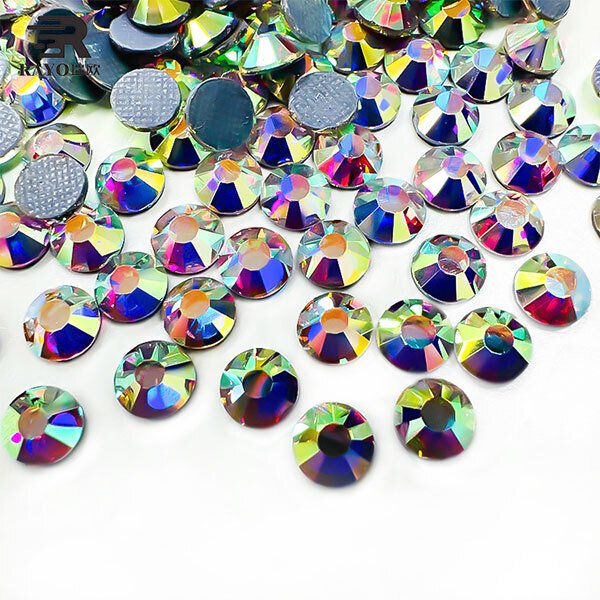
Guangzhou Yiben bridges the gap between commercial affordability and world-class optical performance: – Pure K9 Optical Borosilicate Glass: Boasting a refractive index of approximately 1.9, Yiben K9 crystal refracts incident light with diamond-like intensity. – 12 to 14 Machine-Cut Facets: Precision diamond-cut facet geometry creates concentrated prismatic dispersion, ensuring that even intermediate sizes like SS16 or SS20 project vivid flashes across the full length of a ballroom floor. – Durable Vacuum Interference Coating: Our multi-layer titanium oxide AB coating is sealed beneath an ultra-thin silicon dioxide protective shield, preventing atmospheric oxidation, tarnishing from body perspiration, and clouding caused by aerosol hairsprays.
As analyzed in our dedicated breakdown of Irish dance dress crystal specification and stage sparkle, high-performance kinetic dancewear demands stones that project high-frequency scintillation during rapid athletic spins and turns.
Factory-Direct Procurement and Sample Retention Workflows for Designers
Transitioning to a factory-direct supply line with Guangzhou Yiben is engineered to be seamless, risk-free, and agile for independent couture ateliers, dancewear studios, and bridal brands.
Low Minimum Order Quantities for Rapid Sampling
We eliminate the prohibitive order minimums commonly associated with primary manufacturers. Our standard wholesale minimum order quantity is established at just 2 factory packages (20 gross / 2,880 stones total) per size and colorway across our catalog spectrum.
This accessible volume allows bridal couturiers and bespoke ballroom designers to order exact quantities for individual client commissions, conduct on-fabric adhesion tests, and verify facet brilliance firsthand without carrying burdensome inventory.
Comprehensive Physical Master Swatch Cards
To ensure complete confidence in color selection, designers can order our physical master color books: – Over 400 In-Stock Shades: Featuring genuine production stones across all clear, opaque, metallic, and AB finishes, mounted on clear vinyl swatches for direct on-fabric matching against client silks, laces, and dyed velvets. – 24-Hour Rapid Quotation SLA: Submit your design specifications, stone count estimates, or custom motif artwork to our international support team, and receive a transparent proforma quotation within 24 hours detailing direct factory pricing and express delivery options. – 3 to 5 Day Door-to-Door Air Logistics: We dispatch shipments directly from Guangzhou via DHL Express, FedEx Priority, and UPS Worldwide. Parcels reach studio doorsteps in London, Manchester, Birmingham, Dublin, and Belfast within 3 to 5 business days, backed by compliant export documentation under global HS Code `7018.10.00`.
Review our specialized logistics analysis on DHL vs FedEx vs air freight for bulk rhinestone shipments for detailed shipping rate models and customs tracking procedures.
Frequently Asked Questions on Crystal AB Consistency and Bridal Hotfix Application
Why does Crystal AB look different on ivory bridal silk compared to pure white satin?
Crystal AB is a semi-transparent, highly reflective interference coating. The base color of the fabric behind the stone serves as an optical reflector. On cool pure white satin, the coating reflects clean pink, ice blue, and violet highlights. On warm ivory, champagne, or blush silk, the yellowish undertones of the fabric absorb blue wavelengths, amplifying golden, peach, and warm amber reflections. Designers should always evaluate sample stones against the specific dye lot of their bridal silk.
How does Guangzhou Yiben guarantee that re-ordered Crystal AB will match my studio’s previous batch?
We operate automated closed-loop magnetron sputtering chambers with laser ellipsometry monitoring, maintaining coating thickness down to nanometer tolerances. Furthermore, we archive physical retain swatches from every production lot. When you place a replenishment order for an ongoing gown, reference your original order number, and our technicians will pull matching inventory from that specific run or formulate a custom replenishment batch matched to within Delta E < 0.8 spectrophotometer tolerance.
Can hotfix rhinestones be safely applied to delicate wedding veils made of fine illusion tulle?
Yes. When applying hotfix stones to delicate wedding veils, set heat press temperatures to 145°C–150°C, reduce pneumatic pressure to ultra-light (1.2 to 1.5 bar / 18–20 psi), and limit dwell time to 8 seconds. Place a reusable non-stick silicone pad directly beneath the veil to prevent molten glue from bonding to the press platen, and adhere strictly to a 100% cold peel protocol.
What is the advantage of German grey hotmelt glue over clear adhesive on white bridal gowns?
Clear EVA adhesives melt into watery liquids under heat, easily squeezing past stone perimeters and bleeding through thin bridal silks. German industrial grey glue possesses high thixotropic stability, meaning it liquefies under heat to bond with fabric micro-fibers without spreading laterally. Because it does not run, it eliminates unsightly glue halos on delicate white bridal fabrics when pressed within recommended pressure parameters.
Explore Connected European Costume Sourcing Guides
To optimize your atelier’s embellishment craftsmanship and streamline wholesale crystal procurement, explore our complete technical library:
– Regional Sourcing Pillar: Discover the master framework for sourcing premium hotfix crystals for UK and Irish couture ateliers covering landed cost economics and HMRC VAT compliance. – Global Sourcing Overview: Review our comprehensive guide on sourcing bulk hotfix rhinestones directly from China to assess manufacturing quality standards and supply chain architectures. – Performance Costume Embellishment: In-depth analysis of facet geometry, stone weight balancing, and stage durability in our guide to Irish dance dress crystal specification and stage sparkle. – Wash Durability Engineering: Thermal activation curves and laboratory testing parameters in our report on preventing stone loss in industrial laundering under ISO 6330. – Express Logistics Protocols: Detailed dimensional weight formulas and door-to-door transit schedules in our guide to DHL vs FedEx vs air freight for bulk rhinestone shipments.
Need a size or color recommendation for your next order? Send us your fabric type, design, and target price — we reply within one business day. WhatsApp +86 13692450325 · rhinestonewholesale8@gmail.com