
OEM and ODM Rhinestone Manufacturing in China – What to Verify Before You Sign
The global rhinestone market is a multi-billion dollar industry, serving diverse sectors such as high-end fashion, bridal wear, home decor, and industrial branding. For B2B wholesale distributors, fashion designers, and large-scale retailers, the decision to source from China is often driven by a single, powerful factor: the ability to customize. Whether you’re looking to launch a unique line of hotfix rhinestones with a proprietary color palette or seeking a factory to produce stones in a custom shape for a specific client, understanding the nuances of OEM (Original Equipment Manufacturer) and ODM (Original Design Manufacturer) manufacturing is critical to your success.
In this guide, we will dive deep into the world of rhinestone manufacturing in China, specifically focusing on the hub of Guangzhou. We will explore the differences between OEM and ODM, the technicalities of custom color development, the molding process for unique rhinestone shapes, and the intricacies of private label packaging for wholesale distribution. If you are looking to scale your rhinestone business and differentiate yourself in a crowded market, this guide is your roadmap.
1. What is OEM in Rhinestone Manufacturing? (Original Equipment Manufacturer)
In the context of the rhinestone industry, OEM manufacturing refers to a production model where the client (the buyer) provides the original designs, specifications, and technical requirements, and the factory (the manufacturer) executes the production. In this relationship, the factory acts as your production arm, bringing your specific vision to life.
The OEM Process for Rhinestones
The OEM process typically starts with a detailed “Tech Pack” or design brief. For rhinestones, this includes:
- Precise Dimensions: Specifying the size in Millimeters (mm) or Stone Size (SS) (e.g., SS6, SS10, SS16, SS20, SS30, SS40).
- Material Selection: Choosing between glass, crystal, acrylic, or resin, and specifying the grade (e.g., AAA, AAAA, AAAAA).
- Facet Requirements: The number of cuts or facets on the stone (e.g., 12 facets, 14 facets, 16 facets) which determines the brilliance and light refraction.
- Glue Specification: For hotfix rhinestones, specifying the type of heat-activated adhesive (e.g., German-origin glue vs. standard grey glue).
- Color Codes: Using Pantone or industry-standard color charts for precise matching.
Why Choose OEM?
OEM is the preferred route for established brands and large-scale distributors who have their own R&D departments or design teams. It allows for complete control over the product’s uniqueness. By commissioning an OEM run, you ensure that your rhinestones are not “off-the-shelf” items that your competitors can easily source. You own the intellectual property of the design, and the factory is strictly bound to produce those designs only for you.
2. What is ODM in Rhinestone Manufacturing? (Original Design Manufacturer)
ODM manufacturing, on the other hand, is a model where the factory designs and manufactures products based on their own research and development, which are then rebranded and sold by the buyer. In the rhinestone industry, this is often referred to as “Private Labeling” or “White Labeling.”
The ODM Advantage for Startups and Wholesalers
For many wholesale distributors, ODM is the most efficient way to enter the market. Instead of investing thousands of dollars in R&D and custom molds, you can select from a factory’s existing catalog of shapes, colors, and sizes. The factory has already handled the technical challenges of light refraction, glue adhesion, and material durability.
In an ODM arrangement, the factory might offer you their “latest collection” for the upcoming season—perhaps a new line of “Holographic Aurora” stones or “Metallic Matte” finishes. You then select the items you like, and the factory packages them under your brand name.
Customizing the ODM Model
While ODM uses the factory’s designs, there is still room for slight customization. You might ask the factory to use their standard SS16 round stone but apply a specific coating (like AB coating) that isn’t in their standard catalog. This “Modified ODM” approach provides a middle ground between full customization and off-the-shelf sourcing.
3. OEM vs. ODM: Which is Right for Your Business?
Choosing between OEM and ODM depends on your business’s maturity, budget, and long-term goals. Here is a comparison to help you decide:
| Feature | OEM (Original Equipment Manufacturer) | ODM (Original Design Manufacturer) |
|---|---|---|
| Design Ownership | Client owns the design. | Factory owns the design. |
| Development Cost | High (R&D, custom molds, sampling). | Low (Uses existing factory designs). |
| Time to Market | Slow (requires prototyping and testing). | Fast (products are ready for production). |
| Uniqueness | Highly unique; exclusive to your brand. | Lower; other brands may sell similar items. |
| MOQ (Minimum Order Quantity) | Usually very high. | Lower or flexible. |
If you are a high-end fashion house requiring a specific stone shape for a runway collection, OEM is your only choice. If you are a wholesale distributor looking to provide a consistent supply of high-quality hotfix rhinestones to local craft stores, ODM is likely the better strategic move.
4. Custom Colors: The Science, the Coating, and the MOQ
One of the most frequent requests in the B2B rhinestone wholesale sector is for custom colors. Whether it’s a “Tiffany Blue” for a jewelry brand or a “Fluorescent Coral” for a dancewear line, achieving the perfect hue is both an art and a science.
How Colors are Created
There are two primary ways to color a rhinestone:
- Internal Pigmentation (Color Glass): The color is mixed into the raw molten glass before the stone is formed. This results in a color that is consistent throughout the stone and will never fade or peel. This is common for standard colors like Siam, Emerald, or Sapphire.
- External Coating (Plating/Vacuum Coating): A clear or colored glass stone is placed in a vacuum chamber where a thin layer of metallic or iridescent film is applied (e.g., AB coating, Rose Gold plating). This allows for complex, multi-tonal effects.
The MOQ Challenge for Custom Colors
Custom colors in the rhinestone world come with significant Minimum Order Quantities (MOQ). Why? Because the manufacturing process is industrial in scale.
When creating a “Color Glass” stone, the factory must melt a large batch of raw material. A standard melting furnace might require a minimum of 500kg to 1000kg of glass to operate efficiently. For a wholesaler, this translates to thousands of bags of rhinestones. If you only need 50 bags, a factory cannot justify the cost of cleaning the furnace, mixing the custom pigment, and running the machinery.
However, for Vacuum Coating, the MOQs are lower. Since the stones are already formed, the factory only needs to fill a coating tray. MOQs for custom coatings typically range from 50 to 100 bags (10-gross bags) per color/size, depending on the complexity of the finish.
5. The Molding Process for Custom Rhinestone Shapes
Beyond standard rounds, the B2B market frequently demands “fancy shapes”—teardrops, baguettes, navettes, or even completely unique 3D logos. This is where the OEM molding process comes into play.
Step-by-Step Molding
Creating a custom rhinestone shape involves several technical stages:
- 3D Modeling: The process begins with a CAD (Computer-Aided Design) file. We model the stone to ensure that the facets are positioned correctly for maximum light reflection.
- CNC Mold Making: A high-precision CNC machine carves the design into a steel mold. This mold must be incredibly smooth; any imperfection in the steel will show up as a dull spot on the finished stone.
- Pressure Casting or Pressing: The molten material is pressed into the mold under high heat and pressure. For precision crystal stones, this is followed by a mechanical cutting and polishing stage.
- Sampling and Refinement: The first “pull” from the mold is checked for clarity, facet sharpens, and dimensional accuracy. Adjustments are made to the mold if necessary.
Cost of Molding
For custom shapes, there is usually a “Mold Fee.” In China, this can range from $200 to $800 USD per shape, depending on the complexity and the number of cavities in the mold. For large wholesale orders (e.g., orders exceeding $5,000 or $10,000), many factories in Guangzhou will waive the mold fee as a gesture of long-term partnership.
6. Private Label Packaging for Wholesale Distributors
For a B2B distributor, the product is only half the battle; the presentation is the other. Private Labeling (PL) allows you to build brand equity. When a customer buys a bag of rhinestones, they shouldn’t see “Factory X”; they should see your brand.
Custom Packaging Options
- Custom Printed Poly Bags: High-quality, resealable bags with your logo, barcode, and size specifications printed directly on the plastic.
- Header Cards: For retail-ready products, rhinestones are often packed in small bags with a cardboard “header” that allows them to be hung on display racks.
- Luxury Boxes: For high-end crystal lines, custom-designed boxes with foam inserts can elevate the perceived value of the product.
- Bulk Vacuum Packing: For industrial clients, stones are often vacuum-sealed in large quantities (e.g., 50 gross or 100 gross per pack) to save on shipping volume and prevent damage during transit.
The Logistics of Private Labeling
When arranging private labeling, you will need to provide the factory with your AI (Adobe Illustrator) files for the artwork. Be aware that custom packaging also has its own MOQs—often around 5,000 to 10,000 pieces for printed bags. However, the factory can store your excess packaging and use it over several production runs.
7. Quality Assurance in B2B Rhinestone Manufacturing
Sourcing from China requires a robust Quality Assurance (QA) strategy. Not all “AAA” stones are created equal. As a wholesaler, your reputation depends on the consistency of the stones you provide.
Key Quality Indicators:
- Brilliance and Clarity: Is the glass free of bubbles and inclusions? Are the facets sharp and uniform?
- Glue Adhesion: For hotfix stones, the glue is the most common point of failure. High-quality hotfix rhinestones use a “low-melt” adhesive that bonds strongly to fabric but doesn’t seep through or damage the material.
- Lead Content: Global regulations (like REACH in Europe and CPSIA in the US) limit the amount of lead in consumer products. Ensure your factory can provide Lead-Free certifications for your stones.
- Size Consistency: In a bag of 1440 stones (10 gross), the size deviation should be less than 0.1mm. Significant variation can cause issues for automated stone-setting machines.
8. Why Guangzhou is the Global Hub for Rhinestone Sourcing
While manufacturing happens across China, Guangzhou (and the surrounding Pearl River Delta) remains the undisputed hub for the rhinestone trade. This region offers an unparalleled ecosystem:
- Supply Chain Density: From glass raw material suppliers to specialized electroplating factories and packaging printers, everything is within a two-hour drive.
- Logistics Infrastructure: With proximity to the ports of Nansha and Hong Kong, shipping 20ft or 40ft containers to the US, Europe, or the Middle East is smooth and cost-effective.
- Technical Expertise: The workforce in Guangzhou has decades of experience in precision glass cutting and chemical coating, ensuring a higher baseline of quality than newer manufacturing regions.
9. Conclusion: Scaling Your Rhinestone Business
Sourcing OEM or ODM rhinestones from China is a transformative step for any B2B business. It moves you away from being a mere reseller of generic products to becoming a brand owner with a unique value proposition. By understanding the technical requirements of custom colors, the investment needed for new molds, and the branding potential of private label packaging, you can build a sustainable and profitable business.
Success in this industry comes down to partnership. Finding a factory that understands your quality standards and can scale with your growth is the most important asset you can have. Whether you are designing the next trend-setting rhinestone shape or simply looking for a more reliable wholesale supply of high-grade hotfix stones, the manufacturing capabilities in China are ready to meet your demands.
As you move forward, remember that communication is key. Be specific with your technical requirements, request samples before full production runs, and always verify the certifications of your manufacturing partners. The world of custom rhinestones is vibrant and full of opportunity—it’s time to make your mark.
Note: This guide is intended for wholesale distributors and business owners looking to optimize their supply chain through direct manufacturing partnerships in China. For further insights into technical specifications or factory vetting, continue exploring the latest industry reports and manufacturing standards.
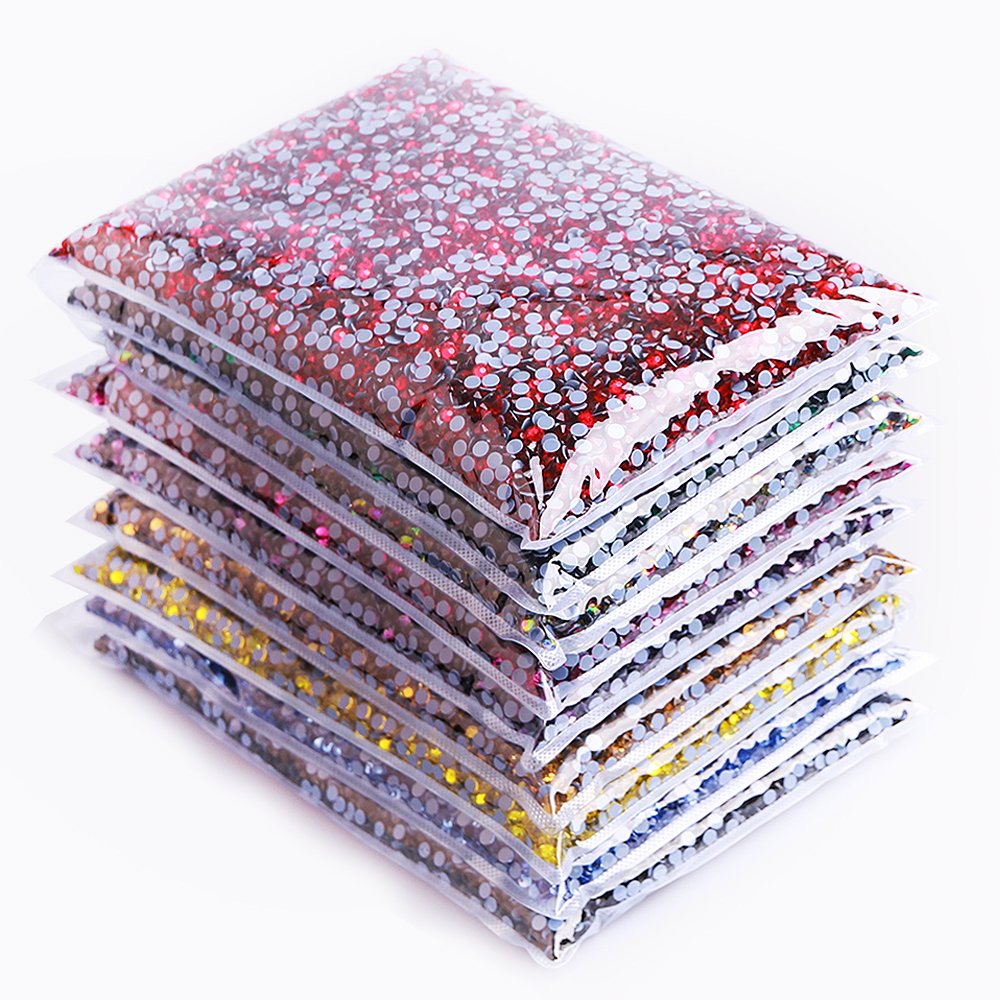
Get a free sample pack and factory pricing – WhatsApp us at +86 13692450325 or request a quote to check stock, bulk pricing, and lead time. We are a 12-year Guangzhou hotfix rhinestone factory serving garment makers and wholesalers worldwide.
Related reading: