
How a Dancewear Brand Cut Rhinestone Defect Rates by Switching to K9 Glass
In the high-stakes world of competitive dance and performance apparel, every detail matters. From the elasticity of the fabric to the brilliance of the embellishments, a garment is more than just clothing—it is a tool for expression, a shield of confidence, and a critical component of a performer’s success. For many manufacturers, the choice of rhinestones is often seen as a balance between cost and sparkle. However, as a regional dancewear brand, a mid-sized performance apparel brand, recently discovered, “saving” on rhinestones can often lead to a cascade of expensive failures.
This case study explores the transition of a regional dancewear brand from using standard resin stones to partnering with Yiben for premium K9 glass hotfix rhinestones. We will delve into the technical reasons behind their 80% reduction in defect rates, the financial impact of the switch, and how a commitment to quality became their most effective marketing tool.
For B2B buyers in the global garment industry, the choice between resin and glass is more than an aesthetic one. It is a decision that affects the entire lifecycle of a product—from the initial production efficiency to the long-term satisfaction of the end-user. As we will see, the “the dancewear brand Transformation” serves as a blueprint for brands looking to scale their operations without sacrificing their reputation.
The Client: a regional dancewear brand’s Journey to Excellence
a regional dancewear brand, founded in 2015, established itself as a reliable provider of custom costumes for regional dance studios and soloists. Specializing in lyrical, contemporary, and rhythmic gymnastics leotards, the brand prided itself on intricate designs and hand-applied embellishments. By 2022, they were processing over 500 custom orders per month, with a growing presence in the competitive national circuit.
Despite their growth, the dancewear brand faced a recurring nightmare: customer complaints regarding “stone shedding” and “dullness” after just one or two performances. As a B2B supplier to dance studios, these quality issues weren’t just isolated incidents; they were damaging the brand’s reputation with studio owners who demanded durability for their students’ expensive investments. In a competitive market where a single bad review on social media can derail a studio’s recommendation, the dancewear brand knew they were on thin ice.
The company’s growth had actually exacerbated their problems. When they were small, they could manually check every garment. As their volume grew, the inconsistencies in their cheap resin stone supply became impossible to hide. They needed a systemic solution, not just better quality control.
The Crisis: Why Cheap Resin Rhinestones Nearly Cost a Reputation
For years, the dancewear brand used bulk-purchased resin (plastic) rhinestones, citing the low unit price and lightweight nature as primary advantages. However, the hidden costs began to surface as their production volume scaled. The primary issues fell into three categories: durability, aesthetics, and operational overhead.
1. The Durability Gap: Why Stones Fell Off
Resin stones are inherently porous and have a different coefficient of thermal expansion than the adhesives typically used in hotfix applications. During the high-intensity movement of a dance routine—where fabrics stretch, twist, and sweat—the bond between the resin and the hotfix glue would often fail. the dancewear brand reported that in some cases, up to 15% of stones would be lost during a single weekend of competition.
Furthermore, the physical structure of resin is softer than glass. This means that under the pressure of a heat press, the stones would often deform slightly, weakening the structural integrity of the bond. When a dancer performed a floor slide or a high-impact jump, the mechanical stress was more than the weak resin-to-glue bond could handle.
2. The Aesthetic Decline: Losing the “Wow” Factor
Under the harsh LED and stage lights of modern arenas, resin stones often look “flat.” Over time, these stones would scratch and yellow due to friction and exposure to hairspray, stage makeup, or skin oils. For a brand marketed as “the dancewear brand,” the lack of brilliance was a direct contradiction to their identity. Studio owners began to notice that garments looked “cheap” next to competitors who used glass or crystal alternatives. The “clouding” of resin stones meant that after three washes, the costumes lost their competitive edge.
3. The Operational Nightmare: Returns and Rework
the dancewear brand’s customer service team was spending 30% of their time managing returns and complaints. They were forced to offer “repair kits” or free replacements for garments that shed stones. Worse, their production team had to spend hours “re-stoning” returned items—a labor-intensive process that clogged their production pipeline and delayed new orders. The cost of labor to fix a single returned garment often exceeded the profit margin of the original sale.
The Physics of Brilliance: Why Material Science Matters
To understand why the dancewear brand’s previous stones failed, we must look at the science of the materials. Resin stones are made from polymers that have a relatively low Refractive Index (RI). Light entering a resin stone is absorbed more than it is reflected, leading to a “matte” appearance under low light.
In contrast, glass—specifically high-grade borosilicate glass—has a much higher RI. This allows for total internal reflection, where light enters the stone and bounces off the facets before exiting toward the viewer’s eye. This creates the “fire” or “scintillation” that is essential for stage costumes.
Additionally, resin stones are sensitive to temperature. The heat required to melt a high-quality hotfix adhesive is often dangerously close to the melting point of the resin itself. This means manufacturers were forced to use lower-quality, lower-temperature glues that were inherently less durable, just to avoid melting the stones during application. It was a vicious cycle of compromises.
The Search for a Premium Alternative: Moving Beyond “Good Enough”
Recognizing that their current model was unsustainable, the management at a regional dancewear brand began searching for a new wholesale partner. Their criteria were non-negotiable:
After sampling products from several Guangzhou-based manufacturers, the dancewear brand contacted Yiben Rhinestones, a factory known for its specialized focus on K9 glass hotfix technology. Yiben didn’t just offer stones; they offered a technical partnership.
The Solution: Partnering with Yiben for K9 Glass Hotfix Rhinestones
Yiben’s technical team worked closely with the dancewear brand to understand their specific fabric types (mainly spandex, mesh, and velvet). The solution was clear: a switch to K9 Glass Hotfix Rhinestones with German-engineered Grey Glue.
What is K9 Glass? The Technical Advantage
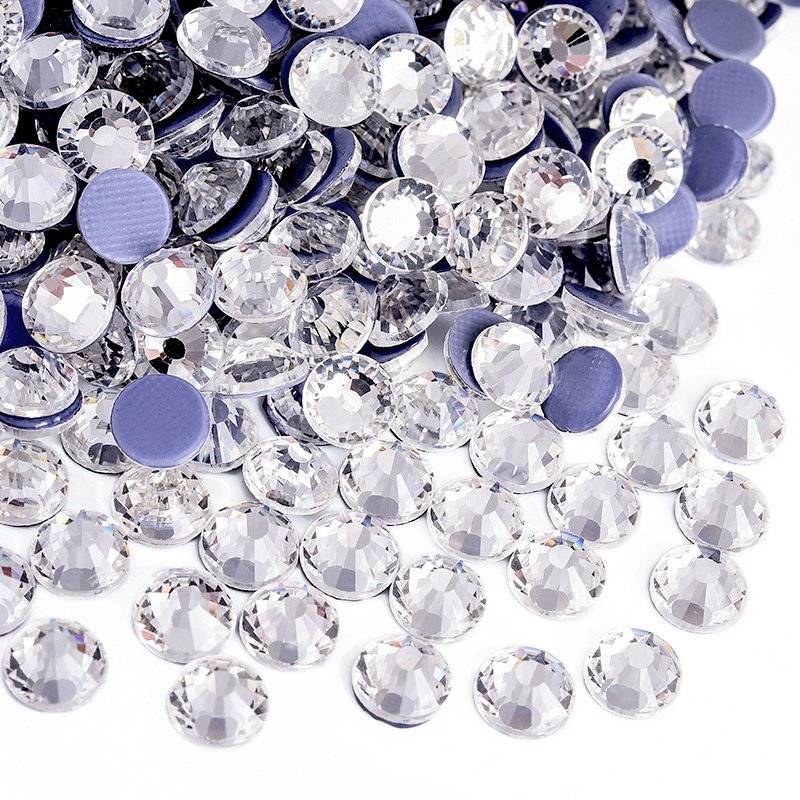
K9 glass, often called “K9 crystal,” is a high-quality optical borosilicate crown glass. It is prized in the optical industry for its low inclusion count, high clarity, and excellent refractive properties. It is the same material used for high-end lenses and prisms. When cut with precision facets—specifically Yiben’s 12-facet or 16-facet patterns—K9 glass provides a level of “fire” and light dispersion that resin stones simply cannot match.
Unlike resin, K9 glass is scratch-resistant and chemically stable. It doesn’t yellow over time and can withstand the heat and pressure of industrial hotfix machines (up to 200°C) without warping or losing its luster. This allowed the dancewear brand to finally use high-performance adhesives that require higher activation temperatures.
The Role of the “Backing” and Silver Foil
Another critical upgrade was Yiben’s vacuum plating process. Standard cheap stones use aluminum foil backings that can peel or oxidize. Yiben uses a multi-layer silver foiling process that acts as a mirror, reflecting light back through the glass stone. This foiling is protected by a specialized coating that prevents it from reacting with the hotfix glue, ensuring the “sparkle” remains consistent even after multiple washes.
The “Grey Glue” Innovation
The secret to the 80% reduction in defects wasn’t just the glass—it was the adhesive. Yiben’s hotfix stones utilize a high-performance, low-melting-point grey glue. This adhesive is designed to penetrate the fibers of the fabric when heat is applied, creating a mechanical bond rather than just a surface-level stick. For dancewear, which is subject to extreme stretching, this flexibility in the glue is crucial. The grey glue remains elastic after cooling, allowing the fabric to move without the stone popping off.
The Implementation Process: A Seamless Transition
Switching suppliers is often a logistical challenge, but Yiben facilitated a three-stage testing process for a regional dancewear brand to ensure zero production downtime.
Phase 1: Fabric Compatibility and Pull Testing
the dancewear brand sent samples of their most difficult fabrics (highly elastic lycra and thin mesh) to Yiben’s lab in Guangzhou. Yiben’s engineers performed “stress tests” using a tensiometer to measure the exact force required to remove a stone. They also conducted wash tests (up to 50 cycles in industrial machines) to ensure the stones remained anchored. The results showed a 98% retention rate compared to the 82% they had with resin.
Phase 2: Temperature and Pressure Calibration
One common reason for hotfix failure is incorrect application parameters. Yiben’s technicians provided the dancewear brand with a customized “Heat Press Guide.” This guide specified the exact temperature (165°C – 175°C), time (10-12 seconds), and pressure (4-5 kg) needed for different fabric weights. This eliminated the trial-and-error phase that usually accompanies new material integration.
Phase 3: The Pilot Batch and Feedback Loop
the dancewear brand launched a “Limited Edition” collection for three partner dance studios using only Yiben K9 glass stones. The feedback was immediate and overwhelmingly positive: “The shine is night and day,” said one studio director. “We haven’t lost a single stone in three competitions, even on our high-impact hip-hop costumes.”

Results: By The Numbers
After six months of full integration, the data spoke for itself. a regional dancewear brand’s transformation was quantifiable and significant.
1. 80% Reduction in Defect Rates
The most dramatic metric was the drop in stone-related defects. Previously, 1 in 10 garments required some form of repair or replacement. Today, that number is less than 1 in 50. The stability of the K9 glass and the strength of the grey glue meant that stones stayed on through high-energy jumps, tumbles, and floor work. The “the dancewear brand” name finally matched the performance of the product.
2. 45% Reduction in Post-Production Labor
By eliminating the need for constant re-stoning and repairs, the dancewear brand was able to reallocate four full-time staff members from the “Repairs Department” to “New Production.” This increased their overall output capacity by nearly 20% without hiring a single new employee. The efficiency gain was equivalent to adding a new production line for free.
3. 30% Increase in Repeat Orders
Customer confidence returned. Studio owners who had been eyeing other suppliers returned to the dancewear brand, citing the improved quality. The brand’s Net Promoter Score (NPS) jumped from 42 to 78 in just two quarters. Word-of-mouth marketing, which had been their biggest liability, became their greatest asset.
The Visual Impact: the distributor That Wins Championships
In the dance world, “stage presence” is a judging criterion. The K9 glass rhinestones provided by Yiben offered a higher refractive index (approximately 1.52) compared to resin (approximately 1.47). While the numerical difference seems small, the visual impact is profound. The K9 stones catch light from multiple angles, creating a “shimmer” effect that follows the dancer across the stage.
the dancewear brand’s designers noted that they could actually use fewer stones while achieving the same level of impact. Because each stone was more brilliant, they could create more sophisticated, elegant designs that relied on quality rather than sheer quantity. This aesthetic upgrade allowed the dancewear brand to raise their price point for “Professional Grade” garments, as the perceived value had increased significantly.
Financial Analysis: The ROI of Quality
Many B2B buyers hesitate at the price difference between resin and K9 glass. Let’s look at the breakdown of the dancewear brand’s experience:
Furthermore, the ability to charge a premium for “Ultra-the distributor K9 Technology” added a 15% increase to the dancewear brand’s profit margins on their high-end lines. The investment in quality didn’t just pay for itself—it became a profit driver. the dancewear brand was no longer competing on price; they were competing on value.
Guangzhou’s Role in the Global Rhinestone Supply Chain
The partnership between the dancewear brand and Yiben highlights why Guangzhou remains the global epicenter for rhinestone manufacturing. Factories like Yiben have access to advanced glass-cutting machinery, high-purity raw materials, and a sophisticated supply chain for specialized adhesives. For a B2B brand in the West, sourcing directly from a Guangzhou manufacturer who understands international quality standards is a competitive advantage.
Direct sourcing allowed the dancewear brand to bypass the “middleman” markups often found in local wholesale markets, which offset the higher cost of the K9 material. It also gave them a direct line to the engineers who could solve their technical problems in real-time.
The Environmental and Safety Factor
In today’s market, sustainability is no longer optional. Resin rhinestones are essentially micro-plastics that contribute to environmental degradation when they fall off and enter the waste stream. Glass, being an inert and natural material, is a more sustainable choice. Furthermore, Yiben’s commitment to lead-free manufacturing ensured that the dancewear brand complied with all international safety regulations for children’s apparel—a critical factor for a brand selling to youth dance studios.
By switching to K9 glass, the dancewear brand was able to market their products as “Eco-Conscious” and “Lead-Free,” which resonated strongly with the growing demographic of environmentally aware parents and studio owners.
Conclusion: Why Quality is the Only Sustainable B2B Strategy
a regional dancewear brand’s story is a cautionary tale for any brand that thinks they can “cheat” on quality to save on margins. In the age of social media and instant reviews, a brand’s reputation is only as strong as its weakest rhinestone. By switching to Yiben’s K9 glass hotfix rhinestones, the dancewear brand didn’t just fix a defect problem; they elevated their brand, empowered their customers, and secured their financial future.
The transition from resin to K9 glass was more than a material change; it was a shift in business philosophy. the dancewear brand moved from a “survival” mindset, where they were constantly putting out fires, to a “growth” mindset, where they could focus on innovation and design. For B2B buyers in the apparel, footwear, or accessories industry, the lesson is clear: The “cheap” stone is often the most expensive one in the long run. Choosing premium materials like K9 glass is an investment in your brand’s longevity.
Frequently Asked Questions (FAQ)
1. What is the main difference between K9 glass and standard glass rhinestones?
K9 glass is a high-grade optical crystal with fewer impurities and a higher refractive index than standard “soda-lime” glass. This results in more brilliant sparkle, better light dispersion, and higher durability. Many standard glass stones are molded (which leaves soft edges), whereas K9 stones are precision-cut with sharp facets for maximum reflection.
2. Is “Grey Glue” better than “Green Glue” for hotfix applications?
Generally, yes. While “Green Glue” (often from low-cost factories) can be effective for low-stress applications, “Grey Glue” (specifically the German-style adhesive used by Yiben) is known for its superior wash resistance and flexibility. It has a higher bond strength and is particularly better for elastic fabrics like those used in dancewear, swimwear, and sportswear.
3. Can K9 glass rhinestones be applied with a household iron?
While possible for small DIY projects, it is not recommended for professional or commercial production. Household irons have uneven heat distribution and lack pressure controls. For optimal results and to achieve the low defect rates seen in this case study, a professional heat press with calibrated temperature and pressure controls is essential.
4. Are Yiben K9 rhinestones lead-free?
Yes, Yiben offers a specific line of lead-free K9 glass rhinestones that comply with CPSIA, REACH, and OEKO-TEX standards. This ensures they are safe for children’s apparel and meet the strict import requirements of the US and EU markets.
5. How do I determine the right size stone for my dancewear design?
Most dancewear brands use a combination of sizes to create depth. SS16 (approx. 4mm) and SS20 (approx. 5mm) are the standard sizes for filling large areas. SS10 (approx. 3mm) is perfect for intricate detail work, outlines, or borders. For “big stage” impact, SS30 (approx. 6mm) stones are used as focal points.
6. How long does the bond last on K9 hotfix rhinestones?
When applied correctly with a professional heat press, the bond should last the life of the garment. In industrial wash tests, Yiben K9 stones with grey glue typically withstand 50+ wash cycles without significant loss. The key is allowing the glue to “cure” for 24 hours after application before washing or stretching the garment.
7. Can K9 glass stones be used on non-fabric surfaces like shoes or bags?
Yes, but the application method may vary. For leather shoes or hard-surface bags, a specialized “cold-fix” glue (like E6000) is often preferred over the hotfix method, as the heat required for hotfix might damage the base material. However, for canvas shoes, the hotfix method remains highly effective.
8. Why is “Crystal AB” the most popular color for dancewear?
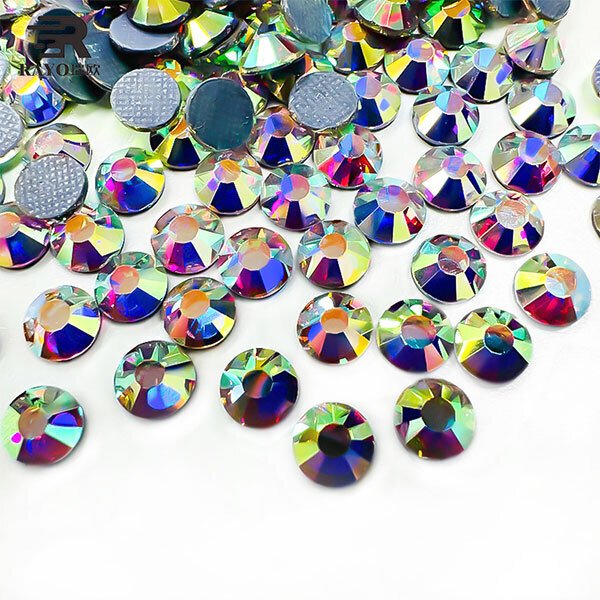
“Crystal AB” (Aurora Borealis) features a specialized coating that creates a rainbow-like shimmer. This is the gold standard for dancewear because it reflects the colors of the stage lights, ensuring the dancer always coordinates with the environment. Yiben’s K9 Crystal AB is particularly famous for its uniform coating and deep blue/gold reflections.
Need a size or color recommendation for your next order? Send us your fabric type, design, and target price — we reply within one business day. WhatsApp +86 13692450325 · rhinestonewholesale8@gmail.com