
Sourcing Premium Hotfix Rhinestones from Guangzhou Without the Trader Trap
A Guangzhou quotation can cut your hotfix rhinestone cost by a wide margin compared with your local distributor, or it can cost you an entire production season. The difference is not the city. It is the supplier behind the quotation. Every year, garment factories, dancewear studios and bridal ateliers send their first deposit to a company they found on a B2B marketplace, only to receive stones that change shade between batches, glue that fails after the second wash, or goods that never match the approved sample. None of that has to happen. This article shows you how to avoid the common Guangzhou sourcing traps, how to tell a real factory from a trading company in under an hour, and how to structure your first order so the stones you receive match the ones you approved.
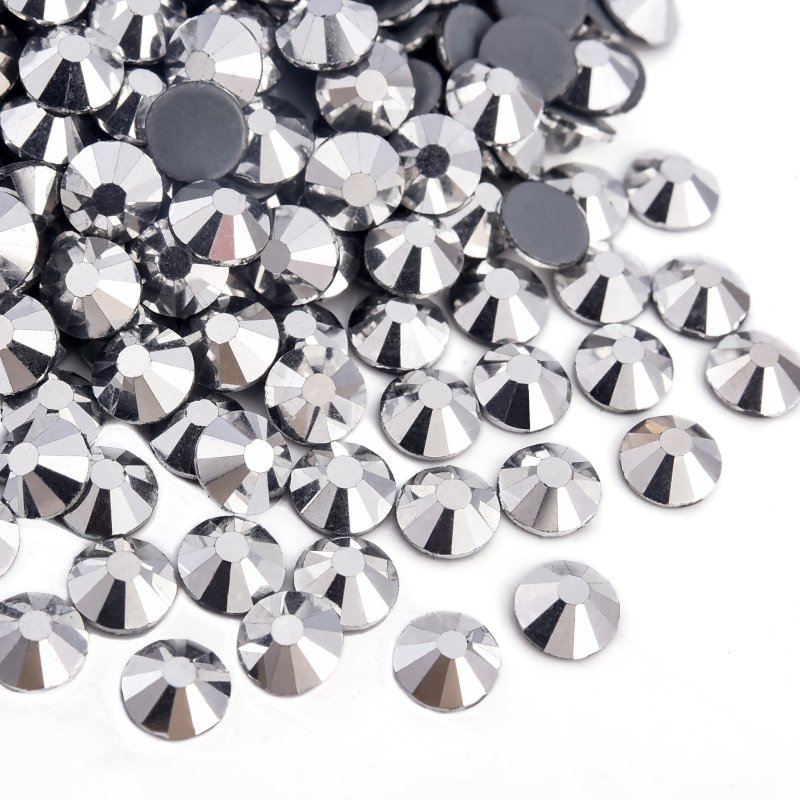
Why Is Guangzhou the Global Hub for Hotfix Rhinestones?
Guangzhou produces a large share of the world’s hotfix rhinestones because the entire production chain sits within a few hours of one location, next to two of China’s busiest ports. That density, not any single factory, is what makes the city the default sourcing hub.
Crystal glass blanks are cut locally, coating lines apply AB and metallic finishes nearby, adhesive workshops mix hot-melt glue, and packers fill the same day the stones come off the line. The port matters just as much. Air freight from Guangzhou reaches North America in 5-7 working days; sea freight runs 18-25 days to the West Coast and 25-35 to the East Coast. When a buyer in Miami needs a reorder inside three weeks, those numbers decide whether a season is saved or missed.
Density keeps prices sharp and MOQs low, because real factories compete on the same streets. It also supports traders who buy from whichever factory gives the best margin that week. We have cut, coated and glued glass crystal rhinestones in Guangzhou for 12 years, and the pattern is always the same: the cheap offer is not a discount on the same product, it is a cheaper grade.
Where Can You Buy Hotfix Rhinestones in Bulk in Guangzhou?
Three routes exist, and for B2B repeat orders the factory-direct route wins on price, MOQ flexibility and consistency. Wholesale markets, trading companies and factories all sell the same-looking product; what differs is what you can control after your deposit leaves the bank.
Wholesale markets suit one-time sample runs. You compare colors in person and leave the same afternoon, but stalls often switch sources when stock runs out, so reorders drift in shade. Trading companies sit in between. They hold no production line, so your order goes to whichever factory gives them the best margin that week, and quality drifts with it.
Factory-direct changes the math. You talk to the people who cut, coat and glue your stones, and a reorder comes off the same line as the first batch. That consistency makes factory-direct the right default for volume buyers, which is why the next section shows how to verify you are actually talking to a factory and not a well-dressed trader.
How Do You Tell a Real Factory from a Trading Company?
Four checks settle it in under an hour: a specific factory address, a live video call of the production floor, a fully itemized quotation, and a verifiable shipment record. If any one is refused, treat the supplier as a trader until proven otherwise.
Start with the address. Real manufacturers sit in districts like Baiyun, Panyu or Huadu, and the address should show cutting, coating and packaging equipment in the same facility. Cross-check it on a map and look for the same company name on the sign. Then ask for a live video call of the workshop. A factory shows you the line in real time, the coating machine, the glue pot, the packing table. A trader offers excuses.
Read the quotation the same way. Factories quote per pack with unit costs that scale consistently across sizes. Traders often quote per size with irregular jumps that hide reseller margins. And before any payment, ask for a bill of lading or a tracking number from a recent shipment and verify it with the carrier. Paper trails are checkable. Excuses are not.
If you want the full checklist in one place, how to find a reliable K9 glass hotfix rhinestone factory in Guangzhou walks through each verification step with the exact questions to ask.
What Should You Check When Inspecting Hotfix Rhinestone Quality?
Three things decide whether a hotfix rhinestone order is premium or a disappointment: the glass grade, the adhesive on the back, and color consistency across batches. Each one fails in a different, expensive way.
The glass grade is where most of the cost hides. K9 optical crystal has a refractive index around 1.9, a Mohs hardness of 6-6.5 and 12-14 facets that throw real flashes. Acrylic, the cheap substitute, sits near 1.49 with a hardness of 2-3 and scratches in the bag before it reaches your garment. If a quote looks too good to be true, ask the supplier to state the material in writing and confirm it against a physical sample.
The adhesive decides whether stones stay on your fabric after the tenth wash. Industrial hot-melt glue melts in the 150-170°C window and survives repeated machine washing. Cheap yellow glue melts below 130°C and releases in heat and sunlight. Press a sample onto your actual fabric and run it through your wash cycle before you buy in volume.
Color consistency is the third test. Premium suppliers control dye lots so a reorder six months later matches the first batch. Ask how the factory manages batch shade before full production. A factory that owns its coating line can answer; a trader who buys from whoever is cheapest this week cannot.
On the QC side, a real factory runs inspection at three gates: incoming glass lots, mid-production on the coating line, and pre-shipment visual checks under light. Ask what the factory’s per-batch defect allowance is. A straight answer looks like [COMPANY EXPERIENCE NEEDED: state your per-batch defect allowance, e.g., under 1%]. Buyers shipping into the EU also ask about lead content and REACH SVHC compliance, so a factory that tests its coating and shares the report is a safer partner. If you are buying at volume, quality control in bulk rhinestone manufacturing explains which QC records you should request before production starts.
Why Does K9 Crystal Beat Acrylic for Hotfix Rhinestones?
K9 is the premium standard because its refractive index of roughly 1.9 is close to natural crystal, its 12-14 facets split light properly, and its Mohs hardness of 6-6.5 survives real handling. Acrylic looks flat and scratches like a plastic bottle.
Put the two side by side under stage light and the difference is immediate. K9 stones look alive, with light refracting through the facets and firing back in flashes. Acrylic catches the same light and just sits there, because at a refractive index near 1.49 it cannot bend light the way crystal does.
Hardness matters more than buyers think. K9 at 6-6.5 on the Mohs scale survives bag-to-bag contact during shipping and handling on the worktable. Acrylic at 2-3 scratches the way a plastic bottle does, so a full carton of cheap stones arrives looking dull. Coating matters too. AB (aurora borealis) effects on premium stones are applied by vacuum deposition of a thin film layer, not a simple paint, which is why the rainbow effect survives the wash cycle.
The price gap between K9 and acrylic narrows quickly once you count rejected garments, rework and customer complaints. Cheap stones are never cheap. They are just paid for later.
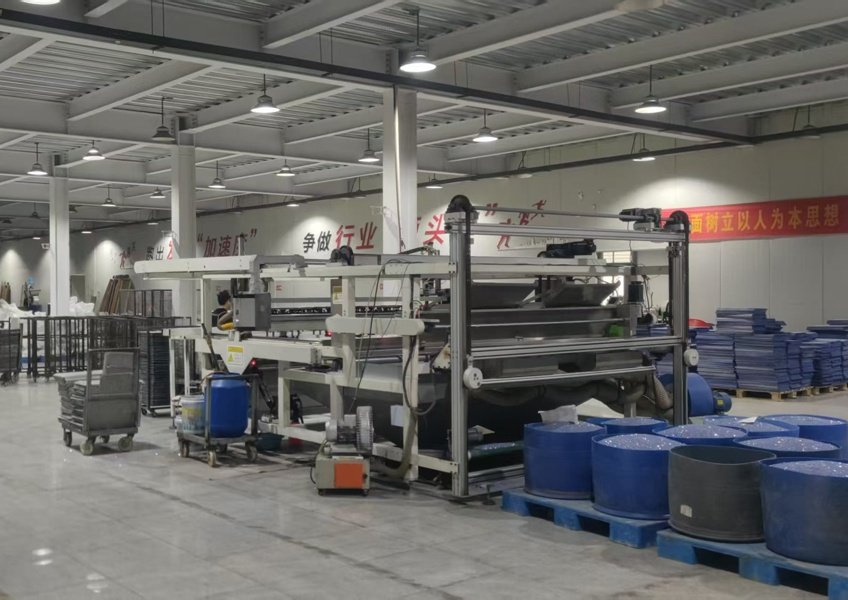
What Is the Minimum Order Quantity for Hotfix Rhinestones from Guangzhou?
Most factories work with MOQs far lower than new importers expect, commonly two packs per color and size, and a standard pack of SS16 stones holds about 1,440 pieces. That means you can test a supplier with a small first order before committing capital.
Low MOQs exist because production is modular. Cutting, coating and gluing run on standard lines, so a small batch costs only slightly more per unit than a large one. The MOQ climbs only when you ask for something non-standard, such as a custom color, a custom adhesive tint or branded packaging, because setup work has a price.
Treat the MOQ as a screening tool. A supplier who insists on a huge minimum before you have seen a sample is signalling a trader with tied-up capital, or a factory that does not want a test order. A factory that takes two packs lets you verify material, glue and color with a tiny investment. Run that test. It is the cheapest insurance in sourcing. If you want to see whether a factory’s material suits your garments, order samples first, send your color and size list to WhatsApp at +86 13692450325 and we will prepare a sample set for your fabric test.
For the full picture on minimums, custom orders and negotiation, see what to know about MOQ and custom rhinestone orders before contacting any supplier.
How Does an Order Move from First Inquiry to Your Warehouse?
A typical order follows a sequence that protects both sides: inquiry, quotation, samples, confirmation, deposit, production, inspection and shipping. Skipping any step raises your risk.
Start with a precise inquiry. State sizes in SS numbers, SS6 is 2.0mm, SS10 is 2.8mm, SS16 is 4.0mm, SS20 is 4.8mm, SS30 is 6.4mm, plus quantities per color and whether you need hotfix or flatback. If you are unsure which sizes suit your garments, which hotfix rhinestone size do you need walks through the common applications. A precise inquiry returns a precise quotation, and the quotation is your first quality test. Vague quotes hide vague product.
Samples come next, and this is where you protect yourself. Order samples of every color, press them onto the fabric you will actually decorate, and run them through your wash or wear test. A supplier who resists samples is a supplier you do not need.
Payment is typically a 30% deposit by T/T, with the balance against the packing list before shipment. Never pay in full upfront to an unverified supplier. For large orders, request photos or video of the packed goods before dispatch.
Shipping closes the loop. Air freight takes 5-7 working days; sea freight runs 18-25 days to the West Coast and 25-35 to the East Coast, quoted per cubic meter (CBM), calculated as length × width × height in meters. Know your CBM before negotiating freight. The relevant HS code for glass rhinestones is 7018.10, and your landed cost will hold no surprises if the CBM is right.
What Sourcing Mistakes Cost Importers the Most Money?
Five mistakes cause most of the damage: buying on unit price alone, skipping the wash test, ordering color on faith, paying in full upfront, and forgetting freight math.
Mistake one is buying on unit price alone. The cheapest stone per thousand is usually acrylic sold as crystal, or a thin glue that fails wash testing. Price means nothing until material, glue and color are fixed.
Mistake two is skipping the wash test. Every order should come with a pressed sample that has survived the same wash, heat and wear your customers will inflict. If the factory’s stones cannot pass your protocol, the price was never cheap.
Mistake three is ordering color on faith. Colors look different on a phone screen, on fabric and in real light. Confirm colors against physical samples, and ask how the factory controls batch shade before reordering at volume.
Mistake four is paying in full before production. A deposit structure keeps both sides honest. A supplier who insists on 100% upfront from a first-time buyer is a red flag, not a normal term.
Mistake five is forgetting freight math. A great stone price turns sour once you add freight per CBM, duty under HS 7018.10 (about 6.6% into the US, about 3.7% into the EU) and inland delivery. Compare suppliers on landed cost, not stone price.
How Do Guangzhou Factories Compare with Local Suppliers Near You?
Guangzhou wins on unit cost, full color range and control. A local supplier wins on convenience, lead time and easy returns. The right choice depends on order size and reorder frequency.
A local supplier carries stock on the ground, ships in days and handles returns without international shipping. But every layer between the factory and your door takes a margin, and that margin compounds across reorders. Local distributors also hold only a fraction of the factory’s range. You will rarely find 400+ colors of K9 stones on a local shelf.
A Guangzhou factory wins on cost and control. You order two packs to test, then scale. You can request custom colors or mixed sizes in one carton. You own the relationship, so reorders match previous batches. The cost is your time: verifying the supplier, testing samples, managing freight and import formalities.
For an established business shipping regularly, factory-direct almost always wins on landed cost. For a one-time project, the local supplier may be the smarter purchase. Run the math on your own numbers, quantity, freight per CBM, duty and storage, and the decision stops being emotional. If you want a factory-side quotation to feed into that math, send your list to WhatsApp at +86 13692450325 and we will quote within one working day.
What Should You Prepare Before Sending Your First Inquiry?
Gather five things before you contact any Guangzhou supplier: the SS sizes you need, quantities per color, the fabric you will press onto, your wash or wear testing protocol, and your target delivery date. With those in hand, your first inquiry is a spec, not a question.
A precise spec does two things. It signals you are a serious buyer, and it forces the supplier to reveal quality early. A factory that cannot answer a specific, technical inquiry has already failed your screening.
The sequence is the same for every supplier: verify the factory, order samples, test on your fabric, confirm MOQ and payment terms, then scale. Guangzhou’s advantage, production density, port speed and factory-direct pricing, only shows up when you work with a verified manufacturer.
We are one of those manufacturers. Guangzhou Yiben has produced glass crystal rhinestones for 12 years, holds more than 400 colors across SS6-SS30, bonds with German grey industrial adhesive, and wash-tests stones in-house to ISO 6330. Our typical on-time delivery record over the past 12 months is [COMPANY EXPERIENCE NEEDED: state your on-time rate, e.g., 98%]. Samples are available before any bulk commitment, and our MOQ starts at two packs per color and size.
Send your sizes, quantities and target dates to WhatsApp at +86 13692450325 or by email at rhinestonewholesale8@gmail.com, and we will confirm whether your order fits factory pricing. You can also review our full factory profile and product range before you write.
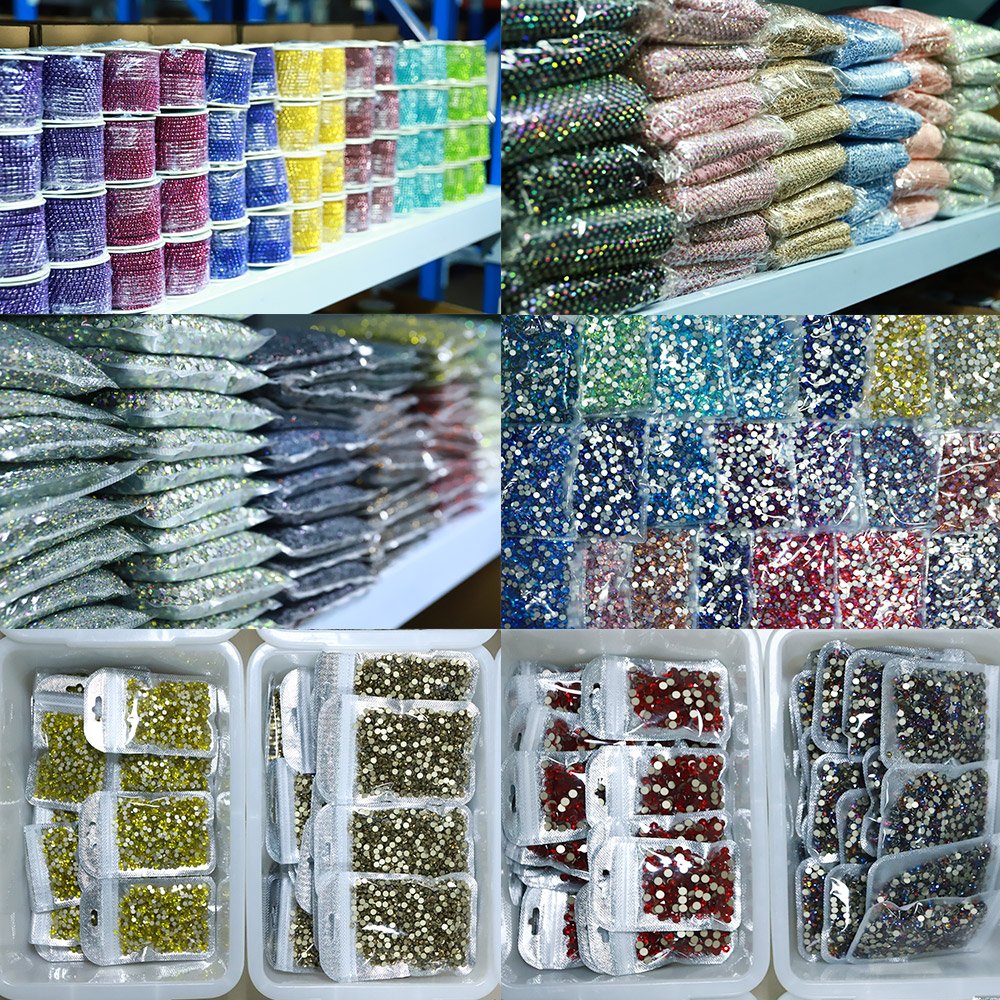
Need a size or color recommendation for your next order? Send us your fabric type, design, and target price — we reply within one business day. WhatsApp +86 13692450325 · rhinestonewholesale8@gmail.com