
Hot Fix Rhinestones Kit That Bonds Crystals to Fabric in Seconds
A hot fix rhinestones kit is the fastest way to turn a plain jacket, dance costume, or pair of jeans into something that catches light from across the room. Each crystal in the kit arrives with a thin disc of heat-activated glue already bonded to its flat back, so you skip the messy step of spreading fabric glue. You lay the stones face-up, press with a hot iron for a few seconds, and the adhesive melts into the weave. The whole process takes less time than hemming a sleeve, and the result survives the washing machine. Whether you are decorating a single pair of shoes or stocking up for a small home-based custom apparel business, the kit model is the practical entry point.
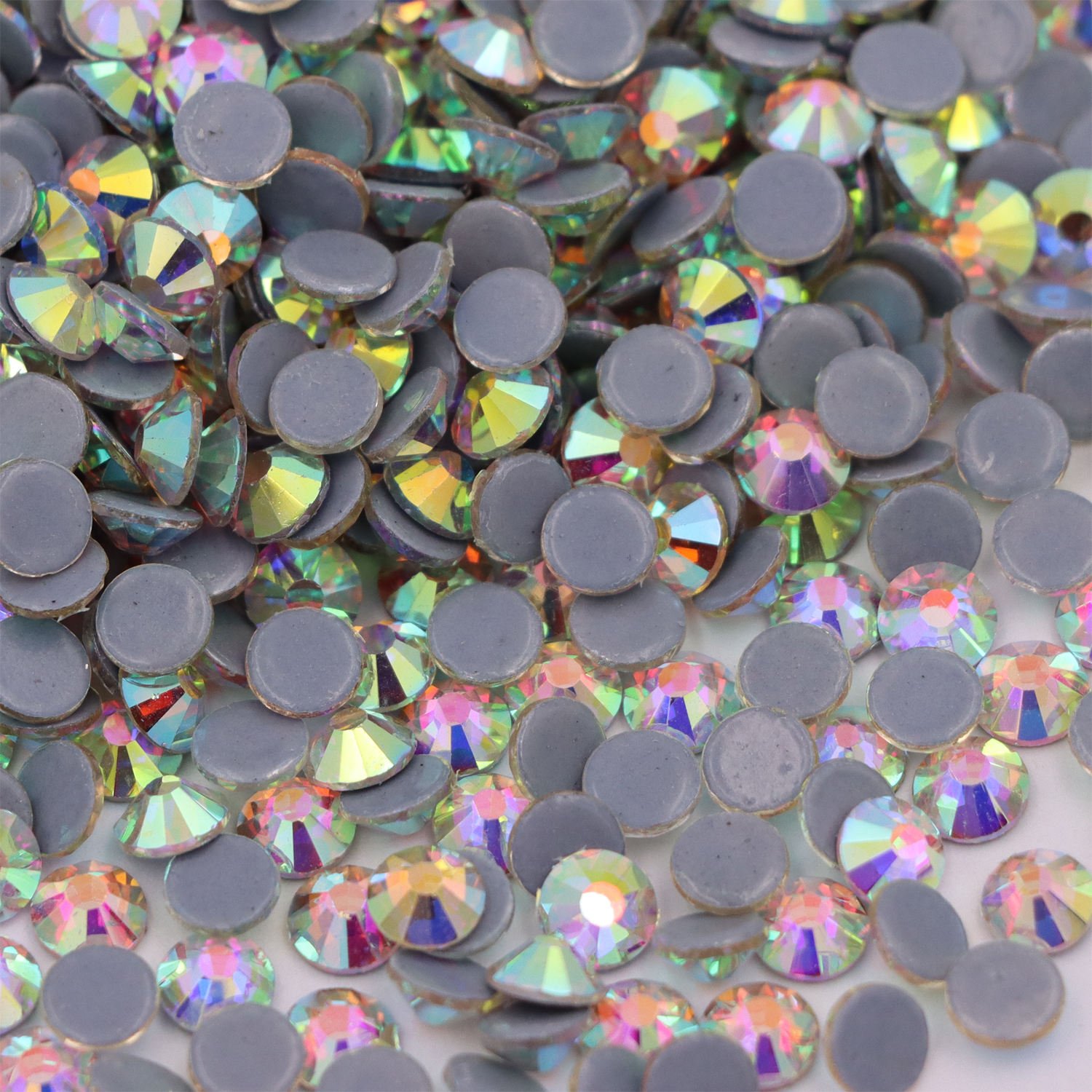
What is a hot fix rhinestones kit?
A hot fix rhinestones kit is a package of crystals that each carry a pre-applied layer of heat-activated glue on the back, ready to be ironed directly onto fabric. The glue is a specialized thermoplastic that softens between 150 and 170 degrees Celsius, which is why a standard home iron on its cotton setting works as well as a professional heat press. You do not need any additional adhesive, brush, or applicator liquid. The crystals are typically K9 optical glass cut with 12 to 14 facets, so they throw off more sparkle than the cheaper acrylic stones that only have eight facets or fewer. A kit usually mixes several sizes and a handful of colors so you can test placement before committing to a larger wholesale order.
Inside a typical kit you will find crystals in common sizes such as SS10, which measures 2.8 millimeters across. Some kits also include small motif hotfix pieces, which are pre-arranged clusters already shaped into a flower, a bow, or a star that you can place in one step instead of arranging stones individually. Those motif sheets save you a lot of fiddling when you want a finished design without building it dot by dot.
What sizes come in a hot fix rhinestones kit?
Most kits center on the workhorse sizes that suit clothing and accessories. SS6 measures 2.0 millimeters and is the go-to for fine linework and tiny accents. SS10 at 2.8 millimeters is the most common all-around size and the one you will reach for on most motifs. SS16 jumps to 4.0 millimeters for bold single stones and larger fills. SS20 at 4.8 millimeters and SS30 at 6.4 millimeters are statement sizes used sparingly as focal points. A well-built kit leans on SS10 because it is small enough for detail work yet large enough to read clearly on a garment from a few feet away.
What should a good kit contain beyond the crystals?
A kit worth buying should include a few practical extras, not just a bag of stones. Look for a silicone pressing sheet or parchment layer that protects your iron’s soleplate from stray glue. A transfer or pickup tool, often a wax-tipped pen, lets you grip individual crystals without chasing them across the table. Some kits add a small positioning template or a printed motif guide so you can follow a design. If your supplier is a factory that also produces the crystals in bulk, the kit often doubles as a sample pack, letting you test colors and sizes before you order thousands of pieces for production.
How do you apply hot fix rhinestones to fabric?
You place the crystals glue-side down on the fabric, cover them with a pressing sheet, and press with a hot iron or heat press at the correct temperature and pressure for a few seconds. The key numbers for cotton are 165 degrees Celsius, 40 PSI, and about 15 seconds of contact. Polyester and spandex run cooler because they can scorch or shine under high heat. For stretch fabric, you drop to around 150 degrees Celsius and 12 seconds at 30 PSI. Silk needs a barrier sheet and a gentler touch at roughly 140 degrees Celsius for 10 seconds.
Wait for the fabric to cool completely before you touch the stones. The glue sets as it cools, and lifting a stone while it is still warm will pull it back off and leave a smear. Do not iron directly on top of the crystals, because the exposed glass face can trap heat and the glue can squeeze out the sides. A pressing sheet or parchment paper between the iron and the stones keeps everything clean and even.
Can you use a regular iron instead of a heat press?
Yes, a regular household iron works for hot fix rhinestones, but it has two limitations you should plan around. First, you cannot set a precise PSI number on a hand iron, so you have to press straight down with steady, even body weight instead of sliding the iron. Sliding pushes the stones out of place. Second, most home irons have temperature dials marked in fabric types rather than degrees, so you should start on the cotton setting and test on a scrap of the same fabric. If the glue does not grab, raise the heat slightly in small steps. A heat press simply removes the guesswork, which matters when you are decorating dozens of pieces.
How long does the bond last through washing?
On K9 glass crystals with a quality heat-activated glue, the bond holds through repeated machine washing when you apply the stones correctly. Factory testing under the ISO 6330:2021 wash standard at 40 degrees Celsius shows a drop-off rate below 2 percent after 50 cycles for properly pressed K9 with German gray glue. Cheap acrylic stones with low-grade yellow glue lose more than 30 percent of their stones after just five washes. Turn garments inside out, use a gentle cycle, and avoid fabric softener if you want the stones to stay put for the life of the garment.
What is the difference between hot fix and flat back rhinestones?
The difference is the adhesive. Hot fix rhinestones arrive with a layer of heat-activated glue already fused to the back, while flat back rhinestones have a bare, smooth back that needs you to supply the glue. A flat back stone is glued on with liquid adhesive such as E6000 or Gem-Tac, or it is set into a metal finding for jewelry. A hot fix stone is simply positioned and pressed with heat. Both can use the same K9 glass and facet count, so the sparkle is identical, but the application method and the projects they suit are different.
Flat back stones give you more control for jewelry and hard surfaces, because you choose the adhesive and you can reposition the stone before the glue dries. Hot fix stones are built for speed on fabric, because the glue is already measured and evenly distributed on every single stone. That consistency is the real advantage. When you glue flat back stones by hand, the amount of adhesive varies from stone to stone, and some will pop off early because they were under-glued. A factory-applied hot fix glue layer removes that variable entirely.
Which projects call for hot fix and which for flat back?
Reach for hot fix rhinestones when the surface is fabric and you want a fast, washable result. Dance costumes, cheer uniforms, denim jackets, sneakers, tote bags, and bridal wear all take hot fix stones cleanly. Reach for flat back rhinestones when you are working on a hard surface like a phone case, a resin project, a nail set, or a metal pendant, where an iron cannot transfer heat effectively. Hot fix glue needs the fibers of the fabric to grip into, so it does not perform well on glass, plastic, or metal.
Does the hot fix glue affect the sparkle?
No. The glue sits on the back of the stone, behind the mirrored foil coating, and it never touches the faceted face that catches the light. A hot fix crystal and a flat back crystal cut from the same K9 glass will look identical from the front. What changes the sparkle is the glass itself and the facet count, not the presence of glue on the back. That is why a hot fix rhinestones kit from a factory that cuts real optical glass will always outshine a bargain pack of acrylic stones, no matter which application method you choose.
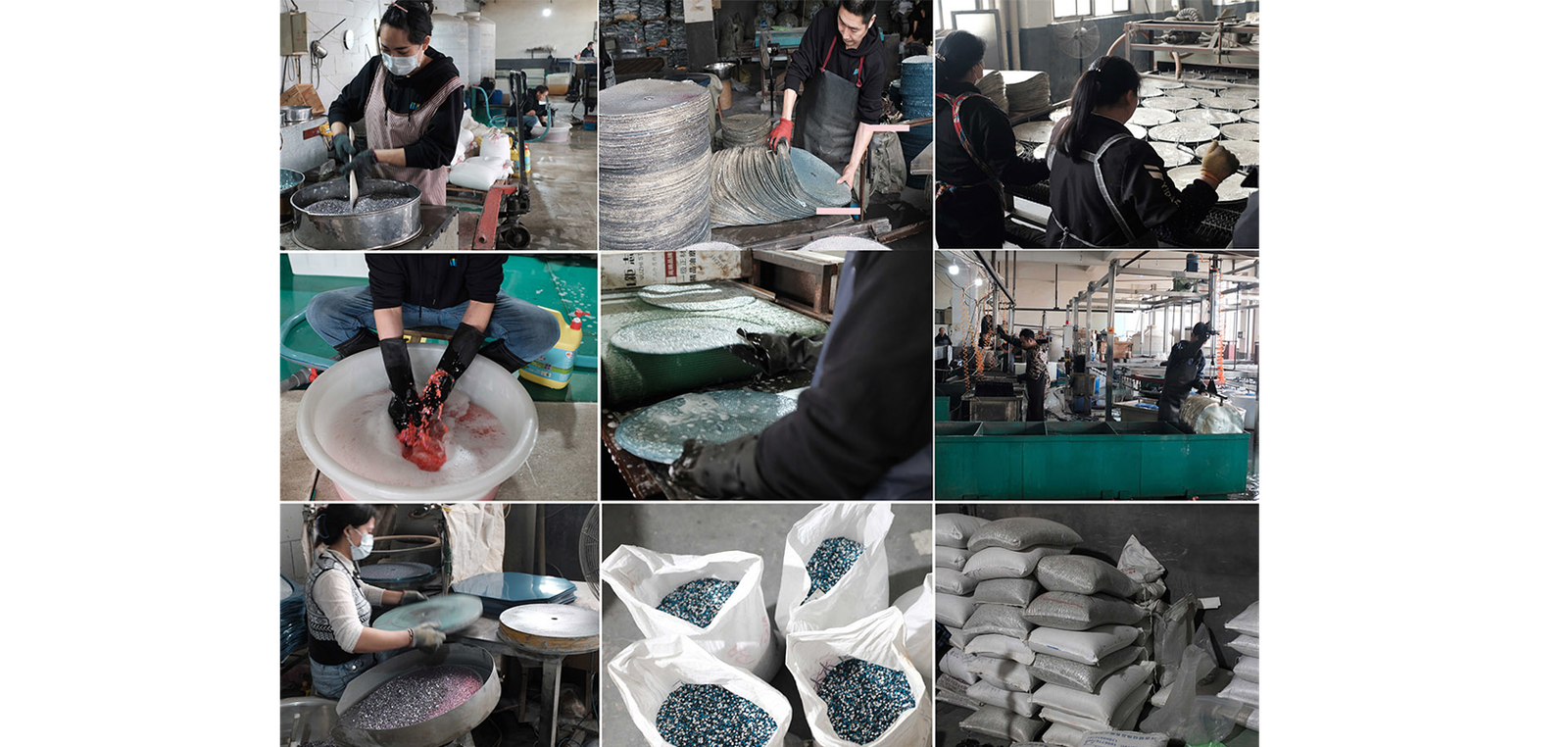
Which fabrics work best with a hot fix rhinestones kit?
Cotton, denim, and woven blends are the easiest place to start because they hold heat well and give the glue a stable surface to grip. The glue melts and flows into the tiny gaps between threads, then hardens into a mechanical lock. Stretch fabrics like spandex and lycra also work, but they require the cooler settings mentioned earlier and a light touch so the fabric does not warp. Leather and vinyl can take hot fix stones if you keep the temperature low and the press time short, because excessive heat will scorch the surface. Nylon and thin polyesters are the riskiest, since they can melt at the temperature the glue needs.
Always test on a hidden seam or a scrap before you decorate the finished garment. Fabrics from different mills behave differently under heat, even when the label says the same fiber content. A 30-second test with two or three stones tells you whether the glue will bond without damaging the material, and it saves you from ruining a costume the night before a performance.
How do you design a motif with a hot fix rhinestones kit?
Start with a template rather than placing stones freehand. You can print a design, tape it under a piece of transfer tape, and build the motif face-down so the glue side stays up. A motif hotfix sheet works the same way but arrives pre-assembled, so you just peel and press. If you are building your own design, work from the center outward so the outline stays even, and keep a consistent gap between stones. The spacing changes the look as much as the size does. Tightly packed stones create a solid, saturated sparkle, while a looser scatter gives a delicate, twinkling effect.
Use SS10 for the body of a motif and drop to SS6 for fine curves and lettering. Reserve SS16 and larger stones for the center of a flower or the corner accents of a design. Mixing sizes inside one motif adds depth that a single-size layout cannot achieve. Once the design is complete, cover it with the pressing sheet and press it in one pass, not in sections, so the glue sets evenly.
Why buy a hot fix rhinestones kit from a manufacturer?
When you buy a kit from a factory that actually cuts the crystals, you are testing the same stones you would later order in bulk. That matters for anyone planning to scale a small decorating hobby into a clothing line or a custom apparel service. The kit confirms the real sparkle, the true color, and the wash durability before you commit to a production order. A factory-backed kit also tends to use K9 optical glass with 12 to 14 facets and a German gray glue that holds through 50 washes, rather than the low-grade acrylic and yellow glue found in unbranded retail packs.
We manufacture hot fix rhinestones at the source and supply kits, sample packs, and bulk wholesale orders with a low minimum of two bags per color per size. The stones ship straight from our production line, so the price does not carry layers of middlemen. If you want to test our K9 crystals on your own fabric before ordering in volume, request a free sample kit and we will send one to your studio. Reach us on WhatsApp at +86 13692450325 or email rhinestonewholesale8@gmail.com for a sample and a quote.
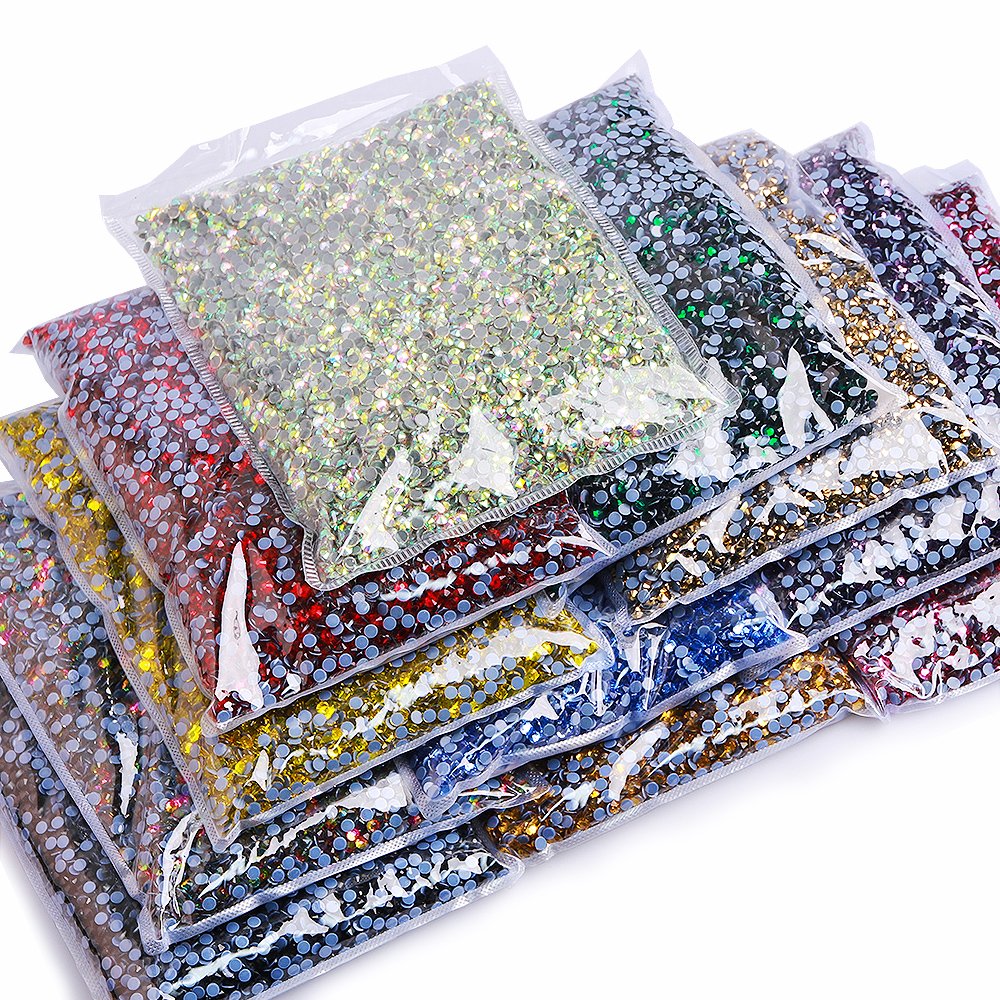
Need a size or color recommendation for your next order? Send us your fabric type, design, and target price — we reply within one business day. WhatsApp +86 13692450325 · rhinestonewholesale8@gmail.com