
Wholesale Flatback Rhinestones for Non Hotfix Gluing Settings and Jewelry Production
Quick answer A flatback rhinestone is a faceted stone with a smooth, uncoated back, so you fix it with glue, a metal setting, or a stitch instead of heat. Guangzhou Yiben supplies 100% K9 optical crystal flatbacks in SS6 (2.0 mm) through SS30 (6.4 mm), in 400+ stock colours plus Pantone custom matches, packed 1440 pieces (one gross) per bag. Ordering is simple. Minimum order is 2 bags per colour and size, stock colours ship the same day payment clears, and custom runs ship in 7 to 15 days depending on order quantity. Send your application, colour and quantity, and we quote within 12 hours with a free sample so you can test the stone on your own fabric before you commit.
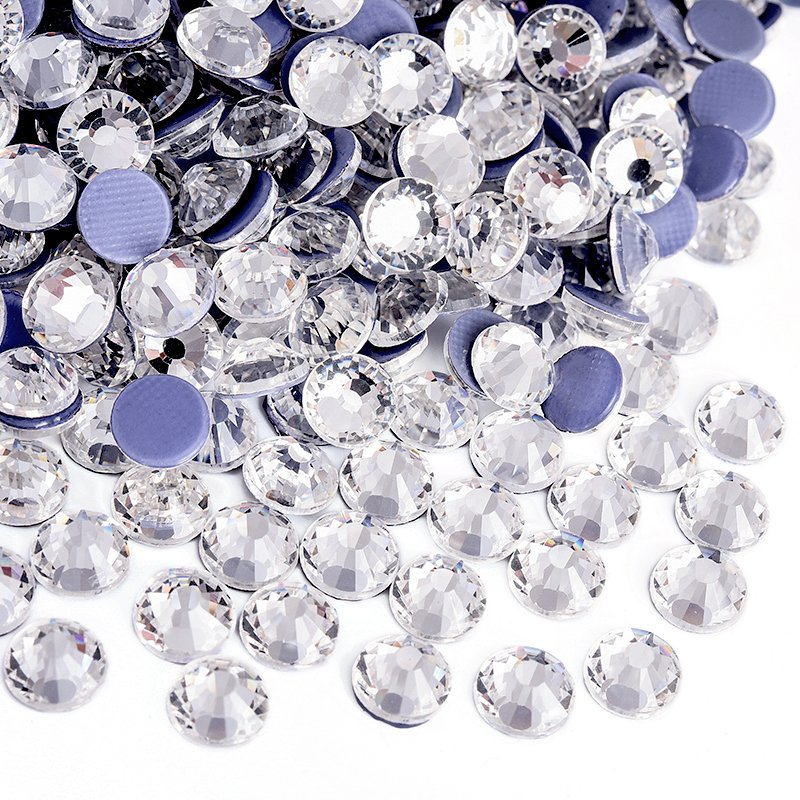
What Is a Flatback Rhinestone and How Is It Different from Hotfix
A flatback rhinestone has a smooth, uncoated back and no pre-applied adhesive, so you attach it with glue, a metal setting, or thread. A hotfix rhinestone carries a heat-activated glue film on its back that bonds when you press it with heat. That single difference decides how every other step works.
The stone itself is where the quality lives. Ours are cut from 100% K9 optical crystal glass, which carries a refractive index of about 1.9 and a density of 2.53 g/cm³. That index is what produces the sharp white fire you see when you tilt a set stone under a lamp. Cheap imitations are cut with 8 facets or fewer and lose light through the base instead of bouncing it back. K9 also sits at Mohs 6 to 6.5 on hardness, where acrylic flatbacks sit at 2 to 3 and scratch the moment a metal setting rubs them. Facet count runs 12 to 14, which is why a K9 stone reads brighter from more angles.
Hotfix reverses the whole workflow. There, the factory pre-coats the back with German-imported heat-activated grey glue with a melting window of 150 to 170°C and a working temperature of 160°C, and the buyer presses the stone onto the fabric. Cheap yellow glue melts below 130°C and lets go after a season of summer storage. Flatback hands that choice back to you. You decide the adhesive, the setting, or the stitch, and you decide how the stone meets the material. If you are still weighing a pointed stone against a flat one, the comparison of flatback vs pointed rhinestones walks through where each wins.
For a 12-hour quote and a free sample, message us on WhatsApp at wa.me/8613692450325, call or message +86 13692450325, or email rhinestonewholesale8@gmail.com.
What Sizes Do Flatback Rhinestones Come In and How Many Are in a Bag
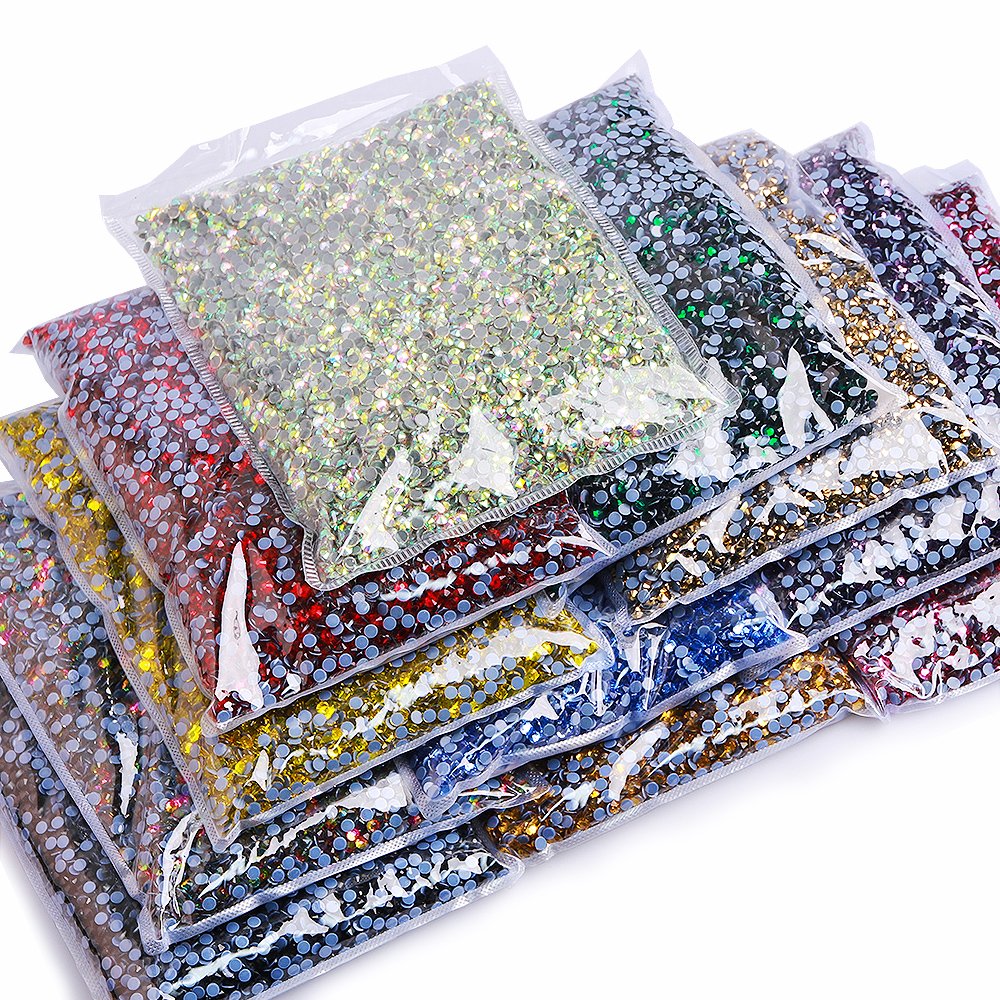
We stock round flatback crystals from SS6 (2.0 mm) to SS30 (6.4 mm) across every popular intermediate size. Each standard bag holds 1440 pieces, which is one gross. Larger sizes are also packed by weight for high-volume lines that do not want to count bags.
Size is the first spec your pattern will fight you over, so get it right before you quote a client.
| SS number | Diameter | Where it usually goes |
|---|---|---|
| SS6 | 2.0 mm | Dense small fills, lettering, swimwear scatter |
| SS10 | 2.8 mm | Everyday garment lining, bag trims, nail-scale detail |
| SS16 | 4.0 mm | The workhorse for gowns, shoes, and mixed fills |
| SS20 | 4.8 mm | Bold accents, belts, bridal focal lines |
| SS30 | 6.4 mm | Statement centres, brooches, structured bags |
The trade works in the SS scale rather than millimetres for a reason. Buyers, pattern cutters and reorders all speak it, and it survives the jump between suppliers without anyone converting units in their head. The full SS6 to SS30 size reference maps every step in the ladder, including where SS8, SS12 and SS20 sit between these anchors.
Bag count matters as much as size, because it is how you plan cost per garment. The 1440-piece bag is one gross, a twelfth of a thousand-dozen batch, and it is the unit almost every wholesale rhinestone supplier quotes against. If your line runs on weight, we quote SS10 through SS30 by kilogram and convert back to a piece count so your costing stays honest.
What Colors, Finishes, and Backings Are Available
We hold 400+ stock colours and can match any Pantone reference on custom runs. Finishes include crystal clear, AB, metallic, and pearl effects. The backing behind the stone is not decoration. It is the mirror that returns light and the surface your adhesive bonds to.
That last point is where most buyers get surprised. The foil on the back of a stone does two jobs at once. It reflects light back up through the facets so the face of the stone looks full instead of grey, and it is the layer that glue or a setting actually grips. Get the backing wrong for your application and the most expensive crystal in the tray will look dull.
| Backing | Effect on light | Best suited to | What it means for adhesion |
|---|---|---|---|
| Silver foil | Bright, neutral mirror; true colour | Apparel, shoes, general production | Standard grip for most craft and garment glues |
| AB (Aurora Borealis) | Prismatic rainbow flash on top of base colour | Dancewear, resort, trend collections | Same grip as silver; coating sits on the face, not the back |
| Gold foil | Warmer reflection; richer on warm tones and gold hardware | Jewelry, belts, gold-plated settings | Pairs cleanly with brass and gold-tone findings |
Finish families are worth separating from colour families. Crystal clear is the neutral bright workhorse, AB adds a rainbow flash that shifts as the wearer moves, metallic finishes kill the sparkle and replace it with a solid metal tone, and pearl finishes give a soft, opaque dome instead of a faceted point. A dancewear client who wants stage flash and a handbag client who wants quiet luxury are asking for two different finish families, not two different colours.
This is also the layer that catches colour drift between orders. A gold-foil stone in the same nominal colour as a silver-foil stone will read a little warmer under a shop lamp, and if your client signed off on one and you reorder the other, it shows. The hotfix rhinestone colors reference covers how colour families behave once they are set, and it is worth reading even if you buy non-hotfix, because the dye lots behave the same way.
How Do You Fix Flatback Rhinestones on Garments, Shoes, and Bags
You have three real routes: glue-on, metal settings, and sew-on. Which one you pick depends on the base material, how heavy the stone is, and whether the piece needs to survive washing. Glue-on covers most garments, settings suit metal and jewellery, and sewing holds the heaviest stones.
| Route | Best base materials | Stone weight it holds | Equipment needed | Removable |
|---|---|---|---|---|
| Glue-on | Fabric, leather, vinyl, plastisol prints | SS6 to SS16 comfortably; SS20 if applied wet and flat | Precision tip, gel or flexible craft adhesive, cure time | Hard once cured |
| Metal settings | Metal, jewellery bases, rigid trims | Any size the bezel or prong is cut for | Bezel or prong cups, pliers or press | Yes, reusable |
| Sew-on | Lace, tulle, structured felt, knit trims | Heaviest stones, up to SS30 and beyond | Needle, matching thread, sew-through or drilled stone | Yes, and re-sewable |
Glue-on is the default for apparel because it handles curves, stretch and tight corners that a bezel cannot reach. The catch is the adhesive, not the stone. A gel glue that stays slightly flexible beats a brittle instant glue on fabric that moves, because rigid glue cracks under stretch and takes the foil with it. If your line already runs heat-set equipment and you use a heat-activated film adhesive, keep the press inside the fabric’s safe window so you bond the glue without scorching the base. Cotton holds 165°C at 40 PSI for 15 seconds, spandex drops to 150°C at 30 PSI for 12 seconds, and silk needs a heat-shield paper down at 140°C and 20 PSI for 10 seconds. Blow past those and the fibre fails before the bond does.
Metal settings solve the problem differently. A bezel or prong cup holds the stone mechanically, so the foil never has to carry load, which is why jewellery makers reach for settings on rings, earrings and rigid pieces. Sew-on is the slowest route and the most forgiving. Drilled or sew-through stones let you anchor a heavy SS30 on tulle or a structured bag panel without trusting any adhesive at all. The step-by-step method for the glue route lives in how to apply flat back crystals, including how to degrease a surface so the glue actually bites.
How Are Flatback Rhinestones Priced at Wholesale and What Is the MOQ
Wholesale pricing is quoted per bag or per kilogram and drops in tiers as quantity rises. Our minimum order is 2 bags per colour and size, roughly 2,880 pieces for a mid-size stone. Send the specs and we quote within 12 hours.
Two bags is a deliberately low floor. It lets a workshop run a real production test on a live order instead of a five-stone sample that proves nothing about a full run. From there, price scales on volume and on mix. Ordering one colour in one size in depth is always cheaper per piece than ordering the same total across ten colours, because setup and packing are what cost money at the low end.
| Order shape | Typical pricing basis | What drives the number |
|---|---|---|
| 2 to 20 bags, one colour | Per bag | Base shelf price, packing included |
| 20 to 200 bags | Per bag, tiered | Colour count and total piece volume |
| 200 bags and up | Per bag or per kg | Whether you take stock colours or a custom run |
| Custom Pantone or private label | Per bag plus setup | Run quantity, packaging artwork, lead time |
Cost per stone only means something against your finished-piece value, which is why the how much rhinestones cost breakdown is worth reading before you set a client price. A gown that takes 3,000 SS16 stones has a very different stone budget than a swimsuit that takes 800 SS10, even if the per-bag price looks identical on the invoice.
For a 12-hour quote and a free sample, message us on WhatsApp at wa.me/8613692450325, call or message +86 13692450325, or email rhinestonewholesale8@gmail.com.
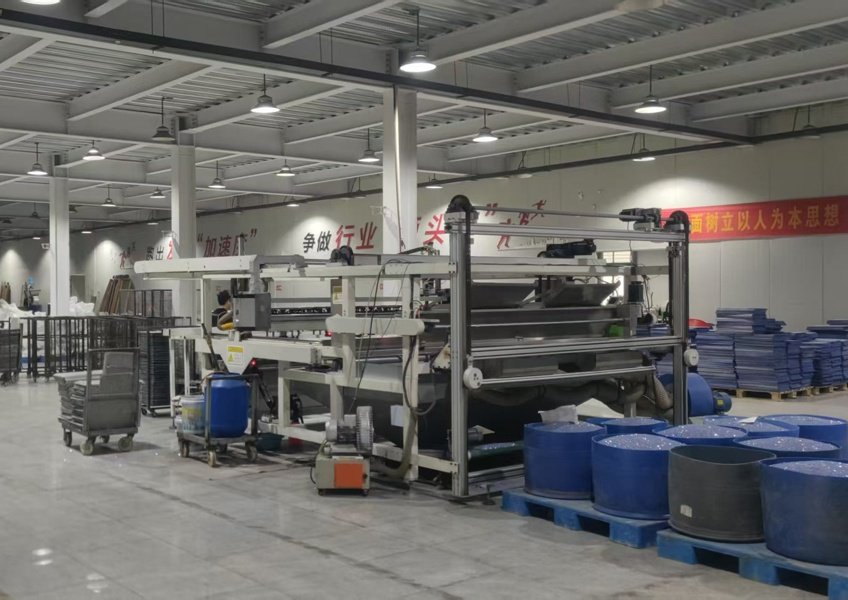
Can You Customize Packaging and Private Label
Yes. We run OEM and ODM private-label programmes, so your logo, bag artwork and pack sizes can be built around your brand rather than ours. Custom packaging is quoted with your order and ships on the same custom production timeline as the stones themselves.
This matters most to distributors and store brands who never want a supplier’s name on a shelf-ready bag. We print your mark, set your pack count, and seal the bags to your spec. For buyers who want a rough planning number before the quote comes back, the table below shows how many stones a project typically swallows. It is an estimate, so treat it as a starting point and confirm against your own pattern.
| Project | Dominant size | Approximate pieces |
|---|---|---|
| Swimwear, one piece | SS10 to SS16 | 500 to 2,000 |
| Bridal gown, hem and scatter | SS16 and SS20 mixed | 2,000 to 5,000 |
| Dance costume, full coverage | SS6 to SS16 mixed | 15,000 to 30,000 |
| Full coverage, 1 square foot | SS16 | About 576 |
| Full coverage, 1 square foot | SS20 | About 400 |
Jewellery runs sit outside these garment numbers because a single setting holds one stone, not a spread. If your project is earrings, rings or charms, the flat back crystals for jewelry making guide is the better fit for planning counts and cup sizes.
How Fast Do Flatback Rhinestones Ship from Guangzhou
Stock colours ship the same day payment clears. Custom runs ship in 7 to 15 days depending on order quantity. Air freight from Guangzhou reaches North America in 5 to 7 working days, and sea freight takes 18 to 25 days to the west coast or 25 to 35 days to the east.
That split between stock and custom is the single number that saves a late order. If your client needs stones next week, order from the 400+ stock colours and take the same-day dispatch. If you need a Pantone match or private-label packing, plan around the 7-to-15-day custom window and choose air or sea based on the deadline.
| Destination route | Method | Transit time |
|---|---|---|
| Guangzhou to North America | Air (DHL / FedEx) | 5 to 7 working days |
| Guangzhou to US west coast | Sea freight | 18 to 25 days |
| Guangzhou to US east coast | Sea freight | 25 to 35 days |
On the paperwork side, glass flatback stones classify under HS code 7018.10. Duties are set by the destination country and change, so confirm the current rate with your customs broker or the latest tariff schedule for your market before you land a costing. If you are mapping the whole import picture, the sourcing bulk hotfix rhinestones from China guide covers the surrounding logistics even though it is written around the hotfix line.
How We Keep Batch Colours Consistent and How We Check Quality
Every colour we ship is measured against a retained Pantone card before it leaves the line, and we keep a physical sample of each batch on file. That gives you a reference to compare your next order against instead of trusting your memory of a photo.
Batch drift is the quiet killer of a repeat order. Your client approves a colour, you run the first drop, and three months later the reorder is half a shade off under retail lighting. A factory that keeps the sample can prove whether the new batch matches, and can catch it before it ships rather than after a complaint. This is the part of sourcing that never shows up in a product page and always shows up in a chargeback.
Quality checks run on the stone as well as the colour. We verify facet count stays in the 12-to-14 range, because a run that drops to 8 facets will look flat next to the approved sample even if the colour is perfect. We check that the foil backing is intact across the batch, since a scuffed or uneven foil reflects the light badly and grips glue unevenly. And we spot-check dimensional tolerance on SS16 and SS20, the two sizes where a fraction of a millimetre decides whether a stone sits flat in a setting or rocks in it. We have run this line for 12 years as a source factory, and the retained-sample habit is the one that pays for itself most often.
What Are the Honest Limits of Non-Hotfix Flatback Rhinestones
A flatback’s durability comes from the adhesive or setting you choose, not from the stone. We cannot hand you the ISO 6330 claim of under 2% loss after 50 machine washes that pre-glued hotfix stones earn with German grey glue, because that number belongs to the glue system, not the crystal.
That is the boundary most flatback sellers skip. The K9 crystal itself is hard and stable, and the foil is the same foil. What changes is the bond. If you glue a flatback onto a stretch knit with a cheap rigid adhesive, it can shed after a handful of washes even though the stone is perfect. The 50-wash figure you see quoted is a hotfix result on cotton and polyester blends with a specific industrial glue, and copying it onto a glue-on flatback would be a promise we cannot stand behind. Match the adhesive to the material and test it on your own fabric, and the stone will hold up.
There are other honest edges. Size carries weight. An SS30 is genuinely heavier than an SS6, and a full-coverage bodice built entirely from SS30 stones can feel stiff and heavy, so on lightweight or children’s pieces it is common to build with SS10 and SS16 and use SS20 and SS30 only as accents. Silk is beautiful and unforgiving. If your line runs silk, budget for the lower press window and a heat shield, or lean on glue and settings and skip heat entirely. And a colour that reads right on a screen is not a colour until you hold the physical stone under your own lighting, which is exactly why we send a free sample before you commit to a run.
How to Choose a Flatback Rhinestone Supplier Without Getting Burned
Judge a supplier by what you can verify: the crystal grade, the size tolerance, whether they keep batch samples, and whether the sample matches the bulk. A supplier who answers those four questions plainly is one you can build a product line around.
Everything else is decoration on the pitch. Ask what the stone is made of and whether the facet count is consistent, not whether the price is the lowest. Ask for the retained sample on your colour so the next batch can be checked against it. Order a small run, put it through the way your customer will use it, and look at the stones before you look at the invoice. If the sample and the bulk diverge, that is the signal, and you want to learn it on two bags rather than two hundred.
We are a 12-year source factory in Guangzhou, and the reason buyers stay is not a slogan. It is that stock colours ship the same day payment clears, custom runs quote and ship in a defined 7-to-15-day window, every batch is checked against a retained standard, and the first sample is free so nobody has to gamble. What you verify in the sample is what you get in the bulk.
For a 12-hour quote and a free sample, message us on WhatsApp at wa.me/8613692450325, call or message +86 13692450325, or email rhinestonewholesale8@gmail.com.
Related Topic
If you are past the sourcing questions and ready to put stones on a product, these two guides pick up where this page stops.
– How to apply flat back crystals covers surface prep, adhesive choice, and the curing steps that decide whether a glued stone stays on. – Flat back crystals for jewelry making covers bezels, prong cups, and setting sizes for earrings, rings, and charms.
Need a size or color recommendation for your next order? Send us your fabric type, design, and target price — we reply within one business day. WhatsApp +86 13692450325 · rhinestonewholesale8@gmail.com