
Add Rhinestones to a Wedding Dress for Reception-Ready Sparkle
You lift the dress off the hanger and the bodice feels bare. The lace is pretty, the silhouette is right, but under the reception lights it disappears. That missing shimmer is the difference between a dress you like and a dress guests photograph from every angle. Adding rhinestones to a wedding dress fixes that gap, and you do not need a designer budget to pull it off. Hotfix crystals with a heat-activated glue backing bond directly to fabric in seconds with an iron or heat press. A bodice treatment typically takes 2,000 to 5,000 stones, and the result reads as couture even though you placed each crystal yourself. This guide walks through the glass you should buy, the heat settings that keep stones attached, and the placement patterns that look intentional rather than scattered.
How do you add rhinestones to a wedding dress?
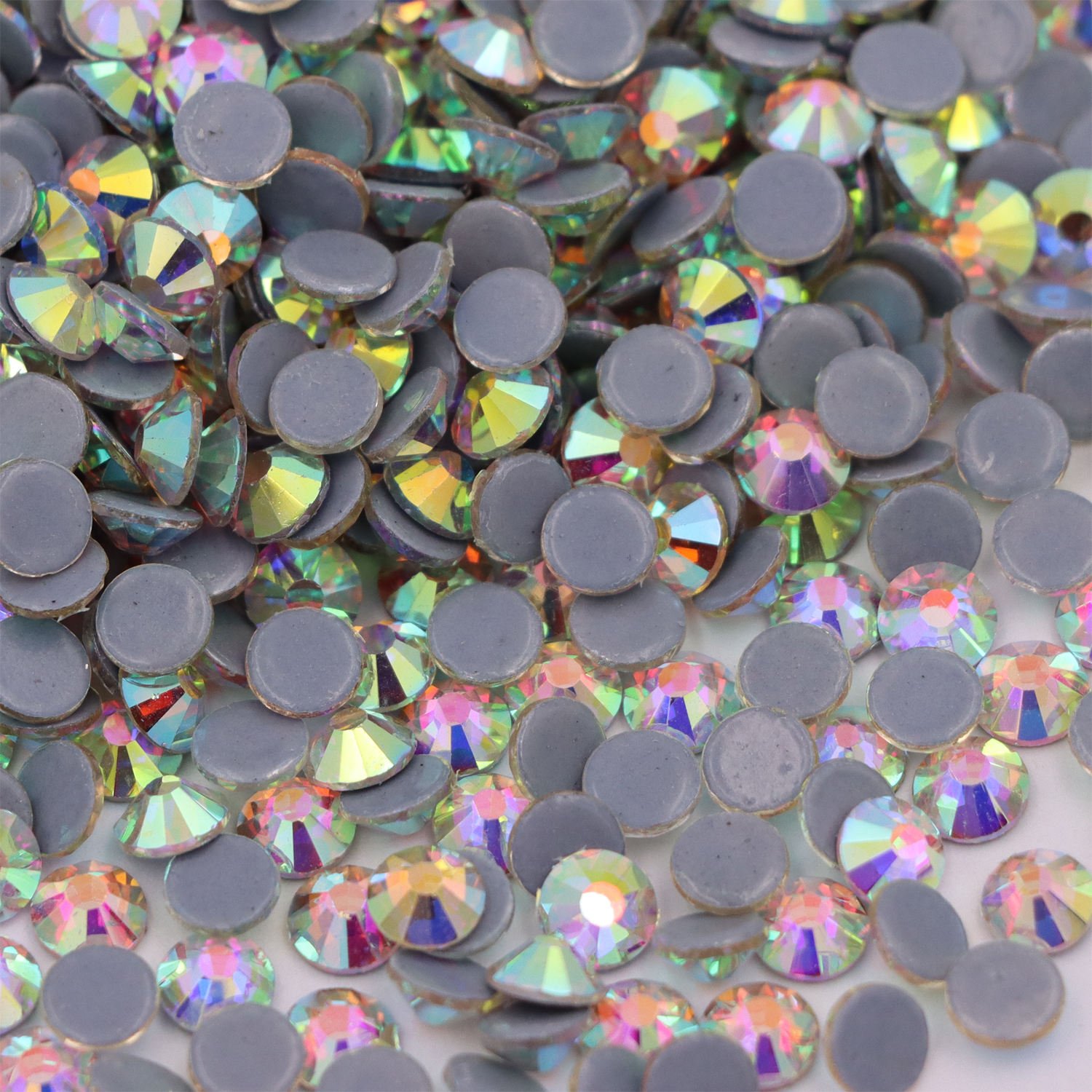
You add rhinestones to a wedding dress with hotfix crystals, which have a heat-activated adhesive on the flat back of each stone. Lay the dress flat on a padded surface, position stones shiny side up with the glue side against the fabric, cover with a pressing sheet, and apply heat for a short hold. The glue melts into the weave and sets as it cools, so each crystal locks into place without a single stitch. Every fabric calls for its own temperature and time, and using the wrong setting either scorches silk or leaves stones that pop off on the drive to the venue.
The process has four stages, and none of them are difficult. First, mark your layout with chalk or a disappearing pen so the spacing stays even. Second, pick up each stone with a wax-tipped picker pen or tweezers rather than your fingers, because skin oil dulls the adhesive. Third, set the temperature to match the fabric, press, and lift straight up without dragging the stone sideways. Fourth, let the area cool fully before you move the panel, since the glue is still soft while warm. Most beginners finish a bodice in an afternoon, and the learning curve flattens out after the first twenty stones. Adding crystals to a wedding dress this way is closer to decorating a cake than to sewing, and mistakes are easy to lift and re-place before you apply heat.
What heat setting works for each bridal fabric?
Cotton and heavier linings tolerate 165°C at 40 PSI for 15 seconds, which produces the deepest bond. Spandex or stretch panels need less heat, around 150°C at 30 PSI for 12 seconds, so the elastic keeps its recovery. Silk and delicate tulle sit at the gentle end of the range, roughly 140°C at 20 PSI for 10 seconds with a sheet of thermal paper between the iron and the stone to shield the fiber. These three settings cover almost every gown, because dresses are built from cotton linings, stretch underlays, and fine overlays layered together. If you are unsure, test on an inside seam allowance first and confirm the crystal grips before you touch the visible bodice.
How do rhinestones compare to sew-on crystals?
Adding rhinestones to a dress with hotfix glue is far faster than sewing, but sew-on crystals still earn their place on net and heavily beaded gowns. Hotfix needs a flat, heat-stable surface to bond properly, so it shines on satin bodices, tulle overlays, and solid linings. Sew-on stones with foil backs work where a needle can pass through, and they tolerate harsher cleaning, though each one costs you time. A hybrid approach works well: hotfix the main sparkle field across the bodice, then hand-sew a few larger focal stones at the waist or neckline where you want extra security. That gives you the speed of iron-on application with the permanence of stitching at stress points.
What kind of rhinestones are best for a wedding dress?
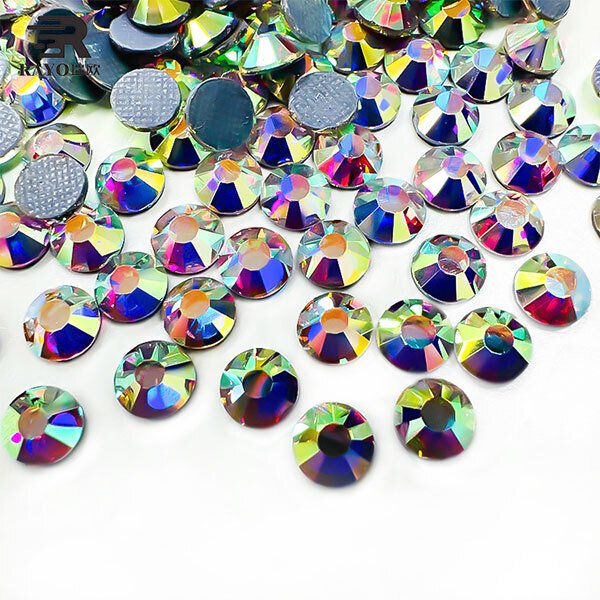
K9 optical glass rhinestones are the best choice for a wedding dress, because they refract light the way a real diamond does. The material has a refractive index around 1.9, compared with roughly 1.5 for ordinary glass and 1.49 for acrylic, which is why K9 stones flash brighter under candles and spotlights. Each stone carries 12 to 14 precision-cut facets that bounce light back to the viewer instead of scattering it, while cheaper imitation stones are cut with eight facets or fewer and read as flat plastic in photographs. For bridal work you want a Crystal AB finish, where a vacuum-deposited iridescent coating, not a spray, adds a soft rainbow edge that flatters white and ivory fabric.
The glue backing matters as much as the glass. Grey hot-melt adhesive melts between 150°C and 170°C and stays bonded through wear, movement, and the occasional tearful hug. Cheap yellow glue softens below 130°C, so it releases at the exact moment the dress stretches or rubs against a chair. When you are adding rhinestones to a wedding dress, the last thing you want is a trail of loose stones on the aisle runner. Choosing K9 glass with grey glue means the sparkle you build is the sparkle that survives the first dance and every photo after it.
What finish flatters a white or ivory dress?
Crystal AB is the safe bridal default because its iridescent coating picks up both warm and cool light, so it reads beautifully under church candles and reception uplighting alike. A clear crystal without coating looks more understated and modern on minimalist gowns, letting the cut do the work without any rainbow tint. Champagne and rose finishes warm up ivory and blush fabrics, while plain AB can read slightly cool against cream. Order a small sample sheet and press a few finishes onto your actual fabric before you commit, because the same stone changes character depending on the weave and tone underneath it.
How do you keep rhinestones attached through the reception?
A rhinestone wedding reception dress takes real abuse: hugs, dancing, chairs, and hours of movement all test the glue. K9 stones with grey hot-melt adhesive hold through dozens of wear cycles, and the bond strengthens as the glue fully cures over the first day. Avoid ironing the decorated area directly afterward, and store the gown on a padded hanger so the stones are not crushed against the closet wall. If a single stone loosens, a quick re-press at the correct setting reseats it in seconds, so tuck a handful of spares into your day-of bag just in case. Steam is the bigger threat than friction, because high-heat steam can soften the adhesive at the edges of your pattern, so steam the dress from the inside or hang it in a steamy bathroom instead of blasting the crystals directly.
How many rhinestones do you need for a wedding dress?
For a localized treatment such as a bodice, neckline, or waistband, plan on 2,000 to 5,000 stones depending on density and the size you pick. Sizing follows the SS scale: SS6 measures 2.0 mm, SS10 is 2.8 mm, SS16 is 4.0 mm, SS20 is 4.8 mm, and SS30 reaches 6.4 mm. Smaller SS6 and SS10 stones create a fine all-over shimmer, while SS16 and SS20 work as scattered accents that catch the eye individually. A full one-square-foot area of tight SS16 coverage takes about 576 stones, so you can estimate any panel by measuring its area and multiplying. Brides usually mix two sizes, laying a field of small stones and dropping larger ones at focal points, which uses fewer crystals and looks more designed than a single-size grid.
Placement changes how many stones you perceive. A dense band around the waist reads as a belt and needs fewer than a thousand stones. A soft gradient that fades from the bodice into the skirt looks expensive and spreads 3,000 to 5,000 stones over a wide area without feeling heavy. The rhinestone dress for wedding guest energy you are chasing comes from concentrated sparkle at the points guests actually see: the collar, the shoulders, and the small of the back. Spend your stone budget there and let the rest of the dress breathe.
What placement patterns look best on a bodice?
Start with a scattered or stardust layout if this is your first project, because even spacing hides small mistakes. Cluster patterns, where three to five stones group tightly around a focal point, add drama and are easy to build once you can place a single stone cleanly. A gradient fade works beautifully on a wedding dress and hides any density shifts, since the eye expects sparkle to thin toward the hem. Avoid rigid straight lines on curved areas like the bust, because the fabric stretches and gaps appear between stones. Whatever pattern you choose, step back every few minutes and photograph the dress in dim light, which reveals dead zones far better than your eyes will.
What should you buy before you start?
A starter kit covers the tools: a wax picker pen, a pair of bent tweezers, a pressing sheet, and a heat press or steamless iron. The picker pen is the unsung hero, because it lifts one stone at a time without smearing the glue backing. A pressing sheet sits between the iron and the crystals so no glue transfers to the iron’s plate. Buy about ten percent more stones than your estimate, because you will drop some, reject a few with flawed coating, and want spares for the day-of repair. When you add rhinestones to a wedding dress for the first time, the extra crystals are cheap insurance against a last-minute panic.
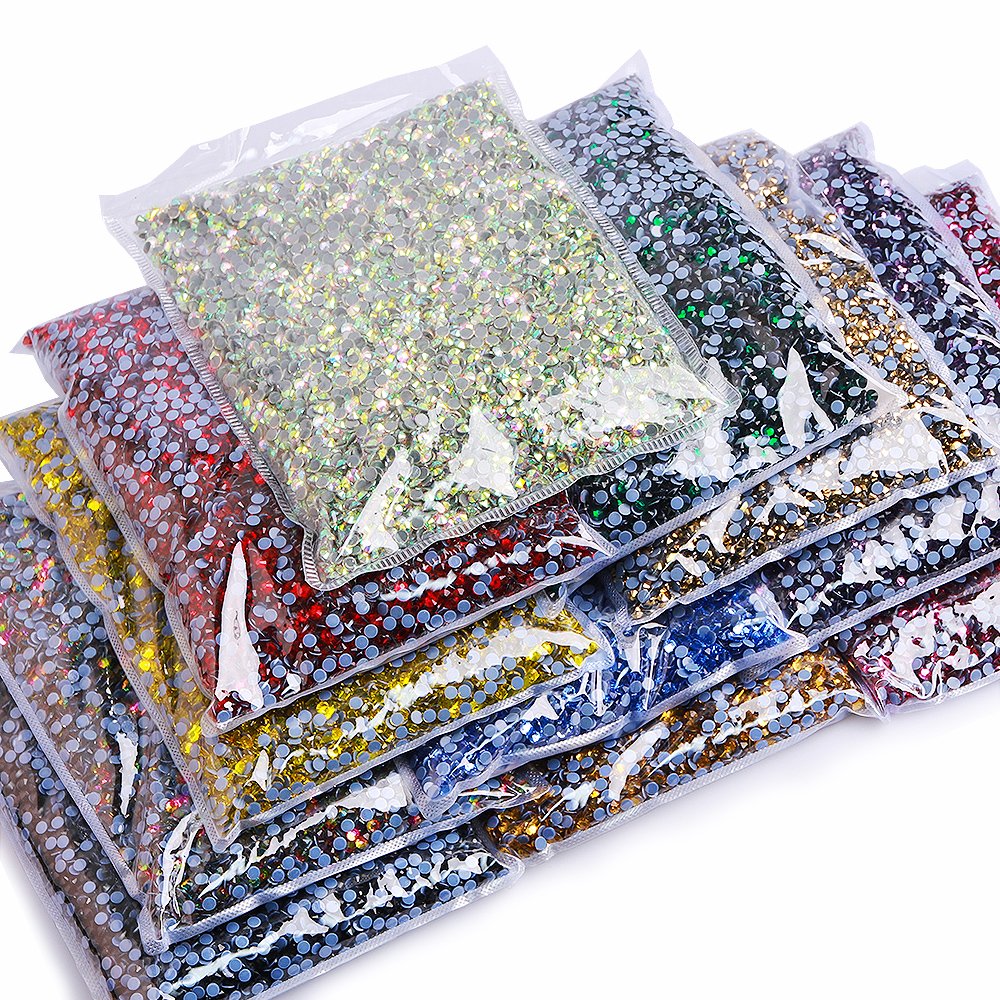
The crystal finish you choose sets the whole mood, so match it to the fabric tone before you order in bulk. Our team supplies K9 hotfix rhinestones in every SS size with the AB finish that flatters white and ivory best. Ask for a free sample pack and press a few stones onto your own fabric before you buy volume, so you can test the sparkle against your exact dress. Message us on WhatsApp at +86 13692450325 or email rhinestonewholesale8@gmail.com and tell us your fabric type, and we will recommend the size, finish, and quantity for your design.
Need a size or color recommendation for your next order? Send us your fabric type, design, and target price — we reply within one business day. WhatsApp +86 13692450325 · rhinestonewholesale8@gmail.com