
Flatback vs Pointed Back Rhinestones — Does the Bottom Shape Affect Light Reflection
When you look at a rhinestone, your eyes are naturally drawn to the crown—the top section where the 12-14 facets catch and splinter the light. However, the true “engine” of a rhinestone’s sparkle is often hidden beneath the surface. The shape of the stone’s base—whether it is a sheer flat plane or a multi-faceted cone—dictates the path that light follows as it travels through the glass. For professional designers and garment manufacturers, understanding this optical path is the difference between a costume that glows and one that merely glimmers.
At Guangzhou Yiben E-Commerce Co., Ltd., we manufacture both flatback and pointed back varieties using premium K9 optical glass. While flatbacks are our primary product for the hotfix market, we recognize that certain high-fashion applications require the depth and dimensionality only a pointed back Chaton can provide. Both shapes share the same chemical durability—meeting OEKO-TEX Standard 100 and REACH requirements—but their application methods and light-return profiles are worlds apart. In this analysis, you will learn how the refractive index (~1.9) interacts with the base geometry to create the visual impact your brand requires.
What is the difference between flatback and pointed back rhinestones
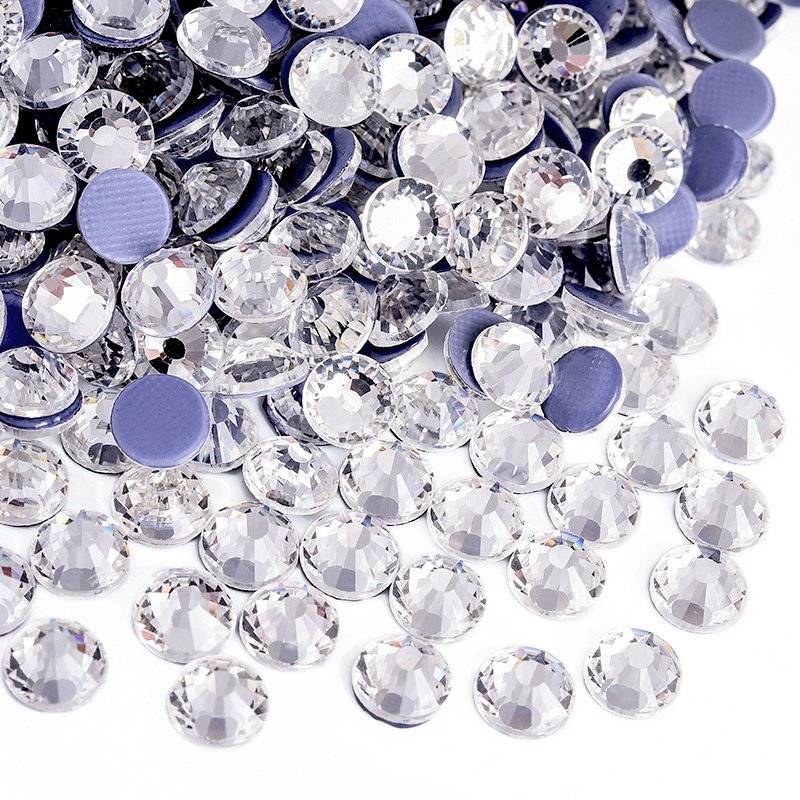
The primary difference is the geometry of the base: flatback rhinestones have a sheer, smooth bottom designed for surface adhesion, while pointed back rhinestones (Chatons) have a conical, faceted bottom designed for setting into metal cups or deep fabric recesses to maximize light reflection.
Flatback rhinestones are the workhorse of the textile industry. They are specifically engineered to be applied to flat surfaces like fabric, leather, or paper. Most flatbacks in our inventory are “Hotfix,” meaning they come pre-coated with German-imported grey adhesive that melts at 150-170°C. The flat surface maximizes the “surface-to-surface” contact area, which is why they can achieve less than 2% loss over 50 machine washes. Without that flat base, the adhesive would have nothing to grip, making the stone prone to falling off.
Pointed back rhinestones, on the other hand, are traditional jewelry-grade components. Because they have facets on both the top and the bottom, light can enter from more angles and bounce internally with greater complexity. In high-end “couture” pieces, these stones are often set into metal “claw” settings (rims) that are then sewn onto the garment. This provides a more traditional jewelry look compared to the sleek, modern aesthetic of hotfix flatbacks.
Which shape creates more sparkle on fabric
Pointed back rhinestones generally create more internal sparkle because their bottom facets allow for more complex light refraction. However, when applied to fabric, flatback rhinestones often appear more brilliant because they sit flush with the material, allowing the top 12-14 facets to catch light without interference from the setting.
The “sparkle” of a stone is technically defined by three factors: brilliance (white light return), fire (color dispersion), and scintillation (flash when moved). K9 optical glass, which we use for both types, has a refractive index of ~1.9. In a pointed back stone, the light travels through the top, hits the bottom facets, and is reflected back through the crown. This creates a “hall of mirrors” effect. But on fabric, a pointed back stone must be placed in a setting, which can block some of that light entry.
Flatback stones use a different optical strategy. The back is typically silver-foiled (mirrored). Light enters the crown, hits the silvered flat back, and immediately bounces back out. This results in a very “clean” and direct reflection. For stage wear and dance costumes where the audience is several meters away, the direct brilliance of a flatback SS20 or SS30 stone is often more effective than the subtle, deep sparkle of a pointed back Chaton.
When should you use flatback instead of pointed back
You should use flatback rhinestones for any application requiring high-speed production, machine-wash durability, or a lightweight finish. Flatbacks are ideal for T-shirts, athletic wear, and bridal veils where the German-imported hot-melt adhesive ensures a permanent, low-profile bond without the weight of metal settings.
Efficiency is the biggest driver for flatback usage. In a 10,000-unit garment run, you can apply thousands of flatback stones per hour using an industrial heat press or ultrasonic setter. The German grey adhesive (melting at 150-170°C) is engineered to seep into the fabric fibers, creating a mechanical lock that is far stronger than any manual sewing. For performance fabrics like Spandex or nylon, flatbacks are the only viable option because they move with the fabric rather than restricting its stretch.
Pointed back stones are reserved for “statement” pieces. If you are designing a luxury evening gown or a heavy crown, the pointed back stone provides a level of depth that flatbacks cannot match. However, the labor-intensive nature of hand-sewing individual settings makes them impractical for mass-market fashion. For 95% of garment decoration, the flatback’s combination of ease of use and high-performance adhesion makes it the superior choice.
Are pointed back rhinestones harder to apply
Yes, pointed back rhinestones are significantly harder to apply to garments because they cannot be heat-pressed directly onto fabric. They require either a metal claw setting to be sewn on or a specialized “cup” that is glued to the surface, adding complexity and labor cost to the production process.
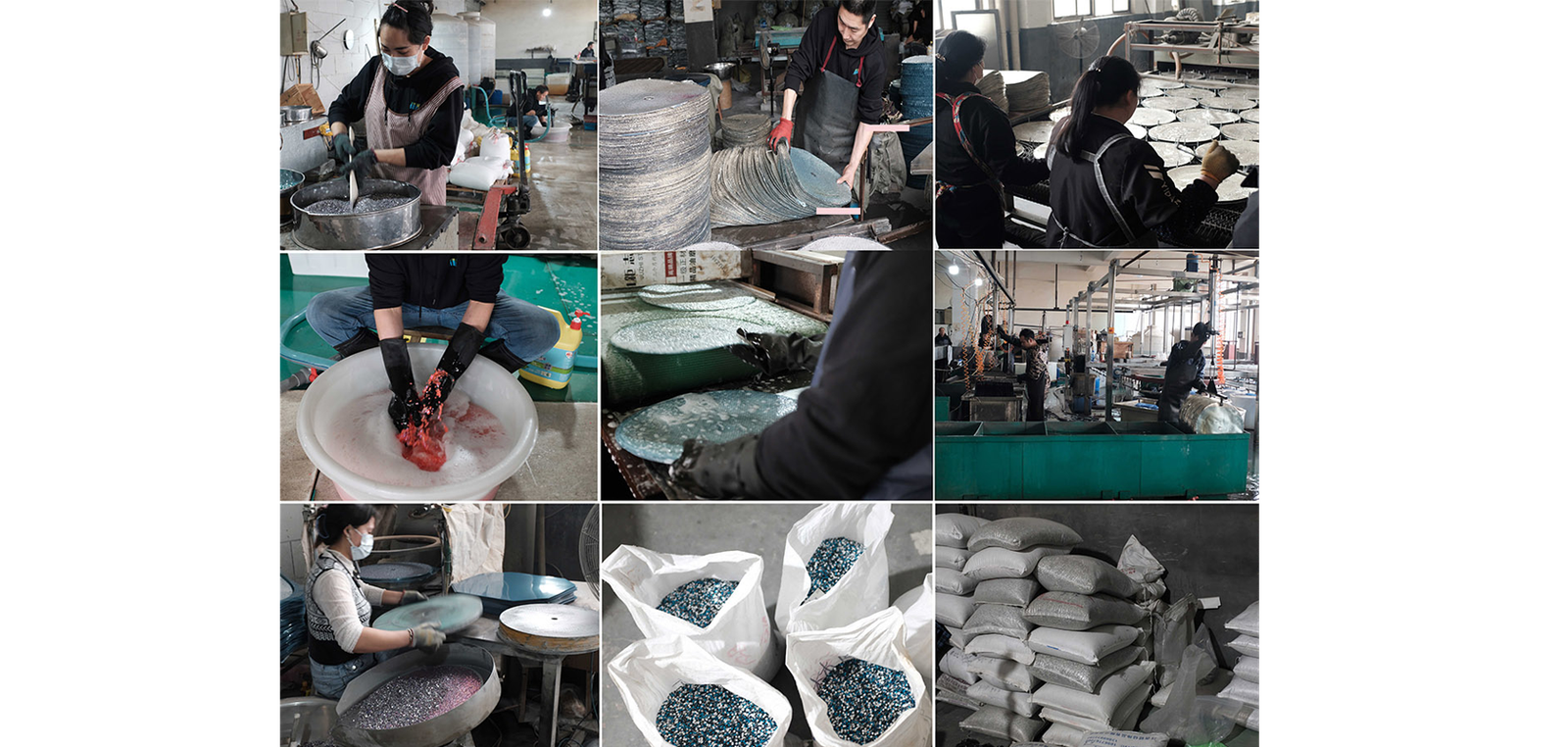
Applying a pointed back stone is a multi-step process. First, the stone must be seated in a setting. Then, the setting’s “prongs” must be bent over the stone with precision pliers. Finally, the setting is either sewn or riveted to the fabric. If the prongs are not tight enough, the stone (with its Mohs hardness of 6-6.5) will eventually fall out. This labor-intensive workflow is why flatback hotfix rhinestones revolutionized the fashion industry; they eliminated the need for manual setting.
With our flatback hotfix stones, the “setting” is effectively the fabric itself. By applying 165°C for 15 seconds on cotton, you are fusing the stone to the textile. There are no prongs to snag on delicate hair or other garments. For bulk wholesalers and garment factories, this reduction in labor costs is the primary reason why SS16 and SS20 flatbacks dominate their inventory orders.
Do both shapes use the same K9 glass material
Yes, at Guangzhou Yiben E-Commerce Co., Ltd., we use high-purity K9 optical glass for both flatback and pointed back rhinestones. This ensures that regardless of the shape, you receive the same RI ~1.9, lead-free compliance, and 12-14 facet precision-cut quality across our entire product range.
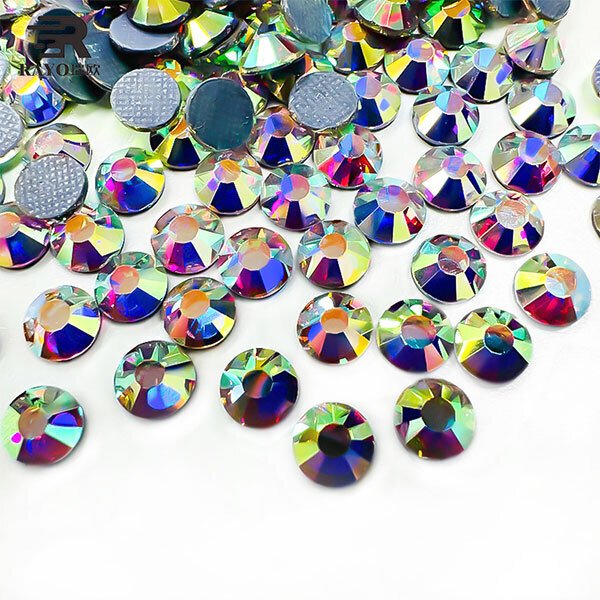
K9 glass is the “gold standard” for rhinestones because it strikes the perfect balance between optical clarity and durability. Acrylic stones (made of plastic) often have a refractive index of only 1.49, which makes them look “flat” and dull. K9 glass, being a dense optical crystal, splits light into a spectrum of colors (fire) similar to a diamond. This is why our “Crystal AB” stones look so vibrant under varying light conditions.
Regardless of the bottom shape, our K9 stones undergo the same rigorous quality checks. They are tested to ensure they are OEKO-TEX Standard 100 certified, meaning they are safe for skin contact and free from harmful chemicals. This is particularly important for dancewear (15,000-30,000 stones) and swimsuits (500-2,000 stones), where the garments are worn close to the body for extended periods.
Which type is more popular in garment decoration
Flatback rhinestones are overwhelmingly more popular in garment decoration, accounting for over 90% of the wholesale market. Their popularity stems from the ease of application via hotfix adhesive and their ability to stay securely attached during the heavy agitation of machine washing.
When you look at modern fashion trends—from streetwear hoodies to high-end bridal gowns—the vast majority of the “bling” is achieved with flatbacks. The ability to create intricate, complex patterns with different sizes (from SS6 for fine lines to SS30 for focal points) is only possible because flatbacks can be arranged into heat-transfer sheets. These “motifs” can then be applied in a single 15-second press, a feat that would be impossible with pointed back Chatons.
We maintain over 400 colors in our flatback inventory to support this massive demand. Whether a client needs a custom Pantone match for a 10,000-unit run or a mix of sizes for a dance costume, the flatback format offers the most versatility. While pointed back stones have their niche in the jewelry and “haute couture” sectors, the efficiency of the flatback hotfix system makes it the undeniable king of garment decoration.
Does the pointed back create a 3D elevation effect
Yes, the pointed back does create a significant 3D elevation effect, but only when it is housed in a metal setting. This combination raises the stone above the fabric surface, creating a high-profile “jewelry” look that is much more textured and tactile than the low-profile, flush-mounted flatback rhinestone.
Texture is an often-overlooked element of fashion design. If you want a garment to feel “crusted” with jewels, like a Royal coronation robe, pointed back stones in settings are the way to go. They cast shadows and interact with the fabric in a way that feels heavy and luxurious. However, this 3D effect comes with a trade-off: weight and “snagging.” Pointed back settings can easily catch on loose-knit fabrics or lace.
Flatbacks can mimic this 3D look by using larger sizes like SS30 (6.4mm) or by “layering” stones, but they will always maintain a smoother overall finish. This makes flatbacks safer for “contact” applications like dance or cheerleading, where a snagged setting could cause an injury or ruin a costume during a performance. For most performance uniforms, the “glow” of a flatback is preferred over the “elevation” of a pointed back.
Whether you need the sleek efficiency of our flatback hotfix stones or the deep brilliance of our K9 pointed back Chatons, our team at Guangzhou Yiben E-Commerce Co., Ltd. can provide the technical support and bulk supply you need. Contact us today via WhatsApp at +86 13692450325 or email rhinestonewholesale8@gmail.com to explore our 400+ color range and request your 3-5 day sample dispatch.
Need a size or color recommendation for your next order? Send us your fabric type, design, and target price — we reply within one business day. WhatsApp +86 13692450325 · rhinestonewholesale8@gmail.com