
How to Choose a Hotfix Rhinestone Factory in China That Actually Delivers
The factory that actually delivers is never the one with the lowest quote. It is the one that survives a four-step check: a production address you can verify, samples that match the batch you actually receive, a quality control process that runs before packing, and a quotation that puts price, MOQ, and lead time in writing. Every failed order we hear about in this trade traces back to skipping one of those four — usually because the price looked too good to question.
Choosing a hotfix rhinestone supplier in China is a sequence, not a search. Screen candidates, verify the factory is real, test samples on your own fabric, audit the QC process, negotiate terms, then scale the relationship. This guide walks the chain in order, with the deeper guide linked at each step.
What to Screen for Before You Contact a Rhinestone Factory
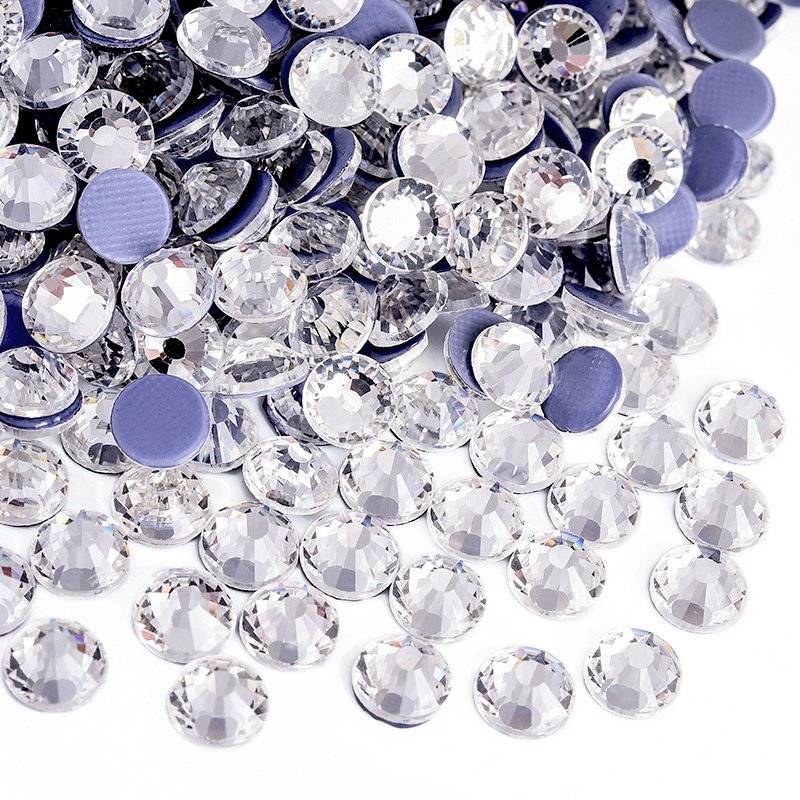
The first pass takes fifteen minutes and costs nothing. Start by separating factories from traders, because every later step assumes you are talking to the right kind of company. A factory cuts glass, applies the hot-melt adhesive layer, and packs the stones under one roof. A trading company buys from several factories and resells — which changes what you are verifying.
Three questions filter most candidates fast. Do they list a specific address in a Guangzhou production district such as Baiyun, Panyu, or Huadu? Do they offer video evidence of the production floor? And can they explain how hotfix stones are made — the cutting step, the facet grinding, the adhesive application — without reading from a brochure?
Product match matters just as much as company type. If your line needs K9 optical glass, a supplier who cannot tell you the difference between K9 and acrylic is disqualifying on the spot. K9 refracts at roughly 1.9 against acrylic’s 1.49, and the difference is visible the moment light hits a garment. For the full screening checklist by region and product type, see our guide to finding a reliable K9 glass hotfix rhinestone factory in Guangzhou.
How Do I Verify a Rhinestone Factory Is Real?
Four checks, in this order: address, photos, video call, price structure. Any supplier who cannot pass all four is a broker, whatever their sales page claims.
Start with the address. A genuine manufacturer in Guangzhou gives you a specific workshop address, not “Guangzhou City.” Put it in a map, then ask for photos of the production floor — grinding, coating, and packaging equipment in the same facility.
Then ask for a live video call of the line. A real factory can show you stones mid-production at ten minutes’ notice. A trader will offer excuses: the factory is in another city, the line is down today, the manager is busy. Compare the price list structure last — factories quote consistent per-pack unit costs across sizes, while traders show irregular jumps that reflect reseller margins.
Do not skip verification on a small order. The cost of a wrong supplier is not the order value; it is the production delay when your stones arrive two sizes off. Our guide to partnering with a China rhinestone manufacturer walks through the full verification sequence, including what to demand in writing before any money moves.
What Certifications Should a Hotfix Rhinestone Supplier Have?
The certifications you need depend on where the garment sells, and one rule covers most cases: if the product touches children or ships to the EU or the US, demand lead and heavy-metal compliance in writing.
The three names that come up in every European and American order are OEKO-TEX Standard 100, the EU REACH regulation, and the US CPSIA. OEKO-TEX Standard 100 caps lead at 90 ppm in finished products and 30 ppm for infant items. CPSIA sets the US limit at 100 ppm for children’s products. REACH restricts substances on the SVHC candidate list, and its scope is wider than lead alone.
Ask for test reports dated within the last twelve months, not a scanned certificate from five years ago. Adhesive chemistry changes, and so does a factory’s sourcing. Also ask what “lead-free” means in their documentation — the industry meaning is lead below the detection limit of roughly 1 ppm. For kids’ lines, the glue matters as much as the stone, since the adhesive is what the child’s skin actually touches.
What Production Capability Looks Like Inside a Real Factory
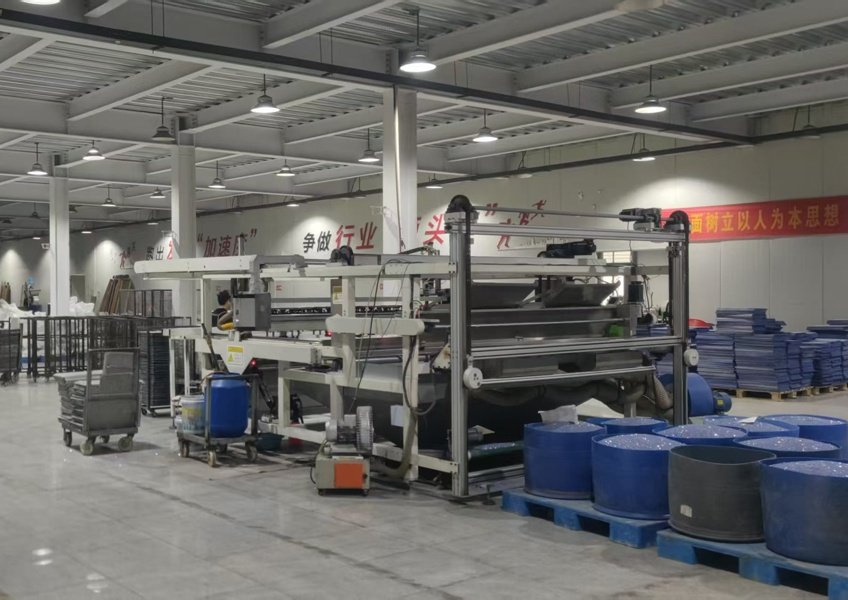
Hotfix rhinestone production is four operations, and you want to know which ones the factory runs itself: raw glass cutting, facet grinding, hot-melt adhesive application, and packing. The adhesive layer is the differentiator. Quality factories use industrial hot-melt glue — typically the German grey adhesive that activates at 150–170°C — applied in a controlled coating line. Cheap operations use yellow glue that softens below 130°C and lets go under heat or sun exposure.
Cut quality shows up in the facet count. Standard K9 stones carry 12–14 facets cut into the glass. Pressed imitations often have 8 or fewer, and the difference is a dull, flat flash instead of the sharp sparkle that sells garments. A supplier who can show you the cutting line, the coating line, and a finished pack in one video call has production capability; a supplier who can only show you a showroom does not.
Capacity matters too. Ask how many stones a week the line produces and what happens during peak season — factories with their own production control their lead times, while traders quote whoever they happen to buy from. For a tour of what a working production floor looks like, our interview with the production director at a Guangzhou rhinestone factory covers the process from raw material to packed box.
How Do I Test a Factory’s Samples Before Placing a Bulk Order?
Order a sample pack first, then run a three-part test: application, wash, and color. The whole test takes one afternoon and settles most of the questions a factory visit cannot.
Apply the stones to the fabric you actually use. For cotton, that means 165°C at 40 PSI for about 15 seconds — push the glue into its working range and see how the stone sits. Then run the wash test. Five machine cycles is the threshold where weak adhesion fails; a stone that survives five washes has a chance. Check the first cycle after washing for lifting, and check the glue residue left on the fabric when a stone does fall.
Color is the check buyers skip, and it is the one that causes the most rework. Lay the sample stones next to your Pantone reference or approved swatch under daylight, not warehouse LED. K9 glass holds color batch to batch; cheap acrylic shifts visibly. If you are ordering custom colors, confirm the factory can match a physical reference rather than a photo.
Ask for samples from the same batch structure you will order, and confirm they match production. Our guide to custom hotfix rhinestone OEM and ODM production covers what sample documentation to demand before production starts.
How a Factory’s QC Process Predicts Your First Order’s Success
Ask one question in your first conversation with any factory: what happens between the last stone being coated and the box being sealed. The answer tells you more about your first order than the price list does.
A serious factory runs three checkpoints: incoming material inspection, in-line checks during coating, and a final inspection before packing — usually an AQL-style sampling inspection where a random percentage of each batch is pulled and checked. Ask what the final inspection actually inspects: facet count, size tolerance, adhesive coverage, color consistency, and a wash-test sample from the production batch. A factory that wash-tests its own production is rare, and it is the single strongest quality signal available.
K9 stones with industrial grey adhesive survive 50+ standard machine washes with under 2% loss in our in-house testing; cheap acrylic with economy glue loses more than 30% of stones after just five washes. When a factory shares its own numbers, compare them against that scale. Ask for batch testing records from the last three months, not a single test from last year. QC that happens once is a brochure. QC that happens every batch is a system.
How Do You Negotiate Price, MOQ, and Payment Terms with a Rhinestone Factory?
Negotiate the whole package, not the unit price. Price, MOQ, payment terms, and lead time move together, and the factory knows all four before you ask.
MOQ is where the negotiating room actually is. A real factory with stocked inventory accepts small trial orders — at Guangzhou Yiben, two packs per color and size, about 1,440 SS16 stones per pack. A supplier demanding 50 packs per color is either a trader consolidating demand or a factory without stock, and either way your color is at risk. Custom colors and custom adhesive colors justify a production-run minimum; what is not legitimate is a “stock” quotation that suddenly demands a big MOQ after you order.
Payment terms follow a standard shape: 30% deposit and 70% balance before shipment, with PayPal for trial orders. Lead time should be on the quotation — stocked colors ship in days, production runs take weeks, and a date in writing is the only date that counts. Compare every line against real benchmarks before you commit; our guide to hotfix rhinestone wholesale from Guangzhou lists realistic price ranges per size, the MOQ patterns to watch for, and the checks that separate a factory quote from a broker quote.
What to Check Before Your First Bulk Import Order
Once samples pass and terms are agreed, the remaining risk is logistics. Hotfix rhinestones classify under HS 7018.10 — glass beads, including imitation gemstones — with US duty combining MFN-free treatment and Section 301 surcharges, and EU duty about 3.7%. A supplier who cannot state the correct HS code has likely never shipped this product, which is a warning sign worth taking seriously.
For the first volume order, pay the premium for air freight. A 10–20 kg shipment reaches North America in 5–7 working days; sea freight takes 18–35 days depending on coast. Verify the full production batch against your approved sample within a week, then commit to a sea-freight volume with confidence. Receiving 50,000 stones that match neither your sample nor your color reference is the worst outcome in this trade, and a fast first batch prevents it.
Buyers outside China often default to a local distributor out of habit, but the middleman’s margin is part of your landed cost, and direct factory sourcing changes the math. If you are in the Gulf, our comparison of wholesale rhinestone suppliers in Dubai versus sourcing from Guangzhou factories works through the cost and risk of both routes.
How a Supplier Relationship Compounds Across Your Orders
The first order should be small enough to hurt nothing and honest enough to reveal everything. The second order is where a good factory starts paying you back.
Once a factory knows your color list, your sizes, and your fabric, reorders get faster. Stocked colors ship without a production run; repeat batches hold color against your original approval; QC history means the factory knows your standard before you ask. Factories also hold frequently reordered colors in stock, which compresses your lead time from weeks to days. None of that exists on a first order.
If your brand is growing, this is the point to move toward private label or OEM work — custom adhesive colors, custom packaging, and stones under your own brand. Our guides to OEM and ODM rhinestone manufacturing in China and private label OEM rhinestone production cover what to verify before you sign a long-term agreement — which is a different contract from a purchase order, with different risks.
What This Means for Your Next Order
Run the sequence once and it becomes routine: screen, verify, sample-test, audit, negotiate, then scale. None of the steps costs money. All of them cost less than the alternative — a bulk order that arrives off-color, wrong-sized, or weeks late.
The suppliers that survive all six steps are the ones with real production, real QC, and enough stock to accept a genuine trial order. Guangzhou Yiben has been cutting K9 glass crystal hotfix rhinestones for 12 years, runs its own production and QC lines, and ships trial orders from two packs up. Our page on why buyers choose Guangzhou Yiben as their hotfix rhinestone supplier and the company profile cover the production details. Send us your color list and quantities at rhinestonewholesale8@gmail.com or WhatsApp +86 13692450325, and we will reply with a quotation and real MOQ within 12 hours.
FAQ
How do I verify a rhinestone factory is real? Check the address on a map, request photos of the production floor, ask for a live video call of the line, and compare the price structure — factories quote consistent per-pack costs while traders show irregular size-by-size jumps.
What certifications should a hotfix rhinestone supplier have? For children’s wear and EU/US markets, ask for OEKO-TEX Standard 100, EU REACH compliance, and US CPSIA documentation, with test reports dated within the last twelve months.
What is the difference between a rhinestone factory and a trading company? A factory cuts glass, applies adhesive, and packs under one roof and can show you the production line live. A trading company buys from several factories and resells, which changes what you can verify.
How do I test rhinestone samples before a bulk order? Press the stones onto your actual fabric at the correct temperature, run five wash cycles and check the glue line, and compare color against your reference under daylight.
What is the minimum order for rhinestones from a China factory? A factory with stocked inventory typically accepts a trial order of two packs per color and size. Demands for large per-color minimums usually signal a trading company.
Need a size or color recommendation for your next order? Send us your fabric type, design, and target price — we reply within one business day. WhatsApp +86 13692450325 · rhinestonewholesale8@gmail.com